360 MAGAZINE is an award-winning international publishing on popular culture and design. We introduce avant trademarks to efficacious architects.
We are a LGBTQIA2S+ friendly publication--officially recognized by the NGLCC.
Our core demographic ranges from 19 to 39-year-old college-educated trendsetters within their respective international communities. The pages in this art book satisfy their strong interests including music, art, travel, auto, health, fashion, tech, philanthropy, design, food and entrepreneurship.
It's an introspective digital/print/tablet portrait series, which encapsulates artists/brands/entities who embody the true essence of our publication- empowerment, equality, sensuality and most important of all, humanity within a global society.
Burbank, CA – March 27, 2026 – Grammy® Award-winning and Multi‑Platinum recording artist Miley Cyrus announced the release of her new original song, “Younger You (From the Hannah Montana 20th Anniversary Special).” The digital single is out today, via Hollywood Records, and is also available in Dolby Atmos.
Cyrus co-wrote, co-produced, and performs the song featured in the “Hannah Montana 20th Anniversary Special,” now streaming on Disney+ and Hulu. The track is available wherever you stream music.
Fans can listen to the official “Hannah Montana” playlist on Spotify, Apple Music, Amazon Music and other digital platforms.
Watch the “Younger You (From the Hannah Montana 20th Anniversary Special)” lift video here and the music video here.
Music from Disney’s “Hannah Montana” franchise achieved remarkable commercial success, earning six certified Platinum singles and nine certified Gold singles overall. The Hannah Montana album, released in 2006, was certified 3x Platinum by the RIAA, followed by Hannah Montana 2: Meet Miley Cyrus, which debuted in 2007 and went on to achieve 4x Platinum certification. Additional releases continued the momentum, with the Hannah Montana: The Movie soundtrack certified 2x Platinum, the Hannah Montana/Miley Cyrus: Best of Both Worlds Concert album reaching Platinum status, and Hannah Montana Forever earning Gold certification—cementing its status as a dominant force in music and pop culture.
The “Hannah Montana 20th Anniversary Special” is a love letter to fans, filled with heartfelt nostalgia. Miley Cyrus revisits her most memorable moments in an exclusive, in‑depth interview hosted by Alex Cooper. Viewers will also enjoy a behind‑the‑scenes look at Miley’s archival collection, familiar faces and surprise guests, and special musical performances by Miley Cyrus.
The special is produced by HopeTown Entertainment and Unwell Productions. Ashley Edens serves as showrunner, with Miley Cyrus, Tish Cyrus‑Purcell, Alex Cooper, and Matt Kaplan serving as executive producers. Cooper also hosts the special, guiding “Hannah Montana” fans through the nostalgic and highly anticipated anniversary celebration.
Confidence comes from a lot of sources. There’s something to be said about inner confidence that can’t be easily rocked or taken away, but in a lot of people, their confidence can be massively affected by how they look. If someone has a physical fault, whether it’s real or perceived, it can knock their confidence.
In turn, this can make them seem less attractive, because we’re always drawn to more confident people. One seemingly small change that can have a huge impact on our looks and our confidence is oral and dental care.
Hiding Your Smile
Naturally perfect teeth are rare. Most people have some kind of minor blemish, whether it’s teeth that are slightly yellowed, slightly misaligned, or worn down. But in some cases, dental imperfections can be the only thing we see.
This can make you feel very self-conscious when you smile or laugh, which then completely ruins the emotion for you. When you’re happy about something, you want to be in the moment, not dragged out of it by a sudden concern about what your teeth look like.
For some people, fixing their dental issues can play a huge role in their confidence, whether they’re smiling, laughing, talking, or just looking in the mirror.
Misaligned or Wonky Teeth
Straight teeth are widely considered to be an attractive feature. But if your teeth are slightly misaligned, you might not want to get expensive braces to fix them. Another problem with ordinary braces is that they’re very obvious, and it’s one thing for a child to have braces, but you could feel even more self-conscious about your teeth if you have obvious metal braces as an adult.
Misaligned teeth can also cause problems when eating and speaking, and can make it harder to keep your teeth clean. This can lead to more serious issues, like cavities or tooth decay, if you can’t properly get rid of plaque.
While serious misalignment might need more significant treatment, most cases can be solved with teeth aligners at home. This is a much less invasive and almost completely invisible way to slowly straighten your teeth over time. So you get straight teeth, but without feeling like your braces are too obvious.
Yellow or Discolored Teeth
If you look at natural teeth, you’ll notice that they’re never perfectly white. In fact, overly bright teeth can look unnatural and off-putting. But there’s a difference between natural-looking teeth and teeth that look too yellow or stained.
A common misconception is that this means teeth are dirty. But staining can be caused by a lot of things, including drinking a lot of tea or coffee. You can brush your teeth all you like, but the stain won’t go away.
Whitening strips or professional teeth whitening, on the other hand, are designed to correct yellow or stained teeth. Even better, they result in a natural look, so you won’t necessarily blind people when you smile.
Next-Gen healthcare devices are changing preventive care as well as how people are diagnosed and treated. However, there are multiple flaws when using devices that connect to other services through protocols such as Wi-Fi and Bluetooth as part of the Internet of Medical Things. As such, many of the most commonly used devices are vulnerable to attack and hostile takeover, from outdated legacy OS systems to the remote takeover of surgical robotics.
Insulin Pump “Man in the Middle” Attacks
A “man in the middle” attack is one of the most common intrusions into a system. Essentially, a hacker places themselves between the user and an app. This can help them either eavesdrop to scrape data or impersonate one party. This is one of the main reasons clinics are exploring greater cybersecurity for medical technology, as continuous glucose monitors are among the most widely exploited since they use Bluetooth to communicate with devices such as phones.
Imaging Systems Using a Legacy OS
MRI and CT scanners are not new machines and have been around for decades. As such, their built-in OS systems are vulnerable to attack if they haven’t been updated, which most have not. However, even relatively new models running an OS like Windows 10 will not receive updates and security patches, leaving them wide open for hackers, with the cost of replacement blocking clinics from buying new devices, of which around 83% are running outdated operating systems.
Next-Gen Healthcare Devices and Risky AI
Some of the most interesting developments in AI are in healthcare devices. However, it can go wrong, and it is believed that 95% of failures are due to human misconfiguration. This includes adversarial AI, where AI is fed slightly altered data that is very hard to spot by humans, resulting in a false diagnosis, which leads to wrong dosage and treatment. The implications of this kind of intrusion place AI devices among some of the riskiest from a health perspective.
Remote Takeovers of Surgical Robotics
One of the most concerning vulnerabilities of modern medical devices is the remote hijacking of surgical robots. In one study, the University of Washington was able to successfully hack a next-generation robot used for telesurgery and control it remotely. In a real-world scenario, a malicious hacker could manipulate commands that can subtly delay the actions of a robotic assistant during surgery, which could have devastating consequences during a procedure.
Organizing An Army of Botnets
DDoS (Distributed Denial of Service) attacks are the most common disruptions to a network and online system, and it is reported that the healthcare industry alone experiences over 820,000 attacks per day that could result in a devastating DDoS outage. While IoMT devices like smart beds don’t have the power to facilitate attacks, they can be organised into a botnet that combines their power, which could be used to launch a massive DDoS attack on a hospital.
Summary
A “Man in the Middle” attack from the interception of communication between a device such as an insulin pump and a smartphone is one example of how next-gen healthcare devices can be hacked. Systems that use AI can also be subtly manipulated, which can result in the wrong care, and hackers could organize individual devices into an army for a huge DDoS attack.
A Name That Stands Out In The Kratom Space For Its Offerings
The kratom market continues to expand, and brands must work harder to earn attention and trust. MIT Therapy has created a presence that feels steady, confident, and focused on quality. Customers today want more than variety because they value reliability and consistent presentation. This brand understands how important first impressions are in competitive retail spaces. By combining thoughtful packaging with reliable supply standards, kanva at MIT Therapy continues to attract curious buyers and loyal supporters. Let’s explore how this name continues building strong recognition within the growing kratom community.
Kanva At MIT Therapy- Stands Out In The Kratom Space For Its Offerings
1. Premium product line for true kratom enthusiasts
Kanva offers a premium product line designed to meet the expectations of dedicated kratom enthusiasts. Each product from MIT Therapy reflects careful planning, an organized presentation, and attention to the overall customer experience. Buyers notice the difference when products feel thoughtfully prepared rather than rushed to market.
The brand focuses on offering options that align with current preferences without overwhelming new customers. This balanced approach makes selection easier for both experienced users and curious newcomers. By maintaining a refined lineup, MIT Therapy positions itself as a brand that values quality and consistency over temporary hype.
2. Quality-focused standards
MIT Therapy’s high-quality standards help brands earn repeat customers in competitive markets like kratom retail. Kanva at MIT Therapy follows structured processes to ensure products meet consistent appearance and packaging expectations. Retailers appreciate receiving items that look clean, organized, and ready for immediate shelf placement.
Clear labeling and professional presentation add to the brand’s overall credibility. Customers feel more confident choosing products that reflect careful handling and responsible preparation. Instead of cutting corners, MIT Therapy continues to reinforce reliable standards that strengthen its long-term market presence and build trust among regular buyers.
3. A brand identity rooted in trust
Trust develops over time through steady performance and open communication with customers. Kanva builds its identity around reliability, professionalism, and consistent product availability. Retail partners value brands that respond quickly and keep promises regarding supply schedules. MIT Therapy also helps customers understand what they are purchasing.
This transparency removes confusion and strengthens buying confidence. As trust grows, customers are more likely to return and recommend the brand to others. This platform’s reliable reputation gives Kanva a stable foundation in today’s evolving kratom marketplace.
4. Customer-centered approach that encourages loyalty
Customer loyalty often grows when brands show a genuine understanding of buyer needs and preferences. Kanva at MIT Therapy focuses on listening to feedback and on adjusting its offerings to meet market expectations. Retailers benefit from working with a brand that values communication and shared success.
Friendly service and professional responses create positive experiences beyond simple transactions. Buyers feel appreciated when their concerns receive thoughtful attention. This customer-centered mindset strengthens relationships and encourages repeat purchases over time. Through consistent support and attentive service, Kanva at MIT Therapy continues building loyalty among dedicated kratom enthusiasts.
5. Transparent sourcing practices
Transparency plays an important role in helping customers feel comfortable with their purchasing decisions. MIT Therapyemphasizes clear sourcing practices and responsible supply management throughout its operations. Retailers and buyers value brands that communicate openly about product origins and preparation methods.
Honest information reduces uncertainty and builds stronger confidence in the brand’s reliability. Clear sourcing practices also reflect organized internal systems and professional standards. By maintaining an open approach, MIT Therapy strengthens its credibility and reinforces its commitment to responsible business conduct within the kratom community.
6. A Growing reputation among kratom lovers
Reputation grows when customers consistently share positive experiences with others. MIT Therapy continues to expand recognition through steady quality and reliable service. Word-of-mouth recommendations often influence new buyers exploring kratom options for the first time. Retailers appreciate carrying products that already have a favorable impression among returning customers.
Positive conversations about packaging, availability, and overall experience contribute to stronger brand awareness. As more people recognize the name, the brand’s influence naturally increases. This expanding reputation positions Kanva as a trusted choice within the competitive kratom landscape.
7. Competitive pricing that balances value and quality
Pricing decisions significantly affect customer satisfaction and long-term retail partnerships. MIT Therapy works to maintain competitive pricing while preserving presentation and quality standards. Balanced pricing helps retailers offer attractive shelf options without sacrificing profit margins.
Customers appreciate finding products that reflect both value and reliability. Fair pricing also supports steady sales volume and repeat purchases. Instead of extreme discount strategies, the brand focuses on sustainable pricing models. This careful balance by this brand allows Kanva to remain accessible while maintaining the professional image customers expect from reputable kratom providers.
8. A brand vision focused on9 long-term community growth
Long-term growth requires vision beyond immediate sales and short-term trends. MIT Therapy emphasizes steady expansion, responsible partnerships, and thoughtful product development. By focusing on sustainability and consistent service, the brand aims to support the wider kratom community. Retailers value suppliers who prioritize future collaboration over quick gains.
Community engagement and steady improvement strengthen long-term positioning in competitive markets. This forward-thinking strategy demonstrates commitment to stability and shared success. With clear direction and structured planning, this brand continues shaping its path toward lasting recognition.
Final Thoughts
Kanva at MIT Therapy continues to stand out by combining premium presentation, reliable standards, and customer-focused service. Through transparent practices, balanced pricing, and steady reputation growth, the brand strengthens its place within the kratom community. Retailers and buyers benefit from organized systems and thoughtful brand direction. In a market where consistency matters greatly, this brand demonstrates how strong identity and reliable performance build lasting success.
About The Author
Palmina Thomson is a lifestyle writer who focuses on kratom culture, emerging brands, and evolving retail trends. She enjoys exploring how thoughtful brand strategies shape customer experiences within growing communities. Palmina writes in a conversational and clear style that makes industry topics easy to understand. She believes strong branding, transparency, and consistency help businesses stand out in competitive spaces. When she is not writing, she studies product trends and observes how communities connect with trusted names. She is passionate about highlighting brands that prioritize long-term growth and meaningful customer relationships. Her goal is to help readers recognize value and authenticity in a competitive marketplace.
Genre-disrupting producer, singer, and songwriter 2hollis has revealed his official concert film, 2hollis Live at The Shrine – Los Angeles (October 27, 2025) a visceral, high-energy capture of his sold-out hometown performance at the iconic Shrine Auditorium in Los Angeles. The film offers fans an immersive front-row experience into one of his most dynamic live shows to date.
Filmed in Los Angeles during a landmark stop on his recent run, 2hollis Live at The Shrine – Los Angeles (October 27, 2025) showcases 2hollis at the peak of his creative and performance powers. Featuring standout moments from across his catalog—including highlights from his latest album star—the film brings his genre-bending sound and explosive stage presence to life through striking visuals and raw, unfiltered energy.
2hollis continues his global run of live dates after two sold-out world tours in the past year, bringing his explosive performances to audiences across the globe. Recent appearances have included major festival stops across South America, with performances at Lollapalooza in Argentina, Chile, and Brazil, as well as Festival Estéreo Picnic in Colombia, followed by a headline show in Mexico City taking place this week. This summer, he will appear at Primavera Sound in Barcelona and Governors Ball in New York, before returning to the U.S. for HARD Summer in Los Angeles. Additional international dates include appearances at Lowlands Festival in the Netherlands, Blockfest in Finland, and All Points East in London. Full details and ticket information are available HERE.
The release follows a breakout year for 2hollis, marked by the arrival of star, a groundbreaking 15-track project that earned widespread acclaim for its “beautifully vulnerable” and “exhilarating” sound (Pitchfork). The album further cemented his reputation as one of the most innovative young artists in music today, blending elements of electronic, hip-hop, and pop into a singular sonic world.
Known for his boundary-pushing live performances, 2hollis has built a reputation as a must-see act, selling out shows across North America, Europe, and Asia and appearing at major festivals including Coachella, Bonnaroo, Lollapalooza, and Outside Lands. 2hollis Live at The Shrine – Los Angeles (October 27, 2025) captures that same intensity—offering both longtime fans and new listeners a deeper look into the artistry and energy that define his live show.
More than just a concert film, the project stands as a visual extension of 2hollis’ creative universe—blurring the line between performance, storytelling, and atmosphere. From intimate moments to full-throttle crowd eruptions, the film documents an artist fully in command of his vision.
NEW CONCERT FILM 2HOLLIS LIVE AT THE SHRINE Auditorium via 360 MAGAZINE.
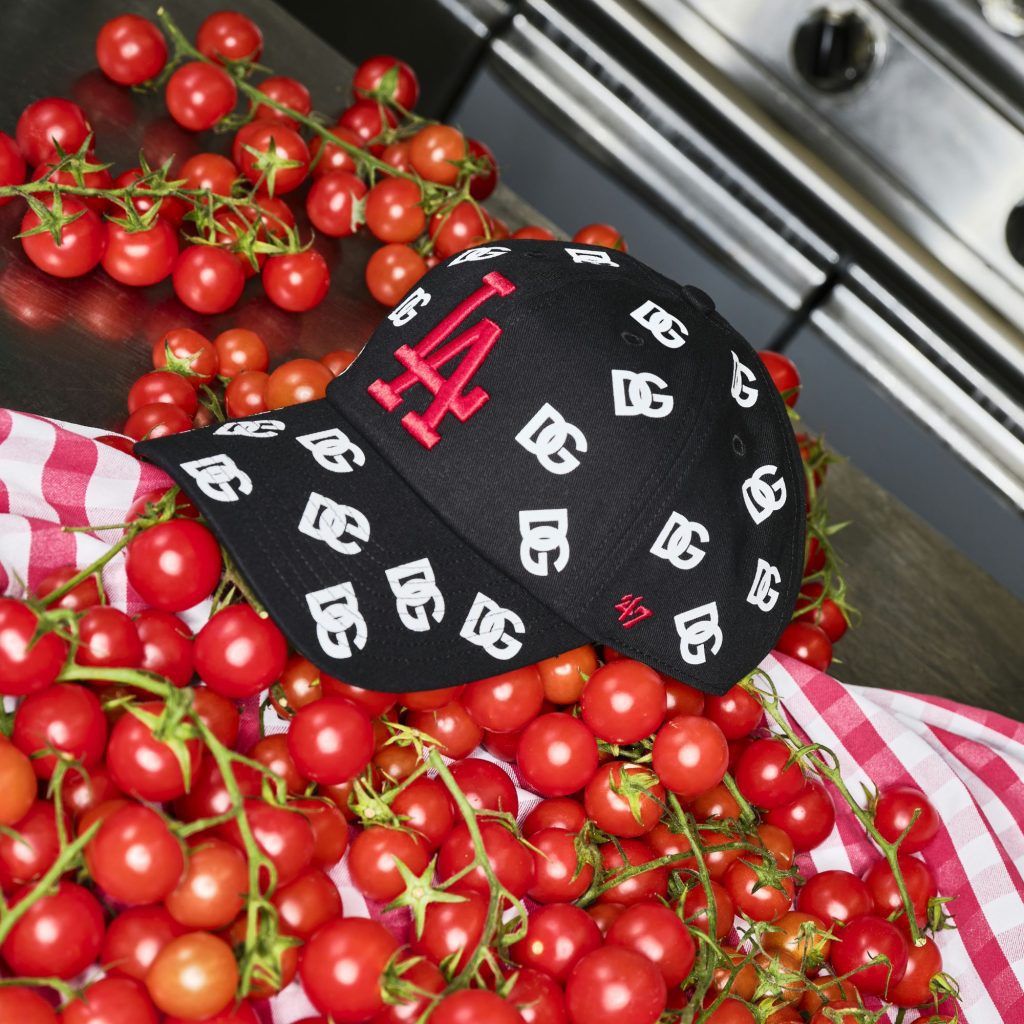
Dolce&Gabbana x ’47, an exclusive collection that combines fashion, sport and lifestyle.
The heart of the collaboration is ‘47’s most iconic style, the ’47 CLEAN UP.
The model is defined by a relaxed silhouette, a curved visor, and adjustable strap, and is worn by millions worldwide.
The ’47 CLEAN UP is reimagined through some of Dolce&Gabbana’s most emblematic prints: the bold and striking spirit of the Leopard, the strong identity of the DG Logo — available in three variations on denim, black, and white backgrounds — and the exclusive Patchwork in denim, always unique and different in every design.
Completing the collection, the ’47 CLEAN UP Balaclava introduces a functional and contemporary element, an accessory with a distinctly urban-inspired attitude.
Each model is available featuring the logos of three of the world’s most popular baseball teams: the Los Angeles Dodgers, New York Yankees, and New York Mets.
The Dolce&Gabbana x ’47 collection is available beginning today exclusively online at www.dolcegabbana.com.
Every player has experienced the dreadful early-league poverty. You load into the new Path of Exile 2 season, grind your way through the campaign, start pushing into your early atlas maps, and suddenly, you hit a massive progression wall. You look in your stash tab and see three Chaos Orbs, a handful of Alterations, and barely enough chisels to roll your next map. Meanwhile, people in global chat are already linking items worth dozens of Divines. It is a completely demoralizing feeling.
The harsh reality about the Path of Exile economy is that the path to real wealth isn’t just about dropping a Mirror of Kalandra from a random destructible barrel. It’s primarily about plugging the holes in your daily gameplay where your currency is silently leaking out. If you are constantly struggling to afford your end-game upgrades or even basic mapping supplies, you are probably making a few errors without even realizing it.
Fixing these bad habits takes time and discipline, and sometimes the early grind can lead to serious burnout before you even see any real profit. If you simply want to skip the frustrating early mapping phase and jump straight into the fun part of the endgame, many players decide to get PoE 2 Divine Orbs at Skycoach for the safe and affordable service. However, if you want to fix your farming strategies and generate currency yourself, let’s break down the most common mistakes that are currently draining your potential wealth.
1: Ignoring the “Bubblegum” Currencies
One of the biggest traps mid-level players fall into is getting overly aggressive with their loot filters. Hiding magic items and low-tier bases is absolutely mandatory once you hit maps, but filtering out every small currency drop too early is a massive mistake.
A lot of people think that holding out for pure Divine drops is the only way to get rich. I used to do this same thing. Back in older seasons, I would hide everything below a Chaos Orb by day three. I always sat there wondering why my overall net worth completely stalled out. The truth is, your bulk alterations, fusing equivalents, and lower-tier mapping materials add up incredibly fast.
2: Throwing Real Currency at Mid-Tier Gear Upgrades
This is an absolute wealth killer. You hit early endgame, your elemental resistances are a little uncapped, and you feel like you need a bit more life to survive specific boss attacks. Instead of finding a cheap, temporary fix, you go to the trade site and spend your very first hard-earned Divine Orb on a pair of boots that are barely better than what you currently have equipped.
Here is a quick breakdown to help you decide when to spend your currency and when to hold onto it:
3: Violating the “Hideout is Lava” Rule
If there is one mantra every wealthy player swears by, it’s “the hideout is lava.” Every single second you spend sitting in your hideout staring blankly at your stash, rolling a single map, or agonizing over a one-Chaos trade is a second you aren’t out there killing monsters. Killing monsters generates loot. Standing next to your waypoint does not.
4: Getting Sniped Because of Lazy Price Checking
We have all experienced this awful feeling. You throw a rare ring into a public tab priced at 10 Chaos. Five seconds later, you get flooded with thirty messages from different players instantly trying to invite you to their party. You just severely underpriced a great item, and the automated trade bots sniffed it out in record time.
Many players get way too impatient when pricing rare gear. If an item has high life, a couple of high-tier resistances, and a desirable third stat, you need to actually search the market. Use trade macro tools or manually search the specific affix combinations on the official trade site.
5: Gambling Away Your Steady Profits
Path of Exile 2 is a massive casino disguised as a video game. The game gives you a hundred different ways to gamble your hard-earned currency. Whether it’s slamming a Vaal Orb on your best weapon, spamming stacked decks hoping for a god-tier card drop, or throwing rare currency at an item hoping to hit an impossible mod, gambling is the fastest way to return to zero.
Unless you have the bankroll to absorb massive losses, you should almost always sell your gambling materials to other players. Sell your stacked decks in bulk. Sell your high-end crafting materials. Let the top 1% of players take the huge risks while you take their guaranteed currency instead. Save yourself the stress and just sell your corruption temple services directly.
6: Forgetting Your Crafting Bench Exists
You drop a solid, rare ring. It has high life and two huge elemental resistances, plus an open suffix. Instead of taking it to the crafting bench in your hideout and adding a missing attribute for literally two Chaos Orbs, players will list it on the trade site as junk and then go spend entirely too much money on a completely different ring.
Always check if an item can be fixed with your hideout crafting bench. It is by far the cheapest mechanic in the entire game, yet new players act like it doesn’t even exist. A standard bench craft can easily turn a completely unsellable item into a highly profitable trade.
7: Rerolling Way Too Many Characters
The biggest hidden currency drain is creating a brand new character every three days. Every time you reroll, you spend currency on leveling gear, you spend hours running through the annoying campaign again, and you aren’t farming actual endgame drops.
By the time your fourth character finally hits maps, your friend who stuck to his league starter just bought his most expensive chase item. Stick to one character and push it as far as it can confidently go. Of course, if you realize your starter build is permanently bricked, and you simply cannot stand the leveling process again, some players opt to buy PoE 2 Divine Orbs at Skycoach just to instantly gear a new character and skip the painful mid-game struggle entirely.
Farming currency doesn’t require playing a complicated build at 500 actions per minute. It just requires basic discipline. Stop wasting time sitting idle in your hideout, sell your items and materials in bulk, don’t gamble your net worth away on a 1% chance, and carefully price your valuable drops. You will find your stash organically filling up much faster than you expected.
Frequently Asked Questions
How do I know if a rare item is actually worth a Divine Orb?
Check the market for similar items using trade layout tools. If your item has multiple high-tier synergy modifiers (like tier 1 life, double tier 1 resistances, and a highly sought-after influenced modifier), it is likely worth a significant amount.
Should I pick up every rare item off the ground to identify and sell?
Absolutely not. By the time you reach middle-tier maps, you should only be picking up high-value bases or jewelry. Identifying hundreds of bad, rare items is a huge chunk of time wasted.
Is crafting my own gear cheaper than buying it from the trade site?
Usually, no. Unless you know exactly what you are doing and are utilizing very specific, deterministic crafting methods, buying mid-tier gear directly from other players is almost always cheaper than gambling currency, trying to make it yourself from scratch.
What is the fastest way to get basic currency for rolling my maps?
Running dense content mechanics like Expedition, Heist, or simply focusing on strongboxes and basic shrines will generate a massive amount of smaller currency like alchemy and chaos orbs organically as you continuously run maps.
Why do my items never sell when I list them?
You are probably overpricing them based on one single good stat while ignoring that the rest of the item is dead. Try lowering the price by 10% to 20% every few hours until it eventually sells, or stick it in a 10 Chaos dump tab and see if anyone bites on the new price.
Some clothing is basic. Others command attention. The leather trench coat belongs to the second group. It has attitude, presence, a sense of confidence that instantly transforms a simple look into memorable.
Wherever you look, you’ll see the trench everywhere. From haute couture to across the streets, these outerwear pieces are having a moment. Wearing it feels like it hasn’t just completed your outfit, it’s leading it.
One of the main reasons behind its hype is simple. The classic trench design already feels polished and timeless. When the same structure is made with leather, it turns out to be even sharper, bolder, and far more striking. This perfect combination of traditional sophistication and the modern edge makes the leather trench coat womens fresh and iconic.
Why the Leather Trench Is a Fashion Power Piece
The trench coat with leather stands out because of the two main fashion ideas. The trench is loved for its silhouette with a clean design, structured lapels, and a waist belt. These details give the leather trench coat a neat and powerful persona that never seems to fade from style.
Now let’s talk about leather. When it enters the picture, the story of the garment deepens even more. Its rich texture and sheen add a subtle confidence. Does this combination sound familiar or remind you of something? Well, it explains why leather trench attire is so common in the celebrity fraternity, fashion editorials, and everyday street style photos.
Another aspect that shouldn’t be missed is its versatility. You can easily wear it with denim or formal outfits, and it will look just as good. Not only that, but it is also flexible enough for transitional or shoulder seasons. You can wear them with light fabric for breezy springs and cozy underlayers during colder months. And just like that, it comes in handy all year round.
Popular Styles of Women’s Leather Trench Coats
One style doesn’t fit all. This is why fashion lovers enjoy this outer layer because it comes in exciting versions. Each variation has its own character while reflecting the classic trench aura.
Classic Belted Leather Coat
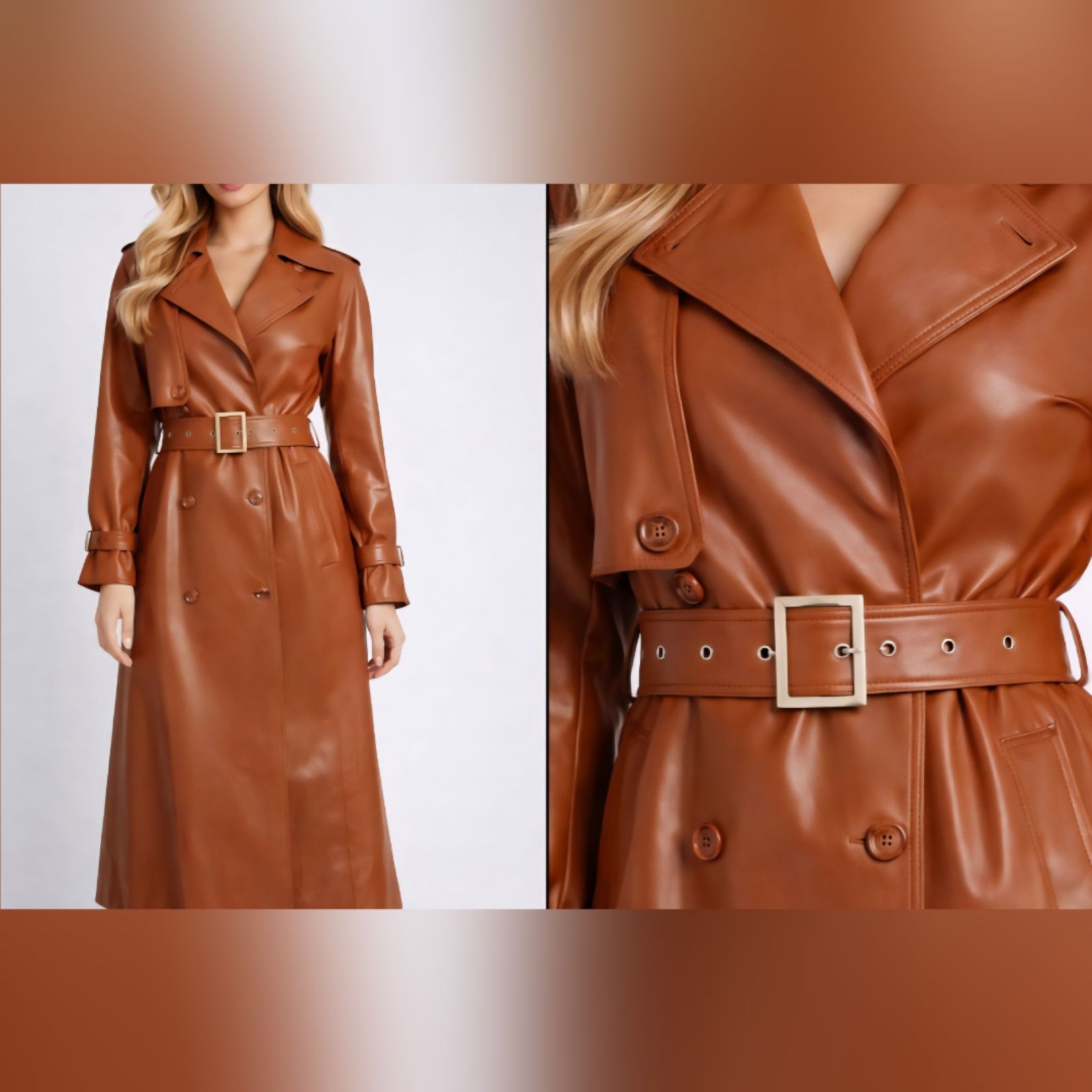
This is the type of trench coat that people recognize just by looking at it. It features a waist belt that accentuates your frame, resulting in a more structured, balanced, and effortlessly elegant look.
Long Trench Coat
For those who love to have a dramatic street walk or appearance, long trench coats were designed for them. You’ll mostly find them on runways and high-end photoshoots as it brings positive chaos to visuals.
Cropped Leather Coat
The cropped versions come on a more playful side with a youthful and modern vibe. You can pair them confidently with casual clothing like denim and boots for a chic, everyday look.
Double Breasted Leather Trench
This design is the epitome of classic trench details, including overlapping front panels and structured buttons. It feels polished and put-together, making it an ideal choice for occasions that require a modestly elegant appearance.
How to Style a Leather Trench Coat for Women
The beauty lies in the eyes of the beholder, and here, it exudes from a leather trench coat womens. It’s a versatile wardrobe staple. Here are a few simple styling ideas that can make the piece shine in everyday wardrobes.
Street Style Look
Start with a white oversized cotton tee and pair it with light blue straight-fit denim jeans for a city vibe. Add black leather ankle boots, a silver chain bracelet, and don’t forget a tan crossbody handbag. Carry black rectangular sunglasses and throw a black trench coat over as the statement outer layer.
Office Ready Outfit
Choose a brown leather trench from NYC Jackets for a polished work aesthetic. To keep your look elegant, layer the coat on top of a soft ivory silk blouse and slim-fit charcoal grey tailored trousers. Wear dark brown pointed-toe leather heels and complete the outfit with a structured black leather tote handbag and a delicate gold bracelet.
Night Out Look
Go for a black satin slip dress that keeps the base sleek and elegant. For footwear, go for black stiletto heels, a silver metallic clutch handbag, and add black cat-eye sunglasses. Throw a burgundy coat over and finish the ensemble with a metallic gold clutch, a gold cuff bracelet, and small gold hoop earrings. The deep burgundy outerwear is here for grabbing attention, while the black and gold accents keep the outfit polished and confident.
Minimalist Chic
For a clean look, grab a beige leather garment and pair the coat with a soft cream cashmere sweater, light beige tailored trousers, and tan leather loafers with a subtle shine. Complement the look with a structured ivory handbag, light brown minimalist sunglasses, and a thin gold bracelet.
Best Colors for Women’s Trench Coats
Colors play a great role in fashion, especially when it comes to a trench coat.
Classic Black Trench
Black is timeless and goes with almost everything, giving you that bold, commanding presence.
Brown Trench
The brown leather trench is here for warmth and vintage charm. It works beautifully with earth-toned clothing and relaxed everyday outfits.
Burgundy Trench
The Burgundy coat has a richer and more fashion-forward appearance. It stands out without doing too much, which makes it ideal for statement looks.
Beige or Neutral Tones
Light neutral shades are great for a softer aesthetic. These colors work well for minimalist wardrobes and bring a fresh touch to layered outfits.
What to Look for When Buying a Leather Trench Coat
Choosing the right piece requires paying attention to a few important details. For instance:
Check the quality. If the leather feels smooth, durable, and flexible, it’s going to age well.
Ensure the coat sits naturally on your shoulders and lets you move freely.
Pick a style, long or short, that matches your body frame and personal taste.
A durable coat will have quality hardware like buttons, buckles, and zippers.
Wear it around to see if the linings are comfortable and warm.
Most of the time, you find one feature in one jacket and another feature in a different jacket, and not all in the same jacket. And if you’ve experienced this, it’s time to check out a trustworthy brand like NYC Jackets.
Why Leather Trench Coats Are a Long Term Wardrobe Investment
Alright, let’s understand it this way. Trends may come, disappear, then come back with another wave and fade away, only to never return. Such is not the case with a leather trench coat womens. It remained in fashion for decades because of its quality material and structure.
Leather is a durable material that lasts for years, often in good condition. As mentioned earlier, the fusion of a classic trench structure and bold leather texture creates a memorable look. Plus, the design works well with countless options. Because of these combined aspects, the coat rarely feels outdated. Instead, it continues to adapt to changing fashion moods while maintaining its iconic status.
Conclusion
Fashion doesn’t wait for anyone. It grows with each passing day, leaving trends behind. But a leather trench coat doesn’t fit this verdict. Due to its sharp frame, versatility, and unforgettable appeal, it’s still cherished in modern wardrobe collections.
Experimenting with this masterpiece differently can reveal just how flexible it truly is. Wear it on a casual day or style it for an evening outing; the coat will make a lasting impression. Of course, confidence is a given; choose the outerwear wisely.
JASON NESMITH IS SET TO COMPOSE THE THEME FOR “STRANGER THINGS: TALES FROM ’85”
Composer and producer Jason Nesmith is set to compose the theme for the upcoming animated Netflix series “Stranger Things: Tales from ’85,” premiering April 23, 2026.
“Stranger Things: Tales from ’85”, is a new animated adventure series scheduled to premiere on Netflix on April 23, 2026. Developed by Matt and Ross Duffer and show-runner Eric Robles, focusing on new journeys for the original characters set between seasons 2 and 3, in Hawkins – during the winter of 1985. The horrors of the Upside Down are finally fading. But beneath the ice, something terrifying has awakened. The heroes must race to solve this mystery and save Hawkins in this new story set in the Stranger Things universe. Featuring the original heroes (Eleven, Mike, Will, Lucas, Dustin, Max) battling new, mysterious creatures. The show is created by Flying Bark Productions and executive produced by the Duffer Brothers, Shawn Levy, and Eric Robles. Jason worked closely with Robles to craft a theme that honors the legacy of the original series while establishing a fresh musical identity for the animated world. The Voice Castincludes voice acting from Brooklyn Davey Norstedt (Eleven), Jolie Hoang-Rappaport (Max), Luca Diaz (Mike), Elisha “EJ” Williams (Lucas), Braxton Quinney (Dustin), Ben Plessala (Will), and Brett Gipson (Hopper). But you really will have to wait to hear the theme, it is under lock and key until its release date.
Jason Nesmith has extensive credits to his name. Recently Jason has partnered with Ahmet Zappa to co-produce the music for a new musical feature film, developed from Zappa’s original concept and featuring songs by Tony-nominated composer Andrew Lippa. He recently finished the theme for the 2025/26 season of Extra Entertainment News, as well as the theme for TMZ Live. Jason also currently composes for Teen Titans Go and the Jennifer Hudson Show on Fox. He has also co-written a slasher romantic comedy musical feature with three-time Emmy Award–winning comedy writer Jason Blackman, which is currently in development. He has also had the pleasure of being one of 8 people chosen to participate in BMI’s Conducting Workshop in 2019. In recent years, he has composed scores for multiple independent films, television movies, and a handful of short films. Among them is Holly Slept Over, a romantic comedy from Sony starring Ron Livingston, Nathalie Emmanuel (Game of Thrones), and Britt Lower (Severance). For the last 19 years, Jason has worked with Warner Brothers/Tele-pictures as one of the primary composers for The Ellen DeGeneres Show. He has also written the themes for Anderson Live, CNN New Day, The Tyra Banks Show, Judge Jeanine Pirro, Let’s Ask America, Jessy and Jessy Food Tech, Ellen’s Design Challenge, Play with Caution, and many more. Since its launch in 2013, Jason has composed music for the Microsoft Surface tablet national commercial spots. He has also done extensive scoring for documentaries on the History Channel, Discovery Channel and the National Geographic Network. In his rock and roll days, he was signed by music industry legend, Seymour Stein to the iconic Sire Records as a member of 90’s famed Brit pop group Nancy Boy.
Beyond his work in entertainment, Jason Nesmith is actively involved in philanthropy through The Gihon Foundation, a nonprofit he runs with his siblings that supports musicians, writers, and artists across multiple disciplines. Recent contributions have included Musicares, and Homeboy Industries.
Today JasonNesmith continues to write and produce for some of the longest running and most successful TV franchises, and can be heard literally 24/7, syndicated worldwide, under his own music company name, JEL Music Group.
www.jelmusicgroup.com
“The first time I can remember hearing music, I remember thinking, I want to make that. Before I fully understood it, I was already trying to compose. When I began learning guitar and piano, writing music became the natural extension of that curiosity. Over the years I’ve worked across symphonic music as well as film and television scoring. Writing the theme for ‘Stranger Things: Tales from ’85‘ was particularly exciting because the music helps define the atmosphere and identity of the show,” Jason says.
Jason knows music, it is in his blood, he was raised with many legendary musicians and writers in the hills of Laurel Canyon. As they say, ‘the fruit did not fall far from the tree,’ and in this case this tree has bared very talented fruit. Jason Nesmith is not stopping anytime soon. With his own 2 children he hopes to keep his family’s legacy out there for the younger generation to enjoy the music. Keeping in line with his musical heritage, Jason is just so excited to see how audiences will react to this latest upcoming project, and the huge brand of the “Stranger Things,” franchise.
1. How has your family inspired you as a musician?
JN: My mom always had records around the house like The Beatles, The Rolling Stones, Bob Dylan, Crosby, Stills & Nash, and The Beach Boys. Also, a lot of musicals like My Fair Lady, Grease, and West Side Story—stuff like that. My dad had a very wide variety of tastes. I was exposed to a lot of the classics and blues, like Robert Johnson, Muddy Waters, B.B. King, Howlin’ Wolf, and John Lee Hooker. He also loved country music and artists like Ella Fitzgerald, Ray Charles, Aretha Franklin, and Etta James.
2. What do the next 5 years look like musically?
JN: I have just finished writing a musical feature film with a partner I worked with for years on The Ellen DeGeneres Show. So, I hope to be making that film and would love to do some scoring on series for Netflix and Amazon, etc.
3. Where do you get your ideas for subject matter for your project development?
JN: Just look around—there is literally material everywhere.
4. What charities are you aligned with and why?
JN: I run a foundation called the Gihon Foundation with my three siblings. The foundation supports the arts. We recently donated to Homeboy Industries and the MusiCares Foundation.
5. What music projects will you be involved with in the future?
JN: I just recently wrote the theme for the new animated series on Netflix called Stranger Things: Tales from ’85. I hope to stay involved with that show, and of course I will continue with Extra, TMZ Live, The Jennifer Hudson Show, and Teen Titans Go! all of which I currently compose for—and two of which I have rewritten the themes for.
6. Who are your biggest influences?
JN: I would say my biggest influences are all over the map—from classical composers like Vivaldi, Bartók, Grieg, Mahler, and Debussy, to film composers like Jerry Goldsmith, James Newton Howard, and Gustavo Santaolalla, Michael Giacchino, Bernard Herrmann, Ennio Morricone, Henry Mancini. Then all the classic musicians and bands like Pink Floyd, Black Sabbath, Crosby, Stills, Nash & Young, The Beatles, Jimi Hendrix, The Rolling Stones, Bob Dylan, and Simon & Garfunkel.
7. What advice would you give to a recording artist or composer starting out?
JN: Learn to work across many genres and be able to compose in many styles. That gives you the best chance, because music supervisors, directors, and producers are always looking for different kinds of music. If you stay in one lane, it limits what you’ll be able to do dramatically.
8. Talk about your training in your early career—who have you trained with and why?
JN: I started playing guitar at a very young age and studied with local teachers, learning all the stuff a young kid wants to learn—Beatles, etc. I then moved on to classical guitar, which was a love of mine from my earliest memories, and studied with a classical guitarist named Jack Sanders. From there, I went on to study music theory, classical composition, and arranging on my own. Setting my sights on attending a music college, I went to Berklee College of Music in Boston for one year before leaving to pursue my career.
9. How do you take care of yourself—your health regimen?
JN: My health regimen is very straightforward. I try to eat as clean as I can. I go to the gym two to three times a week and try to walk or exercise a little every day.
10. Talk about your music on your current projects.
JN: My most recent project is Stranger Things: Tales from ’85, and the theme music on that was a very challenging exercise. I worked closely with Eric Robles, Dan Cohen, and John McGrew at Netflix. We were tasked with creating a new recognizable opening theme for a franchise that already had a very recognizable theme. We wanted to honor the original theme, which is amazing, while also bringing a new piece of music to represent this new take on an incredibly successful worldwide franchise.
11. Who are your favorite composers right now and why?
JN: Some modern-day composers I love right now are Chris Bowers, Teddy Shapiro, and Ramin Djawadi. I think these guys are bringing new and interesting hybrid scores to today’s shows. I like the use of orchestral instruments blended with different types of percussive and synthetic elements—it creates a very unique and compelling sonic environment.
12. When did you know you wanted to be a composer?
JN: I feel like I knew from a very early age. One of the things that fascinated me most about music was how it was made; and I was almost instantly compelled to try to figure it out. The minute I had five chords on the guitar; I started writing chord progressions. I would play them back on my cassette player and then play melodies over them—either on piano or guitar. Even though I didn’t fully understand it at the time, I loved what I was hearing harmonically. It was exciting when it worked and frustrating when it didn’t. I would work hard to improve it, and I could focus in a way that took me out of everyday life.
13. What types of music would you like to work on in the future?
JN: I really love film and TV scoring—that’s my favorite type of music. A very close second would be concert music for orchestra. The level of sophistication in those genres allows you to do so much with harmony and layering—it feels endless to me.
14. What’s your fashion style?
JN: My wife tells me I have no style at all.
15. What do you do to relax?
JN: My absolute favorite thing to do when I’m not working on music is to go fishing with my two boys. It’s a completely different world—very relaxing and very exciting at the same time.
16. What would you be doing if you were not a composer?
JN: I think if I wasn’t a composer, I would probably work in finance. I know that’s a completely different world from where I’ve lived my whole life, so maybe I’m wrong, but it seems interesting to me. There are so many different avenues one can explore.
17. What are your first steps in creating new music?
JN: When I sit down to create music, it always comes from a slightly different place. Sometimes it starts with a chord progression, sometimes with a melody, and sometimes with rhythm. When something pops into my head, I try to get to the piano as quickly as I can. It feels like a signal from somewhere telling me to go and write at that moment. A lot of times I don’t hear anything specific—I just sit down and start playing. Often, something emerges that I like, and that sets me on a particular path.
18. How do you overcome challenges in your career?
JN: I learned at a very young age that there will be challenges at almost every turn. For every 30 opportunities you pursue, you might get one—that’s a tough ratio. There’s a lot of rejection and criticism. For me, I just love doing it, so I keep coming back regardless of success or failure—both of which I’ve experienced plenty of.
19. Is there anything in your career that you wish you could do again?
JN: I wish that in my 20s I had taken my career more seriously. I think there were missed opportunities, especially in the bands that I was in. It was a fun time—being in a rock band, touring the world—but there were distractions. If I could do it again, I would focus more on the craft and less on the extracurriculars.
20. What are your hobbies?
JN: Fishing, reading, working out, and swimming in the ocean.
21. What is your fondest memory as a child with your family?
JN: I don’t have one single memory that sums it all up, but I had a wonderful childhood. My mother was one of the greatest moms you could ask for. My dad wasn’t around when I was young; but he became another wonderful influence in my life when I go to know him later.
22. How have you grown musically in the last 10 years?
JN: When I’m not working on a project, I’m either writing for, practicing, or studying music—often through online courses. I’ve completed many and continue to educate myself. I believe you should never stop learning. With music, it’s a lifelong pursuit.
23. How do you get your jobs composing?
JN: It really comes down to relationships. It’s important to build trust and be reliable. When you do get a job, deliver your best work—because second chances are rare. If people can count on you, they’ll keep coming back. That’s been my experience.
24. How do you see singer/songwriters/composers changing in the future?
JN: I can’t say exactly how it will change, but it definitely will. Music has gone through many evolutions and will continue to do so. For me, it’s important to stay current with technology and integrate it into my work.
25. Do you have a mentor?
JN: Yes, I would say my mentor right now is Adam Schoenberg—he may not even know it, but he is. He’s a very prolific American concert composer.
26. What’s it like to work on the new Stranger Things: Tales from ’85 show?
JN: It was thrilling and exciting—but also intimidating. Even after 20 years of composing professionally, this project carried unique pressure because of how beloved the franchise is. Writing music to define the animated series required careful thought. Eric Robles was incredibly helpful—we had many discussions that guided the direction. His feedback was invaluable when I sat down to compose.
27. What are your strengths as a composer?
JN: It’s hard for me to say, but one strength is listening. As a media composer, you’re helping bring someone else’s vision to life. You can have your own ideas, but it’s crucial to understand what’s needed.
28. What was the last live show you went to?
JN: AJR at the Hollywood Bowl—they were amazing.
29. Talk about all the different instruments you play.
JN: Guitar, piano, bass, and a bit of percussion. I’m not much of a virtuoso—I prefer to bring in great players.
30. How do you balance your music and your family?
JN: I made a decision years ago not to become a workaholic. I try to keep a schedule similar to a regular job—Monday through Friday, daytime hours—and avoid nights and weekends when possible.
31. How do you maintain longevity in this business?
JN: Keep growing, avoid repetition, and treat people well. Being kind and professional matters, just as much as skill.
32. How do you stay relevant?
JN: Learn, practice, repeat.
33. What was it like hearing your music on a show for the first time?
JN: It was unforgettable. It was on Celebrity Justice, a dramatic hip-hop cue during a real-life moment. Hearing my music in that context was incredibly exciting.
‘Rolls-Royce continues to push the automotive threshold with innovation, intuitiveness, and by introducing the Coachbuild Collection, an ultra-exclusive invitation-only collection.’ – Vaughn Lowery
Unites a coachbuilt motor car with a multi-year journey of unforgettable experiences
A Coachbuild Collection is a limited number production motor car, conceived and authored by Rolls-Royce, never to be repeated
Entry by invitation only, offered to clients with a deep affinity for Rolls-Royce design
Offers extraordinary access via the marque’s global Private Office
Private events hosted for clients in the world’s most desirable destinations
“I have had the privilege of meeting clients around the world who seek the very pinnacle in luxury and share an extraordinary passion for Rolls-Royce design. It became clear that they wished to see not only what Rolls-Royce would create if left entirely to its own imagination and with the freedom offered by coachbuilding, but they also wanted to witness that journey at every stage. Coachbuild Collection is the result. This is something the super-luxury world has never seen before. The experience of this program is inseparable from the motor car itself, and both will be brought to life with the care and ambition worthy of the collectors who inspired them – and of Rolls-Royce itself.”
Brownridge, Chief Executive, Rolls-Royce Motor Cars
In response to global client demand, Rolls-Royce Motor Cars announces the Coachbuild Collection: an entirely new proposition in super-luxury, in which a true coachbuilt motor car and an extraordinary multi-year program of experiences are conceived as one. Each Coachbuild Collection is designed entirely by Rolls-Royce and created on a completely new canvas, never to be repeated. Clients with a special affinity for the marque are invited to participate in the program through the global Rolls-Royce Private Office network.
AN UNPRECEDENTED COACHBUILDING LEGACY
Coachbuilding has been central to Rolls-Royce since the marque was founded. In the earliest years, a rolling chassis was delivered to specialist coachbuilders, who would design and construct a body of almost any form to the client’s precise requirements – similar to commissioning a suit on Savile Row or a dress from a Paris couturier. Charles Rolls and Henry Royce introduced one critical constraint: fixed proportions around the radiator ensured every motor car remained unmistakably a Rolls-Royce. That discipline endures today, enabling creative freedom while preserving an identity more than 120 years in the making.
THE COACHBUILD COLLECTION PROGRAM
A Coachbuild Collection begins with a true coachbuilt motor car: a wholly unique body style formed, built and handcrafted by Rolls-Royce’s Coachbuild department. These motor cars will be fully homologated, road-legal, and created to be driven. Each Coachbuild Collection will be strictly limited in number and will never be repeated. Those clients known to have a special affinity for the Rolls-Royce brand, and who the marque believes would be fascinated to be part of such a remarkable project, are invited to participate.
Rolls-Royce recognized that the collectors drawn to this proposition are equally collectors of singular experiences, and conceived a program of equal ambition to reflect this. For the first Coachbuild Collection, clients will be granted exclusive access to closed testing facilities, witnessing the motor car’s development across performance and climate extremes. They will travel to locations chosen for their deep connection to this motor car’s story. They will be granted rare access to the innermost design studios within Rolls-Royce. They will be welcomed into the ateliers of master craftspeople from adjacent worlds within super-luxury, whose dedication to perfection mirrors that of Rolls-Royce itself. Clients will also gather in the world’s most desirable destinations for remarkable, curated private events at which the designers behind each Coachbuild Collection will share the inspirations and convictions that shaped it.
THE WORLD’S MOST DESIGN-LITERATE COLLECTORS
The announcement of landmark Coachbuild motor cars in the Goodwood era – Sweptail in 2017, Boat Tail in 2021, Droptail in 2023 – deepened the affinity that the world’s most influential collectors had long held for Rolls-Royce design. What distinguished this group was the nature of their ambition. They were not seeking to direct the design process themselves. Instead, they were fascinated by the idea of entrusting Rolls-Royce to create something entirely of its own – to see what would emerge when the marque expressed its design principles with the total freedom of coachbuilding. This dialogue became the foundation of the Coachbuild Collection.
THE FIRST COACHBUILD COLLECTION
The design and engineering treatment of a Rolls-Royce Coachbuild Collection – as well as the number of motor cars produced, the features within them, and the experiences that participation unlocks – is not fixed and will be curated to serve the singular vision of each Collection. The first Rolls-Royce Coachbuild Collection will be a fully electric motor car, reflecting the passion that so many clients have for a fully electric Rolls-Royce. Many of the collectors who inspired the Coachbuild Collections program are existing Spectre owners who celebrate how its electric powertrain elevates the Rolls-Royce experience. For these individuals, the question of how the first Coachbuild Collection should be powered had only one answer. That so many of the world’s most exacting collectors responded this way is the most authentic measure of what Rolls-Royce has achieved with electrification.