Posts made in May 2026

A$AP Rocky × PUMA Mostro 3.D Mule via 360 MAGAZINE.

A$AP Rocky × PUMA Mostro 3.D Mule Drop 5/21

Available May 21 10AM EST

PUMA and multi-hyphenated A$AP Rocky have introduced the Mostro 3.D Mule. It’s a brand-new style that was first seen on the runway at Rocky’s New York Fashion Show in February.

For those who challenge the norm, the PUMA Mostro has been a crowd favorite since 1999. Its name is derived from the Italian word ‘monster’ and looks like it was straight out of a horror film. Custom-designed A$AP Rocky x PUMA socks complement this drop.

Rocky’s exploration of the intersection of streetwear and high fashion continues with this silhouette, designed for those who are willing to take a risk and find something truly directional.

Limited pairs will be available at 10am EST on May 21 in the United States, Europe, Japan, China, Korea, ASEAN on PUMA.com, the PUMA App and select retailers for $250.00. 

A$AP Rocky × PUMA Mostro 3.D Mule via 360 MAGAZINE.
A$AP Rocky × PUMA Mostro 3.D Mule  via 360 MAGAZINE.

The Financial Reset More Households Are Prioritizing This Year

The world has been on a serious economic rollercoaster. Most families have felt it, even the wealthier households. 

That’s why so many households are taking a financial reset this year. It’s all about saving money, avoiding overspending, and knowing exactly what to prioritize. 

It doesn’t matter what your finances look like right now, as there are ways to turn them around. Sometimes, it just requires taking a step back and resetting.  

Taking Back Control of Debt

It can often feel like debt gets out of hand. There may be some decisions you made in your past that are still costing you to this day. 

For a financial reset, consider consolidating your debts. It’s something a lot of households are doing, as it means having a clearer outlook on how much you actually owe. Plus, using a service like freedomdebtrelief.com means you can even pay less than the total amount. No matter how many creditors you’re in debt to, it can be consolidated into a single payment, making budgeting that much easier. 

Adjusting the Household Budget

There’s no denying that general living costs are higher than ever before. They have increased quite quickly in recent years, which has left many households with a budget that simply does not align with how much everything actually costs. The items that have increased most due to inflation include: 

  • Groceries: In particular, beef, coffee, and candy. 
  • Energy: Utility bills have been on the rise. 
  • Rent: Rent costs have been hit hard by inflation. 
  • Gas: Many people are feeling the financial burn because of rising gas prices. 

Many people still have a budget that doesn’t take into account these increased costs. For a complete financial reset, it’s important to assess and adjust this budget to ensure you can pay for everything. 

Being More Careful About Where They Spend Money

There’s no denying that increasing prices have everyone holding onto their wallets more. That’s why many households are now thinking more carefully about where they spend their money, especially when there are drop shipping companies that greatly increase the price. 

More and more households are starting to shop around so that they can find the best deal possible. At the same time, more effort is being put into finding products that are genuinely high quality so that they last longer. 

More Aggressive Convenience and Subscription Culling

In previous years, households were more willing to pay for conveniences. For example, paying for premium versions of apps so that they didn’t have to see any ads. 

This is all changing. More and more households are starting to be aggressive when it comes to cutting down on conveniences and subscriptions. That might mean: 

  • Eating out less
  • Only using essential subscriptions
  • Making packed lunches for work
  • Taking fewer vacations

By doing this, households can save a lot of money over time. 

Setting Strong Goals

Rather than simply saving money, households are now setting more specific goals. They want to know exactly where their money will go. That might mean buying a new car, home, or funding a big wedding. When they have that goal in mind, they can create a dedicated financial plan. 

Goth apparel, fashion and accessories f/ vaughn lowery illustration via 360 MAGAZINE.

How to Build a Gothic Capsule Wardrobe on a Budget

A capsule wardrobe is all about owning fewer clothes while creating more outfits. Instead of filling your closet with trendy pieces you only wear once, the idea is to build a collection of essentials that work together effortlessly. In gothic fashion, this approach works surprisingly well because the aesthetic already relies on timeless silhouettes, dark tones, and strong layering.

A gothic capsule wardrobe is not about limiting creativity. It’s about creating a solid foundation of versatile pieces that can shift from casual to dramatic depending on how you style them. Whether your inspiration comes from Victorian romance, minimalist dark fashion, or classic trad goth culture, a capsule wardrobe helps you refine your style without overspending.

Build Around Black Basics

Black remains the core of goth apparel for a reason. It creates cohesion, elegance, and versatility. A few well-fitted black essentials can generate dozens of outfits when layered differently.

Start with simple pieces you genuinely enjoy wearing: a pair of black trousers, a long skirt, oversized knitwear, fitted tops, and a good dark coat. These basics may seem understated on their own, but they become the perfect canvas for accessories, textures, and statement pieces.

The goal is not to look plain. The goal is to create a wardrobe where every item naturally works with the others.

Texture Creates the Gothic Look

One of the biggest mistakes beginners make is focusing too much on graphic prints or overly theatrical clothing. In reality, gothic fashion often feels powerful because of texture rather than color variation.

Velvet, lace, mesh, leather, satin, and heavy cotton fabrics instantly add depth to an outfit. Even a completely monochrome look can appear dramatic when multiple textures interact together. A velvet blazer over a mesh top with leather boots creates visual contrast without needing loud patterns or expensive designer pieces.

This is one of the easiest ways to make affordable clothing look more sophisticated.

Thrift Stores Are a Goth’s Best Friend

Second-hand shopping is practically part of gothic fashion culture. Vintage stores, flea markets, and online resale platforms are full of pieces that fit naturally into a dark wardrobe.

Long coats, silver jewelry, lace blouses, leather jackets, and heavy boots can often be found for a fraction of their original price. The advantage of thrifting is also individuality. Instead of buying identical fast-fashion outfits, you end up building a wardrobe that feels more personal and authentic.

Many experienced goths rarely shop from “official” gothic brands. Styling matters far more than labels.

Choose One Strong Statement Piece

A capsule wardrobe should still reflect personality. The easiest way to achieve this is by investing in one standout item that defines your aesthetic.

For some people, it’s a dramatic trench coat. For others, it might be platform boots, a corset, or a silver jewelry collection. A strong statement piece can completely transform simple clothing into a memorable outfit.

The key is choosing something timeless enough that you’ll still love wearing it years from now.

Accessories Shape the Entire Outfit

In gothic fashion, accessories often matter more than the clothing itself. Rings, layered necklaces, chain belts, chokers, and dark makeup can instantly change the mood of an outfit.

This is also where budget styling becomes easier. Accessories allow you to refresh your appearance without constantly buying new clothes. A simple black outfit can feel romantic, punk, elegant, or industrial depending on the details you add.

Small styling choices create the strongest visual identity.

Focus on Personal Style, Not Perfection

Building a gothic wardrobe takes time. Many people assume they need to buy everything at once, but the best wardrobes evolve naturally over the years.

Instead of chasing trends, focus on discovering what genuinely resonates with you. Some people lean toward minimalist dark fashion, while others prefer Victorian-inspired silhouettes or heavier alternative influences. There is no single “correct” version of gothic style.

A capsule wardrobe simply gives you the freedom to experiment creatively without wasting money on clothes you never wear.

Final Thoughts

Creating a gothic capsule wardrobe on a budget is less about spending and more about intention. By focusing on timeless basics, rich textures, second-hand finds, and carefully chosen accessories, you can build a wardrobe that feels expressive, elegant, and uniquely yours.

Gothic fashion has always been about individuality. You don’t need an unlimited budget to create a dark aesthetic that feels authentic. Often, the most memorable style comes from creativity rather than excess.

Drake + Gordo's ICEMAN via 360 MAGAZINE.

Drake + GORDO’s Massive Run On ICEMAN Continues

GORDO remains one of Drake’s most consistent collaborators over the past several years, helping shape multiple records across Honestly, Nevermind, For All The Dogs, and now ICEMAN. Their chemistry has continued evolving far beyond dance music, becoming one of the more influential artist-producer relationships bridging hip-hop, club culture, and global music right now.

On ICEMAN, GORDO contributed production across numerous records including:MOH (9),” “Hoe Phase,” “Road Trips,” “Outside Tweaking,” “Amazing Shape,” “BBW,” “New Bestie,” “True Bestie,” “Stuck,” “Goose & The Juice,” and “WNBA.”

This continues a run that already includes major Drake records such as “Sticky,” “Massive,” “Currents,” “Calling My Name,” and “Tie That Binds” from Honestly, Nevermind, alongside “Gently” featuring Bad Bunny and “Rich Baby Daddy” featuring SZA and Sexyy Red from For All The Dogs.

Beyond the music itself, there’s a strong cultural story surrounding the relationship between Drake and GORDO over the years, from GORDO living at Drake’s house during the making of Honestly, Nevermind, to touring internationally together, collaborating across multiple albums, and helping bridge the worlds of hip-hop, Latin music, nightlife, and global dance culture.

As of late, GORDO was ranked the highest-charting Hispanic DJ/producer on DJ Mag’s Top 100 list and has become one of the most dominant touring acts throughout Latin America while continuing to expand his presence across hip-hop and mainstream culture.

High roller casino article for risk takers via 360 MAGAZINE.

10 Traits of a Modern High Roller

1. Prioritising Access Over Flashiness

Visible wealth does not hit the same way it once did. Nobody inside a private lounge in Mayfair is impressed by oversized logos or rented supercars parked outside the entrance. Modern prestige is quieter than that. It lives in member clubs with impossible waiting lists, last-minute reservations at fully booked restaurants, and invitations that never make it onto social media. Real status often moves more quietly than social media would suggest. The real flex is getting into rooms most people never even hear about.

2. Staying Calm When the Stakes Get Higher

Some people become louder under pressure, but big spenders usually do the opposite. Whether sitting inside a VIP casino suite in Las Vegas or arriving at a Fashion Week afterparty in Paris at two in the morning, composure matters. That kind of calm is difficult to fake for long.

3. Taking Smart Risks

Every high roller understands risk. The successful ones simply manage it better than everyone else.

A huge percentage of modern wealth now comes from tech startups, digital brands, crypto investing, and creator-led businesses. People thriving inside those industries are comfortable making bold moves without looking reckless, even when millions are involved.

That mindset also explains why online poker still appeals to affluent players who value strategy and emotional discipline over pure luck. In high-stakes environments, patience usually matters more than ego. Knowing exactly when to walk away is part of the appeal.

4. Understanding Social Currency

Status culture now moves at internet speed. One week, it is a members-only rooftop in Dubai. The next is a sold-out dinner during Art Basel or a hidden lounge above a hotel in Tokyo, where nobody is taking photos because everyone important is already there. Affluent circles stay connected because cultural awareness has quietly become part of influence itself. 

In some upper-tier spaces, pulling out a phone at the wrong moment instantly signals that somebody does not belong there. At the same time, audiences have become far better at spotting fake affluence. Private jet photos and logo-heavy outfits no longer guarantee credibility. If anything, trying too hard can have the opposite effect, where people assume the loudest person in the room is rarely the wealthiest.

5. Spending on Experiences People Actually Remember

People remember helicopter arrivals in Monaco, late nights in Saint-Tropez, private dinners overlooking the marina in Dubai, or backstage access at a sold-out festival while the crowd waits outside.

The premium lifestyle market shifted heavily toward experiences because experiences carry stories with them. Travel, nightlife, wellness retreats, and high-end hospitality now sit at the centre of modern VIP culture.

6. Expecting Everything to Feel Effortless

Waiting in line does not fit the lifestyle: Prestige-driven audiences are used to environments where details are handled before they even ask. Concierge teams, private airport terminals, invitation-only launches, personalised reservations, and seamless service now define high-end hospitality in cities like London, Singapore, Miami, and Los Angeles.

7. Staying Ahead of Trends

Being early makes a big impact and gives you power—in short, trends move fast, but affluent circles move faster. By the time something hits TikTok, insiders are usually already bored with it.

High rollers usually know which restaurants are impossible to book months before they explode online. Designer collaborations circulate quietly among insiders long before release dates leak publicly. Soho House rooftops, Formula 1 hospitality suites, and luxury tech events in Miami remain filled with people already moving onto the next thing while everyone else is still refreshing waitlists.

That level of cultural awareness keeps wealthy insiders influential long after trends change.

8. Knowing the Difference Between Wealth and Performance

Social media blurred the line between genuine affluence and staged luxury a long time ago.

Borrowed watches, rented Lamborghinis, and carefully framed private jet photos created an entire industry around looking wealthy online. But audiences are far more sceptical now than they were five years ago.

Some of the wealthiest people in nightlife dress surprisingly understated. No giant logos. No obvious flexing. Just confidence, access, and the kind of ease that cannot really be manufactured. Real influence rarely needs constant validation.

9. Building Powerful Networks Naturally

Modern high rollers rarely network in obvious ways. The most valuable introductions usually happen quietly. Private dinners. Members lounges. Afterparties where nobody needs to ask what anyone does for a living. In upper-tier circles, relationships still open more doors than money.

10. Making Luxury Look Effortless

The most influential person in the room usually is not trying the hardest. That is what makes modern high rollers so fascinating. The style feels natural. The confidence feels controlled. Even the wealthiest people often dress more understated than expected, especially in rooms where everyone already knows who matters. Real status no longer relies on excess alone. It is about access, timing, composure, and knowing how to move through exclusive spaces without looking like attention is the goal. In the end, the people who truly belong don’t need to make a big show to prove it.

Kevin Jonas released his new solo single, “Little Things,” today via 360 MAGAZINE.

KEVIN JONAS RELEASES SINGLE ‘LITTLE THINGS’

LISTEN ON APPLE MUSIC | SPOTIFY | AMAZON

WATCH HERE

Kevin Jonas released his new solo single, “Little Things,” today.  Kevin performed “Little Things” live for the first time Wednesday night at Allianz Parque Stadium in São Paulo, Brazil during the Jonas Brothers’ JONAS20: Greetings From Your Hometown South America run. The crowd reaction was spectacular. CLICK HERE to watch.

Kevin Jonas released his new solo single, “Little Things,” today via 360 MAGAZINE.

Kevin Jonas has captivated sold-out crowds in legendary stadiums, smashed multiple records, toppled charts in successive decades, graced the covers of magazines, and earned the adoration of a diehard global fanbase as one third of 2x-GRAMMY® Award-nominated multiplatinum trio Jonas Brothers. In 2025, Kevin made his solo debut with the fan favorite “Changing.” Produced by Jason Evigan [Maroon 5, Madonna, Dua Lipa], the track instantly resonated with both tastemakers and his ardent audience. From the moment Kevin debuted it live in the middle of the Jonas Brothers gig at Fenway People marveled at how it left “fans buzzing with excitement.” Surpassing 10 million streams out of the gate, it incited the applause of Billboard, Cosmopolitan, and Atwood Magazine who hailed it as “The quiet evolution fans always knew he had.” However, he didn’t stop there. Galvanized by the response and the energy of an entirely new creative season, he continued to write and record in earnest.

“It took me 15 years to feel confident in making music on my own,” he admits. “I finally find one song, and it was everything I’d been searching for. It unlocked the sound. The search was over, and I could build on it.”

Kevin continues to build with his follow-up single “Little Things.” The track is so intimate you can hear the fretboard squeak between chord changes on his acoustic guitar. Backed by a breezy keyboard loop, he discloses all of his favorite idiosyncrasies (and a few secrets) at the heart of a nearly two-decade marriage to his wife Danielle. He teases, “Baby you know what I like,” going on to stretch his high register on the hook, “If you’re wondering where to find my love, it’s all of the little things.” A heavenly guitar solo provides a fitting outro, while the cover art captures a candid moment of the lovebirds. The song sounds like a peak through your favorite couple’s iPhone camera roll.

“Whereas ‘Changing’ felt like a new beginning, ‘Little Things’ is less of an introduction to me and more a continuation of who I am,” he goes on. “My wife and I have been married for 17 years. There are little moments during our time together that trigger my joy and happiness and remind me exactly why I’m still with her. Lyrically, it’s very detailed. It’s a little sexy and fun with the ‘steaming up the shower’ line. You’ve got to keep it spicy, I guess,” he laughs. “The song discusses all of her favorite things. When you think about it, those little things make us who we are. She isn’t an over-the-top person; she’s just the perfect person!”

Shining in multiple arenas outside of music, Kevin notably co-hosted ABC’s Claim To Fame with his youngest brother Frankie. He has co-written two children’s books with his wife Danielle, namely There’s a Beach in My Bedroom and There’s a Rock Concert in My Rock Concert. As a successful and strategic businessman, his portfolio encompasses Rob’s Backstage Popcorn, Peels, Snackpass, Mindright, and more.

With more music on the horizon, Kevin still keeps it simple.

“I’m ready for people to hear more of who I am” he concludes. “I’m just a guy who’s lucky enough to make music. I’m proud of it, and I can’t wait to keep writing more songs.”

Social Media:

Kevin Jonas:

·      Instagram

·      TikTok

·      YouTube

·      Facebook

 Disney Music:

·      Instagram

·      YouTube

·      TikTok

·      Facebook

*Feature Photo Credit: Anthony Mandler

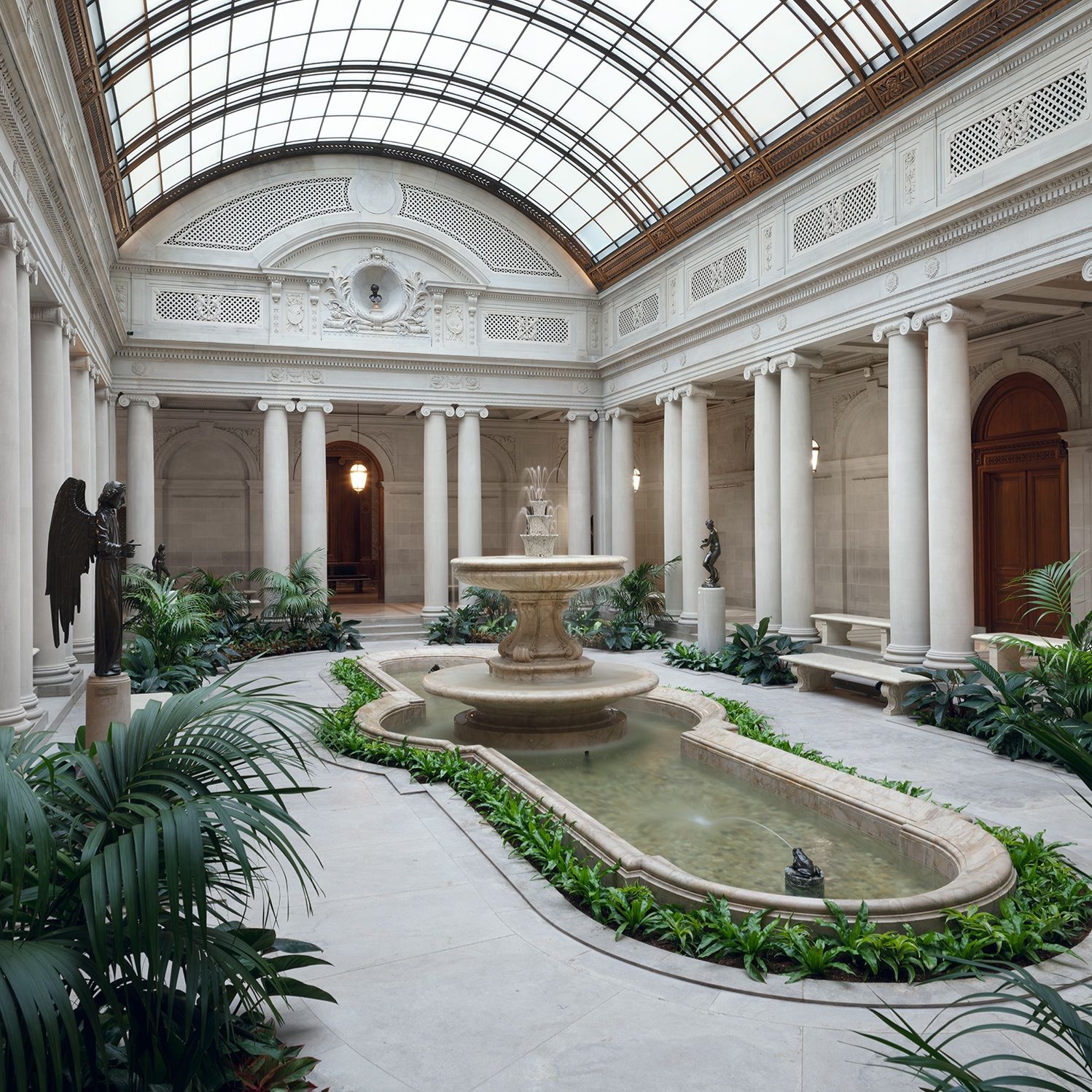
The Frick Collection and Louis Vuitton Cruise 2027 Collection via 360 MAGAZINE.

Louis Vuitton Cruise 2027 Show at Frick

The Louis Vuitton Cruise 2027 show will take place on May 20, 2026, at The Frick Collection in New York City, marking the launch of a three-year museum sponsorship by Louis Vuitton

Louis Vuitton announces their Cruise 2027 show that will be held on May 20 at The Frick Collection, situated along Central Park on Manhattan’s Upper East Side. Nicolas Ghesquière, Artistic Director of Women’s Collections, will present the Cruise collection at the museum, which is housed in one of New York’s last great Gilded Age mansions, offering a unique dialogue between fashion, architecture, and culture. This moment further reflects the House’s enduring commitment to the arts, as Louis Vuitton becomes a principal cultural sponsor of The Frick Collection for the next three years. This Louis Vuitton Cruise collection marks the first that ime a suite of the Frick’s historic first-floor galleries will be activated for a fashion show.

Embodied by the Cruise collections, the spirit of travel and the discovery of emblematic architectural landmarks converge in the choice of this iconic location. Open to the public since 1935, The Frick Collection provides intimate encounters with one of the world’s foremost collections of European fine and decorative arts, with masterworks ranging from the Renaissance to the late nineteenth century. Founded by American industrialist Henry Clay Frick, the museum preserves both his exceptional collection and his renovated historic residence.

Beginning in June 2026, Louis Vuitton will support The Frick Collection’s free monthly Friday evenings through the “Louis Vuitton First Fridays” program, offering free public access to the museum on the first Friday of each month (except January and September from June 2026 through May 2027). 

Additionally, Louis Vuitton will support the Frick’s dynamic exhibitions program and will also be the lead sponsor of the next three major special exhibitions at the Frick, starting with Siena: The Art of Bronze, 1450 –1500 (October 2026 to January 2027). The House will also be lead sponsor of the Frick’s show opening in spring 2027, the first exhibition ever dedicated to the French enameler Susanne de Court— believed to have been the only woman to lead an enamel workshop in Limoges, around 1600. Then, in late 2027 to early 2028, the Frick will present a yet-to-be-announced monographic exhibition of nineteenthcentury paintings, likewise supported at its New York City venue by Louis Vuitton. 

Finally, the House will play an important role in supporting a two-year curatorial position. Created to foster research and engagement, the Louis Vuitton Curatorial Research Associate will be held by Yifu Liu, whose research focuses on cultural exchange and the hybridization of artistic practices between Europe and China in the eighteenth century. In this role, Liu will explore these themes within the context of the Frick’s holdings, including art and fashion of the courts of Louis XV and XVI and of the Qianlong Emperor, and will bring longoverdue attention to the extensive holdings of Asian porcelain in the Frick’s permanent collection. 

Nicolas Ghesquière, Artistic Director of Women’s Collections, says “Presenting the Cruise collection at The Frick Collection offers a unique dialogue between contemporary creation and such a remarkable artistic setting, where, surrounded by masterpieces spanning from the Renaissance onward, we enter into conversation with a place where art, history, and beauty have long been preserved and celebrated. It also marks the beginning of a meaningful relationship with an institution devoted to excellence and cultural heritage, further affirming Louis Vuitton’s commitment to engaging with art spaces that inspire and elevate creative expression.”

Louis Vuitton organizes shows around the world in globally renowned locations and architectural masterpieces, paying tribute to local craftsmanship. The House has organized its shows at, among other sites, the Musée du Louvre, in Paris; the Palais des Papes, in Avignon; the Bob and Dolores Hope Residence by John Lautner, in Palm Springs; the Oscar Niemeyer Museum of Contemporary Art, in Niterói; the Miho Museum by

I.M. Pei, near Kyoto; and the Salk Institute, in California. This new chapter particularly resonates with the House’s Cruise 2020 show at the TWA Flight Center in New York, conceived as a dialogue between Paris and New York, as well as the Cruise 2026 presentation at the Palais des Papes through its cultural appeal as “a place where great theatrical passions are played out.”

Digital nomad destinations: the most stylish cities for remote creatives via 360 MAGAZINE.

How real-time participation became a defining feature of digital culture 

Not long ago, being online mostly meant watching, reading, or scrolling through content. Today, digital culture is shaped by real-time participation, in which users actively engage with content as it unfolds. People no longer just consume content. They react to it, comment on it, chat with other people, and take part in it in real time. Whether it is a livestream, a trending post, or a live event, being part of the moment has become central to the experience.

This shift has changed how digital platforms function. It is no longer just about what is being shared, but how users engage with it as it unfolds. Participation now defines the experience. Being present, responding instantly, and joining conversations are just as important as the content itself.

Where participation happens in real time

Everything is going live, and people are paying attention. Across platforms, real-time formats such as livestreams, online events, and interactive environments are becoming the default. Instead of watching content after it happens, users increasingly prefer to experience it as it unfolds.

Part of the appeal lies in unpredictability. When something is live, there is no pause button and no certainty about what comes next. This creates a stronger sense of authenticity and excitement. Users are not just consuming content. They are reacting to it in the moment alongside others.

This is especially clear in spaces built around interaction, like a live casino like Betway, where timing, reaction, and presence all play a central role. The experience is not only about the outcome. It is about participating in what is happening in real time.

This sense of immediacy keeps people engaged. It creates shared moments, even when participants are physically apart. In a digital environment filled with scheduled, polished content, live experiences stand out as immediate, unscripted, and authentic.

From audience member to participant

Previously, being part of an audience meant simply observing. Today, users expect to actively participate. Comments, reactions, and shares have transformed audiences into contributors rather than passive viewers.

Features such as live chat, duets, stitches, and collaborative tools enable this shift. Users can respond instantly, add their perspective, or build on existing content. Platforms are intentionally designed to encourage this level of interaction. Features like Duet and Stitch on TikTok, for example, allow users to collaborate and engage with content in creative ways.

This reflects a broader structural change in how digital platforms are designed, in which user interaction is no longer optional but built into the core experience.

The power of “now” in digital culture

Timing plays a critical role in digital engagement. When content is live or trending, users feel a strong incentive to engage immediately. This urgency is often driven by FOMO, which influences how quickly people respond to emerging content.

Real-time moments are perceived as more authentic because they unfold without editing or delay. Users experience events simultaneously, which strengthens the sense of connection and relevance.

This explains why trending topics and live events spread rapidly. Users are motivated to participate in what others are discussing in the present moment.

According to the Pew Research Centre, social media users frequently engage with trending content to stay informed and connected to shared experiences. This behaviour highlights how real-time participation supports both social awareness and digital belonging.

Music, media, and the rise of interactive experiences

Music and media are no longer one-directional. Artists now engage directly with audiences through livestreams, listening events, and real-time conversations. This direct interaction strengthens the connection between creators and audiences.

Media platforms have adopted similar approaches. Live polls, Q&A sessions, and instant feedback are increasingly integrated into content formats. Audiences are not only watching. They are influencing what happens next.

In many cases, audience input can shape content outcomes in real time, reinforcing users’ role as active participants rather than observers.

As a result, the distinction between creator and audience is becoming increasingly blurred. Fans can respond, remix, and contribute to content as it develops. Digital content is no longer just delivered. It is experienced collectively.

Always-on platforms and the expectation of instant access

Digital platforms now operate continuously, with new content appearing at all times. This constant availability has shifted user expectations. If content or responses are not immediate, they may be perceived as outdated.

This always-on environment has increased demand for real-time engagement. Users expect frequent updates, quick responses, and continuous interaction. Many check platforms multiple times a day to stay informed and connected.

However, this also introduces pressure for creators. Maintaining visibility requires consistent activity, ongoing engagement, and responsiveness. Sustained participation has become a requirement for relevance in a real-time digital environment.

Participation is the new standard

Digital culture is no longer defined solely by content. It is defined by how people engage with it in real time. Participation has become the standard, shaping how users connect, communicate, and experience digital spaces.

If content does not invite interaction in the moment, it is more likely to be overlooked. Real-time engagement is no longer optional. It is what defines modern digital experiences.

The Founders Who Got Tired of Waiting for Manufacturing to Change

Maria Intscher-Owrang spent 24 years designing for Vera Wang, Calvin Klein, and Alexander McQueen while Phil Cohen sold companies in China and deployed to Afghanistan. Neither expected to end up at the forefront of revolutionizing how things get made. On National Small Business Month, we talked to the co-founders of Simplifyber about how they’re replacing our outdated manufacturing system.

360: Maria, you spent more than two decades at the highest levels of luxury fashion before founding a manufacturing company. What finally pushed you to act?

Maria Intscher-Owrang: Well, it’s not really a secret that the fashion industry has problems. There’s environmental damage, conditions in factories are notoriously less than great, and you also have the chronic financial strain the industry is always under. But what bothered me most was that the industry is so subdivided that nobody was looking at the greater picture. People work in one part of the supply chain and they do not really deviate from it. Some try to make their corner more sustainable, but it’s very hard to feel like you can change the whole thing when you’re only working on a small piece of it.

I waited for years for someone to come along and solve it properly. Then I just got tired of waiting and realized I had to stick my neck out.

360: Phil, you come from a completely different world: military, MIT, building companies in China. How did that background lead you here?

Phil Cohen: The last company I sold was in China, and it put me on factory floors in the south where I saw overwhelming pollution, these long assembly lines, and the conditions the workers were in. We still have factories with literal nets around them so that people aren’t jumping out of windows, and it kind of stayed with me. There had to be a better way to manufacture, not just in terms of the material, but the way the whole system works.

Simplifyber’s my fourth company. I’ve started companies, built them, and sold them. After doing that a few times, you get very clear on what kind of problem is worth your time. This was it.

360: Walk us through what Simplifyber does differently.

Maria Intscher-Owrang: Our products begin as natural fibers in a liquid made of wood pulp, recycled paper, recycled textiles and agricultural fiber. Then, we use that liquid to create 3D shapes directly in a mold, after which the finished parts are bonded together at the molecular level, formed all at once rather than pieced together from flat fabric. That way, we manage t bypass about 60 percent of traditional manufacturing steps and 88 percent of the labor, and because there are no offcuts or intermediate stages, there is essentially no manufacturing waste.

360: That sounds like a difficult sell to industries that got used to doing things the same way for centuries.

Phil Cohen: It is until you tell them about performance and cost. Our materials are lighter than conventional alternatives, with acoustic dampening properties that automotive manufacturers genuinely care about and tunable thermal and electrical conductivity. We are also approaching cost parity with conventional plastics. By making a better-performing material at the same price point as the conventional stuff, we shift the conversation away from ethics and towards practicality.

If you tell manufacturers they’re just getting a better material for the same price instead of some safeless sacrifice for the environment, things tend to go a lot smoother.

360: There has been a lot of conversation about automation displacing garment workers, particularly in developing countries. How do you think about that?

Maria Intscher-Owrang: We want to eliminate the most repetitive and labor-intensive parts of the process so that skilled workers can focus on their craftsmanship. Traditional manufacturing is not disappearing, because there are many products you simply cannot make this way. Where our process can take over a layer of the work, it should, and that frees people whose skills are genuinely irreplaceable to be recognized and compensated accordingly. Right now, those workers are too often positioned as the cheapest part of the chain.

360: What does success look like from here?

Maria Intscher-Owrang: Imagine a factory operator who can dial in a specific material, soft and flexible for a shoe upper or rigid and durable for an automotive interior component, press go, and receive a finished, shaped part from a single machine with no spinning, weaving, or cutting. The material and the geometry formed simultaneously, exactly as specified. That is what we are building toward: not a new material dropped into an old system, but a new system entirely.

Phil Cohen: The category we belong to does not really have a name yet. That is kind of the point.

Simplifyber is headquartered in Raleigh, North Carolina. The company has raised $20 million to date, operates a full-scale production line in-house, and has publicly announced partnerships with Kia for automotive applications and GANNI for footwear. Learn more at simplifyber.com. The U.S. Small Business Administration recognizes May as National Small Business Month.

How I Prepare My Own House for Wildfire, as a Wildland Firefighter Nicholai Allen article via 360 MAGAZINE.

How I Prepare My Own House for Wildfire, as a Wildland Firefighter

By Nicholai Allen, Founder of SAFE SOSS®, Wildland Firefighter

The first time I walked a neighborhood the morning after a fire ran through it, what stayed with me were the houses still standing, and how often the difference came down to small, unglamorous work done weeks or months earlier. A cleared gutter. A bare five feet around the foundation. A woodpile someone had moved off the porch in spring.

May is National Wildfire Awareness Month, and from where I stand, both on active firelines and at my own house in a fire-prone country, it’s the most useful month on the calendar. Three things tend to decide how a home performs when fire arrives: the condition of its exterior, the first five feet around it, and whether the family inside can leave before conditions deteriorate. That work is calm and affordable right now. By August, the window has closed.

Why the Real Work Has to Happen Before Fire Season

Once a Red Flag Warning is issued, the choices left to you narrow fast. Wind builds, humidity drops. By the time you’re packing the car, most of the structural decisions about whether your home survives have already been made.

I’ve spent three seasons on the line, and one pattern repeats every year. The homes that come through best are the ones whose owners did quiet, deliberate work months ahead of any threat. That’s what May is for.

How Wildfires Actually Take Houses Down

From the field, a dominant cause of structure loss is more specific than most people picture. The majority of homes lost in wildfires are ignited by wind-borne embers, small burning fragments that ride the wind, sometimes a mile or more ahead of the active fire front. Research from IBHS shows the same pattern across decades of post-fire investigations.

Embers land on roofs, settle in gutters, blow against fences, work their way under decks, and pull through unscreened attic vents. Many of them smolder quietly for hours before flames become visible. By the time anyone sees fire on a property, the structure is often already burning from within.

Once you understand that embers are the threat, the priority becomes clear. The work centers on keeping small burning fragments out of every place they could land, ignite, or enter the building envelope.

The Walk-Around I Run on My Own House Every Spring

Every May I do the same walk around my property. It takes about an hour. Anyone can do it.

I start with the roof and gutters. Dry needles and leaves are the most common ember catchers on any structure, and the roof presents the largest target a house has. Clearing them out costs nothing and removes one of the most common ember catchers on a typical structure.

Next come the vents: attic, foundation, crawlspaces, etc. Vents are direct ember pathways into a structure, and any screen with openings wider than one-eighth of an inch lets embers through. Even properly screened vents can be overwhelmed during heavy ember activity, which is why most layered defense plans pair permanent screening with a temporary seal-off during the READY phase before evacuation.

Then I look at what fire agencies call Zone 0: the first five feet around the structure. Nothing combustible should sit in this zone, no bark mulch against siding, no firewood stacked on porches, no woven doormats at wood door frames, no patio cushions left out through summer. 

After Zone 0, I check fences. A wooden fence running directly into a structure acts like a wick during an ember storm. Where possible, I recommend you install at least a short metal section as a break before the fence reaches the building, if not entirely metal fence, especially if you have neighbors close to you – that metal fence can act as a potential buffer if a structure next to you catches. 

Last, I check outbuildings, sheds, and the spaces beneath decks. Those are often where fire establishes itself well before anyone realizes the property is involved.

What to Have Ready Before You Ever Smell Smoke

Preparation also includes the work that happens during what fire agencies call the READY phase. Go-bags for every member of the household. Important documents in one accessible folder. A printed evacuation plan with two routes out. Pets factored in. Vehicles fueled and parked facing out.

Sign up for county-level emergency alerts and treat NOAA Red Flag Warnings the same way you’d treat a severe weather advisory. The READY, SET, GO framework agencies use exists because the GO phase leaves you working in minutes. Anything you didn’t handle in READY is no longer available to you. The WATCH DUTY APP has a pre-evacuation notice feature where possible and I recommend everyone download that app and get familiar with it. 

Where Supplemental Tools Fit

After the 2018 Woolsey Fire threatened my family in Ventura County, I spent four years on a problem I kept watching repeat in the field. Some defense systems existed, but they could run $30,000 to $80,000 per home (or more) and were marketed as luxury installations. Most families living in fire-prone neighborhoods had no realistic way to access them. Permanent construction upgrades are essential too but can be cost prohibitive and not possible for many (including myself) to conclude before fires may arrive. 

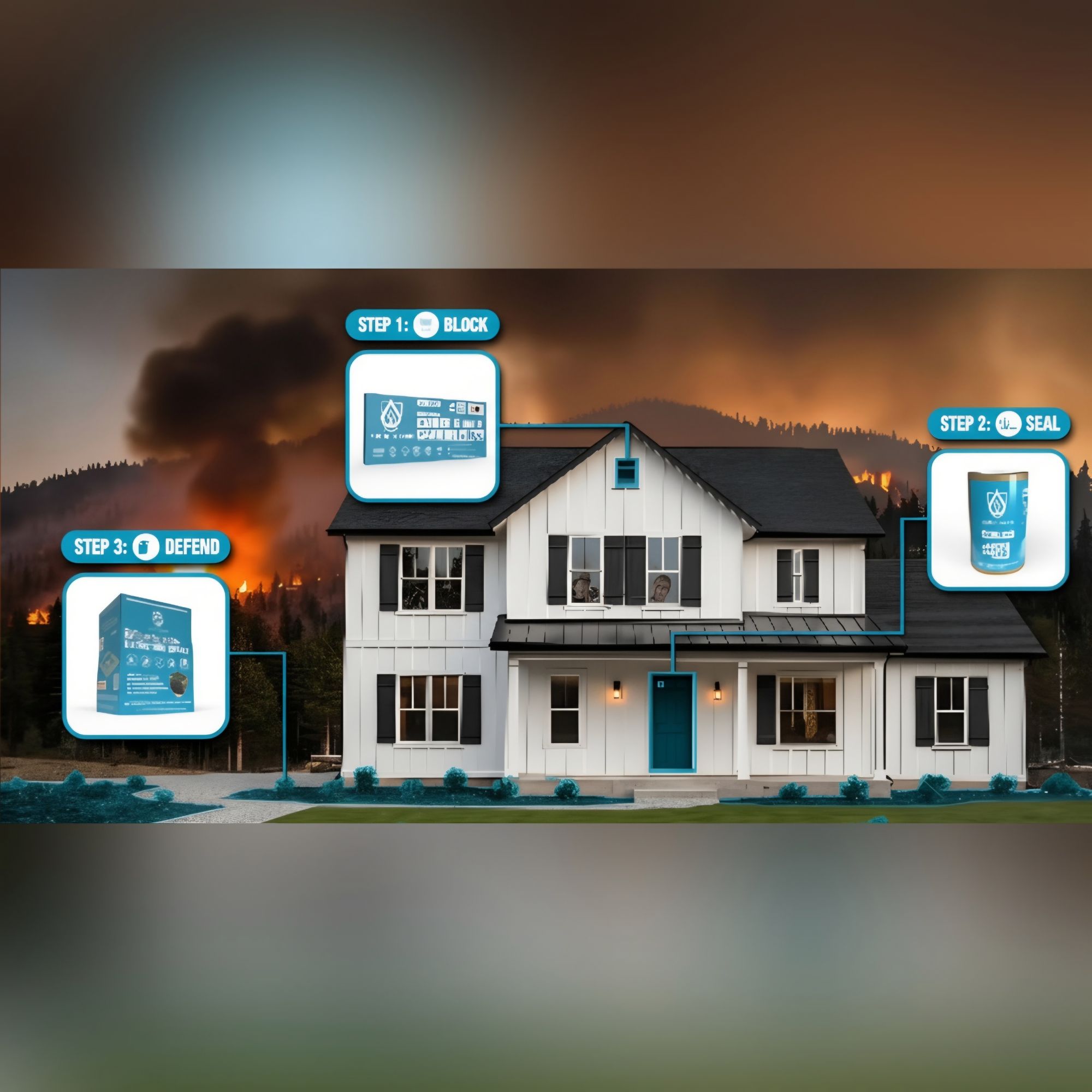
After seeing this pattern repeat year after year, I wanted a practical way for homeowners to actually act on it. After over 5 years that work became SAFE SOSS®, a three-step Block, Seal, Defend system of products available at Lowe’s so they could be accessible to every homeowner. Each step addresses a specific vulnerability I kept seeing repeat on the line:

Block. Universal Ember Guard Carbon Filter

A self-extinguishing poly-carbon matrix that installs behind existing vents without replacing them. Even ⅛” metal mesh struggles to stop fine embers, and this is built to help close that gap. The filter also uses phosphate-infused activated carbon, which helps reduce smoke intrusion during fires in your region, including ones that never reach your property. Stays installed year-round. 

Seal. High-Heat Ember Guard Tape. 

A high-heat resistant fiberglass tape (from the same material used in fire blankets). Designed for last-minute application during the READY phase to seal small gaps where embers collect or enter the structure, door thresholds, garage door edges, roof junctions, utility penetrations, eaves, weep holes. Removes cleanly when fire weather passes. Shelf life is up to ten years, so a roll can sit in the garage until needed.

Defend. Twice Over Wildfire Risk-Reduction Spray. 

Connects to a standard garden hose and applies a clear, eco-friendly phosphate formula to wood, mulch, and vegetation around the home. While formulated to be fluorine-free, the fundamental chemistry is in the same family as proven retardants used in aerial firefighting, and it helps slow ignition in fuels close to the structure. Five-year shelf life. Use it on wood siding, decking, fencing, and combustible landscaping, not on vinyl, stucco, glass, or interior surfaces. Finally, spraying the vents where you have the filters installed will help harden them before embers and fire may sweep  through. 

The pieces are designed to be deployed during the READY phase, before evacuation, as a supplemental layer alongside defensible space and home hardening. They don’t replace clearing your Zone 0, screening your vents, or having a go-bag ready. Like everything else in this article, they assume you’ll already be off the property by the time fire arrives.

FAQ

When should I actually start preparing each year? Spring is the practical window. May is ideal because conditions are calm enough to do the work, and you’re ahead of peak fire weather across most of the western U.S. Waiting until smoke is on the horizon to decide which trees need limbing rarely ends well. Even earlier in spring is good if you have a lot of vegetation and will need to burn piles before burn bans are issued. 

What’s the highest-impact thing I can do this weekend without spending money? Walk your roof and gutters and clear them. It takes a couple of hours and removes one of the most common ember catchers on a typical house. From there, move anything combustible out of the first five feet around the structure, like mulch, firewood, doormats, cushions.

If you’re going to do one thing this weekend, start with the five-foot zone and your vents. Identify gaps and vents that need protection from ember entry, and combustibles that need to be trimmed or cleared back away from your structures, as well as vegetation, outbuildings, pergolas, etc that could be treated with Twice Over Spray

Should I plan to stay and defend my home? No. Defending a structure during an active wildfire is dangerous work that requires equipment, training, and crew support most homeowners don’t have. The plan should always be to harden the property in advance, deploy whatever supplemental defenses you have during the READY phase, and evacuate well before any GO order from local authorities. 

What’s the difference between a Red Flag Warning and an evacuation order? A Red Flag Warning is a fire weather advisory from the National Weather Service, it means heat, low humidity, and wind are aligning to create dangerous fire conditions in your region. An evacuation order is issued by local authorities once a specific fire threatens your area. Treat a Red Flag Warning as your trigger to get ready: charge phones, fuel vehicles, stage go-bags. Treat the GO order as your cue to leave, no questions asked.

What Holds When the Wind Picks Up

Every plan should put people ahead of property. The reason to prepare in May is so that when conditions shift later in the season, the thinking is already done and your family can leave clean.

Use this month for the walk-around. Talk to your neighbors. Sign up for the alerts. Stage your supplemental defenses where you can reach them in a hurry. The work is quiet and may seem unremarkable, but in my experience, it can carry homes through fire seasons.

About the Author
Nicholai Allen is the founder of SAFE SOSS® and an active wildland firefighter. Learn more at safesoss.com.