


By Nicholai Allen, Founder of SAFE SOSS®, Wildland Firefighter
The first time I walked a neighborhood the morning after a fire ran through it, what stayed with me were the houses still standing, and how often the difference came down to small, unglamorous work done weeks or months earlier. A cleared gutter. A bare five feet around the foundation. A woodpile someone had moved off the porch in spring.
May is National Wildfire Awareness Month, and from where I stand, both on active firelines and at my own house in a fire-prone country, it’s the most useful month on the calendar. Three things tend to decide how a home performs when fire arrives: the condition of its exterior, the first five feet around it, and whether the family inside can leave before conditions deteriorate. That work is calm and affordable right now. By August, the window has closed.
Why the Real Work Has to Happen Before Fire Season
Once a Red Flag Warning is issued, the choices left to you narrow fast. Wind builds, humidity drops. By the time you’re packing the car, most of the structural decisions about whether your home survives have already been made.
I’ve spent three seasons on the line, and one pattern repeats every year. The homes that come through best are the ones whose owners did quiet, deliberate work months ahead of any threat. That’s what May is for.
How Wildfires Actually Take Houses Down
From the field, a dominant cause of structure loss is more specific than most people picture. The majority of homes lost in wildfires are ignited by wind-borne embers, small burning fragments that ride the wind, sometimes a mile or more ahead of the active fire front. Research from IBHS shows the same pattern across decades of post-fire investigations.
Embers land on roofs, settle in gutters, blow against fences, work their way under decks, and pull through unscreened attic vents. Many of them smolder quietly for hours before flames become visible. By the time anyone sees fire on a property, the structure is often already burning from within.
Once you understand that embers are the threat, the priority becomes clear. The work centers on keeping small burning fragments out of every place they could land, ignite, or enter the building envelope.
The Walk-Around I Run on My Own House Every Spring
Every May I do the same walk around my property. It takes about an hour. Anyone can do it.
I start with the roof and gutters. Dry needles and leaves are the most common ember catchers on any structure, and the roof presents the largest target a house has. Clearing them out costs nothing and removes one of the most common ember catchers on a typical structure.
Next come the vents: attic, foundation, crawlspaces, etc. Vents are direct ember pathways into a structure, and any screen with openings wider than one-eighth of an inch lets embers through. Even properly screened vents can be overwhelmed during heavy ember activity, which is why most layered defense plans pair permanent screening with a temporary seal-off during the READY phase before evacuation.
Then I look at what fire agencies call Zone 0: the first five feet around the structure. Nothing combustible should sit in this zone, no bark mulch against siding, no firewood stacked on porches, no woven doormats at wood door frames, no patio cushions left out through summer.
After Zone 0, I check fences. A wooden fence running directly into a structure acts like a wick during an ember storm. Where possible, I recommend you install at least a short metal section as a break before the fence reaches the building, if not entirely metal fence, especially if you have neighbors close to you – that metal fence can act as a potential buffer if a structure next to you catches.
Last, I check outbuildings, sheds, and the spaces beneath decks. Those are often where fire establishes itself well before anyone realizes the property is involved.
What to Have Ready Before You Ever Smell Smoke
Preparation also includes the work that happens during what fire agencies call the READY phase. Go-bags for every member of the household. Important documents in one accessible folder. A printed evacuation plan with two routes out. Pets factored in. Vehicles fueled and parked facing out.
Sign up for county-level emergency alerts and treat NOAA Red Flag Warnings the same way you’d treat a severe weather advisory. The READY, SET, GO framework agencies use exists because the GO phase leaves you working in minutes. Anything you didn’t handle in READY is no longer available to you. The WATCH DUTY APP has a pre-evacuation notice feature where possible and I recommend everyone download that app and get familiar with it.
Where Supplemental Tools Fit
After the 2018 Woolsey Fire threatened my family in Ventura County, I spent four years on a problem I kept watching repeat in the field. Some defense systems existed, but they could run $30,000 to $80,000 per home (or more) and were marketed as luxury installations. Most families living in fire-prone neighborhoods had no realistic way to access them. Permanent construction upgrades are essential too but can be cost prohibitive and not possible for many (including myself) to conclude before fires may arrive.
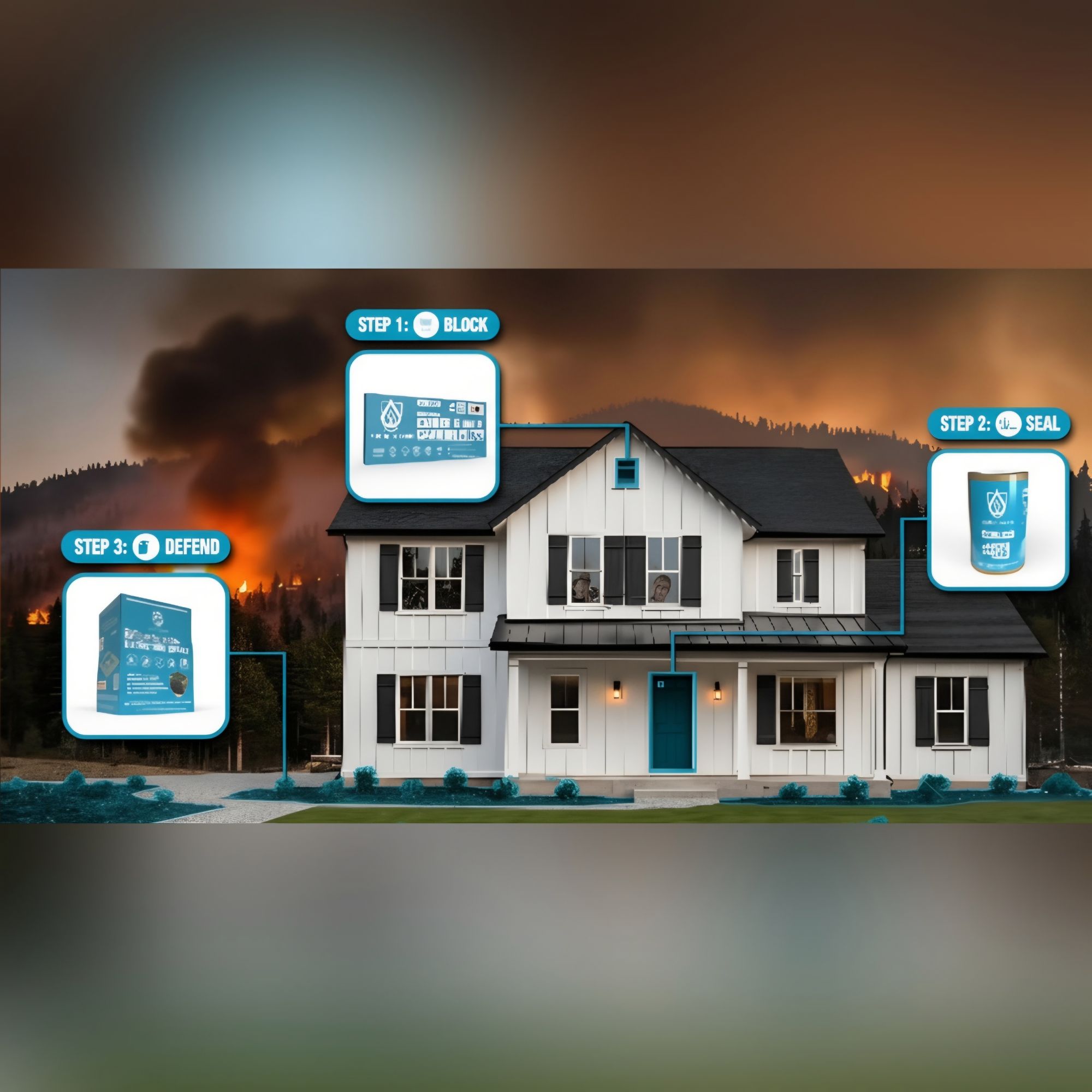
After seeing this pattern repeat year after year, I wanted a practical way for homeowners to actually act on it. After over 5 years that work became SAFE SOSS®, a three-step Block, Seal, Defend system of products available at Lowe’s so they could be accessible to every homeowner. Each step addresses a specific vulnerability I kept seeing repeat on the line:
Block. Universal Ember Guard Carbon Filter
A self-extinguishing poly-carbon matrix that installs behind existing vents without replacing them. Even ⅛” metal mesh struggles to stop fine embers, and this is built to help close that gap. The filter also uses phosphate-infused activated carbon, which helps reduce smoke intrusion during fires in your region, including ones that never reach your property. Stays installed year-round.
Seal. High-Heat Ember Guard Tape.
A high-heat resistant fiberglass tape (from the same material used in fire blankets). Designed for last-minute application during the READY phase to seal small gaps where embers collect or enter the structure, door thresholds, garage door edges, roof junctions, utility penetrations, eaves, weep holes. Removes cleanly when fire weather passes. Shelf life is up to ten years, so a roll can sit in the garage until needed.
Defend. Twice Over Wildfire Risk-Reduction Spray.
Connects to a standard garden hose and applies a clear, eco-friendly phosphate formula to wood, mulch, and vegetation around the home. While formulated to be fluorine-free, the fundamental chemistry is in the same family as proven retardants used in aerial firefighting, and it helps slow ignition in fuels close to the structure. Five-year shelf life. Use it on wood siding, decking, fencing, and combustible landscaping, not on vinyl, stucco, glass, or interior surfaces. Finally, spraying the vents where you have the filters installed will help harden them before embers and fire may sweep through.
The pieces are designed to be deployed during the READY phase, before evacuation, as a supplemental layer alongside defensible space and home hardening. They don’t replace clearing your Zone 0, screening your vents, or having a go-bag ready. Like everything else in this article, they assume you’ll already be off the property by the time fire arrives.
FAQ
When should I actually start preparing each year? Spring is the practical window. May is ideal because conditions are calm enough to do the work, and you’re ahead of peak fire weather across most of the western U.S. Waiting until smoke is on the horizon to decide which trees need limbing rarely ends well. Scheduling tree pruning services in the spring can help remove hazardous branches and improve tree structure before fire season arrives. Even earlier in spring is good if you have a lot of vegetation and will need to burn piles before burn bans are issued.
What’s the highest-impact thing I can do this weekend without spending money? Walk your roof and gutters and clear them. It takes a couple of hours and removes one of the most common ember catchers on a typical house. From there, move anything combustible out of the first five feet around the structure, like mulch, firewood, doormats, cushions.
If you’re going to do one thing this weekend, start with the five-foot zone and your vents. Identify gaps and vents that need protection from ember entry, and combustibles that need to be trimmed or cleared back away from your structures, as well as vegetation, outbuildings, pergolas, etc that could be treated with Twice Over Spray.
Should I plan to stay and defend my home? No. Defending a structure during an active wildfire is dangerous work that requires equipment, training, and crew support most homeowners don’t have. The plan should always be to harden the property in advance, deploy whatever supplemental defenses you have during the READY phase, and evacuate well before any GO order from local authorities.
What’s the difference between a Red Flag Warning and an evacuation order? A Red Flag Warning is a fire weather advisory from the National Weather Service, it means heat, low humidity, and wind are aligning to create dangerous fire conditions in your region. An evacuation order is issued by local authorities once a specific fire threatens your area. Treat a Red Flag Warning as your trigger to get ready: charge phones, fuel vehicles, stage go-bags. Treat the GO order as your cue to leave, no questions asked.
What Holds When the Wind Picks Up
Every plan should put people ahead of property. The reason to prepare in May is so that when conditions shift later in the season, the thinking is already done and your family can leave clean.
Use this month for the walk-around. Talk to your neighbors. Sign up for the alerts. Stage your supplemental defenses where you can reach them in a hurry. The work is quiet and may seem unremarkable, but in my experience, it can carry homes through fire seasons.
—
About the Author
Nicholai Allen is the founder of SAFE SOSS® and an active wildland firefighter. Learn more at safesoss.com.