‘With emotional lyrics and deeply immersive tracks, Kunmie continues to resonate with listeners, crafting heartstrings-tugging compositions that promise to be Afrobeat masterpieces.’ – Vaughn Lowery
As of late, 360 MAGAZINE had an opportunity to chat with fast-rising global music sensation and chart-topping artist Kunmie about his viral new single, Gorgeous.
The song features GRAMMY nominee Lojay to create a stunning afro-R&B-soul offering that has already surpassed 10 million plays online and inspired over 300,000 TikTok videos.
One of Nigeria’s most promising new talents, Kunmie, whose 2025 single Arike surged to the top 5 on the Official UK Afrobeats Chart, secured a top spot in the Official Nigeria Top 100 and found its place in over 20 countries worldwide. He boasts a combined 470K+ followers on various social media platforms.
Your new track ‘Gorgeous’ with Lojay is fast becoming a summer smash, why do you think that is?
It’s the kind of song you can listen to and just enjoy, and I think that’s what people are connecting with. There’s something about the song and the feeling of the song that makes it fit naturally into this period, and I’m just grateful that people are embracing it the way they are. I think when you make something genuine and people can feel that, it has a way of finding its audience.
What was your creative process for ‘Gorgeous’? And how was it different from your other songs?
I had a demo initially, but I felt it wasn’t quite where I wanted it to be for like a year or so, so I went back to it and reworked it until it felt right. I tend to overthink everything I do, so I spent a lot of time making sure the song was exactly where I wanted it to be. I think that process really helped shape the final version of “Gorgeous.”
How have you accumulated such a massive following of listeners on Spotify and TikTok?
Omo, ask Bimbola and PJ, the marketing wizards behind the scenes! But honestly, I think it’s a mix of making music that people genuinely connect with, staying consistent and having a solid team that knows how to get the music in front of the right audience. I just focus on making the music and being myself, and I’m grateful that people continue to listen, share and connect with it.
If you had one gem to leave for an aspiring artist, what would it be?
I would tell them not to go into music thinking it’s going to be easy or that success will come quickly. You have to be ready for the challenges that come with it and be willing to put in the work. If you truly love music and you’re ready to commit to the journey, then go for it. But you have to understand what you’re getting yourself into. But honestly, I would tell them to really think about whether they want to do this, because it’s not an easy journey.
You grew up in Agege in Nigeria’s cultural capital, how has that environment affected the music you’re making now?
It’s a place with a lot of life, different experiences and different kinds of people. I think those experiences become a part of you as you grow up, and they naturally find their way into your music.
If you were to look in the mirror right now, what would you tell your 11-year-old self?
We’re a millionaire now! Don’t mind me, but yeah, I’d probably just tell him I’m proud of you.
You’ve come a long way, and I think 11-year-old me would be happy to see where we are now.
Exclusive artwork inspired by Diaz’s OMAKASE album and a special Toyota Music Den performance at Lollapalooza bring fans closer to the artist’s creative journey
Toyota is partnering with 3x Latin Grammy-nominated Puerto Rican artist Álvaro Díaz to celebrate music discovery, cultural connections and fan engagement through a series of exclusive artwork inspired by his latest album, OMAKASE. The collaboration brings together Toyota’s Japanese heritage and Díaz’s creative vision, which blends Japanese and Puerto Rican influences throughout the album.
Conceived as a curated experience inspired by the Japanese dining tradition in which a chef guides guests through a personalized journey, OMAKASE explores the intersection of cultures, creativity and discovery. It debuted at No. 1 on Spotify’s Top Albums Debut Global chart and reached No. 1 in over 16 countries on Apple Music. To date it has surpassed 200 million global streams. The album’s themes made Toyota a natural partner to help connect fans with Díaz’s music and artistic journey.
“At Toyota, we’re passionate about helping fans discover the artists and cultural movements shaping what’s next in music,” said Paul Doleshal, general manager, motorsports and sponsorships, Toyota. “We’re thrilled to work with Álvaro Díaz, whose creativity, ambition and originality make him an exciting partner. From exclusive artwork collaborations to his upcoming performance at the Toyota Music Den during Lollapalooza, we’re proud to create experiences that bring fans closer to the artists they love while helping drive music discovery forward.”
As part of the partnership, Toyota and Díaz collaborated with two distinctive artists to create a series of limited-edition posters inspired by the OMAKASE tracklist and aesthetic. Drawing from both Japanese and Puerto Rican artistic traditions, the collection features work from Shingo Yamazaki, a Japanese Korean American oil painter whose pieces explore identity, home and nostalgia, and Bikismo, the legendary Puerto Rican graffiti artist and muralist known for his vibrant, hyper-realistic metallic style. Together, the artwork celebrates the cultural fusion at the heart of the album and the partnership.
Fans will have an opportunity to receive a limited-edition poster during Díaz’s special performance at the Toyota Music Den stage at Lollapalooza. The four-poster series brings the creative world of OMAKASE to life through a vibrant, street-style fusion of Latino and Japanese culture. Fans nationwide will also have opportunities to access the artwork through Toyota Latino social channels.
The collaboration builds on Toyota’s commitment to supporting artists through unique music experiences that bring fans closer to the people shaping today’s music landscape. Earlier this year, Toyota introduced OMAKASE to fans during a listening experience at Sueños Music Festival, also in Chicago, and will continue the partnership through additional projects, including Sounds of the Road, presented by Toyota and SiriusXM. This exclusive performance and interview series features emerging and established artists, and Álvaro’s episode will launch later this year in Spanish.
For more information on the partnership and videos on the creative behind the posters, visit www.toyota.com/espanol/music/ and follow Toyota Latino on social media.
Creating beautiful, versatile hairstyles has become easier than ever thanks to modern hair solutions like the human hair half wig and drawstring wig. These two popular options from Beautyforever are designed to give women instant transformation without damaging their natural hair. Whether you want extra volume, added length, or a completely new look, these human hair pieces allow you to achieve salon-quality styles in minutes.
Beautyforever is known for producing high-quality human hair half wigs and drawstring wigs that blend naturally with your own hair. Because they are made from 100% human hair, they offer realistic movement, softness, and styling flexibility. In this article, we will explore the benefits of both products and the best hairstyles you can create using them.
What Is a Human Hair Half Wig?
A human hair half wig is designed to blend with your natural hair while covering only part of your head. Unlike a full wig, a half wig allows the front section of your natural hair to remain visible, creating a seamless transition between your own hair and the wig.
One of the biggest advantages of a human hair half wig is its realistic appearance. Since it is made from real human hair, you can curl, straighten, or style it just like your own hair. It also responds naturally to heat styling tools, allowing you to create countless hairstyles.
If you’re looking for premium-quality beautyforever hair, the brand’s human hair half wigs are known for their soft texture, full volume, and natural shine. They are lightweight and breathable, making them comfortable for all-day wear while helping users achieve salon-quality hairstyles at home.
What Is a Drawstring Wig?
A drawstring wig is a type of wig that comes with an adjustable drawstring and combs inside the cap. This allows the wig to be secured tightly and comfortably on your head. It is designed for quick installation, making it ideal for beginners or anyone who wants a fast styling solution.
Beautyforever drawstring wigs are often made from high-quality human hair, which means they offer a natural look and can be styled in multiple ways. The drawstring feature helps create a snug fit, making the wig feel secure even during daily activities.
Unlike traditional wigs, beautyforever drawstring wigs are easy to put on and remove, making them perfect for busy lifestyles.
Why Choose Beautyforever Human Hair Half Wig and Drawstring Wig?
Both the human hair half wig and drawstring wig offer unique benefits that make them essential beauty tools:
These features make Beautyforever wigs a great choice for women who want beauty, convenience, and versatility in one product.
Best Hairstyles You Can Create
1. Sleek Straight Look
A sleek straight hairstyle is one of the most timeless and elegant looks you can achieve. With a Beautyforever human hair half wig, you can add smooth length and volume while keeping your natural hairline visible. A drawstring wig also creates a polished straight style that looks professional and clean.
This hairstyle is perfect for:
Office wear
Business meetings
Formal events
Everyday elegance
2. Voluminous High Ponytail
A high ponytail is bold, stylish, and easy to wear. A human hair half wig gives you the extra fullness needed to create a thick, glamorous ponytail. Meanwhile, a drawstring wig can be pulled into a ponytail style quickly thanks to its secure fit.
This look is ideal for:
Gym days
Casual outings
Fashion-forward events
3. Soft Waves for Everyday Glam
Soft waves are one of the most popular hairstyles because they look natural and effortless. Beautyforever human hair wigs hold curls beautifully, allowing you to create long-lasting waves.
A human hair half wig blends perfectly with your natural hair to create soft, flowing waves. A drawstring wig also allows you to achieve a full wavy look in minutes.
4. Glamorous Loose Curls
Loose curls add instant glamour to any look. Whether you are attending a wedding, party, or special event, curls always make a statement.
Both the human hair half wig and drawstring wig can be curled using heat tools, giving you bouncy, long-lasting curls that look natural and soft.
5. Half-Up, Half-Down Style
The half-up, half-down hairstyle is trendy and versatile. It combines elegance with casual beauty.
A human hair half wig is perfect for this style because it already blends with your natural hair. You can easily pull the top section into a bun or ponytail while leaving the rest flowing.
A drawstring wig also works well for this look, especially when you want a quick and full hairstyle.
6. Chic Low Bun
A low bun is a classic hairstyle that works for both formal and casual settings. With a human hair half wig, you can create a fuller bun with added volume. A drawstring wig makes it even easier to gather the hair into a smooth, elegant bun.
This style is perfect for:
Weddings
Work environments
Formal dinners
7. Side-Swept Glam Look
A side-swept hairstyle adds softness and elegance to your appearance. You can create this look using either a human hair half wig or a drawstring wig by sweeping the hair to one side and adding curls or waves.
This style is great for romantic occasions and photoshoots.
8. Layered Natural Look
Layered hairstyles give movement and dimension to your hair. Beautyforever human hair wigs can be trimmed and styled into layers for a more personalized look.
Both the human hair half wig and drawstring wig can be customized by a stylist to match your face shape and personal style.
Human Hair Half Wig vs. Drawstring Wig
While both products are made for convenience and beauty, they serve slightly different purposes.
A human hair half wig is best for blending with your natural hair and creating seamless styles. It is ideal for people who want a natural hairline and flexible styling options.
A drawstring wig, on the other hand, is perfect for quick installation and secure wear. It is great for beginners or anyone who wants a full hairstyle in minutes without blending their natural hair.
Many women choose to use both depending on the occasion and desired look.
How to Care for Your Beautyforever Wigs
Proper care ensures your wigs last longer and stay beautiful:
Wash with sulfate-free shampoo
Use moisturizing conditioner regularly
Detangle gently with a wide-tooth comb
Avoid excessive heat styling
Air dry whenever possible
Store on a wig stand to maintain shape
Sleep with a satin bonnet for protection
With proper care, both your human hair half wig and drawstring wig can last for a long time while maintaining their natural beauty.
Final Thoughts
The Beautyforever human hair half wig and drawstring wig are powerful beauty tools that offer flexibility, convenience, and natural-looking results. Whether you want a quick everyday hairstyle or a glamorous look for a special occasion, these wigs make it easy to transform your appearance in minutes.
From sleek straight styles and voluminous ponytails to soft waves and elegant buns, the styling possibilities are endless. Because they are made from real human hair, they allow you to enjoy beauty without compromise.
If you are looking for effortless styling, natural beauty, and long-lasting quality, Beautyforever human hair wigs are an excellent choice for your hair collection.
Museum and gallery websites often treat the exhibition image as the page.
A full-screen installation shot loads first. Motion follows. The title appears over the image, while dates, artists, curators, ticket details, and supporting context sit behind tabs, sliders, or JavaScript.
The result can look exceptional in a design review and still perform poorly as a publishing system.
The risk has grown with AI Overviews. Google can now answer questions about an exhibition before the searcher opens an institution’s site. If the museum page is slow, thin on crawlable text, or hard to index, the summary may rely on press coverage, listings, or other secondary sources instead.
The visual-first web is not invisible because AI cannot process images. It becomes invisible when the facts surrounding those images are difficult to retrieve.
The Image Payload Became the Page
Images are already the heaviest part of the typical web page. The 2025 Web Almanac found that the median mobile homepage weighed 2.56 MB, with images accounting for 1,059 KB and JavaScript adding another 697 KB.
Museum sites can exceed that pattern quickly. They need high-resolution artwork, installation photography, collection thumbnails, video, interactive timelines, and custom transitions. The problem is not using those assets. It is loading too many before the visitor or search crawler reaches the exhibition information.
A 6 MB hero image does not communicate more authority than a well-sized responsive version. A carousel containing 20 installation views does not need to download every slide on first load. Text should not wait for a client-side animation to finish before appearing.
Performance also affects the people museums are trying to reach. Visitors may search on mobile while traveling, using public Wi-Fi, or standing outside the venue. The page should deliver the exhibition name, location, dates, price, and booking route before the full visual layer finishes loading.
The design question is not whether the site should feel like the institution. It is which assets have earned a place in the first screen.
AI Overviews Need Evidence They Can Retrieve
Google says pages must be indexed and eligible for a search snippet to appear in its generative AI features. Its current guidance also tells site owners to keep content crawlable, use clear technical structure, and follow JavaScript SEO practices.
That creates a weak point for exhibition pages built as visual shells.
An image may contain the artist’s name, exhibition title, and opening dates as part of the artwork. A human can read it. Search systems still work better when those facts also appear as text, headings, metadata, and structured page elements.
Google’s image guidance makes the relationship explicit. It uses nearby text, captions, titles, filenames, and alt text alongside computer vision to understand an image.
Traditional rankings do not guarantee an AI citation either. Ahrefs analyzed 863,000 search results and four million AI Overview URLs in 2026. Only 37.9% of cited URLs also appeared within the first 10 result blocks for the same query.
That means institutions cannot rely on a strong domain name or an old first-page position. Their exhibition pages need to supply direct answers to the related questions AI systems generate: who is included, what period the work covers, why the exhibition matters, where it is held, and when it closes.
Without those facts, the museum may provide the subject while another publisher receives the citation.
Museums Already Own the Best Source Material
The irony is that museums have exactly the material AI search is supposed to value.
They hold curator essays, provenance records, object metadata, installation photography, conservation research, artist biographies, lecture transcripts, and archival video. The weakness is often how that material is connected and published.
Culture24’s “Let’s Get Real” review said the cultural sector was still struggling to evaluate online success more than a decade after its first research program. Its earlier report had been downloaded nearly 24,000 times, showing how persistent the question remained.
Some institutions are moving in a stronger direction.
ArtDaily reported that the Museo Nacional del Prado launched Canal Prado in 2026 to gather and organize its growing library of art videos and lectures. It also covered the ALBERTINA’s first online catalogue raisonné of Gustav Klimt drawings, which turned collection material into a searchable research resource rather than a simple image gallery.
Those projects give each object, lecture, or topic a stable destination with its own context.
The same principle should apply to an exhibition. One page should contain the essential facts, curatorial argument, named works, credits, accessible image descriptions, related events, press material, and booking information. Video transcripts and object records should link back to it.
That structure serves visitors, researchers, journalists, and AI systems without writing a separate version for each one.
Keep the Visual Experience, Expose the Facts
The fix is not turning every museum site into a plain database.
It is separating the visual experience from the information architecture, then making both work together.
A release checklist should cover:
Server-rendered exhibition titles, dates, venue details, and summaries
Responsive AVIF or WebP images with width and height attributes
Descriptive filenames, captions, and useful alt text
Lazy loading below the first screen
Indexable URLs for exhibitions, artists, objects, videos, and events
Article, Event, VideoObject, and organization markup where accurate
XML sitemaps that include current exhibition and image URLs
Transcripts for lectures and curator videos
Internal links between collection records and exhibition pages
Search Console checks for indexing, Core Web Vitals, and AI-feature visibility
The build brief should ask studios that handle design-heavy, visual-first builds to protect the institution’s art direction without hiding its publishing layer. That means designers, developers, curators, accessibility specialists, and content teams agreeing on what must appear in the page source before motion and interaction are added.
Google does not require a special AI file or a rewritten “GEO” version of every page. It asks for useful content, clear structure, crawlable access, and strong image and video practices.
Museums do not lack distinctive content. They risk packaging it in a way that makes secondary coverage easier to retrieve than the institution itself.
The next generation of cultural websites should still make people want to see the work in person. They should also make the institution the easiest source to find, understand, and cite.
GRAMMY-nominated artist DESTIN CONRAD continues his exploration of Caribbean-inspired sounds with his new single, “I LOVE YOUR BODY,” a genre-blending anthem that fuses dancehall, reggae, and R&B into a bold, flirtatious celebration of rhythm, confidence, and desire. With buoyant percussion, rolling basslines, and DESTIN’s airy delivery, the track channels the excitement of immediate attraction through a performance that feels effortless and self-assured. Listen HERE.
Shot in Portland, Jamaica, the official video for “I LOVE YOUR BODY” embraces the spirit of dancehall culture, reimagining it with DESTIN at the center. Daytime vignettes give way to neon-lit club scenes, where bodies collide, flirtation crescendos, and movement becomes a language of its own. Watch HERE.
Earlier this month, DESTIN unveiled “NERVOUS,” produced by longtime collaborator Louie Lastic. Built around a syncopated, multi-layered dancehall groove sampling the viral rendition of “Midu Mountain Song,” the track finds DESTIN riding the riddim through fluid vocals and sharp lyricism. Directed by Zev York, the accompanying visual translates that energy into motion as DESTIN and a crew of friends move through bold colors, statement prints, bubbling waistlines, and sharp footwork. Watch HERE.
Following a sold-out performance at Sony Hall for the Blue Note Jazz Festival and a standout set at the Montreal Jazz Festival, DESTIN launched the second leg of his wHIMSY! Tour on July 17, building on a sold-out first run that included multiple nights in Los Angeles and New York City. The tour continues this summer with appearances at Lollapalooza, Outside Lands, Japan’s Summer Sonic, and Broccoli City this fall. Tickets are available at destinconrad.com.
This spring, DESTIN released the critically acclaimed alt-jazz project wHIMSY!, featuring Terrace Martin, James Fauntleroy, Keyon Harrold, Vanisha Gould, and Ambré. The album debuted at No. 1 on Apple Music’s Jazz chart and No. 3 on Billboard’s Contemporary Jazz Albums chart, with VIBE naming it one of the year’s best releases and the Los Angeles Times calling it “a masterclass.” The project followed a landmark year for his debut album LOVE ON DIGITAL, which earned a GRAMMY nomination for Best Progressive R&B Album, was named Billboard’s No. 1 R&B Album of the Year, and surpassed 60 million global streams.
Whether moving through R&B, jazz, or now reggae, DESTIN CONRAD follows instinct over convention, carving a path defined by conviction and an unwavering commitment to creativity and vision.
People have been asking strangers for a read on their lives for about as long as there have been strangers to ask. What has changed is the setting. The velvet curtain and the storefront sign have given way to the Internet, and the person offering the insight might be three time zones away. Someone who once searched for a psychic reading near me now scrolls through a roster of profiles and starts a session before the kettle boils. The catch is that there are hundreds of these platforms, not all worth your money, and their marketing sounds identical. Here are four worth knowing.
TL;DR
Nebula — Best for chat-based love & self-discovery readings;
Psychic Source — Best for phone & medium readings;
Mysticsense — Best for specialty filters & tarot readers;
Spiritual Blossom — Best for low-cost, multi-channel readings.
Nebula
Nebula is the largest of the four and the most modern in feel. It opens with a matching quiz that takes your birth details and the question you are carrying, then returns a shortlist rather than a directory. Around 900 advisors work at any hour, and the center of gravity is the love psychic reading: relationships, patterns, and self-discovery. You reach them by live chat, with audio calls and email also offered, but no video. Rates begin around $1 per minute, and subscriptions of roughly $7.99 weekly or $49.99 yearly sit on top of that rather than replacing it. Nebula has a 4.3-star rating on Trustpilot, and the split is instructive: praise for fast replies and the matching step, and complaints about renewals after a cheap first charge.
Psychic Source
Psychic Source has been operating since the late 1980s, which in this industry is close to geological time. That longevity buys screening; advisors complete test readings before they are listed, and the platform offers a stated assurance: if you are unhappy with your last paid reading by phone, chat, or video, the platform credits up to 20 minutes back to try someone else. For a first-timer, that is the difference between a bad match costing $60 and costing nothing. It is also the strongest of the four for a psychic medium reading spoken aloud rather than typed, with a deep bench of mediums and clairvoyants. The trade-off is price: standard rates run $4.99 to $18.99 per minute, and while new customers start as low as $0.66, that cliff is steep. Cost is the complaint raised most often on Trustpilot.
Mysticsense
If you already know what you want, Mysticsense is built for you. Its filtering is the most granular here, by the tools an advisor uses, the style they read in, and when they are free, making it the easiest place to line up a psychic tarot reading with a particular deck or spread rather than a generalist who also owns cards. Readers set their rates, roughly $0.99 to $10.99 per minute, by chat, phone, or video. Understand the free minutes first: five are credited after a deposit of at least $10, not handed over up front. And on any marketplace where independent readers set their standards, quality varies. The platform’s Trustpilot score is 4.6 stars.
Spiritual Blossom
Spiritual Blossom is the newest name here and competes on price and tone. Rates start around $1.18 per minute, shown on each profile before you connect, not after. It offers four ways to reach an advisor via phone, live chat, text, and video, and operates a stated no-negativity policy: no curses, no blocks, and none of the fear-based upsells. The network is smaller, so there are fewer specialists available, and there is no mobile app. Its Trustpilot page carries a high score, though many reviews come from advisors describing their recruitment rather than clients describing readings.
Which Platform Should You Pick?
Decide the format first: phone or video suits people who want tone and back-and-forth; chat suits anyone who would rather stay off-camera. Then check whether the platform has real depth in your topic. Finally, weigh what a bad match costs: free minutes, transparent terms and conditions, and visible rates all limit the downside.
For a first psychic reading, Nebula is a reasonable place to begin: the quiz does the shortlisting, the entry rate makes a 15-minute session a small commitment, and the chat leaves a record to reread later.
Frequently Asked Questions
What is a psychic reading? It is a session where an intuitive advisor offers insight into a situation, relationship, or decision. Readers use different methods as a lens for reflection, and most people treat the result as a way to think through a question rather than a forecast.
How much does a reading cost? Readings are billed per minute, so 20 minutes at an entry rate of about $1 costs roughly $20, while the same session at a standard $4.99 per minute costs about $100. Free trial minutes cover the introductions, so setting a time limit keeps the price predictable.
Are psychic readings real? There is no scientific evidence that psychics predict fixed future events, and honest advisors present guidance as perspective rather than proof, though many people still find a session a useful prompt for reflection.
How accurate is a reading? No reading is guaranteed accurate, and results differ by advisor and by person. Platforms with visible screening and recent reviews are worth favoring over anonymous listings.
How long does a reading take? Most sessions run 15 to 30 minutes, enough to cover one or two questions properly. Longer sessions rarely add clarity in proportion to their cost.
Rideshare assault cases often carry heavy emotional, medical, and evidentiary burdens for survivors in St. Louis, Missouri, and across the country. Uber’s own safety reports documented 3,824 sexual assault incidents during 2019-2020, and court filings in the ongoing litigation have referenced over 400,000 reports of sexual assault and misconduct between 2017 and 2022. As of May 2026, more than 3,400 lawsuits alleging passenger sexual assault have been consolidated into MDL 3084 in the Northern District of California, with the Judicial Panel on Multidistrict Litigation centralizing these federal claims before U.S. District Judge Charles Breyer. Early bellwether trials have already produced verdicts, including an $8.5 million jury award, with additional trials scheduled throughout 2026. Survivors may face trauma symptoms, disrupted sleep, anxiety, and fear during daily travel, while courts need records, platform policies, complaint histories, and driver screening materials.
Multidistrict litigation brings related federal claims before one judge, organizing shared questions while preserving each person’s account, damages, and legal proof. The Uber MDL 3084 lawsuit alleges that Uber failed to properly screen and background check drivers, putting thousands of passengers at risk. Attorneys examine reporting systems, driver vetting, prior complaints, and internal safety decisions, and the coordinated process ensures that shared records receive consistent review, while each survivor’s physical, psychological, and financial harm remains separately evaluated.
What Multidistrict Litigation Means
Multidistrict litigation groups federal cases that share factual questions. It is not a class action. Each plaintiff keeps an individual claim and personal damages profile. One judge usually manages discovery, pretrial motions, and early test cases. That structure can reduce repeated disputes across courts. It also helps both sides assess evidence before serious settlement discussions begin.
Why Grouping Matters
Rideshare assault claims may involve safety training, driver history, complaint intake, and incident response. If similar cases proceed separately, judges may issue inconsistent discovery orders. The Northern District of California, which oversees coordinated proceedings for the Uber MDL, can set uniform deadlines and document rules. That approach helps lawyers compare records, preserve testimony, and evaluate patterns without repeating the same fight in many jurisdictions.
Discovery Pressure
Discovery often determines how strong a case can become. Plaintiffs may request internal safety data, prior incident files, and communications about known danger signals. Defendants may seek treatment records, trip details, and damages evidence. In coordinated litigation, one discovery ruling can affect many people. Access to key documents may change settlement posture quickly.
Bellwether Trials
Bellwether trials are early sample cases chosen from the larger group. Their verdicts do not control every claim. Still, they can influence how parties value injuries, proof, and risk. A strong plaintiff result may increase negotiation pressure. A defense verdict may lower expectations. Mixed outcomes often sort claims by evidence quality, trauma severity, and documented losses.
Settlement Effects
Coordinated cases often lead to structured settlement discussions. Equal payment for every claim is rare. Case value may turn on assault severity, medical care, therapy records, lost wages, and prior notice. A central process can help compare similar injuries. Even so, survivors usually need individualized review before accepting any proposed resolution.
Individual Proof Still Counts
Coordination cannot replace personal evidence. Each survivor’s timeline, symptoms, treatment, work disruption, and family impact remain central. Lawyers still need records, witness details, expert opinions, and consistent testimony. Shared proceedings may address company conduct, but damages depend on lived experience. That distinction can shape both settlement value and trial strategy.
Timing Concerns
Multidistrict litigation can take time because many claims, lawyers, and discovery disputes are involved. Early phases often focus on document production and legal motions. Later stages may include bellwether trials or mediation. Some plaintiffs may wait longer than expected. Coordinated review, however, can prevent duplicate battles that would delay separate cases in multiple courts.
Public Safety Evidence
These cases may bring safety practices into public view. Filings can discuss background checks, user reports, warning systems, and response protocols. Litigation serves legal claims, yet disclosed records may inform safety debates. Judges can restrict sensitive materials, so public access varies. Even limited information can pressure companies to improve reporting pathways and rider protection.
Role of Expert Testimony
Experts may address trauma, corporate safety practices, data patterns, or industry standards. Their opinions can connect clinical symptoms with case evidence. Courts may test whether methods are reliable and relevant. If an expert is excluded, many claims may feel the impact. When testimony survives challenge, plaintiffs may gain stronger support for system-level safety arguments.
Risks for Plaintiffs
No coordinated process guarantees compensation. Some claims may face missing records, deadline issues, or causation disputes. Defense lawyers may argue the company lacked notice or control. Survivors may also face painful testimony about intimate harm. Careful preparation can reduce surprises. Strong screening helps identify files with clearer timelines, better documentation, and credible supporting evidence.
Practical Outcome Factors
Outcomes often turn on concrete facts. Prior complaints about a driver, platform response time, trip data, and medical documentation can carry weight. Consistent records may strengthen credibility. Missing reports do not automatically defeat a claim, but they can create disputes. Stronger cases usually connect personal injury with evidence that safety risks were known earlier.
Conclusion
Multidistrict litigation can shape rideshare assault outcomes by organizing evidence, testing claims, and influencing settlement pressure. It can clarify shared safety questions while keeping personal damages separate. Survivors still need careful documentation, trauma-informed legal support, and advice grounded in their own facts. The process may move slowly, but its structure can reveal patterns that help courts distinguish isolated disputes from broader safety failures.
The global market for artificial intelligence in interior design grew from $1.39 billion in 2025 to a projected $1.76 billion in 2026, a 27.1 percent jump in a single year, according to The Business Research Company’s 2026 industry report. The same analysis expects the category to reach $4.55 billion by 2030. Those are unusual numbers for anything attached to home decorating, a sector that normally moves at the pace of drying paint. And the growth is not being driven by design firms buying enterprise software. It is being driven by ordinary people pointing their phone cameras at their own living rooms.
Interior design has always had a quiet gatekeeping problem. The people who could afford professional design help got homes that were planned; everyone else got homes that were accumulated, one impulse purchase and one hand-me-down sofa at a time. What has changed in the past two years is that the planning layer, the part that used to require either a trained professional or an unusual amount of natural confidence, is now available as software, and increasingly as software that costs nothing to try. That shift explains why “best free AI interior design app” has become the kind of phrase people type into a search bar at midnight while staring at a living room they no longer like.
A Small Market Growing Inside an Enormous One
To understand why the AI design category is expanding so quickly, it helps to see the market it sits inside. Fortune Business Insights values the global home decor market at roughly $802 billion in 2025. That is the universe of furniture, textiles, lighting, and accessories that people buy to make their homes feel like theirs. Home decor grows steadily but slowly, in the single digits most years, because it tracks things that change slowly: household formation, housing turnover, disposable income.
The AI-in-interior-design segment is a rounding error inside that figure, less than a quarter of one percent of it. But it is compounding at more than 27 percent annually while the market around it inches forward. When a tiny category grows roughly five times faster than its host industry, it usually means it is not competing for the same dollars at all. It is absorbing a job that previously went undone. In this case, the job is deciding what a room should become before anyone spends money on it.
That framing matters because most households have never paid anyone for that decision. They have paid for the sofa, the rug, and the regret, but not for the plan. The plan was a luxury line item, and the pricing shows why.
The Affordability Gap That Made This Inevitable
Cost-tracking data from Angi and HomeAdvisor puts a typical professional interior design engagement between roughly $2,000 and $15,200, with the average project landing around $8,500. Hourly consultations alone commonly run from $50 to $200, with rates in high-demand markets climbing higher still.
Now set those figures against what households actually spend on their homes. The 2025 U.S. Houzz & Home study found a median renovation spend of $20,000 in 2024, down from a peak of $24,000 in 2023. For the median renovating household, hiring a designer at the average rate would consume more than 40 percent of the entire project budget before a single wall was painted or a single chair purchased.
The arithmetic is even harsher for the far larger group of people who are not renovating at all. Someone refreshing a bedroom with a $1,500 budget cannot rationally spend $8,500 deciding how to spend the $1,500. So historically they did not decide, not in any structured way. They browsed, they guessed, they bought, and a meaningful share of that $802 billion decor market has always gone toward correcting earlier purchases that never suited the room in the first place.
This is the gap free AI design tools moved into. Not the top of the market, where clients with six-figure renovations will keep hiring humans for taste, sourcing, and project management, but the enormous base of the pyramid, where the alternative to an AI-generated plan was never a professional. It was no plan at all.
What Homeowners Are Actually Doing With AI
Adoption data suggests this is no longer fringe behavior. A 2026 survey of 1,003 U.S. homeowners by home warranty provider 2-10 Home Buyers Warranty found that 26 percent are now using AI tools to help with home projects. More revealing than the headline number is what they use the tools for:
67 percent use AI to visualize project outcomes before committing to them
59 percent use it to generate design ideas
47 percent use it for step-by-step instructions
Visualization leading that list is the important detail. The hardest part of redecorating has never been finding products; online commerce solved that decades ago. The hardest part is the imagination step: standing in a dated beige room and trying to accurately picture it as something else. Professionals train for years to do this reliably. Most people simply cannot, and the fear of guessing wrong, of spending real money on an outcome they could not preview, is what keeps rooms frozen for a decade at a time.
Generative image models attack exactly that step. They do not tell a homeowner what to buy so much as show them what their own specific room could look like, which turns an abstract risk into a concrete before-and-after. The same survey found that 55 percent of homeowners exploring AI are doing so out of curiosity, which is consistent with a category still in its trial phase: people are not yet dependent on these tools, but they are testing whether the software can see something in their homes that they cannot.
How a Free AI Redesign Actually Works
The workflow that has emerged as the category standard is photo-first, and it is worth walking through because it explains why adoption skews toward people who never engaged with design services before. AIRoomDecor, a web-based free AI interior design app that grew out of an established mobile app, illustrates the pattern. The user photographs their actual room, the real one, with the radiator in an awkward spot and the window that gets no light, and uploads it. The system then generates redesigned versions of that same space in whatever styles the user selects, keeping the room’s architecture while reimagining its surfaces, furnishings, and palette.
Three things about this workflow are structurally different from traditional design services. First, it starts from the user’s own room rather than from an idealized showroom, which is what makes the output believable enough to act on. Second, it is rapidly iterative: a homeowner can run a dozen styles past the same photograph in the time a design consultation would spend on introductions, and discard eleven of them without apology. Third, the free trial model means the first redesign happens before any financial commitment, which inverts the traditional sequence where payment came first and the vision arrived weeks later.
Because AIRoomDecor runs in the browser, the results also travel easily, to a partner who needs convincing, to a landlord, to the friend whose taste everyone trusts. In practice, the generated images often function less as a final blueprint and more as the argument that gets a stalled project moving.
The Honest Limits of the Category
None of this means the technology is finished. The same 2-10 survey that measured adoption also found that 26 percent of homeowners using AI tools have already run into problems with them, a reminder that the category is maturing in public. The common failure modes are predictable. Image models render rooms; they do not measure them, and a generated sofa is not guaranteed to exist at a purchasable price or to fit through the stairwell. AI also cannot manage a contractor, negotiate a trade discount, or notice that a wall is load-bearing.
For the professional design industry, this is why the technology has so far functioned more as a funnel than a threat. A homeowner who has visualized four versions of their kitchen arrives at a designer’s door as a dramatically better client, with clarified taste and realistic expectations. The professional side is moving in the same direction: Home Innovation Research Labs found that the share of U.S. home builders using AI for design and planning nearly doubled from 9 percent in 2024 to 17 percent in 2025. The tools are being adopted on both sides of the old gate.
Who Redesigns a Home Now
The most consequential number in this story is still the quietest one: for decades, structured design help was priced in the thousands of dollars, and so the overwhelming majority of the world’s rooms were arranged without it. That was not a preference. It was a constraint, and constraints look permanent right up until they disappear.
A market compounding at 27 percent a year, a quarter of homeowners already experimenting, and visualization ranking as the number-one use case all point to the same conclusion: the planning layer of home design is being unbundled from its price tag. The beneficiaries are not primarily the people who could always afford a designer. They are renters staging a first apartment, families making a $2,000 budget behave like a considered one, and everyone who has lived with a room they disliked because they could not quite picture the alternative. The picture is now the cheap part. What people do with it is the next chapter of an $800 billion industry.
Anxiety doesn’t wait for a convenient time, and neither should your care. Finding the best psychiatrists in Los Angeles is genuinely hard right now, especially when wait times stretch weeks, insurance coverage feels like a puzzle, and half the specialists you find don’t take your plan. After reviewing dozens of providers across LA, from telehealth startups to decades-old specialty institutes, one pattern keeps showing up: the right fit matters more than proximity. This guide covers five standout options for anxiety disorders, so you can stop guessing and start getting care that actually works.
The vetting process for this list
Public-facing information guided every decision here. Review platform data, directory listings, official practice websites, and documented patient outcomes were all factored in. Only providers with a clear, verifiable track record in mental health services, in anxiety treatment, made the cut.
→ See the full research breakdown
Reimagine Psychiatry – Best for telehealth psychiatric medication management and integrated mental health treatment
Westwood Institute for Anxiety Disorders – Best for severe and treatment-resistant OCD, Body Dysmorphic Disorder, and related anxiety disorders
Rogers Behavioral Health – Best for mental health and addiction treatment services
Century City Psychiatry – Best for psychiatric care and medication management
Pacific Mind Health – Best for mental health treatment with advanced therapy modalities
The Difference the Right Psychiatrists In Los Angeles Make
Choosing the right psychiatrist in a city like Los Angeles isn’t just a preference decision. It’s a clinical one. LA’s demand for psychiatric care is high, appointments book fast, and costs can feel out of reach without the right insurance match. The wrong fit means delayed care, which means delayed recovery.
When a provider actually specializes in anxiety disorders, treatment moves faster. PHQ-9 and GAD-7 scores drop sooner. Follow-up rates stay higher because patients feel understood, not shuffled through a system. That kind of clinical alignment is rare, but it changes everything about how quickly someone starts to feel better.
The 5 Best Psychiatrists In Los Angeles: Quick Comparison
Note: All data in this table is sourced from review platforms and the official websites of the listed companies.
Reimagine Psychiatry provides telehealth psychiatric medication management across California, treating anxiety, ADHD, depression, PTSD, OCD, bipolar disorder, and insomnia. Led by UCLA-trained psychiatrist Dr. Sham Singh, they go beyond prescriptions by pairing medication management with genetic testing, nutrition guidance, sleep hygiene coaching, and mindfulness practices. Same-week appointments are available through their secure telehealth platform, and they accept most major commercial insurance plans, which makes them genuinely accessible for LA patients who are tired of long intake waits.
Why Is Reimagine Psychiatry a Contender for Psychiatrists In Los Angeles?
Reimagine Psychiatry directly addresses two of the biggest frustrations in LA psychiatric care: long wait times and the feeling that medication is the only tool on the table. Their integrated model, combining pharmacotherapy with lifestyle-based support, reflects what current evidence actually supports for anxiety treatment, not just what’s fastest to prescribe.
From the User Reviews:
Patients consistently flag the same-week appointment availability as a standout feature, especially given how backed-up most LA practices are. The combination of accessible telehealth and a provider who factors in sleep, nutrition, and genetics, not just symptom checklists, leaves a strong impression. That kind of personalized attention is hard to find at this price point.
Westwood Institute for Anxiety Disorders – Best for Treatment-Resistant OCD and Anxiety
Which Functions Does Westwood Institute for Anxiety Disorders Handle?
The Westwood Institute for Anxiety Disorders has been working with severe OCD, Body Dysmorphic Disorder, and related anxiety spectrum conditions since 1997. Founded by Dr. Gorbis, the institute uses Exposure and Response Prevention Therapy combined with cognitive components, medication management, and group therapy. Both intensive in-person programs and remote services are available, which gives them reach well beyond LA. Their reported 70% improvement rate for treatment-resistant cases is among the highest documented in the country (not a number you see thrown around often).
Why Is Westwood Institute for Anxiety Disorders a Contender for Psychiatrists In Los Angeles?
The institute fills a significant and underserved gap: patients who have already tried standard treatment and haven’t responded well. That kind of clinical rigor, backed by decades of documented outcomes, builds real trust in a space where overpromising is common.
From the User Reviews:
The institute’s media presence on programs like 20/20 and 60 Minutes has raised its public profile, and patient sentiment reflects genuine trust in Dr. Gorbis’s clinical knowledge. Most reviewers aren’t casual anxiety patients. They’re people who tried multiple providers first and describe the institute as a turning point.
Rogers Behavioral Health – Best for Mental Health and Addiction Treatment
Which Functions Does Rogers Behavioral Health Handle?
Rogers Behavioral Health is a nonprofit organization with over a century of experience treating OCD, anxiety, depression, addiction, eating disorders, trauma, and PTSD. They operate across ten states and offer a full continuum of care: inpatient, residential, outpatient, and virtual. Their Research Center runs ongoing outcome studies, and their measurement-based care model tracks patient progress at every stage. Joint Commission accreditation, NCQA Top Performer status, and ASAM Level of Care Certification all sit in their credentials (indicating organizational-level credibility, not a solo practice).
Why Is Rogers Behavioral Health a Contender for Psychiatrists In Los Angeles?
Rogers brings over 118 years of research-backed clinical experience to a space where newer entrants often rely on reputation alone. Their investment in long-term outcome studies means treatment decisions are shaped by real data, not just clinical intuition.
From the User Reviews:
Patients value Rogers most for the structure and depth of their treatment programs. Reviews often mention the thoroughness of care and the sense that the team is working from an actual plan, not improvising. That consistency across multiple states is hard to match.
Century City Psychiatry – Best for Boutique-Level Care with Insurance Access
Which Functions Does Century City Psychiatry Handle?
Century City Psychiatry is a physician-owned practice offering psychiatric evaluations, medication management, and ongoing care for depression, anxiety, PTSD, ADHD, and bipolar disorder. Every clinician on staff is personally selected, trained, and supervised by Dr. Mike Mah, which keeps clinical standards consistent across the practice. Services are available both in-person and via secure telepsychiatry throughout California. The fact that they accept insurance while delivering what feels like a boutique experience is a combination that’s genuinely hard to find in a market like LA.
Why Is Century City Psychiatry a Contender for Psychiatrists In Los Angeles?
A lot of LA practices make patients choose between quality care and affordability. Century City Psychiatry’s physician-led, insurance-accessible model challenges that trade-off directly. Their 5-star Standards of Excellence recognition reflects a practice where clinical oversight isn’t a formality but a daily operational commitment.
From the User Reviews:
Patients frequently mention the personalized attention and the sense that their provider actually knows their history. The physician-led structure creates a level of accountability that feels different from larger corporate practices. And the insurance accessibility gets called out as a genuine differentiator, not just a marketing claim.
Pacific Mind Health – Best for Advanced Treatment Modalities
Which Functions Does Pacific Mind Health Handle?
Pacific Mind Health operates across Los Angeles and Orange County, offering Theta-Burst TMS, Spravato (esketamine), ketamine therapy, cognitive behavioral therapy, dialectical behavioral therapy, EMDR, grief counseling, and couples therapy. They also run pharmacogenomic testing and lifestyle coaching to personalize treatment pathways. Telepsychiatry is available statewide, and they accept major in-network insurance plans. Worth mentioning: their Theta-Burst TMS sessions take roughly three minutes each, which is a real differentiator for busy LA patients.
Why Is Pacific Mind Health a Contender for Psychiatrists In Los Angeles?
Pacific Mind Health fills the gap for patients whose anxiety hasn’t responded to standard medication and talk therapy alone, offering clinical alternatives like TMS and ketamine that most outpatient practices don’t carry. Their multi-location Southern California footprint, combined with statewide telehealth access, means they can meet patients where they are.
From the User Reviews:
Patient testimonials on their website and Yelp reflect strong satisfaction with the clinical team’s depth of knowledge. The most common theme is that patients felt genuinely heard during intake, which isn’t a small thing when you’re walking in after other treatment attempts. The variety of modalities available in one practice gets mentioned repeatedly as a relief.
The Process Behind This Ranking
Pulling together a list like this takes more than a Google search. The research for this ranking started broadly and got more focused at every stage.
Data Assembly for Analysis
The initial pool was built by pulling from mental health directories, patient-facing review platforms, state licensing databases, and practice-level websites. The goal was to capture a wide range of psychiatric providers operating in Los Angeles or serving LA patients through telehealth. Specialty focus, years operating, service breadth, and geographic reach were all noted during this phase. Providers without a clear anxiety-related service offering were removed early in the process.
Pre-Verification Phase
Once the initial pool was narrowed, review patterns across multiple platforms were analyzed for consistency. Providers with thin review histories, inconsistent ratings across platforms, or vague clinical descriptions were flagged. This phase filtered out practices that looked solid on the surface but lacked the kind of sustained patient feedback that reflects real operational consistency. The emphasis here was on patterns, not individual data points.
The Verification Phase
Each shortlisted provider’s public-facing claims were cross-checked against what real patient reviews actually described. When a practice said it offered same-week appointments, reviews were checked to see if patients confirmed that. When an institute claimed industry-leading success rates, external references to that figure were reviewed. Discrepancies between marketing language and patient-reported experience were treated as a signal to dig deeper or remove the provider from consideration.
Tracking Authority Markers
Credibility was considered as a separate layer. This included accreditations, recognition from national health organizations, media mentions, and any published clinical research. These markers don’t replace patient outcomes, but they do indicate whether a provider is operating at a level that earns recognition beyond their own patient base. Providers with documented peer recognition, whether from nonprofit certifications or national media coverage, were weighted accordingly.
Psychiatrists In Los Angeles: Proof Points
The final filter was clarity of focus. Providers needed clear, dedicated evidence of anxiety disorder knowledge, not just a general psychiatry practice that listed anxiety among fifteen other conditions. Verified patient reviews mentioning anxiety treatment, dedicated service pages, and documented clinical outcomes related to anxiety spectrum disorders all contributed to the final ranking. Practices that treated anxiety as a specialty, rather than a line item, made the final list.
How to Pick Your Best Match
Picking a psychiatrist for anxiety treatment in LA comes down to more than who has the fastest availability. The right provider should match your specific condition, your budget, your schedule, and your treatment preferences. Here’s what to focus on:
Industry/Domain Experience: Look for a provider who has documented experience with your specific anxiety condition. OCD, generalized anxiety, PTSD, and social anxiety all respond to different approaches, and a specialist in one area may not be the best fit for another.
Features and Services: Some practices offer medication management only. Others combine it with therapy, genetic testing, or advanced modalities like TMS. Know what you need before you book.
Pricing Structure: Check whether the provider accepts your insurance before you reach out. Out-of-pocket psychiatric care in LA can be expensive, and the billing question is worth settling in the first phone call.
Results Measurement: Ask how the practice tracks treatment progress. Providers who use standardized tools like PHQ-9 or GAD-7 scores are generally more accountable to real outcomes.
Industry Knowledge and Compliance: Confirm that the provider meets California Medical Board standards, holds any relevant DEA licensing for controlled substance management, and follows HIPAA protocols for telehealth. These aren’t optional considerations.
Closing Thoughts
Anxiety treatment in Los Angeles doesn’t have to mean month-long waits and generic care. The five providers on this list each bring something valuable: telehealth accessibility, specialty knowledge, research-backed protocols, boutique-level oversight, or advanced clinical tools. The best fit depends on what your situation actually requires. As telehealth expands and awareness around mental health care grows, options in this space will only get better, but the need to choose thoughtfully remains the same.
High healthcare spending per capita is usually discussed as a cost problem. For the facilities and distributors operating within a high-spend market, it tells a different story: dense clinical activity, a large and active patient population, and consistent, high-volume demand for the equipment and supplies that support that care.
Per capita healthcare spending in New Jersey reached $10,468 in 2024, according to the U.S. Bureau of Economic Analysis, placing the state among the top five highest healthcare spending states in the country alongside New York, Massachusetts, Alaska, and Connecticut. That figure reflects a combination of high population density, a large proportion of older residents, and some of the most active hospital and outpatient infrastructure on the East Coast. For supply chains serving this market, it translates into sustained, predictable demand across every product category from surgical supplies and laboratory consumables through to patient monitoring equipment and infection control products.
What Facilities Across New Jersey Actually Need
The supply categories in active use across New Jersey’s healthcare settings span a wide range, each with its own procurement rhythm and risk profile.
At the consumable and protective layer, nitrile gloves and PPE supplies are the highest-turnover items in any facility, used across every patient interaction regardless of setting or specialty. Exam table paper and underpads run through outpatient practices quickly and are often the first items to create operational disruption when a reorder is missed. Surgical gauze serves both procedural and wound care contexts, bridging the gap between the operating suite and the clinical floor.
Wound care supplies carry particular weight in a state with a significant population managing diabetes and vascular conditions, where chronic wound management is an ongoing rather than episodic clinical need. Orthopedic supplies support the post-surgical and rehabilitation layer that follows the acute care episode.
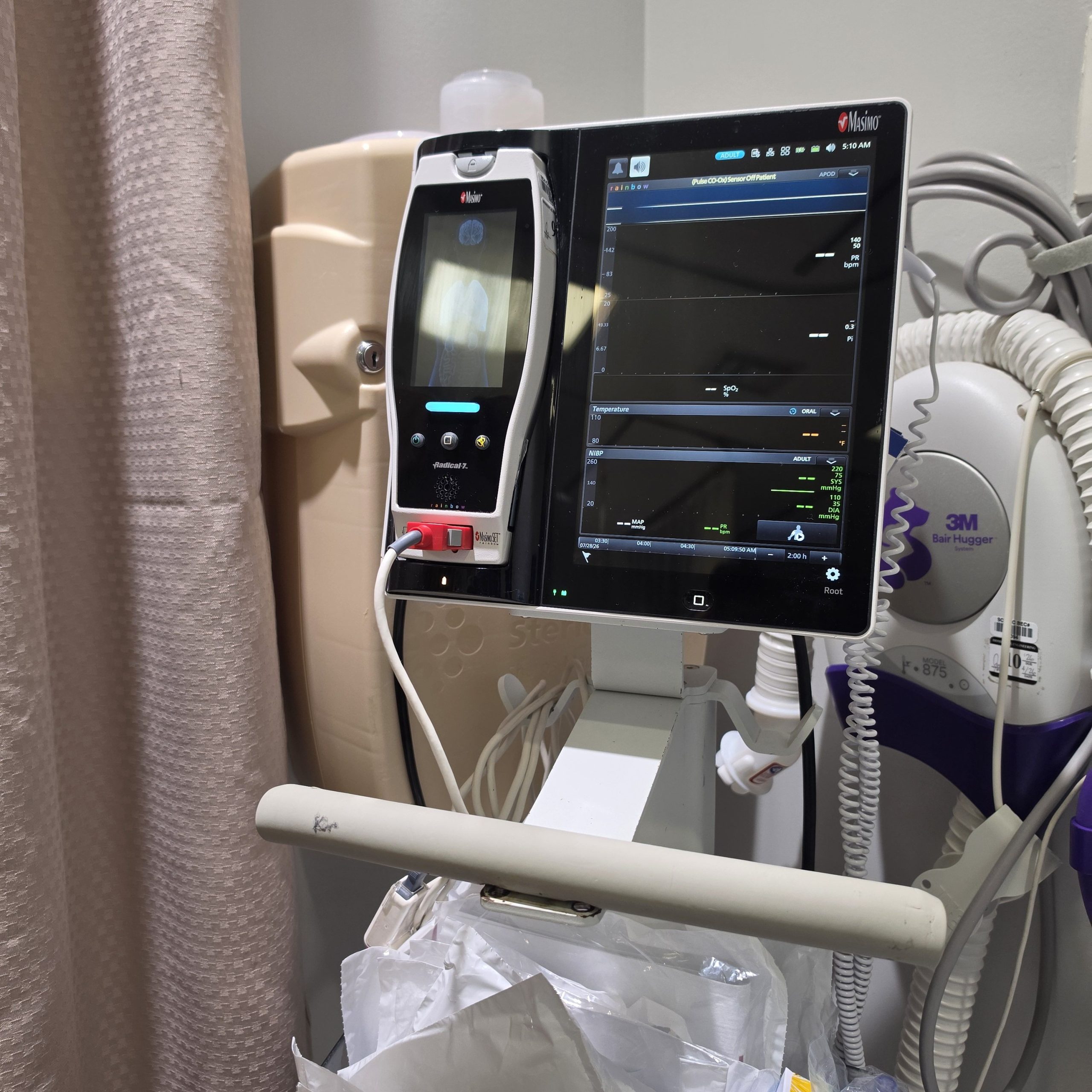
For facilities managing both inpatient and outpatient populations, patient monitoring equipment and oxygen therapy supplies have become central to how care is delivered, particularly as more patients are discharged earlier with home monitoring protocols. Physical therapy equipment supports the downstream recovery phase for both hospital-based and outpatient rehab programs. Pharmaceutical supplies and surgical instruments require a different level of sourcing scrutiny, given the quality, sterility, and availability requirements that apply to both categories.
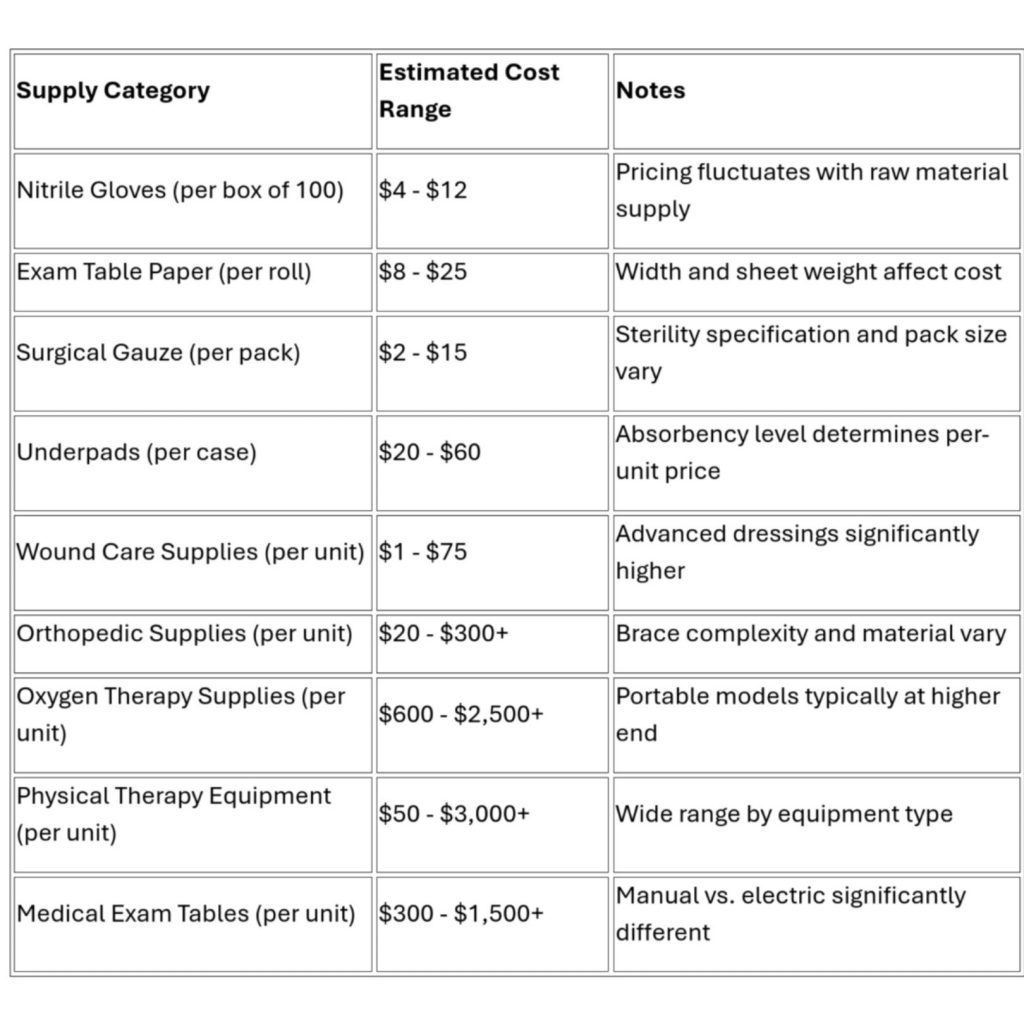
Supply Cost Reference for New Jersey Facilities
Below is a general cost reference for commonly ordered categories across the state:
Sources: General wholesale medical supply pricing compiled from distributor catalogs and industry data (2025-2026)
Why Jersey City and the Broader Metro Area Need Regional Coverage
New Jersey’s healthcare geography concentrates significantly around the Hudson County and northeastern corridor, where Jersey City, Newark, and surrounding communities host a dense network of hospitals, outpatient clinics, urgent care centers, and home health agencies. A medical supply store or equipment supplier operating with genuine regional distribution capacity in this part of the state can respond to urgent mid-week reorders in ways that national fulfillment centers with longer lead times cannot reliably match.
For facilities across this corridor, HSS Medical Supply is a trusted distributor providing durable medical equipment in New Jersey alongside the broader clinical supplies that busy urban and suburban practices depend on daily.
The Procurement Logic for a High-Density Market
New Jersey’s combination of high per-capita healthcare spending, dense clinical infrastructure, and a large aging population creates a procurement environment that rewards preparation over reaction. Facilities that build supplier depth across core categories before a shortage or delivery disruption hits are consistently better positioned than those managing procurement reactively. For example, following established medical supply procurement best practices can help healthcare organizations improve inventory resilience and reduce operational disruptions.
In a state where the volume of daily healthcare activity is among the highest in the country, the supply chain behind it deserves the same level of strategic attention as the clinical operations it supports.