


About 360 MAGAZINE

360 MAGAZINE is an award-winning international publishing on popular culture and design. We introduce avant trademarks to efficacious architects. We are a LGBTQIA2S+ friendly publication--officially recognized by the NGLCC. Our core demographic ranges from 19 to 39-year-old college-educated trendsetters within their respective international communities. The pages in this art book satisfy their strong interests including music, art, travel, auto, health, fashion, tech, philanthropy, design, food and entrepreneurship. It's an introspective digital/print/tablet portrait series, which encapsulates artists/brands/entities who embody the true essence of our publication- empowerment, equality, sensuality and most important of all, humanity within a global society.

Cloud vs On-premise: What Does Your Company Need

If you’re looking for a new, efficient document management system, you’re probably noticing that many of your options are either cloud solutions or on-premise solutions.

In this article, we’ll talk about the differences between these two options. That’ll help you figure out which option is best for you.

Cloud Vs On-Premise: What Are My Needs

When considering your company’s needs, think about these five factors:

  • Functionality
  • Cost
  • User interface
  • How to share files
  • Integrations with other software

Let’s talk about each of these factors in more detail.

  1. Functionality

Cloud-based solutions earn their ‘online’ monikers due to the fact they can function in-browser on the internet, and this is important for several reasons.

Virtually any information device can gain access to the Internet these days, whereas, with on-premises DMS, access to organizational storage and collaboration features remain tied to the software’s point of installation/origin. Cloud vs. on-premise document management cannot be distinguished from each other without analyzing the functional limitations of on-premise solutions.

However, the cloud can transcend issues with desktop compatibility sometimes found in niche operating systems (niche meaning not within Windows).

Essentially, cloud-based, online DMS is, beyond any serious criticism, more functional than its on-premises counterpart, particularly because of its accessibility via mobile applications and consumer-grade laptops (such as Mac), which are becoming increasingly popular in the enterprise.

  1. Cost

Many know the up-front price differences between on-premises and cloud-based DMS, but few understand the differences in long term value. And, as always, value and price must be viewed hand-in-hand.

This is one of the most complex differences between cloud vs. on-premise document management solution.

Price is the most complex facet of these two technologies’ differences. On one hand, there are simple, bottom-line methods of measuring the expenses of each, and on the other hand, there are ‘benefits’ that are much more difficult to initially calculate as hard ROI.

Initially, the cloud costs less across the board from simple calculations, but both on-premises and cloud-based DMS will generate ROI for organizations because each technology helps organizations go paperless.

However, it should be noted that in general, organizations will have to spend more on electricity costs with an on-premises solution, and on-premises solutions are a better fit for rural offices as these areas have fewer Internet speed/access options.

  1. User Interface

On-premises solutions are typically easier for DMS newcomers to understand. But the cloud, as a web technology, offers a certain degree of customizability that can render the solution more intuitive to its user.

Despite the intuitiveness of the cloud, on-premises is a technology that’s been around for a while and can be likened to the intuitiveness of software comprising the Windows interface.

Despite these differences, both modes of DMS usage provide the software integration needed to make processes more intuitive with an existing tech infrastructure.

  1. How To Share Files

On-premises solutions are great if you only need to share documents across the office. On-premise software solutions usually rely on an office intranet to share documents from employee to employee.

The problem is, businesses oftentimes need to share documents with people outside of the building. There are different secure options for sending messages, but a cloud-based DMS will have that built-in already.

So consider who will need access to documents when making the decision.

  1. Integration

On-premises offers more control over how security is implemented, measured, and contained, whereas the cloud, although not as customizable, is arguably more configurable – meaning external components are more easily integrated into the system.

Cloud vs. on-premise document management provides insight on how much customizability is offered for on-premise over cloud-based alternatives.

An organization with a lot of programming demands may want to consider this option. As with any new technology, there are always going to be somewhat limited integration capabilities with preexisting organizational structures.

However, the right document management software, whether on-premises or in the cloud, can offer software integration to mitigate the impact of customizing challenges.

Cloud Migration Challenges and How To Overcome Them

Firstly, one has to understand that migrating to the Cloud cannot be achieved with the push of a button. It would be wise for a firm or individual planning to make their move to the Cloud to seek assistance from a team that specializes in Cloud migration from on-premise to the Cloud.

Also, do not try to migrate everything all at once or try to pull off an “all or nothing” migration. When moving to the Cloud it is better to take a sub-set approach by uploading a bit at a time.

When all data has been migrated to the Cloud, the next step would be to train staff members in using the Cloud to its full potential. It should be understood that moving to the Cloud will give rise to new processes and procedures that will differ from what was used previously in on-premise systems. In other words, one has to ensure that their firm is “Cloud-ready.”

Last but not least is planning, planning, planning. Be sure to plan what data needs to be moved across to the Cloud. This is especially true with firms that have decades of data, some of which have become “stale.” Moving stale data creates stale data in the Cloud; however, migration can be used as an opportunity to clean up obsolete databases and files.

Is Rubex by eFileCabinet Secure?

We previously mentioned how Cloud security is generally more robust than on-premise, and eFileCabinet is no different. We take security seriously and offer security measures that are above and beyond that which can be achieved by local systems.

When using Rubex by eFileCabinet, all files are heavily encrypted to ensure that data remains safe and confidential. Also, Rubex files reside on SAS 70 Type II secure servers with a variety of physical barriers and intrusion detection systems to prevent unauthorized access.

Furthermore, all files are backed up regularly at multiple geographic locations to ensure that lost data can easily be recovered in the event of a fire, theft, natural disaster, hard drive failure, etc.

Going a step further, data that resides on our online systems is protected using SSL: Secure Socket Layer encryption as an added layer of security. Rubex spares no effort in keeping sensitive information safe and secure. Find out how you can keep your files secure today by filling out the contact form provided for a free 15-minute demo.

Andreas Rivera is a technology writer with experience in both reviewing and marketing tech services and products. His areas of expertise include writing about B2B, SaaS companies and how they best address the pain points of businesses. Since early 2019, he has been the Marketing Content Writer for eFileCabinet and has become well versed in how document management software helps businesses reinvent their manual processes and spur growth. Contact him at arivera@efilecabinet.com. 

tech, computers, illustration, 360 MAGAZINE

Facebook Enters Stage of World Politics

By Dr. Nick Oberheiden, Esq.

When political and military leaders from around the world convene this week for the annual Munich Security Conference, one attendee does not seem to quite fit the convention’s profile: Mark Zuckerberg. The CEO of Facebook will sit next to over 40 heads of state, intelligence officers, and military commanders at the world’s preeminent international security conference.

Zuckerberg’s visit marks a dramatic shift in world politics. Governments and law enforcement agencies have discovered the enormous utility of platforms like Facebook, WhatsApp and Instagram to connect people, places, and events. China and Russia have expanded their definition of national security to include virtually any data set: from military drone footage to online tracing to consumer behavior. Zuckerberg does not wear a military uniform, nor is he an elected or appointed official, but Facebook plays a pivotal role on this intensifying cyberspace battlefield.

With over 2 billion Facebook users, Facebook controls an unimaginable amount of digital data such as user contact information, physical whereabouts, cell-site locations, email addresses, IP addresses of websites visited, and records of interpersonal communications. Zuckerberg is the king of information. Facebook has transformed into a hybrid platform where commercial businesses and political activists spread messages, inform (and misinform) to influence politics, the economy, and society. The few publicly available numbers confirm this heightened political dimension of Facebook. Year over year, Facebook reports an increase of FBI National Security Letter (NSL) requests pursuant to 18 U.S.C. Section 2709 (Section 201 of the Electronics Communications Privacy Act of 1986).

In this war of information, the United States is at a crossroads. While some lawmakers support consumer activists who attack Facebook for its criticized handling of privacy rights, too many American politicians still overlook the strategic value Facebook plays in what Zuckerberg himself called an “ongoing arms race” with Russia and China in his 2018 congressional testimony. Others hesitate to introduce legislation that could be seen as infringing on the First Amendment rights of speech and association – which apply to corporations as well as natural persons.

When governmental agencies begin to depend on commercial businesses for information, it’s time to rethink national security in this country. For example, how should U.S. companies respond when a foreign country that is considered an enemy of the United States requests sensitive economic information from such a private company? Revised legislation may be needed to capture the geopolitical threats of our time. Congress may need to step in to define how much intel U.S. companies may share with foreign governments and whether the dissemination of certain national security data to non-NATO partner countries may be penalized. Checkpoint Charlie does not exist anymore. Today’s files are carried digitally, no longer by spies with a suitcase. The need for prevention and deterrence, however, remains. Traitors and defectors tempted to cash out by offering critical data are the spies of our time.

Zuckerberg knows that he is holding the oil of the 21st century: sensitive information. Coincidence or not, Zuckerberg’s journey takes him from Munich to Europe’s capital Brussels to negotiate Facebook’s tax and antitrust deal with European lawmakers, many of whom will fawn over him at the Munich Conference. Zuckerberg will enter these negotiations from a position of strength.

Dr. Nick Oberheiden is the founder of federal litigation and trial law firm Oberheiden P.C., which is largely comprised of former Justice Department attorneys.

latam cargo, Colombia, 360 magazine

LATAM × VALENTINE’S

LATAM Cargo, the leader in air cargo transportation to, from, and within Latin America, today announced, more than 210 LATAM Cargo Boeing 767-300 freighters took off from Colombia and Ecuador, carrying 12,600 tons of flowers for the 2020 Valentine’s Day season. Together with Mother’s Day, this represents the peak of the fresh flower export activity. This year’s figure represents a growth of 45% compared to last year.

The increase is the result of the company’s strategy implemented in 2019, which created a permanent and stable increase of operations in Colombia and Ecuador. This year, roses, mixed bouquets and carnations were the stars of the flower season which started the week of January 14 and ended on February 10. Colombia and Ecuador were the main producers, and their flowers were shipped to the United States, the Netherlands and China, among other destinations.

“In 2019 we decided to expand our cargo operations in Colombia and Ecuador to offer our customers enhanced frequency and capacity options,” said Felipe Caballero, LATAM Cargo Senior Revenue Manager for South America. “For the company, these Valentine’s Day figures are proof that our customers understand and value our commitment and effort to provide permanent and stable solutions for their shipments.”

Chrysanthemums, iris, gypsophila and greenery were also big hits this season, mostly coming from Bogota and Medellin in Colombia and from Quito in Ecuador, and heading  to markets in North America, Europe, Oceania, South America and Asia. This connectivity was made possible thanks to the more than 145 destinations that make up LATAM Cargo’s network, linking Latin America to the rest of the world.

More frequencies and destinations

In Colombia, the company operated 110 flights after adding 38 new frequencies to its normal operation during this period, and in Ecuador it operated 100 flights, with 58 frequencies more than the regular operation during these four weeks.

In all, the operation was 2.2 times larger than an ordinary week in Colombia and 3.5 times larger in Ecuador, totaling 6,600 tons of flowers transported from Colombia and 6,000 tons from Ecuador.

The main consumer of fresh flowers was the United States, with 90% of all flowers transported by the company (11,300 tons). Demand went up 65% compared to a regular period and 45% compared to Valentine’s Day 2019.

Miami played a major role as one of the world’s largest distribution hubs and home to LATAM Airlines Group cargo operations base.

Other importing markets include the Netherlands with 850 tons (7%), and to a lesser extent, Hong Kong, Shanghai, Beijing (China), Madrid (Spain) and Sydney (Australia). Flowers were also flown into New York (USA), Santiago (Chile), and New Zealand, among other destinations.

“LATAM Cargo successfully completed a highly complex operation to maintain the freshness and shelflife of our customers’ flowers. This positive result comes at the same time as we introduce to the market our new perishable care, FRESH, which seeks to safeguard the freshness and shelflife of perishable products,” said Cristina Oñate, VP of Marketing and Product Development for LATAM Cargo. “FRESH is our stable and scalable approach to meeting this challenge, and offers a global standard of cold chain management for perishables across our LATAM network.”

LATAM Cargo in Colombia

At the end of 2019, LATAM Cargo launched an expansion plan in Colombia that saw a gradual increase in frequencies to strengthen its presence in that market, and enhance the country’s export and import role.

Currently LATAM Cargo, has nearly tripled its export offerings between Bogota and Miami, going from 6 to 15 weekly flights. In Medellin, the company maintains its presence with six-per-week frequencies to Miami.

On the import side, LATAM Cargo opened the Miami–Cali route with two weekly frequencies, which will provide a greater flow of cargo from North America and offer a new gateway to Colombia. The company will also soon announce the start of operation of a new route from USA to Colombia, in addition to Bogotá and Cali, to continue exploring new destinations in the Latin American country.

the weeknd, republic records, 360 magazine, Duncan Loudon

THE WEEKND – AFTER HOURS

The Weeknd has announced the name of his upcoming album, After Hours, coming soon via XO Records / Republic Records. The album has been led by his two Platinum singles “Heartless”, which previously hit #1 on the Billboard Hot 100, and “Blinding Lights” along with outstanding live performances on The Late Show with Stephen Colbert and Jimmy Kimmel Live!. “Blinding Lights” also soundtracked the Mercedes-Benz EQC campaign which The Weeknd starred in and served as creative director for. Last week he also scored his first ever UK #1 song with “Blinding Lights” and also earned his 10th #1 song on Billboard’s Rhythmic Songs chart.
 
On March 7th, The Weeknd will be making his third appearance as musical guest on Saturday Night Live.
 
Watch the After Hours album teaser HERE

Jane Fonda, 360 MAGAZINE, elle magazine

JANE FONDA × ELLE

KO Média is pleased to announce that the March issue of ELLE Canada stars the inimitable Jane Fonda.

In a special issue that celebrates getting older with an open mind, the inspiring 82-year old actor, activist and icon opens up about her plans for the future and her past regrets.

“I can’t pretend that I’m not vain, but there isn’t going to be any more plastic surgery—I’m not going to cut myself up anymore,” says the refreshingly frank face of L’Oréal who talks about finding confidence later in life.

“I have psychic scars that I will never be able to give up.”

The special issue is packed with thoughtful features that dig into today’s most relevant questions, examining how societal perceptions about age are changing, and asking: Are fillers over? What’s the TikTok take on beauty? When will we finally start taking openly about menopause? In the words of French supermodel and author Caroline de Maigret, who is also featured in the exciting issue, “showing insatiable curiosity will make you look younger than a new pair of breasts.”

The March 2020 issue also boasts an everything-you-need-to-know guide to the season’s hottest trends, in which seasoned ELLE Canada editors decode how to wear must-have suits, trenches, retro prints, cool-girl denim and more.

Also in this issue: behind-the-scenes with Louis Vuitton’s Nicolas Ghesquière and his muses; a new study that hints romantic movies might be able to heal our relationships; and a fresh take on bold patterns and sleek minimalism.
 
The March issue of ELLE Canada will hit stands on February 17th.

AMTRAK VALENTINES DAY SALE

Amtrak Offers Trip for Two with Its Buy One Get One Free Valentine’s Day Sale

At Amtrak, they want to show customers how much they love them by offering a Valentine’s Day Buy One Get One Free Sale. Thursday, February 13, through Monday, February 17, customers can buy one coach ticket and get the second free for nationwide travel between March 9 and August 30, 2020, with no blackout dates. Customers can receive discounted tickets by using the code V214 at checkout or at amtrack.com/valentines-day-sale.

Amtrak is offering a great way for customers and their loved ones to travel for a weekend away or on a leisurely vacation. From couples, to moms, to friends, to every loved one, Amtrak encourages individuals to give more than chocolates, flowers and valentines this year. Instead, consider gifting a trip on Amtrak with a two for the price of one, Buy One Get One Free Sale. The discount is valid for travel across the national network including most long distance routes as well as the Acela, Adirondack, Carolinian/Piedmont, Cascades,
Downeaster, Downstate Illinois Services, Empire Service, Ethan Allen Express, Heartland Flyer, Maple Leaf, Michigan Services, Missouri River Runner, Northeast Regional, San Joaquins, Valley Flyer, Vermonter and reserved sections of the Pennsylvanian and Keystone Service. Two customers can travel together in coach for as low as:

New York – Washington, D.C (Acela)
$183

Los Angeles – Seattle
$126

Washington, D.C. – Boston (Acela)
$192

Seattle – Portland, OR
$36

Washington, D.C. – Chicago
$105

San Francisco – Denver
$149

San Francisco – Los Angeles
$66.50

New York – Atlanta
$164

New York – Washington, D.C.
$98

Chicago – St. Louis
$31

Los Angeles – Albuquerque
$86

St. Louis – Kansas City
$36

Portland, ME – Boston
$29

Richmond, VA – Charlotte
$54

Detroit – Chicago
$40

Washington, D.C. – Orlando
$139

Fares will vary by train

Being able to easily travel to/from city centers, Amtrak has one of the most generous baggage policies in the travel industry, applicable for two personal items and two carry-on bags. Amtrak also offers the freedom to use phones and electronic devices at all times (no “airplane mode”), the ability to travel with small pets on many trains, large spacious seats with ample leg room and no middle seat. This sale is valid for one free companion rail fare traveling on the same reservation as one full adult coach fare. This offer is valid for travel on all reserved service except the Auto Train. Adults must travel together and be booked in the same reservation. Valid for coach seats only; no upgrades allowed. This offer is not combinable with any other discount offer. All prices will be automatically discounted from the standard fare when accessing this promotion at amtrak.com/valentines-day-sale or by using the discount code (V214) when booking their trip.

Other terms and conditions apply.

Super Model Simonetta Lein Opens NYFW Show For Fashion Designer Stevie Boi

Super Model Simonetta Lein Opens NYFW Show For Fashion Designer Stevie Boi

1) From your viewpoint what was it like walking for famous designer Stevie Boi?

“It was like being home. Many people reach out to me and they are always very surprised when I talk to them with no problem. They think that because I have been named as one of the top 5 in the world I should be unapproachable. I firmly believe that the more you grow the more you should stay humble, and thank every blessing you receive. Stevie has my same philosophy. He is a very talented man who put together a professional yet kind team. That to me is synonymous of real success.”

2) How was the event different from anything you’ve ever done?

“I had many stylists dedicated to me and what I loved is that they were constantly asking me if I felt good in my outfit or I needed to change something. I truly felt that it was Stevie’s special touch and heart. Also it was the first time I got to open a NYFW show. That special feeling of butterflies in my stomach was different, as I felt responsible for the good start of the show. It was a good feeling and also tested me, I feel even stronger now.

3) What kind of vibe did the event hold?

It was an urban grunge type of vibe. My makeup and hair were different from anything else I have ever done and as a model that made me happy, as I could experiment with something different. It was artistic yet contemporary, which I appreciated.

4) As an influencer and trendsetter what did you think of his collection?

I think it was futuristic yet sellable, which is something very important for an artist and a designer. His silver touch and plastic inserts made it very particular and bold, and mixed with fashion staples as jackets, mini skirts, jeans, created an ensemble of clothes that urban people can wear to be seen yet be comfortable and edgy. I also appreciated him being inclusive with a mom with a baby, different sizes shapes and colors of models which represents the world of today.

5) What was your take on New York fashion week this year?

Knits are the new normal. Volume and movement. Plaid is back, as we have seen in my outfit. Everyone is going sustainable. I have been advocating for that for a while now and it is so great to see it happening on the runways.

6) What was your opinion of the outfit you walked in?

I would definitely wear it for an event or a day of work in the city. Perfect to be elegant but different. A retro style with plaid pattern with irregular fringes, a mini skirt and a top that made me feel so cute and feminine.

7) What was the highlight of the event from your point of view?

The show itself was really well done, and that is the major highlight. I think sometimes in fashion we look for too many external components and we forget the basics. A well organized performance leaves the public and buyers happy. He also had performers and a very cool graphic. When I got into my moment and walked for him and I saw the entire room surrounded by waves moving on the wall I thought: this is nothing but the great Stevie Boi.

Pictures on the runway by DWSNAPSHOT

Other pictures by Nicole Tienken

New Purdue Pharmacy Programs

Purdue pharmacy programs take innovative approach to saving lives

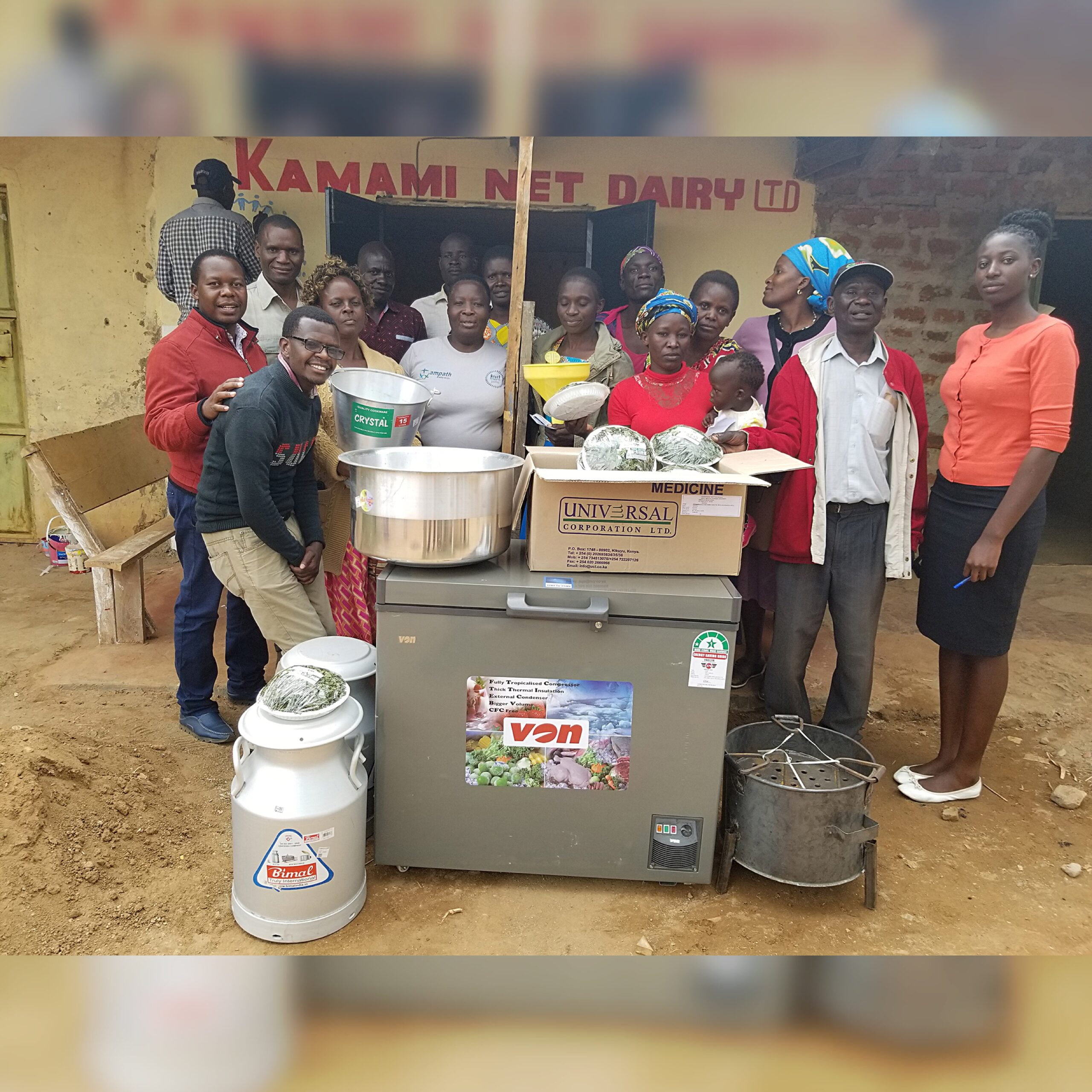
Programs designed to provide much-needed health care services to rural families in Kenya are leading to a new generation of medical professionals and innovators – who are helping save the lives of those facing financial and mobility constraints.

Purdue University’s College of Pharmacymhas a strong presence in Kenya, with multiple programs supporting the health care needs of families. Purdue is one of a handful of schools involved in the Academic Model Providing Access to Healthcare (AMPATH) program, which promotes and fosters a comprehensive approach to address the multifaceted needs of the western Kenyan population AMPATH serves.

This program has helped to permanently change the trajectory of the millions of citizens it serves. One such example is Benson Kiragu, who was one of the first Kenyans the AMPATH program reached. Benson’s experience with AMPATH serves as a microcosm of the impact AMPATH and consortium partners like Purdue can have in unlocking the potential of vulnerable populations.

When Kiragu first met AMPATH staff, he was one of many street youth with an extensive list of health issues that impeded his desire to break the poverty cycle. He suffered from eye conditions, which could have easily led to permanent blindness, and life-threatening asthma that has nearly taken his life on several occasions.

However, through the support of a team of faculty from Purdue and Indiana University, Kiragu has been able emerge from his humble beginnings to become the leader of several initiatives that now prevent other Kenyans from being trapped in the same poverty cycle he once found himself in.

Now, Kiragu is leading programs focused on providing education to street kids and treating cardiovascular and other diseases in the clinic and in homes.

“I know from my own experiences that working together as teams has helped to dramatically improve health care in Kenya,” Kiragu said. “Western Kenya now has some of the best access to health care in sub-Saharan Africa and this infrastructure is being used to help people of all ages and incomes.”

Through Kiragu’s training as a pharmacist, he has been able to become a part of the transformation in the roles that pharmacists play in Kenya through the support of the Purdue’s College of Pharmacy, Moi Teaching and Referral Hospital, and Moi University School of Medicine.

“Pharmacists are now seen as experts in providing health care support to patients,” Kiragu said. “We know how certain medications will likely impact patients and which ones are the most likely to improve their lives with minimal side effects.”

Kiragu said he was inspired by the work of Julie Everett, an associate professor of pharmacy practice from Purdue who was based full time in Kenya. Everett had suffered an unexpected health emergency and passed away in 2006 but was able to inspire individuals like Kiragu to follow in her footsteps and address the needs of the Kenyan population.

“Kiragu was determined to become a pharmacist and carry on the great work Julie had started with the people of Kenya,” said Sonak Pastakia, who was hired in 2007 to lead Purdue’s presence in Kenya. “I continue to be thankful that programs like AMPATH and people like Julie have been able to inspire vulnerable youth like Benson to become the change agents the country needs to prevent additional generations of Kenyans from succumbing to treatable illnesses or being trapped in the poverty cycle.

“It is because of AMPATH’s years of collaborative efforts that I have the good fortune of working alongside people like Benson who have a deep firsthand knowledge of the challenges Kenyans face and then work tirelessly to overcome them.”

Pastakia and his team in Kenya have worked with the Purdue Research Foundation Office of Technology Commercialization to patent some of their technologies and approaches. They are looking for additional partners as they work to take their proven approaches and expertise to other parts of the world. For more information on licensing a Purdue innovation, contact the Purdue Office of Technology Commercialization at otcip@prf.org

About Purdue Research Foundation

The Purdue Research Foundation is a private, nonprofit foundation created to advance the mission of Purdue University. Established in 1930, the foundation accepts gifts; administers trusts; funds scholarships and grants; acquires property; protects Purdue’s intellectual property; and promotes entrepreneurial activities on behalf of Purdue. The foundation manages the Purdue Foundry, Purdue Office of Technology Commercialization, Purdue Research Park and Purdue Technology Centers. The foundation received the 2019 Innovation and Economic Prosperity Universities Award for Place from the Association of Public and Land-grant Universities.

Vaughn Lowery, Alejandra Villagra, illustration, 360 MAGAZINE

10 of our Favorite Business Credit Card Options in 2020

A good business credit card is an invaluable tool for a business owner. But with so many options on the market, you might find yourself completely overwhelmed in deciding which card could possibly serve all your specific needs. After all, every year brings a new potential crop of products out there vying for your business.

That’s why we’re here to present a detailed rundown of the 2020 best business credit cards. Before you make any decisions regarding which is the best fit for your company, be sure to consult with your executive team as well as the banks in question. With that disclaimer out of the way, here are 10 of the best business credit cards out there.

American Express Blue Business Cash Card

Cardholders of this American Express product will earn 2 percent cash back on up to $50,000 of all eligible purchases per calendar year. The Blue Business Cash Card also carries “Expanded Buying Power,” allowing you to strategically go over your credit limit.

That amount actually adjusts with your card use, transaction history and financial records. Plus, you receive 0.0 percent APR on purchases and balance transfers for 12 months and no annual fee.

American Express Blue Business Plus Credit Card

This second American Express card has some of the same basic features as the above. However, it also provides double the membership rewards points for eligible business purchases. Likewise, it still has Expanded Buying Power, providing much greater opportunity to rack up points.

Bank of America Business Advantage Cash Rewards Mastercard

With this Bank of America card — the only one to make our list — you’ll get $300 in statement credit when you spend at least $3,000 during your first 90 days.

You can also earn 3 percent cash back in a category of your choice, as well as 2 percent cash back on dining and unlimited 1 percent cash back on other purchases. Moreover, you’ll face no annual fee, and perhaps best of all, your cash rewards never expire.

Capital One Spark Cash for Business

When you sign up for the Spark Cash for Business card, you earn a $500 cash bonus as long as you spend $5,000 in your first three months. Plus, you’ll receive $1,500 when you spend $50,000 within your account’s first six months.

As for cash back incentives, cardholders get unlimited 2 percent cash back on every purchase without any restrictions whatsoever. You also won’t have to deal with foreign transaction fees or an annual fee for the first year.

Capital One Spark Miles for Business

If you’re the type of professional who does a lot of traveling, then this Capital One card might be for you. If you spend $5,000 in your first three months, you’ll receive 50,000 bonus miles. Or if you spend $50,000 in six months, you’ll get a staggering 150,000 bonus miles.

You’ll also receive unlimited double miles per dollar for unlimited, unrestricted purchases or five times the miles on any hotel and rental car bookings. And, yes, there’s no annual fee in the first year.

Capital One Spark Cash Select for Business

The last Capital One card to make our list has a lot to offer. First, cardholders get an unlimited 1.5 percent cash back incentive on unrestricted business purchases.

You’ll also get a one-time $200 cash bonus if you spend $3,000 in the first three months of your account’s life. Moreover, you receive 0 percent intro APR for 12 months, no annual fee and no foreign transaction fees.

Chase Ink Business Unlimited Credit Card

For the detail-oriented business owner, Chase has several notable business credit cards on the market. This one offers $500 bonus cash back after a $3,000 expense in the first three months.

But it also features unlimited 1.5 percent cash back on every business purchase you make. If you need something a little more robust, stay tuned. But the Business Unlimited card has all the basics covered.

Chase Ink Business Cash Credit Card

With the Business Cash card, Chase account holders get the same $500 bonus cash back as the Business Unlimited card. But they also have access to 5 percent cash back on the first $25,000 spent at office supply stores and on telecommunications services.

Moreover, you earn 2 percent cash back on the first $25,000 in expenses on gas stations and restaurants each year. For the business owner with a higher budget, this card is the perfect option.

Chase Ink Business Preferred Credit Card

Cardholders with this Chase card earn 80,000 in bonus points once they spend $5,000 on any purchases in the first three months of their account.

The Business Preferred card also offers 3 points for every dollar of the first $150,000 spent on travel and select business purchases. For all other purchases, there is an even point match for every dollar spent.

Discover It Business Card

New customers with this credit card receive an unlimited cash back match for every dollar spent in the account’s first year.

In addition, you earn 1.5 percent cash back on every dollar you put toward any purchases. Plus, there’s no annual fee, accessible customer service and a free credit score just for being a customer.

Choosing the Best Business Credit Card for You

So there you have it: our 2020 best business credit cards. Choosing the best one for you is going to depend on your unique business needs, from your overall budget to how often you travel and whether or not you’ll be making foreign transactions. For comparison’s sake, take a look at Incfile’s Top Credit Cards of 2019. With so much to consider, selecting a business credit card is not an easy decision. Hopefully, this glimpse at what’s out on the market has inspired you to find the perfect one for your business needs. Make 2020 the best year yet for your business!

This article was originally published on the Incfile Blog.

Dustin Ray leads business development and growth initiatives at Incfile, a national incorporation service company specializing in business formation and small business services. Founded in 2004, Incfile makes it possible to start a business with a $0 formation + state fee and has assisted in the formation of more than 250,000 corporations and LLCs.

tech, computers, illustration, 360 MAGAZINE

Can you trust what you see?

Deepfakes videos bring a new, misleading factor into 2020 elections 

A video on social media shows a high-ranking U.S. legislator declaring his support for an overwhelming tax increase. You react accordingly because the video looks like him and sounds like him, so certainly it has to be him.

Not necessarily.

The term “fake news” continues to take a much more literal turn as new technology is making it easier to manipulate the faces and audio in videos. The videos, called deepfakes, can then be posted online with little indication they are not the real thing.

Edward Delp, director of the Video and Imaging Processing Laboratory at Purdue University, says deepfakes are a growing danger with the next presidential election fast approaching.

“It’s possible that people are going to use fake videos to make fake news and insert these into a political election,” said Delp, the Charles William Harrison Distinguished Professor of Electrical and Computer Engineering. “There’s been some evidence of that in other elections throughout the world already.

He expects people will be creating deepfakes throughout this current election year, causing problems with what voters can believe was said by candidates.

He said deepfakes can be found wherever a user can post content online. That said, action by industry leaders like Facebook and Google speaks volumes about the severity of the issue at hand.

“One interesting trend is both Facebook and Google recently have announced they are both working on the deepfakes problem now and Google even has released a toolkit for manipulated images,” Delp said.

Delp and a doctoral student have previously worked for three years on video tampering as part of a larger research into media forensics. They’ve worked with sophisticated machine-learning techniques based on artificial intelligence and machine learning to create an algorithm that detects deepfakes.

Delp and his team’s algorithm has previously won a Defense Advanced Research Projects Agency (DARPA) contest. DARPA is an agency of the U.S. Department of Defense.

“By analyzing the video, the algorithm can see whether the face is consistent with the rest of the information in the video,” Delp said. “If it’s inconsistent, we detect these subtle inconsistencies. It can be as small as a few pixels; it can be coloring inconsistencies; it can be different types of distortion.”

Systems developed by Delp and his team are data driven and look for any anomalies, ranging from lack of blinking by the person to varying illumination within the deepfakes videos. Systems will continue to get better at detecting deepfakes as more examples to learn from emerge.

Deepfakes also can be used to fake pornography video and images, using the faces of celebrities or even children.

Delp said early deepfakes were easier to spot. The techniques couldn’t recreate eye movement well, resulting in videos of a person that didn’t blink. But advances have made the technology better and more available to people.

News organizations and social media sites have concerns about the future of deepfakes. Delp foresees both having tools like his algorithm in the future to determine what video footage is real and what is a deepfake.

“It’s an arms race,” he said. “Their technology is getting better and better, but I like to think that we’ll be able to keep up.”

Writer: Brian Huchel, 765-494-2084, bhuchel@purdue.edu

Source: Edward Delp, 765-494-1740, ace@ecn.purdue.edu