


Posts made in June 2020

Parenting Tips for Teenagers

THE EDGE OF ADULTHOOD: EIGHT SUMMER TIPS FOR PARENTING TEENAGE CHILDREN THIS SUMMER

Summer is often a time when teenagers take major strides towards independence. They may start their first job, land an internship, volunteer with a charity, or visit college campuses to plan for the future. However, with the current COVID-19 pandemic reshaping the entire world right now, many teens have had to put their traditional summer plans on hold. Parents, too, will need to rethink their approach to technology when it comes to guiding and supporting their adolescents through these difficult and uncertain times.

As part of our ongoing series, Children and Screens: Institute of Digital Media and Child Development has teamed up with some of the top experts in the fields of parenting, education, and child psychology to bring you a new collection of helpful hints for making the most of this pivotal moment in your teenager’s development. Read on for details, and be sure to tune in to the next “Ask The Experts” interactive webinar series at noon EDT today, June 8, when an esteemed panel of experts will talk about how to navigate this unique summer with your teen and answer your questions via Zoom. You can RSVP here. The workshop will be moderated by Robert M. Bilder, PhD, Director of the Tannenbaum Center for the Biology of Creativity at UCLA, the Michael E. Tannenbaum Family Distinguished Professor and Chief, Division of Psychology; Department of Psychiatry and Biobehavioral Sciences at UCLA David Geffen School of Medicine.

Hit reset

Neuroscientists have found that roughly 60-90 minutes of heavy technology use creates a major overload in the brain, and an overloaded brain simply doesn’t work as well as a calm one. Luckily, the cure is easy. TAKE BREAKS. A short break, even as few as 10 minutes, is like hitting “reset” for your body. Brain scans shows us that exercising, taking a walk outside in nature, talking to a friend in person, working on a crossword puzzle, listening to music, and, in fact, any activity that takes your mind away from your devices can be beneficial. Stepping away for 10-15 minutes every hour or so will help “reset” your overloaded brain so you can function more smoothly and effectively. – Larry Rosen, PhD, Professor Emeritus and Past Chair of the Psychology Department at California State University, Dominguez Hills

Connect and cope

Remember when you were a teenager, on the edge between childhood and adulthood? Your mind and body felt ready for more grown up things, but part of you longed for the safety and security of childhood. As teens, we feel so much, and it can be difficult for many to put these feelings into words or to know when and how to share them. Imagine being a teen today when there is so much to feel. Take advantage of the time when you and your teen(s) are in the house together. Think of a movie that explores some of the feelings your teen might be feeling. Watch together and ask them questions about what the characters in the stories were going through, how the characters felt, and what they think the character did right or could have done differently. Be open to all their explorations and listen. The movie you choose might be about a crisis, about a cultural revolution, or just about being a human being dealing with big things. Also, try some fantasy and comedy to visit times and places that bring feelings of calm and spark the imagination. Let them choose some shows or films to show you, as well, and ask why they like them. Stories help us focus on problems and solutions in a space where the consequences aren’t ours. They help us move through difficult feelings and consider how we want to be in the world. I hope that some of these experiences with your kids can end up creating silver linings in your family’s shared memories of this moment in history. – Karen Shackleford, faculty member in the Media Psychology doctoral program at Fielding Graduate University, and Incoming Editor of Psychology of Popular Media.

Independence day

Teens need opportunities to exercise their emerging sense of independence, which can be difficult to do when most of their time is spent at home. This summer, help them find (safe) ways to get out of the house and do something without you. It could be as simple as hanging out with friends, or it could be more involved, like participating in a social cause they care about. Whatever the activity, the key thing is that it’s theirs. – Katie Davis, Associate Professor, University of Washington Information School

Use the news

Between COVID, climate change concerns, and protests over police brutality and civil liberties, teens on social media are likely seeing a lot of contradictory information with high emotional stakes, so it’s important to use this opportunity to teach them about media literacy and healthy habits when it comes to news consumption. Teenagers are capable of understanding a lot, and often want to talk about these issues as part of their emerging political identity, but they need a way to sort through and make sense of it all. Talk to your teens about different sources and biases, using reverse image search to verify pictures, and the pros and cons of expressing one’s views on social media. As teens may be exposed to images of racial violence and trauma circulated online, talk to them about how they manage their media intake, how it makes them feel, and what they can do with this information. For teens who want to express their views, talk to them about how they can manage the risk of online political expression by thinking about which platforms they use, who they follow, and how they comment on others’ posts. Not sure how to proceed? Check out Common Sense Media Resources such as Parenting, Media and Everything in Between and Resources about Race and Racism. – Ellen Middaugh, Ph.D., Assistant Professor, Lurie College of Education, San Jose State University, @emiddaugh on Twitter

Stay connected

Cut your teens (and yourself) some slack, and let your kids connect with their friends online. An important part of being an adolescent is learning about friendships, and in a COVID world this is happening increasingly online. If your teen is a gamer, let them play extra Fortnite with their friends, or if they love social media, encourage them to reach out, create, and connect on TikTok and Snapchat. Luckily, the research shows that most kids are not negatively harmed by this kind of social connection, but of course be sensitive if your teen seems to be exhibiting any extra anxiety from the additional screen time. Make sure they balance screen time with family time and physical activity (which these days can also involve screens), but don’t worry too much, especially if they are using these platforms to socialize. As one teen said pre-COVID, “I’m not addicted to technology, I’m addicted to my friends.” And that’s a good thing! — Yalda T. Uhls, Ph.D, Author of Media Moms & Digital Dads: A Fact not Fear Approach to Parenting in the Digital Age, Founder of UCLAs Center for Scholars & Storytellers

Rest is best

For good mental and physical health, it’s vital that adolescents receive 8-10 hours of uninterrupted sleep per night. A lack of quality rest puts teens at far greater risk for anxiety, depression, impaired learning, poor diet and obesity. Teens have an extended circadian rhythm, which means they’re susceptible to staying up and sleeping in later, especially if they engage in screen media at night and don’t have structured activities to get them out of bed in the morning. Unchecked, adolescent sleep patterns during the summer can quickly become completely deregulated and dysfunctional. Many teens need parental intervention to maintain healthy sleep habits. Often the best thing that parents can do for the health of their adolescents is ensure that they get out of bed by 8AM and stay out of bed during the day. Parents should also consider completely eliminating screen media from their teen’s bedroom, which will keep help keep the teen out of their bed during the day and help ensure that their devices don’t keep them up or wake them up late at night. Getting adolescents out of bed in the morning can be a challenge, but it can be helpful to gradually open window shades in the morning and let natural light into the room, which helps teens wake up and resets their circadian rhythm correctly. Teens typically don’t appreciate this type of structure being put into their day, but it can do wonders for their health and well being. – Paul Weigle, MD, American Academy of Child & Adolescent Psychiatry’s Media Committee Chair

Engage in anti-racist action

Take time this summer to engage in a collective effort to confront racism online and offline through co-watching, co-reading and discussing works that illustrate the impact of systemic racism on Black people in the United States. Several documentaries, docu-series, and films are available to watch, as well as historic speeches and debates such as James Baldwin’s debate with William F. Buckley in 1965. There are now several online resources, such as this one, which presents several ways in which you and your adolescent can schedule time each day to increase awareness around racism, and how to combat racism, in the United States. Remember that contribution is one of the key developmental tasks of adolescence, and engaging in dialogues around important societal issues is one significant way to validate your adolescent’s perspective and growth. – Kate Mills, PhD, Assistant Professor, Department of Psychology, University of Oregon

Let teens lead

When my teen daughter Tessa was not long ago experiencing lots of stressful emotions all I wanted to do was help her. Yet, each time I stepped into to try to suggest solutions, I just made things worse. As a physician, I looked for science to explain what was happening and this led me to Dr. Jessica Borrelli’s research on just this issue. Borrelli wanted to understand what happens when parents step in and try to problem-solving for their teens. Borrelli ran experiments where they created a computing puzzle where teenagers were asked to do a puzzle which was basically unsolvable. The parents were told not to help. Monitors that measure stress levels were placed on the skin the teens and the parents. Once the teens started failing at the puzzle most parents stepped in to help. The researchers found that when the parents stepped in and tried to help they had decreases in their stress and the teens had increases in theirs.This scientific explanation helps me with problem-solving now and now I often employ these simple phrases which have made a huge difference with my daughter, “I am curious, what solutions have you been thinking about to address that problem? And, “I am here to brainstorm solutions whenever you want me to — just let me know.” These phrases let her know I have faith in her problem-solving skills and also they put the sense of control in her hands—if she wants my input she has control to ask me for it. – Delaney Ruston, MD, director of Screenagers and Screenagers NEXT CHAPTER about uncovering skills for stress resilience, and author of the parenting blog, Tech Talk Tuesdays.

This summer is already shaping up to be a challenging one for parents and teens on a number of fronts, but such challenges can yield important physical, mental, and social growth if approached with a healthy mindset. Encourage your teens to engage with the world in safe and thoughtful ways while at the same time giving them the space to develop their own identity and values. For more tips, and to have your questions answered by experts, don’t forget to register for today’s virtual workshop here.

About Children and Screens

Children and Screens: Institute of Digital Media and Child Development is a 501C(3) national non-profit organization founded by Dr. Pamela Hurst-Della Pietra. Children and Screens advances and supports interdisciplinary scientific research, enhances human capital in the field, informs and educates the public, and advocates for sound public policy for child health and wellness.
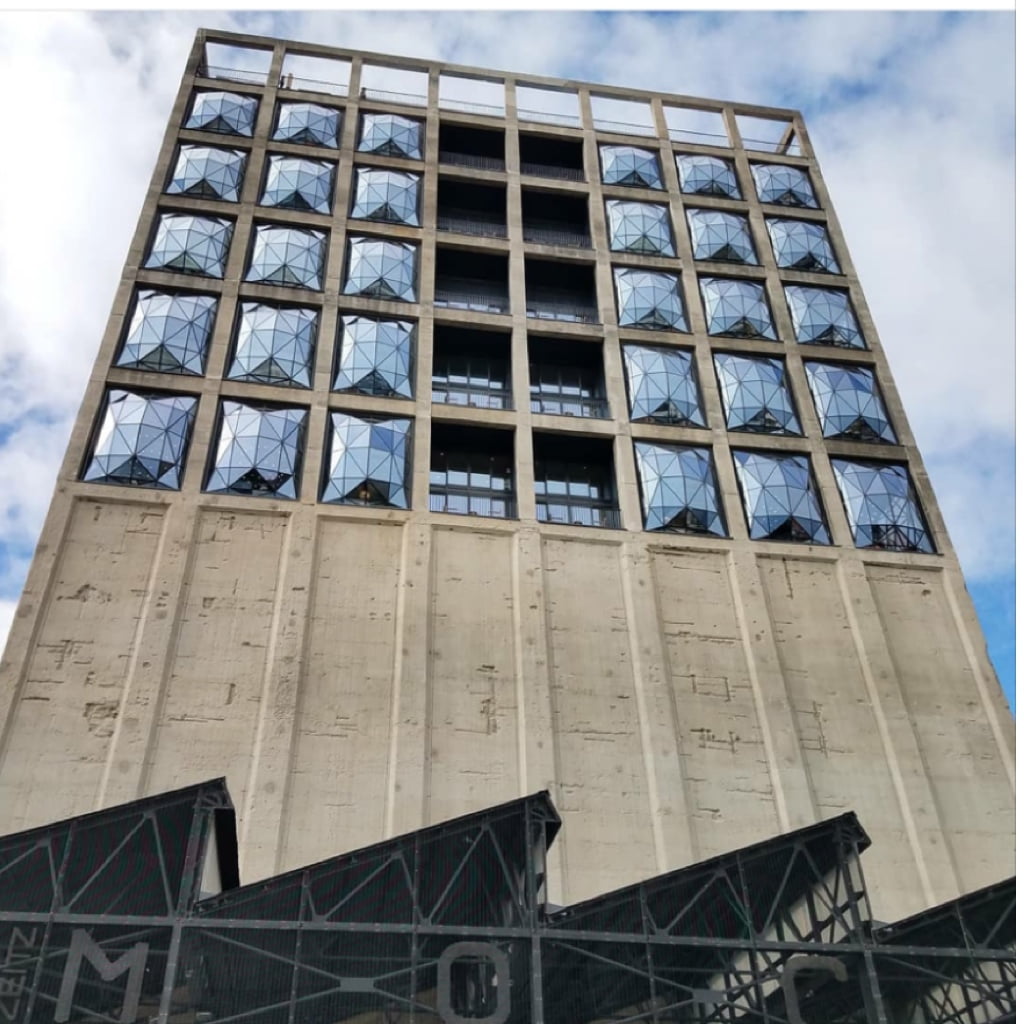

Kouoh • MOCAA

A conversation between the revolutionary artist and Koyo Kouoh, the Executive Director and Chief Curator of Zeitz MOCAA

View other talks here.

Facebook, Twitter, Instagram

Website https://zeitzmocaa.museum

Zeitz Museum of Contemporary Art Africa (Zeitz MOCAA) is a public, not-for-profit institution that exhibits, collects, preserves and researches contemporary art from Africa and its diaspora; conceives and hosts international exhibitions; develops supporting educational, discursive and enrichment  progammes; encourages intercultural understanding; and strives for access for all.

The museum’s galleries feature rotating, temporary exhibitions with adedicated space for the permanent collection. The institution also includes the Centre for Art Education, the Centre for the Moving Image, and a project space for emerging artists.

360 Magazine

Top 3 Reasons To Become an Educator

These days, a quality education is key to every student’s future job prospects, socioeconomic mobility and professional success. If you love helping others, are patient and have a knack for breaking things down in an easy-to-understand way, you may want to consider becoming an educator. You’re probably already familiar with a few of the perks of going into teaching, like getting summers off or having creative control over your classroom and teaching style. However, there are some other great perks that you might not have thought about. If you’re thinking of continuing your education first to become as well-prepared for your future career as possible, click here. To learn more about the top three reasons you should consider a career in education, read on.

1. It’s Great for Family Life

If you’re the parent of young children looking for a career that will fit into your family life but also bring professional fulfillment, look no further than a teaching career. While many teachers will tell you that even after the final school bell rings, you may have to bring grading or lesson planning home, being on the same daily schedule as your children is a big advantage. After all, you’ll be on spring break and summer vacation when they are, and you won’t have to hire babysitters to look after them until you get off work at your 9 to 5. For family work-life balance, going into education is a great option!

2. You Can Work Anywhere

While different states may have different educational and licensing requirements, teachers are in demand in just about every city across the country. This means that if you decide to become an educator, you get to pick where you want to live and will be sure to find job opportunities in the locality of your choosing. If you like the idea of having opportunities everywhere and not being restricted to living in only one metro area for the rest of your career, the versatility of going into education could be a great fit for you!

3. You Help Shape Students’ Academic Success

As any former student is well aware, success in school doesn’t just mean access to quality materials – it means having a great teacher as well. As the head of your own classroom, you have the potential to help your students exceed learning outcomes, get interested in new material and get motivated for future success. A good teacher helps students pass standardized tests; a great teacher helps students develop critical thinking skills that will serve them for years to come. If you’re driven by a desire to help foster creative thinking and practical skills in your students, you’ve got what it takes to make a big impact on your students’ academic performance not just in this school year, but potentially for the future as well. After all, a great experience in your classroom could change their entire outlook on academics and shape their future trajectory!
Education is essential for shaping the next generation, and working as an educator comes with a surprising roster of perks. If you’re invested in molding tomorrow’s citizens, teaching could be the perfect career for you.

Week in Tech + Press Freedom

The Reporters Committee for Freedom of the Press and 115 media and press freedom organizations sent a letter last week to officials in Minnesota, demanding that law enforcement officers immediately stop attacks against credentialed, clearly identifiable journalists covering nationwide protests in response to a white Minneapolis police officer killing George Floyd, a Black man, on May 25. The Reporters Committee also sent a letter to officials in New York, and will be contacting officials in other states in the coming days.

The Reporters Committee is also tracking curfew orders imposed by cities, counties and states in response to the protests — and whether they include exemptions for members of the news media.

Here’s what the staff of the Technology and Press Freedom Project at the Reporters Committee for Freedom of the Press is tracking this week.

Two developments this week point to the potential use of technology to automate how government documents are processed internally and in response to public records requests. As access to government records are a mainstay of a journalist’s toolbox, how these advances play out will be critical to the profession.

At the federal level, the Public Interest Declassification Board issued recommendations largely focused around transitioning the classification system from the “analog age” to digital. The report was decidedly pro-transparency; it opens by acknowledging the “bipartisan recognition that the Government classifies too much information for too long.” Specific goals include implementing “Big Data, Artificial Intelligence, Machine Learning, and Cloud storage and retrieval” to automate classification and declassification decisions and potentially streamlining the classification categories by adopting a two-tiered system.

A California Supreme Court judge, Justice Mariano-Florentino Cuéllar, commented on similar technological improvements in the context of public records requests. The case, National Lawyers Guild v. City of Hayward, involved a public records request that included police body camera footage with audio and visual material exempt from disclosure.

The court ruled that the requesters would not have to pay a fee for redactions from electronic records under the California public records law. (The Reporters Committee filed a friend-of-the-court brief in support of the NLG, which had submitted the public records request.) Cuéllar wrote separately from the majority, noting that implementation of artificial intelligence or other advanced software to collect and redact records en masse will “merit nuanced application of statutory provisions.” He suggested that because a better, more efficient records system might be more expensive, it would at times be “prudent” to interpret the law such that certain requests will fall under the fee-bearing provisions.

Enhanced technology in records systems has the potential to unlock far more records, permitting journalists, in particular, to obtain and disseminate that information to the public. And as technological advances are applied to the management of government records, courts and legislators should be wary of undermining government transparency by overburdening the individuals and organizations — particularly in media — who function as critical watchdogs.

The Center for Democracy and Technology on Tuesday filed a lawsuit against President Trump in his official capacity, arguing that the recently signed “Executive Order on Preventing Online Censorship” violates the First Amendment. The organization notes that the order is “plainly retaliatory” against Twitter, and that it “seeks to curtail and chill the constitutionally protected speech of all online platforms and individuals — by demonstrating the willingness to use government authority to retaliate against those who criticize the government.” On May 28, the Reporters Committee issued a statement raising constitutional concerns about the executive order.

On Tuesday, the Reporters Committee joined a friend-of-the-court brief, drafted by the Harvard Cyberlaw Clinic, in Everytown for Gun Safety v. ATF. The Second Circuit case arose out of a Freedom of Information Act request Everytown made for records from the Bureau of Alcohol, Tobacco, Firearms, and Explosives regarding firearms recovered from the scenes of suicides. ATF denied the request, claiming that retrieval of aggregate data from a database requires the creation of a new record. The amicus brief argues that there is no legal distinction between searching data in a database and retrieving aggregate data. Privacy and civil liberties advocates are raising concerns about government efforts to conduct surveillance on protesters using facial recognition software, license plate readers, body cameras, drones, and other tools. Additionally, BuzzFeed News reported on Tuesday that the Justice Department signed off on new authority for the Drug Enforcement Administration to “conduct covert surveillance” and collect intelligence on protesters, which some note could require the use of “stingray” devices that simulate cell sites.

On Monday, the FBI announced on Twitter that it is soliciting information, photos, and videos that show violent encounters during demonstrations. In a press release, the FBI stated that it was collecting this information as part of what it dubbed a commitment “to apprehending and charging violent instigators who are exploiting legitimate, peaceful protests.”

360 Magazine, Protests, VFILES

VFILES x Protest Support

By Jason Tayer

VFILES is a powerful newsletter that appeals to young audiences around the world regarding music, fashion, and other trending pop culture pieces. Their site contains various collections of video, image, or music posts, which are called vfiles. Individuals can create their own profiles on the site and begin uploading and sharing vfiles of his or her own. The newsletter is based in New York City, and there, the community produces live events and performances.

As a response to the current, country-wide and globally-participated protests for black rights and against police brutality, VFILES has been supporting influential activists like Chi Ossé. They are encouraging their audience to “step out in the name of justice” and continue spreading awareness about the very complex issue at hand. The platform supports @domrobxrts‘s account, which offers many updates and opportunities to learn more, provide support, and spread awareness.

Additionally, VFILES is sharing an initiative started by CITYKITS to share and distribute protest preparation kits. These kits are providing a great deal of tangible support for protestors who are spending much of their time and energy fighting for systematic change. As VFILES reaches a dominantly youthful audience, they also share stories and content related to young artists and their emotional responses to the protests.

360 MAGAZINE, BUSINESS, ILLUSTRATIONS ,rita azar

How to Increase Productivity Quickly and Efficiently 

So much to do, so little time. It is a common feeling amongst many, leaving us feeling like we never get round to completing the tasks that we need to. Being more productive doesn’t just happen overnight; it does require making some adjustments to how you manage your time. Maximizing productivity isn’t simply putting all your time into the tasks at hand, but managing the way you go about handling them. 

Remove Distractions from the Situation

Distractions could be anything from your smartphone, the TV, or anything around you that is taking away your full ability to focus. Switch everything off so you can think clearly about what it is you need to put all your attention on, decreasing chances of your mind wandering to other things. 

Don’t Multitask too Much

Multitasking often causes more stress than is realized and makes tasks take longer, and sometimes can affect how well assignments are completed, making your workload even bigger than when you started. It is much more productive to keep your full attention on one responsibility at a time, rather than trying to do multiple things at once. If you really struggle with managing your time, you can get support with the use of lots of different time management tools. Setting an alarm on an alarm clock is also a simple way to keep track of your time. 

Plan Your Day

There is no need for long lists of what you need to get done. Determining the most important things you would like to achieve by pinpointing 2 to 4 main objectives that are important is a straightforward way to make a to-do list. To-do lists are a productive way to help you stay organized and keep track of things you need to complete and have completed. Preparing this the night beforehand is the best time to do it, as it will eliminate any stress of sorting it out in the morning. 

Tidy Your Work Environment 

Whether it is where you do most of your work in your home or in your work environment like an office, keeping your workspace tidy and organized is scientifically proven to help your brain focus and feel less irritated. Removing clutter from the space you are working in or living in will benefit your mental health and increase the ability to be more productive. Although knowing where to start can be difficult, there are many simple ways of how you can declutter your environment quickly and efficiently. 

Complete Similar Tasks Together

Save time by bundling similar tasks together. Things you need to do like writing emails, making phone calls or similar forms of housework should all be put into one bundle to complete one after another. 

Get a Good Night’s Sleep

If you do not get enough sleep, your productivity levels are more likely to drop. Lack of sleep causes less energy, affects your ability to focus, and makes it more difficult to be creative and solve problems. Getting sufficient sleep isn’t easy for everyone, with many common problems causing sleep deprivation. Just a few of these problems could be sleep disorders like insomnia, stress, or discomfort. To improve your sleeping habits, you could consider investing in a better mattress for your body, as this is often the reason that can cause insufficient amounts of sleep. There are several good options to choose from when purchasing a mattress that suits you to enable a better night’s sleep. 

When it comes to increasing your productivity in an efficient way, take time to think about the steps you will take and what will suit you best. Don’t worry about rushing everything and feeling stressed about managing everything all in one day. 

Ivory Rowen, 360 MAGAZINE, illustration

A Letter From MGM Resorts

As quarantine policies lift around the country and people begin to leave their homes, travel guidelines must be carefully calculated so jet setters can safely explore. In a letter from Jenn Michaels, Senior Vice President of Public Relations at MGM Resorts International, she explains how the resort experience has changed for a health-conscious stay.

Having recently reopened resorts in Mississippi, Las Vegas, and New York and Excalibur opening later this week, Michaels explains the new normal for the MGM Resorts. Employees and guests wear masks, plexiglass separates players at card game tables, and signs remind guests to keep social distance from one another. The resorts implement new technological innovations to ease worries for guests. One technology applies to their restaurants where guests can now view menus and wine lists on their phones and receive texts when their tables are ready. Another innovation allows guests to use their mobile phones to check into their room and as a room key. Technology like this limits the touch points in one’s MGM Resort stay.

Jenn explains that, despite the readjustments necessary for a safe stay, guests still relax and enjoy their stays, “What else do I see as I wander around? People having a great time, enjoying fun dinners, hanging out poolside, exploring the Bellagio Conservatory (a gorgeous Japanese display), watching the fountains dance, and generally having a blast, like you’re supposed to in Las Vegas. And even better than that is seeing people back at work and how happy they are to be reunited with their colleagues.”

And for those of you who are still weary of travel, Jenn assures guests that MGM Resorts will be happily awaiting your arrival, “When you’re ready to come back, we’re here. There’s no doubt that the world needs travel, adventure, exploration, experiences. And all of us, in some way, play a role in that for consumers – whether it’s the destination itself or telling wonderful stories that inspire people to travel. Let’s continue to be there for each other and for the world.”

Our lives may look different but with innovative technology and careful policies, we can ease back into comfortable and exciting vacations.

Read more about MGM Resorts International on their website, Instagram, or Wikipedia.

360 Magazine

W.E.B Du Bois Book

W.E.B. Du Bois spent many decades fighting to ensure that African Americans could claim their place as full citizens and thereby fulfill the deeply compromised ideals of American democracy. Yet he died in Africa, having apparently given up on the United States.

In this tour-de-force, Elvira Basevich examines this paradox by tracing the development of his life and thought and the relevance of his legacy to our troubled age. She adroitly analyzes the main concepts that inform Du Bois’ critique of American democracy, such as the color line and double consciousness, before examining how these concepts might inform our understanding of contemporary struggles, from Black Lives Matter to the campaign for reparations for slavery. She stresses the continuity in Du Bois’ thought, from his early writings to his later embrace of self-segregation and Pan-Africanism, while not shying away from assessing the challenging implications of his later work.

This wonderful book vindicates the power of Du Bois’ thought to help transform a stubbornly unjust world. It is essential reading for racial justice activists as well as students of African American philosophy and political thought.

The Author:

Elvira Basevich is Assistant Professor of Philosophy at University of Massachusetts, Lowell.

Reviews:

“Unique among books on Du Bois, Basevich originally and persuasively presents a liberal ideal of civic enfranchisement as the heart of Du Bois’ thought.”

Chike Jeffers, Dalhousie University

“A valuable and compelling addition to the literature on Du Bois. Both a useful introduction to those unfamiliar with his thought and an innovative interpretation that will hold the interest of experts, Basevich has achieved a remarkable feat—and produced an apt tribute to her subject.”

I’ll Benjamin McKean, Ohio State University

FPWA × Poor People’s Campaign

FPWA’s chief executive officer and executive director, Jennifer Jones Austin, and Rev. Dr. William J. Barber, II, president of Repairers of the Breach and national co-chair of the Poor People’s Campaign, will hold a virtual rally on June 9 to bring attention to the campaign’s Mass Poor People’s Assembly and Moral March on Washington, to be held online on June 20.

Rev. Barber and Ms. Austin will lead a conversation about why every American should participate in the assembly and march, which will be the largest digital and social media gathering of poor and low-wealth people, moral and religious leaders, advocates, and people of conscience in United States history. This gathering will bring together and raise the voices of the 140 million poor and low-income Americans.

Ms. Austin leads FPWA, whose mission it is to advocate for just public policies that promote the social and economic well-being of all New Yorkers. She is one of eight members on Mayor de Blasio’s Fair Policy Task Force to rebuild a fairer New York as the city restarts its economy by confronting the deep inequities that reach into every neighborhood.

FPWA is linking arms with the Poor People’s Campaign: A National Call for Moral Revival to ensure that as we emerge from the global pandemic, which is exposing even more of the already existing crisis of systemic racism and poverty, we rebuild with the aim of no longer managing poverty but instead, ending poverty across the nation. They will also address the current state of social unrest and political disenfranchisement in the wake of incidents across the country impacting the most vulnerable.

Who:

Jennifer Jones Austin, CEO and ED of FPWA Rev. Dr. William J. Barber II, president of Repairers of the Breach and national co-chair of Poor People’s Campaign: A National Call for Moral Revival

What:

Virtual rally and conversation in support of the Mass Poor People’s Assembly & Moral March on Washington

When:

11 a.m. to 11:30 a.m. June 9

Don Benjamin, 360 MAGAZINE, antm, tyra banks, illustration, top model, Emily Simon

Spotlight – Don Benjamin

Multi-talented Don Benjamin transitions from modeling to music

→ Los Angeles, California June 2020 – After a successful modeling career and placing in the top three of hit modeling competition show, America’s Next Top Model (ANTM), Don Benjamin takes aim at the music industry.

Benjamin’s music isn’t the traditional mainstream rap we’re used to hearing. He hopes his music influences our society in a positive way. “I’m a fan of Drake and J Cole. Lately, I’ve been listening to more gospel rap, artists like Bizzle, Eshon Burgundy, and Lecrae [noted Christian rappers]. Music lately feels so negative. It’s all about doing drugs and degrading women. I need something that is gonna feed my spirit and motivate me to be a better person,”

Don Benjamin on distinguishing himself from the direction of current mainstream rap artists:  “I don’t feel like much rap nowadays spreads positivity. Most songs that take off aren’t really saying much of anything. I want to spread a good message.”

During this time of unrest, Benjamin has taken a stand in solidarity with the Black Lives Matter movement and joined the music industries Blackout Tuesday. Other celebrities, including Beyoncé have used their social media platforms to demand justice for George Floyd and encourage their followers to take action.

→ PUMA × The Hundreds – California streetwear brand The Hundreds joins PUMA to debut a new line of footwear, apparel and accessories inspired by the last three decades, called “The ‘90s Cliques”.

→ Shaggy – Grammy award winning artist Shaggy, known for top hits “It Wasn’t Me” and “Boombastic,” discusses the variety of  his music and how he remains grounded. 

→ YaVe Tequila by Joe Cruz – Motivated by his passion for family and community, Joe Cruz creates YaVe Tequila. After many attempts to get the right formulation and an incredible shift to a team of female chemists, the world’s first naturally flavored tequila was born. Although this tequila was introduced shortly before a world-wide pandemic hit and YaVe’s original plan of having a large presence in bars is impossible, they’ve managed to grow their online presence with partnerships and influencers. YaVe has angled themselves as an essential for a stay at home happy hour. 

→ Michael B. Jordan × BODYARMOR –  BODYARMOR’s largest campaign to date, voiced-over by award winning actor Michael B. Jordan, is rooted in the belief that no matter who you are, only you can make you better. 

To delve into this provocative award-winning magazine issue, go HERE.

Special Thanks to the following individuals:

Photo: Sham Abdo
Style: Winnie Stackz
Mask: Marianna Harutunian
Jewelry: Aporro Brand
Story: Abigail Baldwin
Art: Alejandra Villagra
EIC: Vaughn Lowery