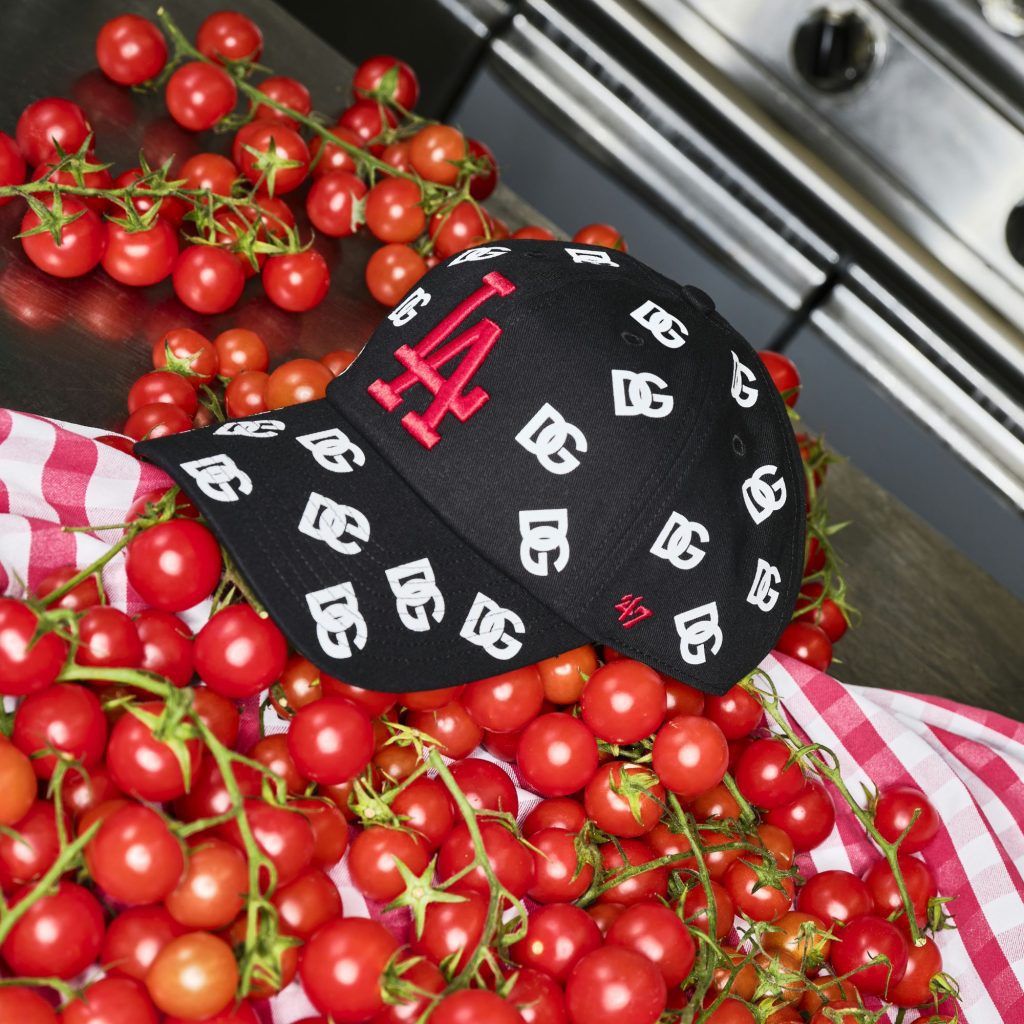
Dolce&Gabbana x ’47, an exclusive collection that combines fashion, sport and lifestyle.
The heart of the collaboration is ‘47’s most iconic style, the ’47 CLEAN UP.
The model is defined by a relaxed silhouette, a curved visor, and adjustable strap, and is worn by millions worldwide.
The ’47 CLEAN UP is reimagined through some of Dolce&Gabbana’s most emblematic prints: the bold and striking spirit of the Leopard, the strong identity of the DG Logo — available in three variations on denim, black, and white backgrounds — and the exclusive Patchwork in denim, always unique and different in every design.
Completing the collection, the ’47 CLEAN UP Balaclava introduces a functional and contemporary element, an accessory with a distinctly urban-inspired attitude.
Each model is available featuring the logos of three of the world’s most popular baseball teams: the Los Angeles Dodgers, New York Yankees, and New York Mets.
The Dolce&Gabbana x ’47 collection is available beginning today exclusively online at www.dolcegabbana.com.
Every player has experienced the dreadful early-league poverty. You load into the new Path of Exile 2 season, grind your way through the campaign, start pushing into your early atlas maps, and suddenly, you hit a massive progression wall. You look in your stash tab and see three Chaos Orbs, a handful of Alterations, and barely enough chisels to roll your next map. Meanwhile, people in global chat are already linking items worth dozens of Divines. It is a completely demoralizing feeling.
The harsh reality about the Path of Exile economy is that the path to real wealth isn’t just about dropping a Mirror of Kalandra from a random destructible barrel. It’s primarily about plugging the holes in your daily gameplay where your currency is silently leaking out. If you are constantly struggling to afford your end-game upgrades or even basic mapping supplies, you are probably making a few errors without even realizing it.
Fixing these bad habits takes time and discipline, and sometimes the early grind can lead to serious burnout before you even see any real profit. If you simply want to skip the frustrating early mapping phase and jump straight into the fun part of the endgame, many players decide to get PoE 2 Divine Orbs at Skycoach for the safe and affordable service. However, if you want to fix your farming strategies and generate currency yourself, let’s break down the most common mistakes that are currently draining your potential wealth.
1: Ignoring the “Bubblegum” Currencies
One of the biggest traps mid-level players fall into is getting overly aggressive with their loot filters. Hiding magic items and low-tier bases is absolutely mandatory once you hit maps, but filtering out every small currency drop too early is a massive mistake.
A lot of people think that holding out for pure Divine drops is the only way to get rich. I used to do this same thing. Back in older seasons, I would hide everything below a Chaos Orb by day three. I always sat there wondering why my overall net worth completely stalled out. The truth is, your bulk alterations, fusing equivalents, and lower-tier mapping materials add up incredibly fast.
2: Throwing Real Currency at Mid-Tier Gear Upgrades
This is an absolute wealth killer. You hit early endgame, your elemental resistances are a little uncapped, and you feel like you need a bit more life to survive specific boss attacks. Instead of finding a cheap, temporary fix, you go to the trade site and spend your very first hard-earned Divine Orb on a pair of boots that are barely better than what you currently have equipped.
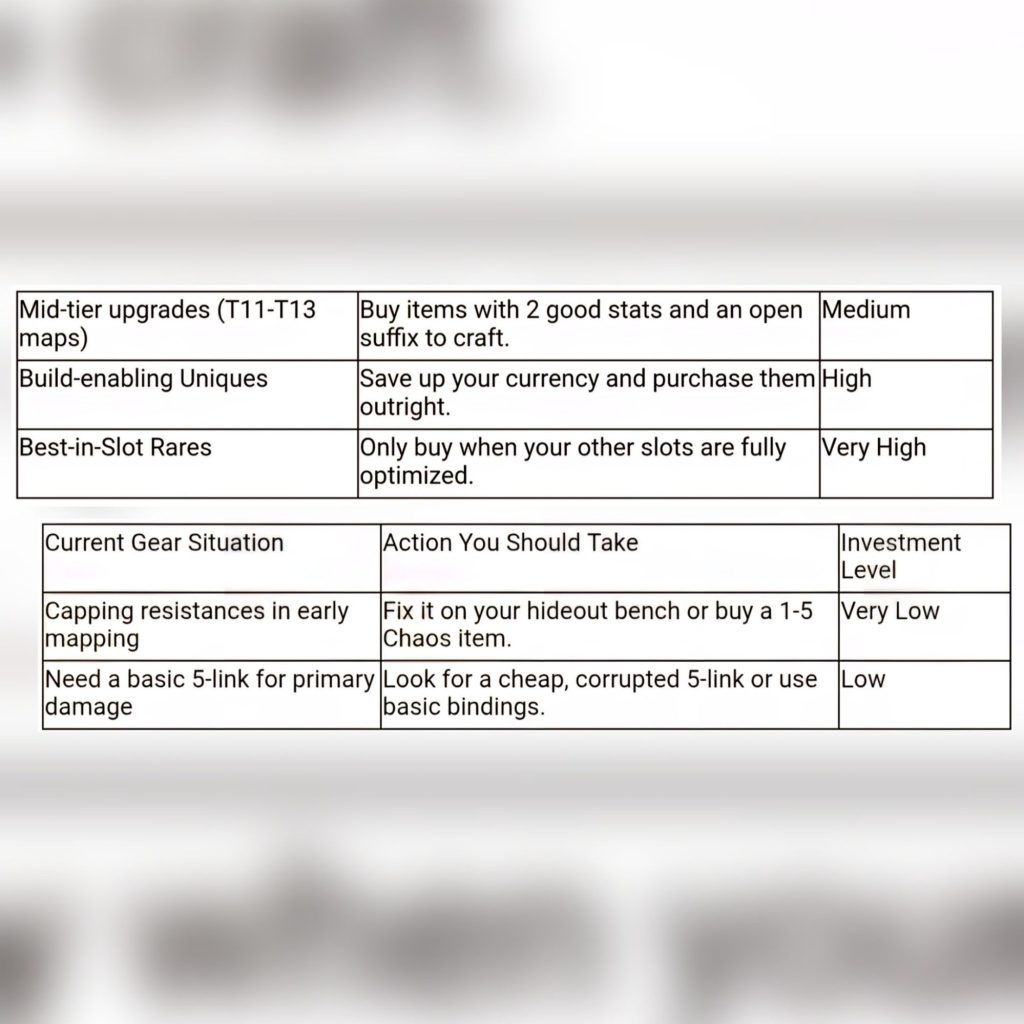
Here is a quick breakdown to help you decide when to spend your currency and when to hold onto it:
3: Violating the “Hideout is Lava” Rule
If there is one mantra every wealthy player swears by, it’s “the hideout is lava.” Every single second you spend sitting in your hideout staring blankly at your stash, rolling a single map, or agonizing over a one-Chaos trade is a second you aren’t out there killing monsters. Killing monsters generates loot. Standing next to your waypoint does not.
4: Getting Sniped Because of Lazy Price Checking
We have all experienced this awful feeling. You throw a rare ring into a public tab priced at 10 Chaos. Five seconds later, you get flooded with thirty messages from different players instantly trying to invite you to their party. You just severely underpriced a great item, and the automated trade bots sniffed it out in record time.
Many players get way too impatient when pricing rare gear. If an item has high life, a couple of high-tier resistances, and a desirable third stat, you need to actually search the market. Use trade macro tools or manually search the specific affix combinations on the official trade site.
5: Gambling Away Your Steady Profits
Path of Exile 2 is a massive casino disguised as a video game. The game gives you a hundred different ways to gamble your hard-earned currency. Whether it’s slamming a Vaal Orb on your best weapon, spamming stacked decks hoping for a god-tier card drop, or throwing rare currency at an item hoping to hit an impossible mod, gambling is the fastest way to return to zero.
Unless you have the bankroll to absorb massive losses, you should almost always sell your gambling materials to other players. Sell your stacked decks in bulk. Sell your high-end crafting materials. Let the top 1% of players take the huge risks while you take their guaranteed currency instead. Save yourself the stress and just sell your corruption temple services directly.
6: Forgetting Your Crafting Bench Exists
You drop a solid, rare ring. It has high life and two huge elemental resistances, plus an open suffix. Instead of taking it to the crafting bench in your hideout and adding a missing attribute for literally two Chaos Orbs, players will list it on the trade site as junk and then go spend entirely too much money on a completely different ring.
Always check if an item can be fixed with your hideout crafting bench. It is by far the cheapest mechanic in the entire game, yet new players act like it doesn’t even exist. A standard bench craft can easily turn a completely unsellable item into a highly profitable trade.
7: Rerolling Way Too Many Characters
The biggest hidden currency drain is creating a brand new character every three days. Every time you reroll, you spend currency on leveling gear, you spend hours running through the annoying campaign again, and you aren’t farming actual endgame drops.
By the time your fourth character finally hits maps, your friend who stuck to his league starter just bought his most expensive chase item. Stick to one character and push it as far as it can confidently go. Of course, if you realize your starter build is permanently bricked, and you simply cannot stand the leveling process again, some players opt to buy PoE 2 Divine Orbs at Skycoach just to instantly gear a new character and skip the painful mid-game struggle entirely.
Farming currency doesn’t require playing a complicated build at 500 actions per minute. It just requires basic discipline. Stop wasting time sitting idle in your hideout, sell your items and materials in bulk, don’t gamble your net worth away on a 1% chance, and carefully price your valuable drops. You will find your stash organically filling up much faster than you expected.
Frequently Asked Questions
How do I know if a rare item is actually worth a Divine Orb?
Check the market for similar items using trade layout tools. If your item has multiple high-tier synergy modifiers (like tier 1 life, double tier 1 resistances, and a highly sought-after influenced modifier), it is likely worth a significant amount.
Should I pick up every rare item off the ground to identify and sell?
Absolutely not. By the time you reach middle-tier maps, you should only be picking up high-value bases or jewelry. Identifying hundreds of bad, rare items is a huge chunk of time wasted.
Is crafting my own gear cheaper than buying it from the trade site?
Usually, no. Unless you know exactly what you are doing and are utilizing very specific, deterministic crafting methods, buying mid-tier gear directly from other players is almost always cheaper than gambling currency, trying to make it yourself from scratch.
What is the fastest way to get basic currency for rolling my maps?
Running dense content mechanics like Expedition, Heist, or simply focusing on strongboxes and basic shrines will generate a massive amount of smaller currency like alchemy and chaos orbs organically as you continuously run maps.
Why do my items never sell when I list them?
You are probably overpricing them based on one single good stat while ignoring that the rest of the item is dead. Try lowering the price by 10% to 20% every few hours until it eventually sells, or stick it in a 10 Chaos dump tab and see if anyone bites on the new price.
SET TO COMPOSE THE THEME FOR “STRANGER THINGS: TALES FROM ’85”
Composer and producer Jason Nesmith will compose the theme for the upcoming animated Netflix series “Stranger Things: Tales from ’85”, premiering April 23, 2026.
“Stranger Things: Tales from ’85”, is a new animated adventure series scheduled to premiere on Netflix on April 23, 2026. Developed by Matt and Ross Duffer and show-runner Eric Robles, focusing on new journeys for the original characters set between seasons 2 and 3, in Hawkins – during the winter of 1985. The horrors of the Upside Down are finally fading. But beneath the ice, something terrifying has awakened. The heroes must race to solve this mystery and save Hawkins in this new story set in the Stranger Things universe. Featuring the original heroes (Eleven, Mike, Will, Lucas, Dustin, Max) battling new, mysterious creatures. The show is created by Flying Bark Productions and executive produced by the Duffer Brothers, Shawn Levy, and Eric Robles. Jason worked closely with Robles to craft a theme that honors the legacy of the original series while establishing a fresh musical identity for the animated world. The Voice Castincludes voice acting from Brooklyn Davey Norstedt (Eleven), Jolie Hoang-Rappaport (Max), Luca Diaz (Mike), Elisha “EJ” Williams (Lucas), Braxton Quinney (Dustin), Ben Plessala (Will), and Brett Gipson (Hopper). But you really will have to wait to hear the theme, it is under lock and key until its release date.
Jason Nesmith has extensive credits to his name. Recently Jason has partnered with Ahmet Zappa to co-produce the music for a new musical feature film, developed from Zappa’s original concept and featuring songs by Tony-nominated composer Andrew Lippa. He recently finished the theme for the 2025/26 season of Extra Entertainment News, as well as the theme for TMZ Live. Jason also currently composes for Teen Titans Go and the Jennifer Hudson Show on Fox. He has also co-written a slasher romantic comedy musical feature with three-time Emmy Award–winning comedy writer Jason Blackman, which is currently in development. He has also had the pleasure of being one of 8 people chosen to participate in BMI’s Conducting Workshop in 2019. In recent years, he has composed scores for multiple independent films, television movies, and a handful of short films. Among them is Holly Slept Over, a romantic comedy from Sony starring Ron Livingston, Nathalie Emmanuel (Game of Thrones), and Britt Lower (Severance). For the last 19 years, Jason has worked with Warner Brothers/Tele-pictures as one of the primary composers for The Ellen DeGeneres Show. He has also written the themes for Anderson Live, CNN New Day, The Tyra Banks Show, Judge Jeanine Pirro, Let’s Ask America, Jessy and Jessy Food Tech, Ellen’s Design Challenge, Play with Caution, and many more. Since its launch in 2013, Jason has composed music for the Microsoft Surface tablet national commercial spots. He has also done extensive scoring for documentaries on the History Channel, Discovery Channel and the National Geographic Network. In his rock and roll days, he was signed by music industry legend, Seymour Stein to the iconic Sire Records as a member of 90’s famed Brit pop group Nancy Boy.
Beyond his work in entertainment, Jason Nesmith is actively involved in philanthropy through The Gihon Foundation, a nonprofit he runs with his siblings that supports musicians, writers, and artists across multiple disciplines. Recent contributions have included Musicares, and HomeboyIndustries.
Today JasonNesmith continues to write and produce for some of the longest running and most successful TV franchises, and can be heard literally 24/7, syndicated worldwide, under his own music company name, JEL Music Group.
www.jelmusicgroup.com
“The first time I can remember hearing music, I remember thinking, I want to make that. Before I
fully understood it, I was already trying to compose.
When I began learning guitar and piano, writing music became the natural extension of that curiosity. Over
the years I’ve worked across symphonic music as well as film and television scoring. Writing the theme for
Stranger Things: Tales from ’85 was particularly
exciting because the music helps define the
atmosphere and identity of the show,” Jason Says.
Jason knows music, it is in his blood, he was raised with many legendary musicians and writers in the hills of Laurel Canyon. As they say, ‘the fruit did not fall far from the tree,’ and in this case this tree has bared very talented fruit. Jason Nesmith is not stopping anytime soon. With his own 2 children he hopes to keep his family’s legacy out there for the younger generation to enjoy the music. Keeping in line with his musical heritage, Jason is just so excited to see how audiences will react to this latest upcoming project, and the huge brand of the “Stranger Things,” franchise.
1. How has your family inspired you as a musician?
JN: My mom always had records around the house like The Beatles, The Rolling Stones, Bob Dylan, Crosby, Stills & Nash, and The Beach Boys. Also, a lot of musicals like My Fair Lady, Grease, and West Side Story—stuff like that. My dad had a very wide variety of tastes. I was exposed to a lot of the classics and blues, like Robert Johnson, Muddy Waters, B.B. King, Howlin’ Wolf, and John Lee Hooker. He also loved country music and artists like Ella Fitzgerald, Ray Charles, Aretha Franklin, and Etta James.
2. What do the next 5 years look like musically?
JN: I have just finished writing a musical feature film with a partner I worked with for years on The Ellen DeGeneres Show. So, I hope to be making that film and would love to do some scoring on series for Netflix and Amazon, etc.
3. Where do you get your ideas for subject matter for your project development?
JN: Just look around—there is literally material everywhere.
4. What charities are you aligned with and why?
JN: I run a foundation called the Gihon Foundation with my three siblings. The foundation supports the arts. We recently donated to Homeboy Industries and the MusiCares Foundation.
5. What music projects will you be involved with in the future?
JN: I just recently wrote the theme for the new animated series on Netflix called Stranger Things: Tales from ’85. I hope to stay involved with that show, and of course I will continue with Extra, TMZ Live, The Jennifer Hudson Show, and Teen Titans Go! all of which I currently compose for—and two of which I have rewritten the themes for.
6. Who are your biggest influences?
JN: I would say my biggest influences are all over the map—from classical composers like Vivaldi, Bartók, Grieg, Mahler, and Debussy, to film composers like Jerry Goldsmith, James Newton Howard, and Gustavo Santaolalla, Michael Giacchino, Bernard Herrmann, Ennio Morricone, Henry Mancini. Then all the classic musicians and bands like Pink Floyd, Black Sabbath, Crosby, Stills, Nash & Young, The Beatles, Jimi Hendrix, The Rolling Stones, Bob Dylan, and Simon & Garfunkel.
7. What advice would you give to a recording artist or composer starting out?
JN: Learn to work across many genres and be able to compose in many styles. That gives you the best chance, because music supervisors, directors, and producers are always looking for different kinds of music. If you stay in one lane, it limits what you’ll be able to do dramatically.
8. Talk about your training in your early career—who have you trained with and why?
JN: I started playing guitar at a very young age and studied with local teachers, learning all the stuff a young kid wants to learn—Beatles, etc. I then moved on to classical guitar, which was a love of mine from my earliest memories, and studied with a classical guitarist named Jack Sanders. From there, I went on to study music theory, classical composition, and arranging on my own. Setting my sights on attending a music college, I went to Berklee College of Music in Boston for one year before leaving to pursue my career.
9. How do you take care of yourself—your health regimen?
JN: My health regimen is very straightforward. I try to eat as clean as I can. I go to the gym two to three times a week and try to walk or exercise a little every day.
10. Talk about your music on your current projects.
JN: My most recent project is Stranger Things: Tales from ’85, and the theme music on that was a very challenging exercise. I worked closely with Eric Robles, Dan Cohen, and John McGrew at Netflix. We were tasked with creating a new recognizable opening theme for a franchise that already had a very recognizable theme. We wanted to honor the original theme, which is amazing, while also bringing a new piece of music to represent this new take on an incredibly successful worldwide franchise.
11. Who are your favorite composers right now and why?
JN: Some modern-day composers I love right now are Chris Bowers, Teddy Shapiro, and Ramin Djawadi. I think these guys are bringing new and interesting hybrid scores to today’s shows. I like the use of orchestral instruments blended with different types of percussive and synthetic elements—it creates a very unique and compelling sonic environment.
12. When did you know you wanted to be a composer?
JN: I feel like I knew from a very early age. One of the things that fascinated me most about music was how it was made; and I was almost instantly compelled to try to figure it out. The minute I had five chords on the guitar; I started writing chord progressions. I would play them back on my cassette player and then play melodies over them—either on piano or guitar. Even though I didn’t fully understand it at the time, I loved what I was hearing harmonically. It was exciting when it worked and frustrating when it didn’t. I would work hard to improve it, and I could focus in a way that took me out of everyday life.
13. What types of music would you like to work on in the future?
JN: I really love film and TV scoring—that’s my favorite type of music. A very close second would be concert music for orchestra. The level of sophistication in those genres allows you to do so much with harmony and layering—it feels endless to me.
14. What’s your fashion style?
JN: My wife tells me I have no style at all.
15. What do you do to relax?
JN: My absolute favorite thing to do when I’m not working on music is to go fishing with my two boys. It’s a completely different world—very relaxing and very exciting at the same time.
16. What would you be doing if you were not a composer?
JN: I think if I wasn’t a composer, I would probably work in finance. I know that’s a completely different world from where I’ve lived my whole life, so maybe I’m wrong, but it seems interesting to me. There are so many different avenues one can explore.
17. What are your first steps in creating new music?
JN: When I sit down to create music, it always comes from a slightly different place. Sometimes it starts with a chord progression, sometimes with a melody, and sometimes with rhythm. When something pops into my head, I try to get to the piano as quickly as I can. It feels like a signal from somewhere telling me to go and write at that moment. A lot of times I don’t hear anything specific—I just sit down and start playing. Often, something emerges that I like, and that sets me on a particular path.
18. How do you overcome challenges in your career?
JN: I learned at a very young age that there will be challenges at almost every turn. For every 30 opportunities you pursue, you might get one—that’s a tough ratio. There’s a lot of rejection and criticism. For me, I just love doing it, so I keep coming back regardless of success or failure—both of which I’ve experienced plenty of.
19. Is there anything in your career that you wish you could do again?
JN: I wish that in my 20s I had taken my career more seriously. I think there were missed opportunities, especially in the bands that I was in. It was a fun time—being in a rock band, touring the world—but there were distractions. If I could do it again, I would focus more on the craft and less on the extracurriculars.
20. What are your hobbies?
JN: Fishing, reading, working out, and swimming in the ocean.
21. What is your fondest memory as a child with your family?
JN: I don’t have one single memory that sums it all up, but I had a wonderful childhood. My mother was one of the greatest moms you could ask for. My dad wasn’t around when I was young; but he became another wonderful influence in my life when I go to know him later.
22. How have you grown musically in the last 10 years?
JN: When I’m not working on a project, I’m either writing for, practicing, or studying music—often through online courses. I’ve completed many and continue to educate myself. I believe you should never stop learning. With music, it’s a lifelong pursuit.
23. How do you get your jobs composing?
JN: It really comes down to relationships. It’s important to build trust and be reliable. When you do get a job, deliver your best work—because second chances are rare. If people can count on you, they’ll keep coming back. That’s been my experience.
24. How do you see singer/songwriters/composers changing in the future?
JN: I can’t say exactly how it will change, but it definitely will. Music has gone through many evolutions and will continue to do so. For me, it’s important to stay current with technology and integrate it into my work.
25. Do you have a mentor?
JN: Yes, I would say my mentor right now is Adam Schoenberg—he may not even know it, but he is. He’s a very prolific American concert composer.
26. What’s it like to work on the new Stranger Things: Tales from ’85 show?
JN: It was thrilling and exciting—but also intimidating. Even after 20 years of composing professionally, this project carried unique pressure because of how beloved the franchise is. Writing music to define the animated series required careful thought. Eric Robles was incredibly helpful—we had many discussions that guided the direction. His feedback was invaluable when I sat down to compose.
27. What are your strengths as a composer?
JN: It’s hard for me to say, but one strength is listening. As a media composer, you’re helping bring someone else’s vision to life. You can have your own ideas, but it’s crucial to understand what’s needed.
28. What was the last live show you went to?
JN: AJR at the Hollywood Bowl—they were amazing.
29. Talk about all the different instruments you play.
JN: Guitar, piano, bass, and a bit of percussion. I’m not much of a virtuoso—I prefer to bring in great players.
30. How do you balance your music and your family?
JN: I made a decision years ago not to become a workaholic. I try to keep a schedule similar to a regular job—Monday through Friday, daytime hours—and avoid nights and weekends when possible.
31. How do you maintain longevity in this business?
JN: Keep growing, avoid repetition, and treat people well. Being kind and professional matters, just as much as skill.
32. How do you stay relevant?
JN: Learn, practice, repeat.
33. What was it like hearing your music on a show for the first time?
JN: It was unforgettable. It was on Celebrity Justice, a dramatic hip-hop cue during a real-life moment. Hearing my music in that context was incredibly exciting.
‘Rolls-Royce continues to push the automotive threshold with innovation, intuitiveness, and by introducing the Coachbuild Collection, an ultra-exclusive invitation-only collection.’ – Vaughn Lowery
Unites a coachbuilt motor car with a multi-year journey of unforgettable experiences
A Coachbuild Collection is a limited number production motor car, conceived and authored by Rolls-Royce, never to be repeated
Entry by invitation only, offered to clients with a deep affinity for Rolls-Royce design
Offers extraordinary access via the marque’s global Private Office
Private events hosted for clients in the world’s most desirable destinations
“I have had the privilege of meeting clients around the world who seek the very pinnacle in luxury and share an extraordinary passion for Rolls-Royce design. It became clear that they wished to see not only what Rolls-Royce would create if left entirely to its own imagination and with the freedom offered by coachbuilding, but they also wanted to witness that journey at every stage. Coachbuild Collection is the result. This is something the super-luxury world has never seen before. The experience of this program is inseparable from the motor car itself, and both will be brought to life with the care and ambition worthy of the collectors who inspired them – and of Rolls-Royce itself.”
Brownridge, Chief Executive, Rolls-Royce Motor Cars
In response to global client demand, Rolls-Royce Motor Cars announces the Coachbuild Collection: an entirely new proposition in super-luxury, in which a true coachbuilt motor car and an extraordinary multi-year program of experiences are conceived as one. Each Coachbuild Collection is designed entirely by Rolls-Royce and created on a completely new canvas, never to be repeated. Clients with a special affinity for the marque are invited to participate in the program through the global Rolls-Royce Private Office network.
AN UNPRECEDENTED COACHBUILDING LEGACY
Coachbuilding has been central to Rolls-Royce since the marque was founded. In the earliest years, a rolling chassis was delivered to specialist coachbuilders, who would design and construct a body of almost any form to the client’s precise requirements – similar to commissioning a suit on Savile Row or a dress from a Paris couturier. Charles Rolls and Henry Royce introduced one critical constraint: fixed proportions around the radiator ensured every motor car remained unmistakably a Rolls-Royce. That discipline endures today, enabling creative freedom while preserving an identity more than 120 years in the making.
THE COACHBUILD COLLECTION PROGRAM
A Coachbuild Collection begins with a true coachbuilt motor car: a wholly unique body style formed, built and handcrafted by Rolls-Royce’s Coachbuild department. These motor cars will be fully homologated, road-legal, and created to be driven. Each Coachbuild Collection will be strictly limited in number and will never be repeated. Those clients known to have a special affinity for the Rolls-Royce brand, and who the marque believes would be fascinated to be part of such a remarkable project, are invited to participate.
Rolls-Royce recognized that the collectors drawn to this proposition are equally collectors of singular experiences, and conceived a program of equal ambition to reflect this. For the first Coachbuild Collection, clients will be granted exclusive access to closed testing facilities, witnessing the motor car’s development across performance and climate extremes. They will travel to locations chosen for their deep connection to this motor car’s story. They will be granted rare access to the innermost design studios within Rolls-Royce. They will be welcomed into the ateliers of master craftspeople from adjacent worlds within super-luxury, whose dedication to perfection mirrors that of Rolls-Royce itself. Clients will also gather in the world’s most desirable destinations for remarkable, curated private events at which the designers behind each Coachbuild Collection will share the inspirations and convictions that shaped it.
THE WORLD’S MOST DESIGN-LITERATE COLLECTORS
The announcement of landmark Coachbuild motor cars in the Goodwood era – Sweptail in 2017, Boat Tail in 2021, Droptail in 2023 – deepened the affinity that the world’s most influential collectors had long held for Rolls-Royce design. What distinguished this group was the nature of their ambition. They were not seeking to direct the design process themselves. Instead, they were fascinated by the idea of entrusting Rolls-Royce to create something entirely of its own – to see what would emerge when the marque expressed its design principles with the total freedom of coachbuilding. This dialogue became the foundation of the Coachbuild Collection.
THE FIRST COACHBUILD COLLECTION
The design and engineering treatment of a Rolls-Royce Coachbuild Collection – as well as the number of motor cars produced, the features within them, and the experiences that participation unlocks – is not fixed and will be curated to serve the singular vision of each Collection. The first Rolls-Royce Coachbuild Collection will be a fully electric motor car, reflecting the passion that so many clients have for a fully electric Rolls-Royce. Many of the collectors who inspired the Coachbuild Collections program are existing Spectre owners who celebrate how its electric powertrain elevates the Rolls-Royce experience. For these individuals, the question of how the first Coachbuild Collection should be powered had only one answer. That so many of the world’s most exacting collectors responded this way is the most authentic measure of what Rolls-Royce has achieved with electrification.
For many people, it’s hard not to turn around and take a look at a vehicle with a unique or aggressive aesthetic. After all, tires are more than just rubber elements that support the vehicle and enable its forward motion. They are a part of one’s visual branding and style.
However, that doesn’t mean practicality isn’t important. Pursuing visuals at the cost of traction and handling doesn’t provide the safest results. As such, appearance and performance go hand in hand, and one without the other simply doesn’t scratch the itch. That’s why drivers prefer tire models that offer both.
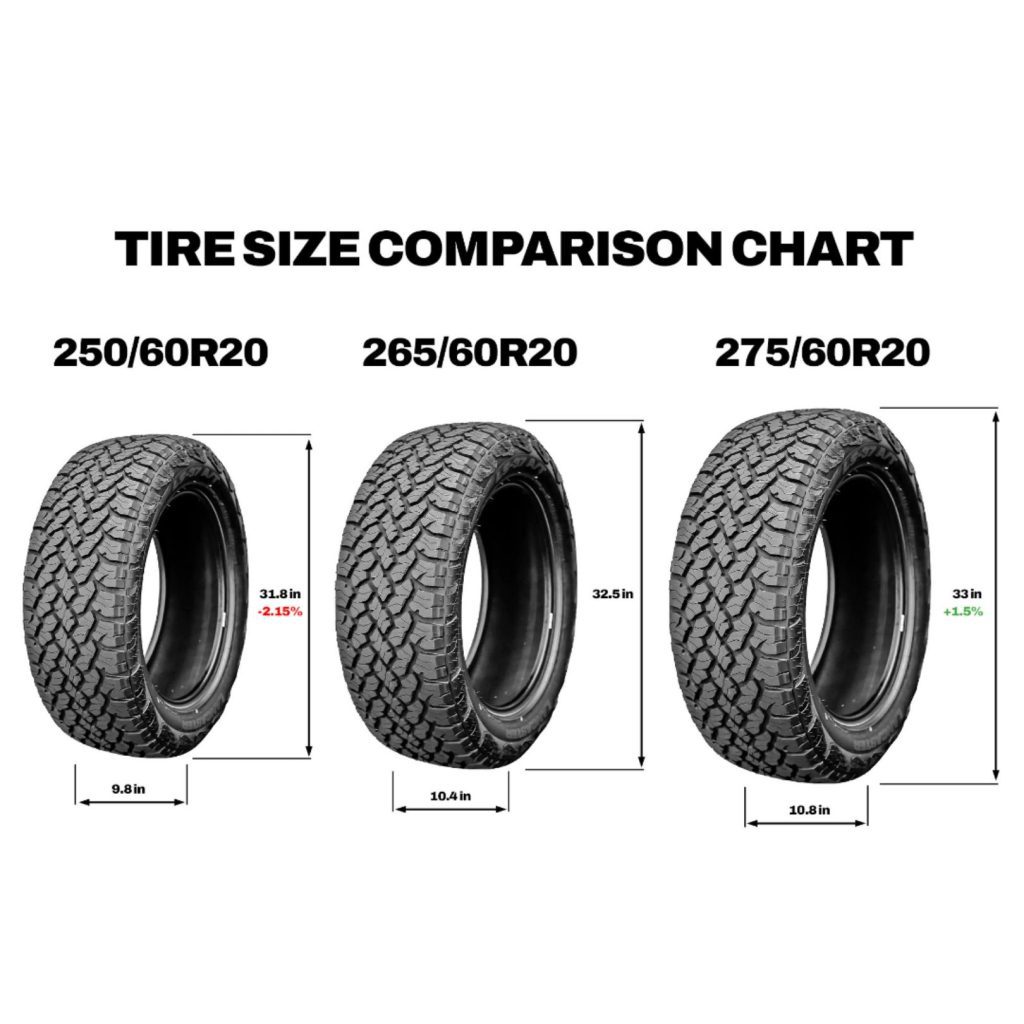
Opting for the 265/60R20 tire size will get you the best of both worlds. It offers the right look alongside safety and stability, both on city streets and while off-roading. So, let’s explore this a bit deeper.
Breaking Down 265/60R20
Before exploring the popularity of 265/60R20 tires, we should first understand what these numbers and letters mean. Don’t worry, the meaning of this marking is relatively straightforward.
The number 265 describes the tire’s width. It directly impacts the tire’s performance, fuel efficiency, and comfort. Narrow and wide tires minimize some tire characteristics and boost others.
As for the number 60, it’s called the aspect ratio. It informs drivers about the tire’s profile, revealing how tall the tire is. The larger the number, the taller the tire, leading to greater ground clearance.
The last number identifies the rim diameter of the tire. In our case, the tire fits only on 20-inch wheels. And finally, the R letter specifies the radial construction, which nowadays is the standard for most regular cars.
In short, the sequence defines the tire’s dimensions and construction, helping you determine which tires are the right fit for your vehicle.
Why This Size Is Trending
Having a better understanding of the tire size, we can now tackle the next question. What makes 265/60R20 tires so special? The answer lies in the benefits this tire size offers. Let’s take a look.
Wider tires enhance a vehicle’s visual presence. Their larger size fills wheel wells nicely, creating an aesthetic that appeals to many drivers.
While these bigger wheels are expected to be loud during the drive, they are often designed to maintain ride comfort. They do this by diminishing vibrations and noise on the road, making them perfect for pleasant drives.
In terms of performance, tires of this size feature a versatile application. Their tread design and gripping power result in a balanced performance, making them ideal for urban, highway, and light off-road driving.
Taking these characteristics into account, it’s not surprising that the 265/60R20 tire size is trending. With these benefits, who wouldn’t want to go on adventures?
Real-World Use Cases
As already mentioned, 265/60R20 tires offer a number of benefits for drivers. As such, it’s not surprising that you can encounter them in different environments.
Since these tires are comfortable on pavement, you can enjoy your everyday commute. That is, until you get stuck in a traffic jam, but that’s another matter.
Being wider, with more tread details, allows these tires to handle dirt roads with ease. Due to their powerful grip, they work for trails as well, where their cushioning effect gets more noticeable
Camping trip enthusiasts appreciate these models for having more ground clearance, which protects the cars’ undercarriages. You’ll safely reach your destination, even if the journey takes you across rocks, mud, or uneven surfaces.
Where You’ll See 265/60R20 Tires
Besides finding their way to different locations, drivers sport 265/60R20 tires on specific vehicles. This is the case since their size wouldn’t fit passenger vehicles. So, what vehicles have them?
Larger vehicles, such as SUVs and light trucks, will feature them. Both are powerful and durable enough to withstand demanding off-road challenges, as well as regular road use. In addition, these vehicle types can also handle larger tires, allowing them to fully take advantage of their dimensions. The result is maximum satisfaction of conquering difficult landscapes and reaching your target location in a timely manner.
Driving Experience: What It Feels Like
Since each tire has specific characteristics, it will provide a certain feel during the drive. The 265/60R20 tires make great all-rounders as they cover a variety of driving conditions.
Whether you’re visiting friends in another city or are on a road trip, you can expect a stable and smooth performance on the road. The tread lowers road noise, securing your tranquility on pavement. Moreover, comfort is also ensured while off-roading. Tires with larger profiles act as shock absorbers, enhancing the quality of your ride.
With these tires, you can confidently traverse soft, loose, and uneven surfaces. Larger and wider tires mean more tread blocks and wider grooves. This keeps them clean, enabling them to firmly grip gravel, dirt, and other surfaces. This combination offers better stability, making sure no destination is beyond reach.
Types of Tires in This Size
Despite the technological advances we’ve achieved regarding tires, no tire fits all purposes and conditions. Which is why you have to pick the right one for your adventure. To help you decide, here’s a summary of what you can find with this tire size.
All season models handle changing conditions well, while all weather tires can also withstand harsher winter weather. In contrast to these, winter models are specifically designed for icy and snowy conditions.
Being a safe bet both on and off-road, all terrain tires are great all-rounders. Mud terrain models are best for traversing muddy surfaces, while rugged terrain tires offer a balance of on-road comfort and off-road performance. For the most challenging terrain surfaces, extreme terrain tires are the way to go.
Besides these, there are two more tire types for this size. Touring models reign supreme as providers of the smoothest and most comfortable driving experience on the road. Yet the fastest ones are performance tires, with their imposing high speed durability.
Conclusion
Safety is imperative for any journey, particularly when tackling challenging conditions or long distances. As such, quality tires are a must. However, since one model cannot provide everything, you need to select the one that’s best at handling the job, given the circumstances.
This is where 265/60R20 tires come into play as a modern sweet spot for any driver. They provide a balanced intersection of design, comfort, and versatility. For this reason, they are the go-to option for city and off-road driving.
The cannabis industry has entered a new era of brand sophistication, where packaging design borrows heavily from the visual language of fashion. As legalization expands and competition intensifies, cannabis brands are discovering that pre-roll packaging serves as more than protective wrapping—it’s a statement of identity, a tactile brand experience, and increasingly, a canvas for design innovation inspired by runway trends and streetwear aesthetics.
This convergence isn’t accidental. Both industries target style-conscious consumers who value authenticity, craftsmanship, and visual storytelling. Custom pre-roll packaging has emerged as a critical differentiator in dispensaries crowded with similar products, where a tube’s finish, typography, or color palette can determine whether a consumer reaches for one brand over another. The result is packaging that feels less like a commodity container and more like a collectible object—something worth displaying rather than discarding.
The Rise of Pre Roll Tubes as Design Objects
Pre-roll tubes have become the industry’s preferred format for several practical and aesthetic reasons. Their cylindrical form offers structural advantages while providing a 360-degree surface for branding. Leading cannabis companies now treat these tubes with the same design rigor that luxury brands apply to perfume bottles or cosmetics packaging.
The appeal breaks down into several key factors:
Product Integrity: Airtight construction preserves freshness and protects delicate pre rolls from crushing, maintaining quality from production to consumption.
Pocket-Friendly Portability: Compact dimensions make tubes ideal for consumers who value discretion and convenience, fitting seamlessly into bags or pockets.
Design Versatility: From matte black finishes to holographic foils, tubes accommodate diverse aesthetic approaches that align with seasonal fashion trends and brand positioning.
Tactile Experience: Premium materials—soft-touch coatings, embossed logos, weighted caps—create a sensory experience that reinforces brand quality before the product is even used.
The global cannabis packaging market is projected to reach $7.5 billion by 2030, with custom solutions driving much of that growth. This expansion reflects not just market maturation but a fundamental shift in how cannabis brands communicate value through physical design.
Sustainability Meets Style in Cannabis Packaging
Environmental consciousness has moved from niche concern to mainstream expectation, particularly among younger cannabis consumers who scrutinize brands’ ecological commitments. This demographic overlap with fashion’s sustainability movement has pushed cannabis companies to rethink materials and production methods.
Progressive brands are adopting several approaches:
Biodegradable Substrates: Hemp-based plastics and mushroom mycelium composites offer viable alternatives to petroleum-derived materials without sacrificing durability.
Closed-Loop Systems: Some companies now accept used packaging for recycling or composting, creating circular economies that reduce waste streams.
Minimalist Design Philosophy: Reducing excess materials—eliminating unnecessary inserts, using soy-based inks, choosing mono-material construction—aligns environmental goals with contemporary design aesthetics.
Transparency Labeling: Clear communication about materials sourcing and end-of-life disposal builds consumer trust and differentiates brands in crowded markets.
Research from McKinsey & Company indicates that 60% of consumers consider sustainability when making purchase decisions, with that figure rising to 75% among millennials and Gen Z. Cannabis brands ignoring this shift risk alienating their core demographic.
Navigating Regulatory Requirements for Pre Roll Packaging
Creative ambition in cannabis packaging must operate within strict regulatory frameworks that vary significantly across jurisdictions. These rules exist to ensure child safety, prevent accidental consumption, and provide consumers with essential product information—but they also constrain design choices in ways that fashion packaging never encounters.
Compliance typically requires attention to several mandated elements:
Child-Resistant Mechanisms: Packaging must pass standardized tests proving children under five cannot easily access contents, often necessitating push-and-turn caps or squeeze-to-open features.
Standardized Health Warnings: Specific language, font sizes, and placement requirements for warnings can occupy significant label real estate, challenging designers to integrate these elements elegantly.
Potency and Ingredient Disclosure: THC/CBD percentages, terpene profiles, and additive lists must appear clearly, requiring thoughtful typography and information hierarchy.
Opaque or Resealable Requirements: Some jurisdictions mandate that packaging prevent product visibility or maintain resealability after opening, influencing material and structural choices.
Prohibited Design Elements: Restrictions on cartoon characters, bright colors that might appeal to children, or resemblance to conventional food packaging limit creative approaches.
Suppliers like Sana Packaging, Kush Supply Co., and Calyx Peaks have each developed compliant pre-roll packaging lines that address these requirements without sacrificing shelf presence.
Fashion Collaborations Elevate Cannabis Packaging
The most innovative cannabis brands are forging partnerships with fashion designers, streetwear labels, and visual artists to create limited-edition packaging that transcends traditional product design. These collaborations generate cultural cachet while introducing cannabis products to audiences who might not otherwise engage with the category.
Recent examples illustrate this trend’s potential:
Capsule Collections: Seasonal packaging drops that mirror fashion’s release calendar, creating urgency and collectibility around what might otherwise be disposable containers.
Designer Partnerships: Established fashion names lending their aesthetic sensibilities to cannabis brands, elevating perceived quality and justifying premium pricing.
Cultural Crossovers: Packaging that references streetwear graphics, music subcultures, or contemporary art movements, positioning cannabis within broader lifestyle contexts.
Influencer Co-Creation: Social media personalities with strong visual identities collaborating on packaging designs that resonate with their follower bases.
Material Innovation Drives Next-Generation Tubes
The future of custom pre roll tubes lies at the intersection of material science, digital integration, and personalized consumer experiences. Brands investing in research and development are exploring possibilities that seemed impractical just years ago.
Emerging innovations include:
Smart Packaging Integration: NFC chips or QR codes embedded in tubes that connect consumers to strain information, consumption tips, brand stories, or authentication verification—addressing both engagement and counterfeit prevention.
Thermochromic and Photochromic Materials: Temperature- or light-reactive inks that change color, creating interactive packaging experiences while potentially indicating product freshness or storage conditions.
Modular Design Systems: Tubes engineered for reuse with replaceable components, transforming single-use packaging into durable accessories that consumers retain and refill.
Bioplastic Advances: Next-generation materials derived from algae, agricultural waste, or bacterial fermentation that offer petroleum-plastic performance with complete biodegradability.
Personalization Technology: Digital printing capabilities allowing cost-effective short runs, enabling brands to offer customized tubes for special occasions or individual preferences.
As material costs decrease and production scales, these innovations will likely become industry standards rather than premium differentiators.
Why Packaging Determines Purchase Decisions
In cannabis retail environments where consumers often face dozens of similar products, packaging quality directly influences sales velocity and brand loyalty. This isn’t superficial—it’s fundamental consumer psychology applied to a rapidly maturing market.
Packaging impacts purchasing through several mechanisms:
Shelf Presence: Distinctive tubes command attention in crowded dispensary displays, increasing the likelihood of consideration among browsers unfamiliar with specific brands.
Quality Signaling: Premium materials and thoughtful design communicate product quality before consumption, justifying higher price points and setting expectations.
Brand Recognition: Consistent visual systems across product lines build familiarity, encouraging repeat purchases and simplifying decision-making for loyal customers.
Social Currency: Packaging worth photographing extends brand reach through organic social sharing, particularly important given paid advertising limitations.
Unboxing Experience: The tactile pleasure of opening well-designed packaging creates positive associations that influence repurchase behavior and word-of-mouth recommendations.
The stakes are considerable. As cannabis markets mature and price competition intensifies, brands that invested early in distinctive packaging maintain advantages that purely product-focused competitors struggle to overcome. In an industry where blind taste tests often reveal minimal differentiation between mid-tier products, packaging becomes the primary vehicle for communicating brand values and justifying premium positioning.
For cannabis companies navigating this complex landscape, the lesson is clear: packaging isn’t an afterthought or cost center—it’s a strategic asset that shapes consumer perception, enables brand storytelling, and ultimately drives business outcomes in an increasingly competitive market.
To refresh your property facade this spring focus on upgrading your main entrances, power washing exterior surfaces, adding creative exterior accents, refreshing your garden beds and enhancing your porch space. Winter takes a massive toll on the outside of our homes. I know how frustrating it is to pull into the driveway and see dull siding and dead plants everywhere. We are going to fix that right now.
Spring is the ideal time to enhance your home exterior and boost its curb appeal with a few strategic updates. The weather is finally cooperating. You can actually step outside without freezing. I think the key is finding practical improvements you can implement quickly to revitalize your property without tearing the whole house down.
The real impact of a front entrance
Your primary entrances serve as the focal point of your home. I remember looking at my own house a few years back. The paint was peeling off the front door. It looked sad. I bought a can of dark navy paint from Home Depot and spent a Saturday afternoon painting. I ended up wandering the power tool aisles for an hour before actually buying the paint but that is another story. The difference was MASSIVE once the paint dried.
You want your main access points to look sharp. Sometimes paint is not enough though. If your exterior doors are rotting or warped you need something new. Because nothing says welcome home like a rotting piece of wood. Relying on local professionals such as Adams Door Inc. Cedar Rapids ensures a high-quality installation that perfectly complements your home architecture. They handle the heavy lifting so you do not have to stress over hinges and weatherstripping.
Warm colors are definately trending right now.
Think about warm clay red or soft sage green for your entrance. It invites people in. Consider pairing this with upgraded hardware like modern doorknobs and unique house numbers. A fresh coat of paint was applied to my neighbor’s house last week and it completely changed the street view. You just need to pick colors with long-lasting appeal.
Why power washing changes everything
So here is the tricky part about spring cleaning. You have a great looking door now but the siding around it is covered in green fuzz. That is where a good power wash comes into play.
Over the winter dirt and grime build up everywhere. Mildew loves damp cold months. Blasting all that away is incredibly satisfying. Have you ever tried scrubbing a driveway by hand? Do not do it. Power washing your siding removes these stains and instantly brightens your facade.
Cleaning your walkways and driveways at the same time creates a cohesive and well-maintained look that significantly boosts overall curb appeal. I think people underestimate how much brighter a house looks when it is actually clean. You don’t always need new paint. Just water.
Just be careful with the pressure settings. You can strip paint right off wood if you get carried away. I was washing my deck once and I press too hard and splintered a whole board. Lesson learned.
Layering materials makes your house pop
Single material facades are looking a bit tired these days. Mixing different textures is what gives a house character. If you have a brick house try adding some board and batten siding on the upper level. Or maybe some natural wood brackets under the roofline.
Warm wood tones like light oak look fantastic against painted brick. It creates a layered design that feels authentic. I definetly recommend looking into natural stone accents as well. Granite or limestone pieces add a lot of visual weight.
It is all about creating contrast.
Choosing the right stone elements
Natural stone remains the preferred choice for upscale outdoor spaces. Granite and bluestone are common selections. Slightly textured finishes are preferred for better traction and handcrafted character.
You want materials that feel lived-in and connected to their surroundings. Not overly polished. Combining wood with stone creates dynamic visual interest while improving durability and weather resistance. This approach allows you to incorporate multiple textures that add depth to your facades.
Planting for immediate curb appeal
Plants are the easiest way to add life to a dead looking yard. Spring is literally the season for it. Tulips and daffodils are ‘classic’ for a reason. They push through the cold ground and scream that warmer weather is here.
Potted arrangements on the steps work great if you lack garden beds. I usually grab a few pre-made pots from the local nursery. Well-maintained landscaping makes an immediate visual impact.
A fresh layer of mulch makes everything look intentional. Even if your shrubs are a bit overgrown some crisp black or brown mulch tricks the eye. It hides a lot of sins.
Mulch and basic maintenance
Trimming overgrown shrubs and applying a fresh layer of mulch to flower beds will give your yard a neat appearance. You do not need to be a master gardener.
Just cut back the dead branches from winter. Pull the weeds before they get huge. Seasonal colorful flowers add softness and welcoming appeal.
Herringbone brick pavers and walkways are gaining popularity as accent features to complement these garden beds. They give you a nice path to walk on while you admire your handy work.
Bold accents and trim colors
We talked about the front door but the trim matters too. Dark gutters are surprisingly popular right now. They frame the house like eyeliner.
Contrast is a big deal in exterior design right now. If your house is a warm white maybe try dark teal or charcoal gray for the shutters. Shutters should actually look like they could close over the windows. Fake plastic shutters bolted to the wall just look cheap.
I suppose it depends on your budget. But painting existing trim is a weekend project that costs very little. Modern architectural details can easily elevate your home aesthetic.
Consider adding striking elements like contrasting dark gutters or mortarless stone accents to highlight columns. These creative touches add character and visual interest while modernizing your property. Design professionals emphasize that this marks a fundamental shift in homeowner priorities. People want livability and simple elegant design.
Upgrading the porch experience
A porch should be functional. It is an extension of your living room. Throwing a plastic chair out there is not enough to accomodate guests properly.
You want comfortable seating that invites you to drink your morning coffee outside. A new doormat is a five dollar upgrade that makes a weirdly big difference. Hanging planters with seasonal greenery add softness to harsh architectural lines. A welcoming porch sets the tone for your entire home.
People want spaces that feel lived in. Natural materials help with that. Authentic wood or stone elements on the porch make it feel grounded. Indoor-outdoor continuity is increasingly important.
Homeowners are increasingly investing in outdoor spaces that function year-round. Simple additions create an inviting atmosphere and make an excellent first impression on your visitors. Add a new doormat that reflects your personal style.
The Bottom Line
Updating your home exterior does not have to cost a fortune. Small changes add up quickly. I look at my own house and realize it is a constant work in progress. We fix one thing and notice another.
That is just homeownership. Take it one weekend at a time. Start with the power washer or a can of paint. You will be surprised how much better you feel pulling into the driveway.
Focus on simple elegance and high-quality finishes that add property value. Mix materials thoughtfully. Plant some flowers. Your house will thank you.
Moving is one of those life events that feels deceptively simple—until you’re deep into it. Boxes multiply, schedules tighten, and suddenly you’re juggling logistics you didn’t anticipate. One of the most common sources of stress? Unclear or inaccurate pricing. That’s where instant moving quotes have changed the game.
An instant moving quote isn’t just about speed. It’s about clarity, planning, and avoiding the kind of last-minute surprises that can derail an otherwise well-organized move. Whether you’re relocating locally or planning a longer-distance transition, understanding how instant quotes work—and why they matter—can save you both time and frustration.
The Problem with Traditional Moving Estimates
For years, moving estimates followed a familiar pattern: phone calls, delayed callbacks, vague ranges, and plenty of fine print. While some companies still rely on this approach, it often leaves customers with more questions than answers.
Delays That Slow Everything Down
Traditional quotes can take days to finalize. You may need to wait for an in-person assessment or exchange multiple emails just to get a rough number. During that time, you’re stuck—unable to confirm dates, compare options, or finalize your moving plan.
In a world where schedules fill quickly and moving windows are often tight, waiting for pricing can put you at a disadvantage.
Unclear Assumptions
Many older-style estimates are based on limited information. Without detailed input about inventory, building access, stairs, elevators, or distance, quotes may rely on assumptions that don’t reflect reality. Those assumptions often surface on moving day, when it’s too late to adjust without added cost.
What an Instant Moving Quote Actually Is
An instant moving quote uses structured inputs—often through an online form—to generate a price estimate quickly. Instead of relying on guesswork, these systems prompt you to provide specific details that affect cost and logistics.
Built on Detailed Inputs
Instant quote tools typically ask about:
Size of your home or apartment
Estimated inventory or number of rooms
Pick-up and delivery locations
Floor level and elevator access
Desired moving date
Additional services like packing or storage
By collecting this information upfront, the quote is grounded in your actual situation rather than a generic average.
Immediate Transparency
Once the details are submitted, the quote is generated almost instantly. This gives you a clear starting point for planning, budgeting, and comparison—without waiting days for follow-up.
How Instant Quotes Save You Time
Time is one of the most undervalued resources during a move. Instant quotes help protect it in several important ways.
Faster Decision-Making
With immediate pricing in hand, you can quickly compare options, confirm availability, and secure your preferred moving date. This is especially valuable during peak moving seasons when reputable companies book up fast.
Instead of spending hours on phone calls or waiting for callbacks, you can move forward with confidence.
Fewer Back-and-Forth Conversations
Because instant quotes gather detailed information upfront, there’s less need for repeated clarification. You’re not revisiting the same questions multiple times or correcting misunderstandings later in the process.
This streamlined communication keeps planning efficient and reduces the mental load that often comes with coordinating a move.
Avoiding Unwanted Surprises on Moving Day
Unexpected costs are one of the biggest complaints people have about moving. Instant quotes help minimize that risk by aligning expectations early.
Clear Scope of Work
When a quote reflects accurate details—stairs, long carries, bulky items—it sets a clear scope for the move. Movers arrive prepared, and clients know what services are included.
This reduces the likelihood of last-minute adjustments that result in additional charges or delays.
Better Alignment Between Quote and Reality
No estimate can predict every variable, but instant quotes significantly narrow the gap between expectation and outcome. When both parties are working from the same detailed information, there’s less room for miscommunication.
This alignment creates a smoother moving day and a more predictable final cost.
Budgeting with Confidence
Moving often overlaps with other expenses: security deposits, lease overlaps, new furniture, or home improvements. Uncertainty around moving costs makes budgeting harder than it needs to be.
Early Cost Visibility
An instant quote gives you early insight into one of the largest line items in your move. Even if the final cost adjusts slightly, having a solid estimate allows you to plan responsibly rather than reactively.
Easier Comparisons Between Companies
When quotes are delivered quickly and in a similar format, comparing services becomes simpler. You can evaluate value—not just price—by looking at what’s included, how transparent the estimate is, and how responsive the company appears.
Why Reputable Movers Embrace Instant Quotes
Instant quotes don’t just benefit customers—they also reflect how professional moving companies operate.
Efficiency and Professionalism
Companies that offer instant quotes often invest in systems designed to improve accuracy and customer experience. This signals a commitment to efficiency, organization, and clear communication.
While not every quality mover uses instant tools, many forward-thinking companies do—because they understand that clarity builds trust.
Better Prepared Crews
When movers receive detailed information ahead of time, they can assign the right crew size, truck, and equipment. That preparation leads to faster, safer, and more organized moves.
When Instant Quotes Work Best—and When to Ask More Questions
Instant quotes are powerful, but they’re most effective when used thoughtfully.
Ideal for Most Residential Moves
For apartments, condos, and standard homes, instant quotes provide a strong foundation. As long as you input accurate details, the estimate is likely to be reliable.
Complex Moves May Need Follow-Up
Moves involving oversized items, specialty equipment, or unusual access conditions may still benefit from a follow-up conversation or virtual walkthrough. Reputable companies will let you know when an additional assessment is helpful rather than relying blindly on automation.
The key is that instant quotes start the conversation with clarity, not confusion.
Taking Control of the Moving Process
One of the most stressful aspects of moving is feeling out of control—waiting on information, reacting to changes, and managing surprises. Instant quotes shift that dynamic.
By choosing to get a movers quote early in the process, you take an active role in planning. You gain visibility, set expectations, and reduce uncertainty before it has a chance to compound.
A Smarter First Step Toward a Smoother Move
Moving will always involve effort, but it doesn’t have to involve unnecessary stress. Instant moving quotes represent a more modern, transparent approach to an age-old process.
They save time by eliminating delays, reducing surprises by clarifying scope, and supporting better decision-making from the very beginning. Whether you’re moving across town or planning a more complex relocation, starting with an instant quote helps ensure that your move begins with information—not guesswork.
In a process where clarity is everything, that first step can make all the difference.
We’ve all had that gut-punch moment: you paste your carefully crafted essay or blog post into an AI checker, and it barks back that the piece is “likely AI-generated.” You know every word is yours, yet the result threatens your grade, your client brief, or your reputation. False positives are rare but real, and knowing how to respond keeps a technical hiccup from turning into a credibility crisis.
Most detectors lean on statistical patterns – repetitive syntax, evenly sized sentences, limited personal flair – to decide whether something feels machine-written. The irony is that disciplined human writers often hit those same patterns when they trim fat, avoid slang, and aim for clarity. So the better you get at tidy prose, the more you resemble an algorithm on paper. That’s why even accomplished journalists and graduate students sometimes trigger alarms. Enter the Smodin AI Content Detector: https://smodin.io/ai-content-detector, a fast web tool that highlights suspect lines and hands back a probability score.
Why False Flags Happen
The first culprit is overlapping style. Large language models learn from oceans of public text – text written by humans. Naturally, they echo human habits. When you, a human, write with structured logic or summarise dense research, you overlap the very patterns that detectors look for. A legitimate abstract on cell biology can read “too clean,” because technical writing purposely avoids digressions and emotional spikes that scream “I’m human.”
Second, detectors must estimate across languages, genres, and educational levels. They can’t keep bespoke rules for every niche. That generalisation is useful for speed but risky for nuance. A Shakespeare essay and a forged product review might share the same short sentences and high verb density, even though their origins differ wildly.
Finally, context matters. Detectors ignore how you brainstormed, outlined, or revised. They only see the finished text. Without witnessing your process, they treat your polished draft as a static sample, not a journey. That blind spot is the gap you will fill when challenging the flag.
Pattern Blindness in Practice
Imagine a nursing student summarising clinical guidelines. Each sentence starts with the imperative “Assess,” “Monitor,” or “Document.” The repetition is intentional – a checklist style nurses love – but algorithms sometimes call it robotic. Likewise, a novelist experimenting with rhythmic minimalism can be mistaken for a chatbot stuck on “short mode.” Recognising these practical examples helps you diagnose exactly why the detector blinked red.
Immediate Steps When You’re Flagged
Step one: breathe. Emotional reactions often lead to rushed rewrites that weaken the work. Open the detector’s report and read the highlighted passages aloud. Ask yourself, “Do these lines feel colder or more repetitive than the rest?” Often, you’ll notice pockets of uniformity you can humanise without gutting the piece.
Next, layer in organic markers of authorship. That might be a quick anecdote, a sense impression, or a rhetorical question. Detectors are less confident when sentences vary in length and rhythm. Be subtle – one lively remark per paragraph is enough to tip the statistical balance.
Now cross-verify. Run the text through two or three different detectors. If only one tool cries foul while the others pass, you have immediate grounds to question its verdict. Consistency across platforms builds or erodes your defense, so screenshot each result.
Finally, document your workflow. Keep drafts, timestamped notes, and research bookmarks. In academic settings, version history in Google Docs or Microsoft Word’s Track Changes becomes a powerful receipt book. Showing how the paragraph evolved from outline to final form often ends the conversation.
Communicating with Authority Figures
When approaching a professor or editor, lead with transparency. Explain the false flag, attach your evidence bundle, and invite them to review your draft history. Frame it as a technical misunderstanding, not a confrontation. Most gatekeepers appreciate calm professionalism and will drop the matter once they see your process.
Long-Term Strategies to Protect Your Work
Over time, cultivate a personal voice that detectors find hard to pigeonhole. Mix sentence lengths, slip in sensory verbs, and vary your paragraph structure. You’re not gaming the system; you’re embracing the messy cadence natural to spoken language.
Another habit: periodically read your work in print or on a different screen. When prose feels overly symmetrical, your eyes catch the monotony faster. Light revisions – swapping synonyms, merging two short lines, or adding an aside – restore the human fingerprint.
For students working heavily in browsers, check out the roundup of productivity add-ons from Smodin. Read more, and you’ll find tools that track drafts, auto-cite sources, and even record writing sprints, giving you extra metadata if authenticity is questioned later.
Lastly, never rely on one safety net. Beta detectors come and go, each with its own blind spots. By staying aware of updates, you know which tool is trending with educators this semester and which one fell out of favor due to high false-positive rates.
When Official Appeals Are Needed
If an institution demands formal review – say, a plagiarism board – you’ll want a concise packet: detector screenshots, draft history, third-party detector passes, and perhaps a short statement outlining your research method. Keep it factual; avoid emotional pleas. Boards look for evidence, and your organised dossier often resolves the issue without a hearing.
Closing Thoughts
False flags feel personal because writing is personal. Yet the glitch is rarely about you; it’s about statistical models built to err on the side of caution. By understanding why detectors misread polished human prose, you can answer quickly, protect your integrity, and even improve your style along the way.
Treat detectors as smoke alarms: helpful early warnings, not courtroom judges. When they screech at your genuine work, you now have the roadmap, review, humanise, cross-check, document, and communicate. With those steps in place, a mistaken alert becomes a minor speed bump, not a career-derailing accusation.