


Every player has experienced the dreadful early-league poverty. You load into the new Path of Exile 2 season, grind your way through the campaign, start pushing into your early atlas maps, and suddenly, you hit a massive progression wall. You look in your stash tab and see three Chaos Orbs, a handful of Alterations, and barely enough chisels to roll your next map. Meanwhile, people in global chat are already linking items worth dozens of Divines. It is a completely demoralizing feeling.
The harsh reality about the Path of Exile economy is that the path to real wealth isn’t just about dropping a Mirror of Kalandra from a random destructible barrel. It’s primarily about plugging the holes in your daily gameplay where your currency is silently leaking out. If you are constantly struggling to afford your end-game upgrades or even basic mapping supplies, you are probably making a few errors without even realizing it.
Fixing these bad habits takes time and discipline, and sometimes the early grind can lead to serious burnout before you even see any real profit. If you simply want to skip the frustrating early mapping phase and jump straight into the fun part of the endgame, many players decide to get PoE 2 Divine Orbs at Skycoach for the safe and affordable service. However, if you want to fix your farming strategies and generate currency yourself, let’s break down the most common mistakes that are currently draining your potential wealth.
1: Ignoring the “Bubblegum” Currencies
One of the biggest traps mid-level players fall into is getting overly aggressive with their loot filters. Hiding magic items and low-tier bases is absolutely mandatory once you hit maps, but filtering out every small currency drop too early is a massive mistake.
A lot of people think that holding out for pure Divine drops is the only way to get rich. I used to do this same thing. Back in older seasons, I would hide everything below a Chaos Orb by day three. I always sat there wondering why my overall net worth completely stalled out. The truth is, your bulk alterations, fusing equivalents, and lower-tier mapping materials add up incredibly fast.
2: Throwing Real Currency at Mid-Tier Gear Upgrades

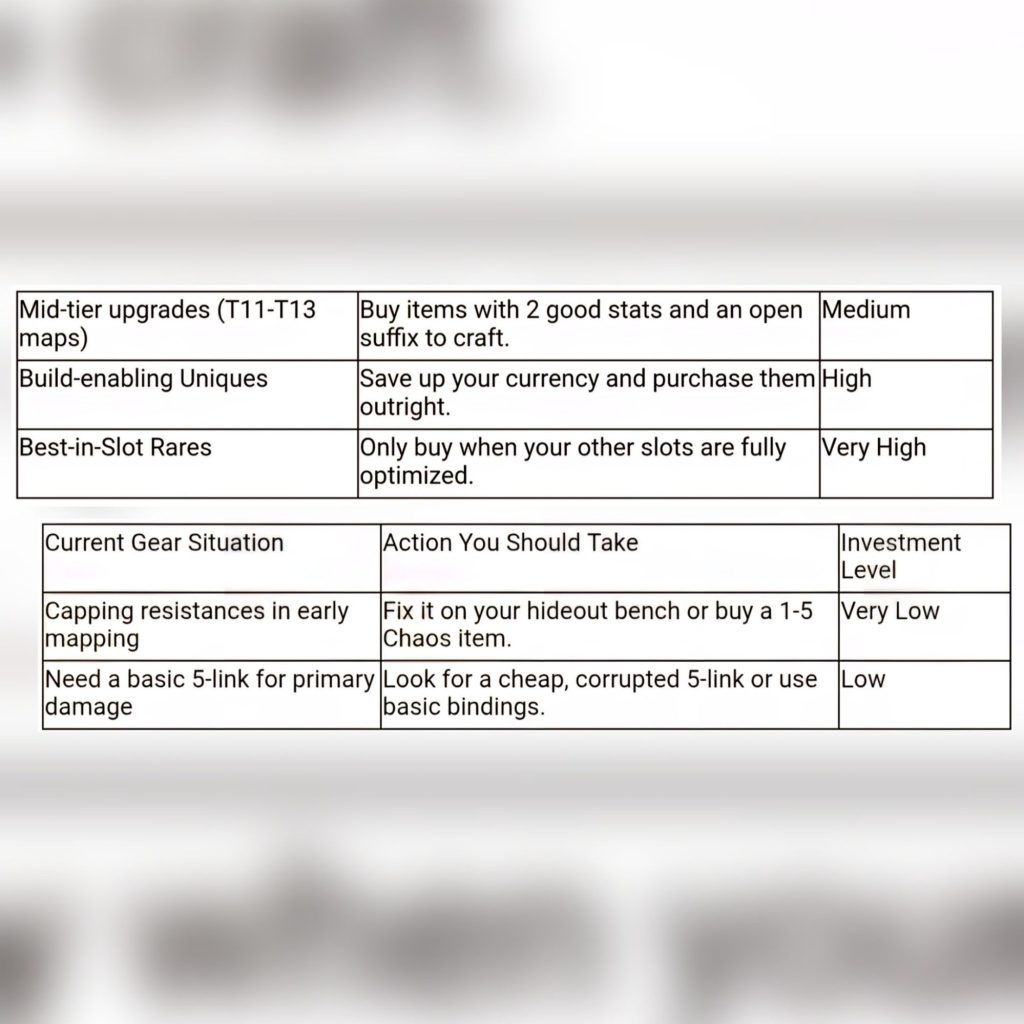
This is an absolute wealth killer. You hit early endgame, your elemental resistances are a little uncapped, and you feel like you need a bit more life to survive specific boss attacks. Instead of finding a cheap, temporary fix, you go to the trade site and spend your very first hard-earned Divine Orb on a pair of boots that are barely better than what you currently have equipped.
Here is a quick breakdown to help you decide when to spend your currency and when to hold onto it:
3: Violating the “Hideout is Lava” Rule
If there is one mantra every wealthy player swears by, it’s “the hideout is lava.” Every single second you spend sitting in your hideout staring blankly at your stash, rolling a single map, or agonizing over a one-Chaos trade is a second you aren’t out there killing monsters. Killing monsters generates loot. Standing next to your waypoint does not.
4: Getting Sniped Because of Lazy Price Checking
We have all experienced this awful feeling. You throw a rare ring into a public tab priced at 10 Chaos. Five seconds later, you get flooded with thirty messages from different players instantly trying to invite you to their party. You just severely underpriced a great item, and the automated trade bots sniffed it out in record time.
Many players get way too impatient when pricing rare gear. If an item has high life, a couple of high-tier resistances, and a desirable third stat, you need to actually search the market. Use trade macro tools or manually search the specific affix combinations on the official trade site.
5: Gambling Away Your Steady Profits
Path of Exile 2 is a massive casino disguised as a video game. The game gives you a hundred different ways to gamble your hard-earned currency. Whether it’s slamming a Vaal Orb on your best weapon, spamming stacked decks hoping for a god-tier card drop, or throwing rare currency at an item hoping to hit an impossible mod, gambling is the fastest way to return to zero.
Unless you have the bankroll to absorb massive losses, you should almost always sell your gambling materials to other players. Sell your stacked decks in bulk. Sell your high-end crafting materials. Let the top 1% of players take the huge risks while you take their guaranteed currency instead. Save yourself the stress and just sell your corruption temple services directly.
6: Forgetting Your Crafting Bench Exists
You drop a solid, rare ring. It has high life and two huge elemental resistances, plus an open suffix. Instead of taking it to the crafting bench in your hideout and adding a missing attribute for literally two Chaos Orbs, players will list it on the trade site as junk and then go spend entirely too much money on a completely different ring.
Always check if an item can be fixed with your hideout crafting bench. It is by far the cheapest mechanic in the entire game, yet new players act like it doesn’t even exist. A standard bench craft can easily turn a completely unsellable item into a highly profitable trade.
7: Rerolling Way Too Many Characters
The biggest hidden currency drain is creating a brand new character every three days. Every time you reroll, you spend currency on leveling gear, you spend hours running through the annoying campaign again, and you aren’t farming actual endgame drops.
By the time your fourth character finally hits maps, your friend who stuck to his league starter just bought his most expensive chase item. Stick to one character and push it as far as it can confidently go. Of course, if you realize your starter build is permanently bricked, and you simply cannot stand the leveling process again, some players opt to buy PoE 2 Divine Orbs at Skycoach just to instantly gear a new character and skip the painful mid-game struggle entirely.
Farming currency doesn’t require playing a complicated build at 500 actions per minute. It just requires basic discipline. Stop wasting time sitting idle in your hideout, sell your items and materials in bulk, don’t gamble your net worth away on a 1% chance, and carefully price your valuable drops. You will find your stash organically filling up much faster than you expected.
Frequently Asked Questions
How do I know if a rare item is actually worth a Divine Orb?
Check the market for similar items using trade layout tools. If your item has multiple high-tier synergy modifiers (like tier 1 life, double tier 1 resistances, and a highly sought-after influenced modifier), it is likely worth a significant amount.
Should I pick up every rare item off the ground to identify and sell?
Absolutely not. By the time you reach middle-tier maps, you should only be picking up high-value bases or jewelry. Identifying hundreds of bad, rare items is a huge chunk of time wasted.
Is crafting my own gear cheaper than buying it from the trade site?
Usually, no. Unless you know exactly what you are doing and are utilizing very specific, deterministic crafting methods, buying mid-tier gear directly from other players is almost always cheaper than gambling currency, trying to make it yourself from scratch.
What is the fastest way to get basic currency for rolling my maps?
Running dense content mechanics like Expedition, Heist, or simply focusing on strongboxes and basic shrines will generate a massive amount of smaller currency like alchemy and chaos orbs organically as you continuously run maps.
Why do my items never sell when I list them?
You are probably overpricing them based on one single good stat while ignoring that the rest of the item is dead. Try lowering the price by 10% to 20% every few hours until it eventually sells, or stick it in a 10 Chaos dump tab and see if anyone bites on the new price.