360 MAGAZINE is an award-winning international publishing on popular culture and design. We introduce avant trademarks to efficacious architects.
We are a LGBTQIA2S+ friendly publication--officially recognized by the NGLCC.
Our core demographic ranges from 19 to 39-year-old college-educated trendsetters within their respective international communities. The pages in this art book satisfy their strong interests including music, art, travel, auto, health, fashion, tech, philanthropy, design, food and entrepreneurship.
It's an introspective digital/print/tablet portrait series, which encapsulates artists/brands/entities who embody the true essence of our publication- empowerment, equality, sensuality and most important of all, humanity within a global society.
For the last year or two, minimalism was dominating all areas of style and fashion. Minimalistic clothes, minimalistic hairstyles, minimalistic accessories, and even minimalistic interior design. However, the time of moderation and temperance seems to be over. In 2022, fashion goes wild. You are allowed to wear whatever you want and style it whatever way you like.
No doubt, this rebel wave has its influence on jewelry too. The extensive layering, combination of gold and silver, bizarre and fancy shapes are only a part of it. The most recent spring/summer runway shows prove that jewelry is now becoming not just a cute accessory but a full-fledged way to express yourself. Here are the most popular trends for 2022 that the world of fashion can offer for now.
Trend #1: Bulky gold chains
They say “the more the better” and in 2022 this phrase can definitely be applied to gold chains. For example, the Hermès and Off-white runways had beautiful examples of large (and we mean it) golden chains, both as a single item and layered with other even larger pieces of jewelry. It looks like it came right from the 90s, so fashion is indeed cyclical.
If you don’t like the designs offered by brands, you can opt for a custom gold chain that you can make even from your own gold. To make it happen, you don’t even need to buy a whole bullion since the gold shot will be just fine. It’s cheaper than normal gold bullion and most jewelers use exactly this form of gold for their work.
Trend #2: Playful colors and shapes
Speaking about going back to the 90s. Nostalgia is a powerful tool that can be used in many ways including setting up fashion trends. In 2022, nostalgia brought us back to our childhood and allowed us to be as cheerful and lively as ever. Somehow, we are now back in 2000 with its vibrant and bright colors, chunky shapes, fancy designs, and enamel. Yes, the enamel is back and we love it. Besides, with the recent pandemic and constant restrictions, it’s obvious that everyday life could lack a spark of joy. Playful jewelry is a nice way to add colors to your days and get more positive emotions.
Trend #3: Silver is the new gold
Yes, chunky gold chains are trendy, but silver continues to win the minds of people. There are some good reasons for it. First of all, silver has the same rich shining as gold but creates a more lightweight look. Secondly, it’s a perfect metal to wear every day with casual clothes. Eventually, silver is way more affordable than gold. So if you are team silver, it’s your showtime. If you are team gold, you can try mixing metals and adding layers to your usual jewelry.
Trend #4: Eye-catching earrings
Chains and rings are not the only pieces of jewelry that got chunkier in 2022. You can also add a colorful accent to your ears. It’s a nice homage to the style of the 70s with its bright colors and vintage inspiration. Since every designer is experimenting, you can find all kinds of shapes and sizes, from large metal hoops to extra-large chains with dozens of precious stones on them. Everything is good in 2022 until it’s big and shiny enough to be seen from afar.
Trend #5: Body chains
If you think that we are done with chains, we are not. Necklaces are not the only option to decorate yourself. Body chains can be an impressive way to manifest your style and message. You can put a nice waist chain to highlight a beautiful crop top or put an Agent Provocateur-like chain dress and barely anything else—the choice is yours. Just be sure that you are comfortable with this type of jewelry.
To sum it all up
In 2022, the fashion becomes wilder and jewelry follows suit. It’s hard to surprise anyone with bulky bracelets or neon-green chokers. And something tells us that it’s not even close to the limit. We mentioned only five ways you can keep up with the trend, but to be honest, it barely matters. As we already said, fashion rules are not as strict as they used to be, so go with your heart and wear whatever resonates with your soul the most.
• GR Supra evolves again with a new manual transmission (MT) option
• MT available on GR Supra 3.0, 3.0 Premium and a limited A91-MT Edition model
• A91-MT Edition limited to 500 units for the U.S. Market, comes in two exclusive exterior colors with a unique Cognac leather trimmed interior
• Refined handling across all GR Supra 3.0 models with new steering and suspension tuning and new Hairpin+ function
• New premium 12-speaker JBL Audio system standard on all 3.0 Premium and A91-MT models
• Complimentary 1-year membership to the National Auto Sport Association, featuring a High-Performance Driving Event with expert
From the moment of its launch in 2019 the GR Supra captured the spirit of TOYOTA GAZOO Racing – one that’s all about the joy of driving. For 2023, it adds one more dynamic element: a six-speed intelligent Manual Transmission (iMT). For drivers who love the control and rewards offered by precisely timed manual shifts, it might be the Supra they’ve been waiting for.
True to the GR Supra’s thoroughbred engineering quality, this development wasn’t simply a matter of using an off-the-shelf solution. Engineers developed a manual transmission specifically for GR Supra, with components designed specifically to suit the power and torque characteristics of its 3.0-litre 382 horsepower engine. At the same time, the GR Supra’s braking control systems and suspension have been retuned for even better performance – changes that are being introduced throughout the model range. The manual transmission will be available as an option on the Supra 3.0 and 3.0 Premium and a limited A91-MT Edition model will also be produced for model year 2023 only. Available colors for the MT 3.0 and 3.0 Premium will include all standard Supra colors plus a new Stratosphere Blue color, which will also be available on Supra 2.0. The A91-MT Edition will be available in Matte White and CU Later Gray. Pricing for 2023 GR Supra MT versions will be announced later this summer and models will be available at Toyota dealerships later this year.
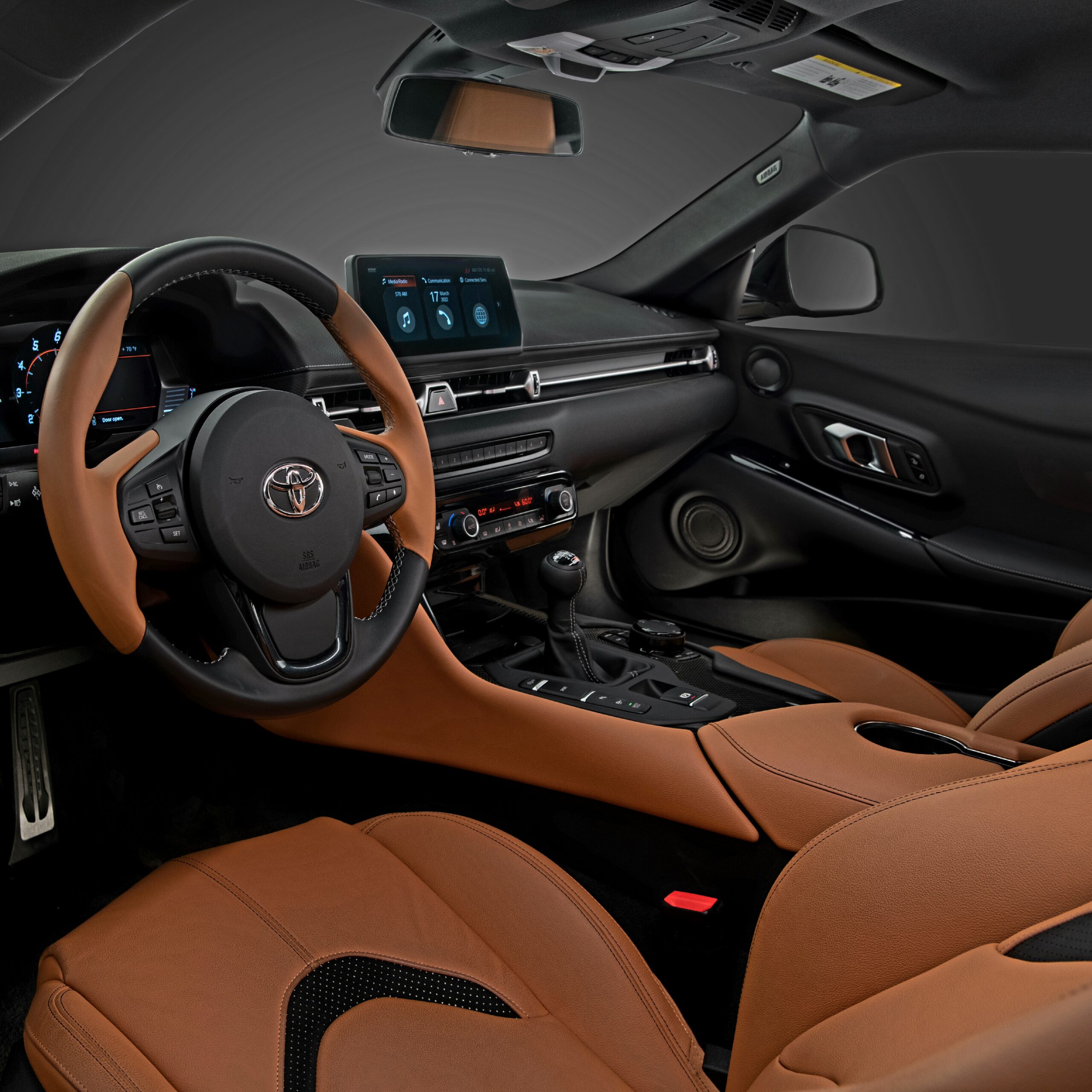
Manual Transmission Designed for Supra Power Available on the 3.0, 3.0 Premium and a limited A91-MT Edition model. The manual transmission installed in the GR Supra has been engineered and tuned specifically for use with the coupe’s straight-six engine. The engineering team modified an existing transmission housing, driveshaft and gear set and removed elements that were not required, such as the acoustic package, which reduced weight. At the heart of the transmission is a newly engineered large diameter clutch with a reinforced diaphragm spring. With a larger friction area and a stronger spring, this new component has the high-performance capability appropriate for use with the GR Supra’s high-torque engine. The newly developed 6-speed manual gearbox also features an Intelligent Manual Transmission (iMT) programmed with new software that prioritizes sporty performance. When upshifting, the parameters are tuned to optimize engine torque at the moment of clutch engagement and release; on downshifts, the software has been fine-tuned for consistent performance. The iMT is set as the default but, if the driver prefers, it can be switched off in Sport mode. To avoid a sluggish take-off and a low in-gear acceleration feel, the final drive ratio has been shortened, from 3.15 (in the GR Supra automatic) to 3.46 (in the GR Supra MT). The result is response and gearing appropriate for sports car performance. Close attention was also paid to how a manual shifter could be accommodated in the driver’s cockpit. The lever ratio was specifically set to minimize the effort required to make shifts and engage reverse gear. While the weight and shape of the 200g gear knob, along with the quality of shift engagement, have all been precisely defined. Ergonomics were also top-ofmind, as the console unit and position of the drive mode selector were adjusted to provide a 1.7-inch clearance between the shift knob and the control panel.
TOYOTA GAZOO Racing:#savethemanual
The GR Supra was Toyota’s first global GAZOO Racing (GR) model and the dream of Toyota President Akio Toyoda to deliver a car that is purely about the joy of driving. Subsequently, the introduction of global models, like the GR Yaris and last year’s arrival of the GR86 coupe, have reinforced the special qualities that define the GR brand – cars that are born out of a passion for driving and draw directly on the world championship-winning expertise and experience of TOYOTA GAZOO Racing. At launch, the 2020 GR Supra was offered with a straight-six 3.0-litre engine with 335 hp/365 lb.-ft. of torque matched to an eight-speed automatic transmission. In 2021, the GR team increased the 3.0 Supra to 382 hp and 367 lb.-ft. of torque and introduced a turbocharged four-cylinder GR Supra 2.0 with 255 horsepower and a stout 295 lb.-ft. of torque. While the car and its performance have received high praise worldwide from media and fans alike, perhaps inevitably the question of whether a manual gearbox would be available persisted. Now that it’s official, the addition of a manual transmission option to the Supra line-up means Toyota will offer all three of its U.S. GR models with a stick, which is standard on the upcoming GR Corolla and available as an option on GR86.
Tuned for Traction, Stability, and Agility The GR Supra’s traction and braking have been optimized for operation with a manual transmission. With an automatic, it’s possible to use second gear when pulling away uphill when opposite wheels are on surfaces with different grip levels – for example, when the car is parked on partly icy road, progress is smooth with no rolling back or wheel slip. With a manual gearbox, first gear must be used and releasing the clutch brings a greater risk of wheel spin. To address the issue, Toyota engineers have tuned the car’s TRAction Control (TRAC) system to achieve smooth operation like that experienced with an automatic. The system is also optimized for the GR Supra’s characteristic high engine torque, wide tires and rear-wheel drive. The car’s behavior when accelerating out of a corner is a key element in the “Fun to Drive” quality Toyota has developed for the GR Supra. For the new manual version, the traction control has again been the focus to ensure an ideal balance of agility and stability when exiting a corner on the throttle. TRAC intervention has been calibrated to maintain stability – so the car keeps faithfully to the driver’s intended line – while allowing the right amount of power for a sporty experience.
The ambition to make the GR Supra fun to drive in the most demanding scenarios has helped inspire the introduction of a new Hairpin+ function. This is designed to allow more freedom and reward when taking tight bends on an uphill gradient (more than 5%) with a high-friction road surface. More “freewheel” spin can make such routes more enjoyable to drive, so Toyota has optimized engine torque control to allow a greater difference in the degree of wheel spin on the left and right-side tires. To counter the possibility of “snap-off” oversteer – something that may be hard to control with the car’s Vehicle Stability Control (VSC) alone – an Anti-Roll Program (ARP) has been adopted for both the manual and automatic versions of the GR Supra. This intervenes at an earlier point with the VSC to cover any sudden loss of grip when the car’s high-response suspension setting it used. In addition, the Track mode has been tuned to allow for easy drifting with freedom of throttle control. The vehicle remains agile, but there is less risk of spinning thanks to specific engine and torque control. Special Edition and Updates Across the Lineup The A91-MT special edition will be a 500 unit limited-run model that comes equipped with exclusive Cognac leather-trimmed seats, GR logoed Alcantara shift knob and a 12-speaker acoustically tuned premium JBL sound system. On the outside, a red “Supra” Badge and red GR Supra emblazoned calipers punctuate its extreme, condensed design. It will be offered in two exclusive colors, Matte White and CU Later Gray, and comes equipped with unique forged 19-inch Frozen Gunmetal Gray wheels. Under the hood, red strut tower braces add one more accent to the already bold Supra. All 2023 GR Supra 3.0 models, both AT and MT versions, will benefit from a retuned suspension with re-tuned shock absorbers for improved roll balance and ride comfort. The mechanical components in the electric power steering and the system’s operating parameters have also been re-tuned. All 3.0 models will have an active rear sport differential standard. The 3.0 MT will come equipped with new 19-inch forged aluminum wheels and be available in previously available standard and premium colors plus the new Stratosphere Blue color. On the inside heated, black leather-trimmed seats are now standard. The 3.0 Premium has everything you’ll find on the 3.0, plus a red and black leather-trimmed interior, full color heads up display, acoustically tuned 12-speaker JBL sound system and Qi Wireless charger standard.
Supra Connect1 is also available. This advanced technology suite is designed to help you get more from your GR Supra 2.0 and 3.0 with Safety and Technology Package, 3.0 Premium and A91-MT Edition and includes features like Automatic Emergency Call, Real-Time Traffic Information, Roadside Assistance and the available Supra Connect iPhone® app to lock/unlock the doors and activate Ventilation Now and Ventilation Timer features.
Grammy artist CeeLo Green also known as the “Soul Machine” is announcing today his upcoming James Brown Tribute Tour entitled “Soul Brotha #100” with his first date this Friday April 29th, 2022 in New Orleans at the Jazz & Heritage Festival. CeeLo will be honoring the legacy and musical genius of his idol James Brown with an unbelievable 75-minute set of 27 hit songs including classics like Superbad, I Feel Good, Man’s World, Sex Machine along with Green’s hits Forget You, Crazy, Bright Lights, Fool For You and many more familiar anthems.
“I’ve always felt deeply connected to James Brown on a musical level and beyond – He’s been a mentor, teacher and literally a godfather to me throughout my career and I remain humble as I embark upon this embodiment. I’ve been studying the era to perfect the show and also James Brown’s archive to make this moment authentic, and a real dedication to what he gave to us and every generation that follows. Together, let’s turn this into the ultimate experience and celebration of James Brown and real music all over,” states CeeLo Green.
More than just a concert, CeeLo Green has curated an elaborate wardrobe that reflects James Brown’s true extravagant style that is similar to Green’s statement looks. Additionally, CeeLo has carefully sifted through video footage from Brown’s estate and this very special video content will be threaded throughout this musical experience that CeeLo has been working on for over a year.
The idea for the tour came to life after CeeLo started spending extended time in Augusta, GA – the home of James Brown. He was asked by Paine College, a historical black university in Augusta, to be a visiting Professor of Music and Ambassador of International Arts & Culture. CeeLo teaches a class on-campus once a month, with a personalized approach, to educate students on the music industry at large and the history of music along with other related topics. His charitable efforts and time spent at Paine and in Augusta have been recognized and celebrated by James Brown’s family. Additionally, because of his new role at Paine among other efforts, CeeLo is receiving the “Honorary Doctorate in Humanitarianism” award on May 21st by the Global International Alliance University, a non-profit organization and international consortium of university lecturers and researchers whose aim it is to provide a collaborative platform for academic research, analysis and development and to explore leading practices, best practices as well as to develop missing practices.
Below is a full list of tour dates for “Soul Brotha #100” and please visit CeeLo Green’s various social media pages for updates, new announcements throughout the tour, and additional one-off performances that will be announced throughout the year.
When you enter the workforce, the odds are that you will often come across people whom you don’t get along with. Sometimes, they will annoy you. Other times, you won’t agree with their opinions. And sometimes, you simply won’t like them.
This is a part of life. However, it does get a lot harder when you don’t get along with a difficult employer. If this is something you’re struggling with, you’ve come to the right place. Keep reading to learn about four ways that you can deal with a difficult employer.
Take legal action
Sometimes, an employer may go too far. Instead of simply being difficult to get along with, they may do things that are illegal, such as harassing you or discriminating against you.
Employers cannot discriminate based on race, so if this is something that your employer is doing, you may have grounds for a lawsuit. Taking legal action can be intimidating, but it’s often the only way of ensuring that your employer stops their harmful behavior.
If you do decide to take legal action, you should consider getting a lawyer to help you.
Communicate
You’ve probably heard time and time again how important communication in the workplace is. While you may be sick of hearing it, it is true.
If you have an issue with your employer, you should consider communicating this issue to them. Of course, the way you do this is very important since you won’t want them to feel attacked. It may be the case that your employer isn’t even aware of what they are doing.
If you simply don’t get along with your employer, you could always consider getting another job. This doesn’t have to be as drastic as it sounds – you can always ask to stay with the company, but just work in another division or on another team.
Or, if you wanted to, you could try to find another job entirely. It may seem extreme to quit your job just because you have a difficult employer, but if it’s affecting you a lot, it may be worth it. Of course, this is a serious decision, so you should think it through. If you need some tips for an effective job search, click here.
Try to ignore it
Finally, you could always just accept that you have a difficult employer, and do your best to not let it affect you too much by simply doing your best to ignore it.
After all, you should only have to deal with them at work, so if you can find a way to cope with them for a few hours each day, it shouldn’t have a big impact on you. This is only true if you separate your work life from your personal life, however. It’s important to keep your personal life out of the office and vice versa if you want to live a balanced life.
Your entire world can change in the blink of an eye. Few people ever think they’ll see their neighborhood on a news broadcast, but natural disasters affect millions every year. Thanks to climate change, the problem grows more severe all the time.
It takes time and plenty of TLC to put the pieces of your life back together again. Be gentle with yourself as you navigate the process. Here are five tips for finding peace after living through a natural disaster.
1. Seek Necessary Resources
Depending on how the natural disaster affected your property, you might not have a place to call home for a while. What about your children’s school? Your transportation to and from work?
Your first contact is your local emergency manager. They’re your best resource for meeting your immediate needs for food and shelter. After that, please reach out to the following individuals:
Your loved ones: Your loved ones deserve to know you’re alright. Fortunately, social media makes it easier than ever. You can mark yourself safe to alert your friends and relatives who also use Facebook. Let people know what they can do to help and how you prefer to be contacted – a flurry of phone calls may or may not be what you need.
Your employer: If you weren’t at work when disaster struck, you need to let your employer know how it affected you and what arrangements you can make until it is safe to return.
Your insurance company: First, document the damage and make a list. Take photographs. If you have some from before the disaster to prove the extent of your loss, all the better.
You might also reach out to local animal shelters if you have pets that you could not evacuate on time. They’ll take a description and reunite you with your beloved companion if they locate them before you do.
2. Give Yourself the Gift of Time
Surviving a natural disaster takes time. This statement isn’t fluff – it’s a physiological fact. While some people recover from a shock to the system more quickly than others, you need time for your body and mind to return to homeostasis.
If possible, take time away from work to heal with those you love. The Federal Emergency Management Agency offers programs for disaster survivors that provide housing and medical assistance. The Small Business Association provides aid to those whose livelihoods suffered the impact of hurricanes, floods, and fires.
It’s important to be aware of the potential that you may develop post-traumatic stress disorder (PTSD). Post-traumatic stress disorder is a mental health condition that’s triggered by witnessing or experiencing a terrifying event. Symptoms can include nightmares and anxiety, as well as uncontrollable flashbacks and thoughts about the event. Evidence suggests that the chances of PTSD and even suicide increase after someone survives a natural disaster.
A natural disaster can shatter your world in the blink of an eye. You and your loved ones could find yourselves without shelter or food, and understandably stressed and anxious. However, if you begin to feel like what you’re experiencing goes beyond normal stress, you may be experiencing some form of PTSD. In either case, it’s a good idea to make an appointment with a certified mental health professional in the wake of surviving a natural disaster. They will be able to help make sense of what you’re experiencing and prescribe an appropriate treatment plan.
If you don’t have the resources to see a mental health professional in person, look into free online resources, counseling and rehabilitation groups and even text therapy, which can be more accessible for some.
3. But Also, Safety First
Your first instinct is to heave a sigh of relief once the twister disappears in the distance and you and your family take your first tentative steps out of the basement. Inhale, exhale, and contact everyone who’s not in your immediate vicinity who should be. Then, take stock of the second shock wave – the illnesses and infections that often follow natural disasters.
For example, after a flood, mold becomes a serious health concern. The CDC has recommendations for assessing your risk and handling the potential hazards to your health. Untreated cuts and scrapes can lead to blood poisoning and tetanus. Get a booster if need be and wash all wounds, dress them with triple antibiotic ointment, and clean, sterile bandages. Pay attention to signs of discoloration and streaking lines around the injury.
It’s not unusual to become sick in the wake of a natural disaster’s wake. Storms stir up germs and displacement introduces you to new ones when your immune system is already compromised by stress. Please take a COVID-19 test and adhere to the required quarantine – even if you don’t have the novel coronavirus, you need a few days to rest and recover.
4. Stay Close to Your Loved Ones
Natural disasters make you cherish the ones you love. Nature intended for you to cling to each other in its wake. Honor that instinct.
Stay close to your loved ones. If you have children, they will need your guidance and support to heal. They don’t have an adult frame of reference to cope with what happened – they’ll need your help to process big feelings and make sense of the senseless.
Spending time with your loved ones also soothes your soul. Disasters have a way of reminding you what matters most. You can’t take material things with you, but the love you leave behind survives.
5. Accept Offers of Help
You might not realize how wide your friendship circle extends until you survive a disaster. However, please take advantage of offers of help. Don’t let pride deny you and your family the support you need to heal.
Please take advantage of available social services. You might not have ever needed a food bank before, but visiting one is better than letting your children go to sleep hungry.
If you’re spiritual, your house of worship is another sanctuary that may open its arms to you and your loved ones. Shelter yourself and those you care about in the arms of your faith, letting members of your congregation accept you and uplift your spirits.
Online casinos are not just a great way to spend an evening. They’re an opportunity to make some big profits. Knowing how to play different online casino games can reduce the house edge and ensure you use the perfect strategy every time.
Whether you’re new to online casinos or a regular player, here are some top tips for mastering online casinos.
Develop a financial management plan
The first thing you need to consider is how you’re managing your bankroll. Without a plan in place, you’ll be liable to overspend. There’s little point in searching for the best no deposit bonuses for online casino play if you’re blowing your hard-earned money on an ill-fated bet.
Think about your household budget and what you can afford to spare. You may even want to consider putting deposit and playing limits in place. Most casinos have these features built-in to their platforms.
Choose the right games to play
After developing your bankroll management strategy, it’s time to examine which games you should play. As a rule, you shouldn’t be playing a game if you don’t understand how it works and what the house edge is.
You want to know the payout rates and the exact rules of the game before playing. Every online casino has variations when it comes to these aspects.
And don’t forget, stick to the games you actually enjoy playing. Ultimately, online casinos are about having fun.
Use any and every bonus
Online casinos are awash with bonuses to entice people to play with them. The online gambling industry is expected to be worth $92.9bn by 2023 due to the relaxation of anti-gambling laws in many parts of the US.
This has meant casinos are in a fierce battle to compete for customers. To do this, they offer bonuses. Smart players will often create accounts with different casinos to take advantage of these bonuses.
Hunt down different bonuses and figure out a strategy for the best way to use them. Make sure you read the terms and conditions of each bonus to ensure they’re worth your time.
Study new gaming strategies
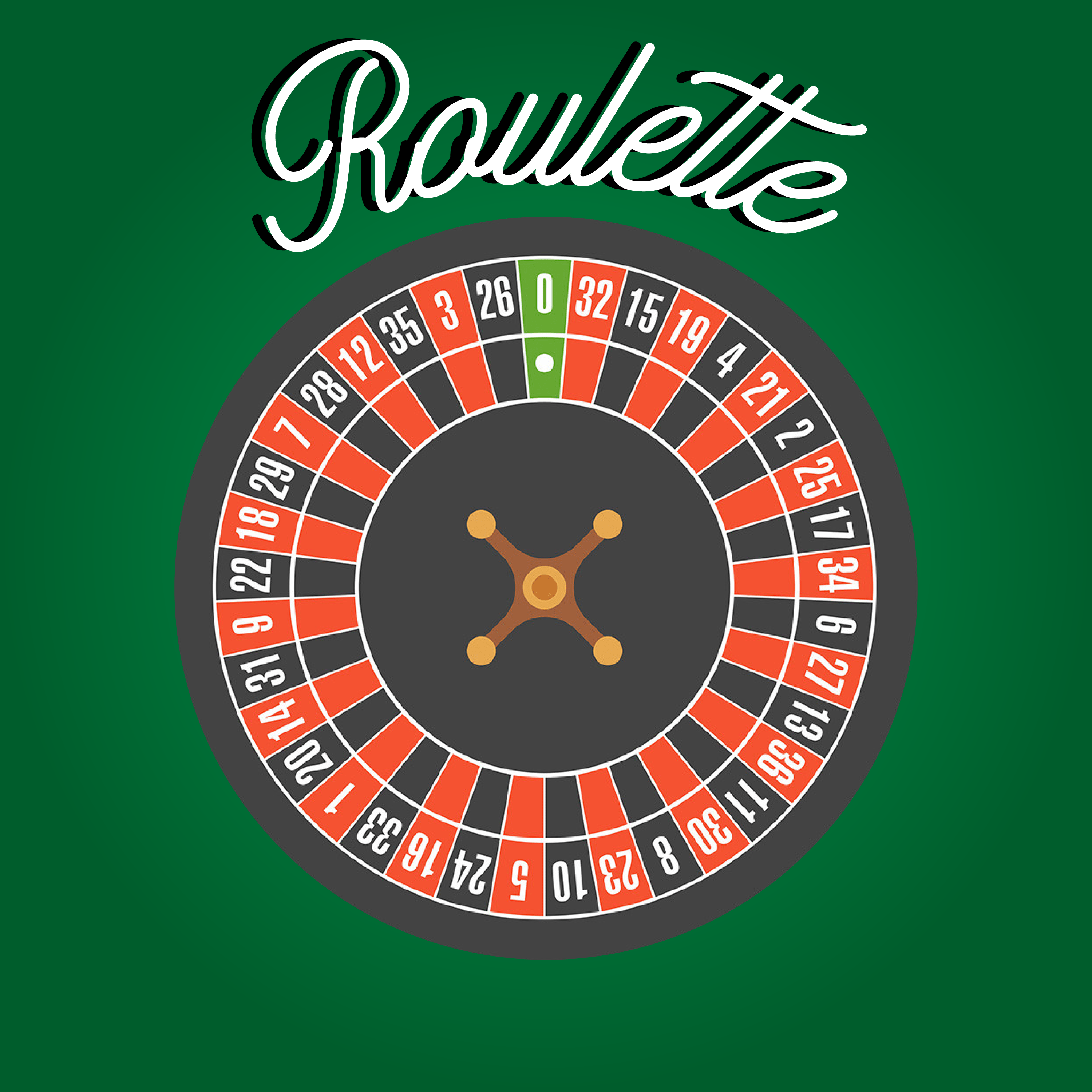
Some games have a lower house edge than others. For example, blackjack and roulette are among the table games with the lowest house edges. Beyond that, you need to take advantage of those low house edges by learning the strategies that shift the odds in your favor.
For example, playing blackjack using a basic strategy can lower the house edge to a mere 1%. Practice developing new strategies by reading online gaming guides targeted at specific games.
Advance your knowledge gradually, and you’ll soon become an online casino master.
Choose your casinos with care
With so many online casinos to choose from, how do you select the one that’s got your best interests at heart?
Firstly, ensure that they’re registered with the proper authorities. Most online casinos tend to be based in friendly gambling jurisdictions, such as Malta, the Isle of Man and Luxembourg.
You can also lookup online reviews from your fellow players and see what they have to say. Reputation is everything in the world of online casinos, and it can tell you a lot.
There’s also the playing experience to consider. Some casinos specialize in certain types of games. For example, you might find a casino that places emphasis on their live dealer games. Others may have incredibly large progressive slots jackpots.
Once you’ve found a casino you can trust, it’s a matter of comparing their gaming catalogs and gaming experiences.
Play with a calm head
The majority of online gambling losses come from people playing on tilt. In other words, they’ve just lost money, and they’re desperate to get it back before they log off for the night. This is when losses magnify.
Always make sure you’re playing when you’re calm and can think logically. Avoid alcohol, drugs or any other substance that could interfere with your decision-making abilities.
Perhaps the best skill any online gambler can have is knowing when it’s time to log off for the evening.
Conclusion
There are no guarantees when wagering your money at an online casino, but smart management of your account, where you play, and the bonuses you claim can push the odds in your favor and increase your likelihood of a big win.
Start your journey to becoming an online gambling master by selecting an online casino to play with. Choose your games. Master one game before moving on to the next one.
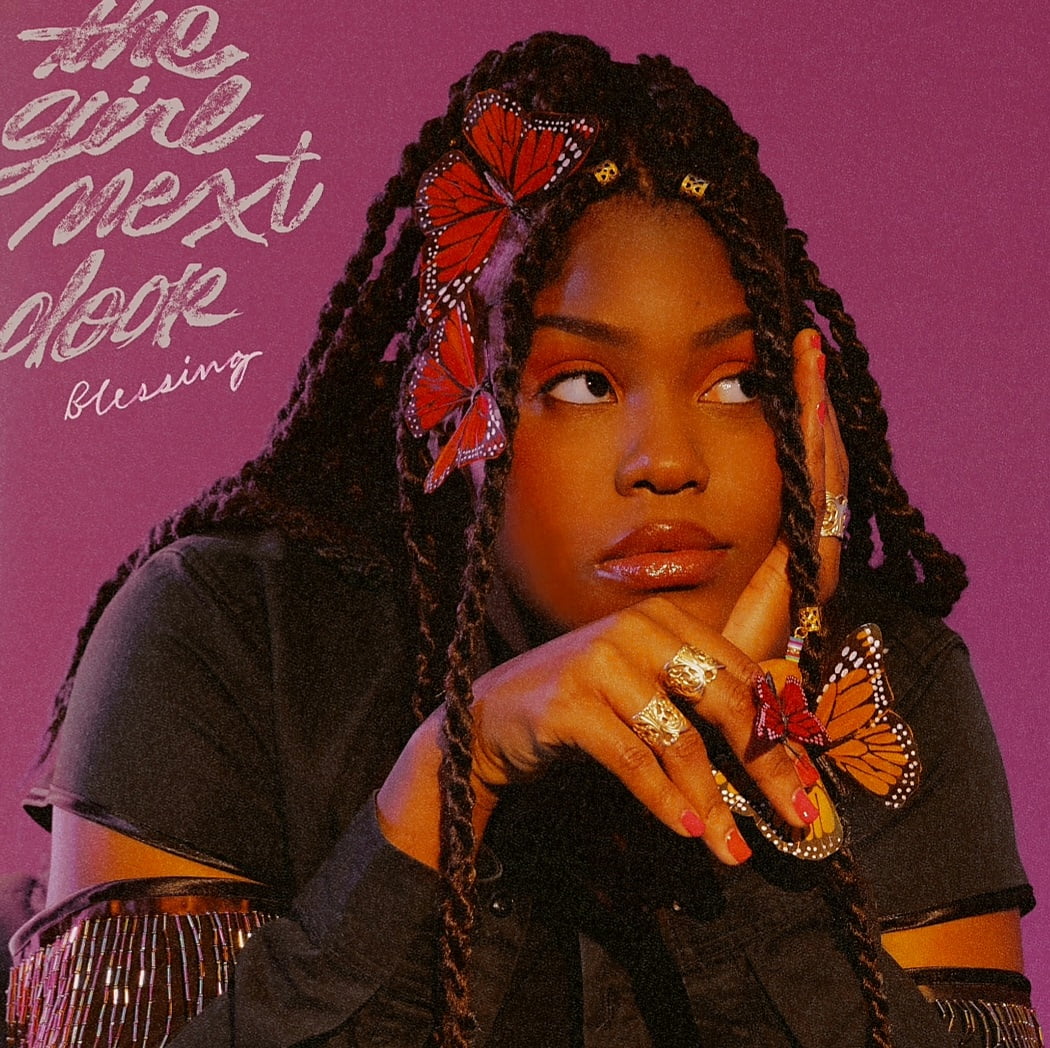
Singer/songwriter Blessing releases her debut EP the girl next door. Listen HERE. The EP features previously released tracks character, boys like you which was included in Teen Vogue’s “New Music Friday” playlist upon release and girl like me along with new tracks freak, rage and 19 and peaked.
Lyrically rich and sonically lush, the girl next door and its six songs are anchored by Blessing’s singular voice, a textured and emotional instrument than can swing as boundless and heartfelt as it can charmingly self-effacing and witty. A byproduct of Blessing spending her senior year of high school at home during a global pandemic, these songs pull from personal experiences and self-reflection as she was closing out her teenage years alone in her bedroom.
Speaking on the girl next door, Blessing shares, “Each of these songs are really the things I never bothered saying being that I felt no one was listening. That truly gave me the advantage to writing everything I was feeling at the time. I just thought well since no one is ever going to hear these I might as well say it all, regardless of how desperate, embarrassing, or unpleasant my words may be.”
About Blessing:
Hailing from Houston, TX, 20-year-old Blessing is the youngest of five siblings and through most of her life, she never felt like she fit in and eventually fell in love with the freedom you have in creating music, especially songwriting. With a sound that’s been called “irresistible” by American Songwriter, Blessing sets out to craft pop music with underlying R&B influences that dive into love, ambition, obstacles, and heartbreak – songs that map the innocent, messy, volatile growing pains of a teenager. Having just spent her senior year in high school at home during a global pandemic, Blessing draws inspiration from personal experiences and weaves her candid emotions and witty observations into catchy songs that teenagers and young adults can relate to.
Twitter is a powerful social media platform that can be used to build an audience and grow a business. However, to be successful on Twitter, you need to have a strategy in place. In this blog post, we will explore what you need to do to gain followers on Twitter in 2022. We will also discuss some of the latest trends and changes that are taking place on Twitter. So, if you want to learn how to succeed on Twitter, keep reading!
Get Rid of the Non-Followers
Twitter can be a great platform for promoting your brand or sharing your thoughts with the world. However, it can also be a breeding ground for so-called “non-followers.” These are people who create fake accounts or follow large numbers of people in the hope that some will follow them back. Non-followers don’t interact with your tweets, and they offer no value to your online presence. They can harm your Twitter reach and engagement levels. If you suspect that someone is a non-follower, you can check their profile to see if they’re following a large number of people but have very few followers themselves. You can also use a Twitter unfollow app to get rid of any non-followers on your account.
Engage with Your Audience
An incredibly important thing that you should do if you are trying to increase the number of Twitter followers you have is to engage with your audience. Much like many of the social media platforms that exist today, one of the most important metrics is engagement. In other words, the more engagement your account receives, the more likely it is to be shown to people who are not your followers.
In addition to engaging with your followers, there are many different ways to engage on Twitter, and you need to be using all of them. For example, a popular way of engaging with people on Twitter is using Twitter chats. Another way to engage with your audience is by replying to comments on your posts or commenting on the posts of other users.
Use Visual Content
The next thing that you’re going to want to do to gain Twitter followers is to post visual content as much as possible. We have always known that humans are visual creatures, but since the invention of social media and the rise of popular social media platforms, such as Instagram and Twitter, we realized just how much of a visual creature we are.
One way to think about it is the fact that many people use Twitter for entertainment purposes and there isn’t anything entertaining about having to wade through a massive block of text. If you can’t think of anything creative to post, you could always use an application that allows you to turn text into an image.
Be Consistent with Everything
One of the most important things that you’re going to have to do to increase the number of followers you have on Twitter in 2022 is to be consistent with everything. What exactly does this mean? This means that there are a lot of things you need to be doing on Twitter to be successful, and you need to be consistent with each of them.
For example, when it comes to posting, you need to be consistent with posting and post regularly rather than irregularly, since this won’t gain any growth. In addition to this, you’ll also need to be consistent with the quality of your posts. Another thing to consider is whether or not you should be posting within a niche, and if you are, you should be consistently posting within that niche.
Always Use Hashtags
If there’s one thing that you can begin doing today which will dramatically increase the number of Twitter followers you have, it’s using hashtags. Hashtags essentially group similar content which shares the same hashtag. This means that if you are not using hashtags, you will not be able to increase the searchability of your content.
This doesn’t mean that you should use every hashtag that you can find. It seems that 223 is the best number of hashtags that you should post. One of the reasons for this is that many hashtags come across as spammy, and this is something that a lot of Twitter users avoid.
Promote on other social media
While Twitter is one of the most popular social media platforms, it is important to remember that other platforms can be just as effective when it comes to promoting yourself or your business. While Twitter is excellent for short, timely updates, YouTube allows you to post longer videos that can provide more information about your product or service, and with different Youtube promotion services you can reach an even wider audience. Both sites also offer opportunities to engage with potential customers, so be sure to take advantage of them.
The Museum at Bethel Woods calls for 1969 Woodstock attendees to offer oral histories for upcoming exhibit
The Museum at Bethel Woods, the National Register Historic Site of the 1969 Woodstock Music & Art Fair, is working on compiling an archive of oral histories of Woodstock from the people who experienced it firsthand. The Museum is asking festival alumni to connect, and arrange for their stories to be heard and recorded. The goal is for these combined narratives to tell the untold story of the festival, preserving them for generations to come.
“Realizing the average age of Woodstock attendees is 75 years old, now is the time to find the lost stories of the festival and save their place in history,” said Neal V. Hitch, Senior Curator, The Museum at Bethel Woods. “In order for the impact of Woodstock to be felt 100 years from now, collecting oral histories of this iconic festival is critical. It is our goal to find as many attendees as possible and document their firsthand experiences, which will also inspire the next generation of young artists, musicians, and music lovers.”
If you or someone you know was one of the almost half a million people who stood in the crowd of Max Yasgur’s farm listening to Santana, swam in Fillippini’s Pond, left a note on the Message Tree, or got stuck in traffic on 17B, The Museum at Bethel Woods wants to hear from you. With the goal to gather at least 4,500 oral histories, every perspective is valuable in rounding out the picture of the greatest festival of all time.
The award-winning 7,000 square foot Museum at Bethel Woods sits on the 800-acre campus of the Bethel Woods Center for the Arts–the site of the Woodstock festival. Its permanent collection and special exhibits are a window to the 1960’s and the music cultural phenomenon. Bethel Woods is dedicated to preserving and presenting that history in a way that captivates audiences across generations.
About Bethel Woods Center for the Arts
Bethel Woods Center for the Arts inspires, educates, and empowers individuals through the arts and humanities by presenting a diverse selection of culturally-rich performances, popular artists, and community and educational programming. Located 90 miles from New York City at the site of the 1969 Woodstock festival in Bethel, NY, the lush 800-acre campus includes a Pavilion Stage amphitheater with seating for 16,000, an intimate 422-seat indoor Event Gallery, the award-winning Museum at Bethel Woods, and a Conservatory for arts education programming.
Through the in-depth study and exhibition of the social, political, and cultural events of the 1960s, as well as the preservation of the historic site of the Woodstock Music and Art Fair, Bethel Woods educates individuals about the issues and lessons of the decade while inspiring a new generation to contribute positively to the world around them. The not-for-profit organization relies on the generous support of individuals, corporations, and foundations to develop and sustain programs that improve the quality of life in the region and beyond.
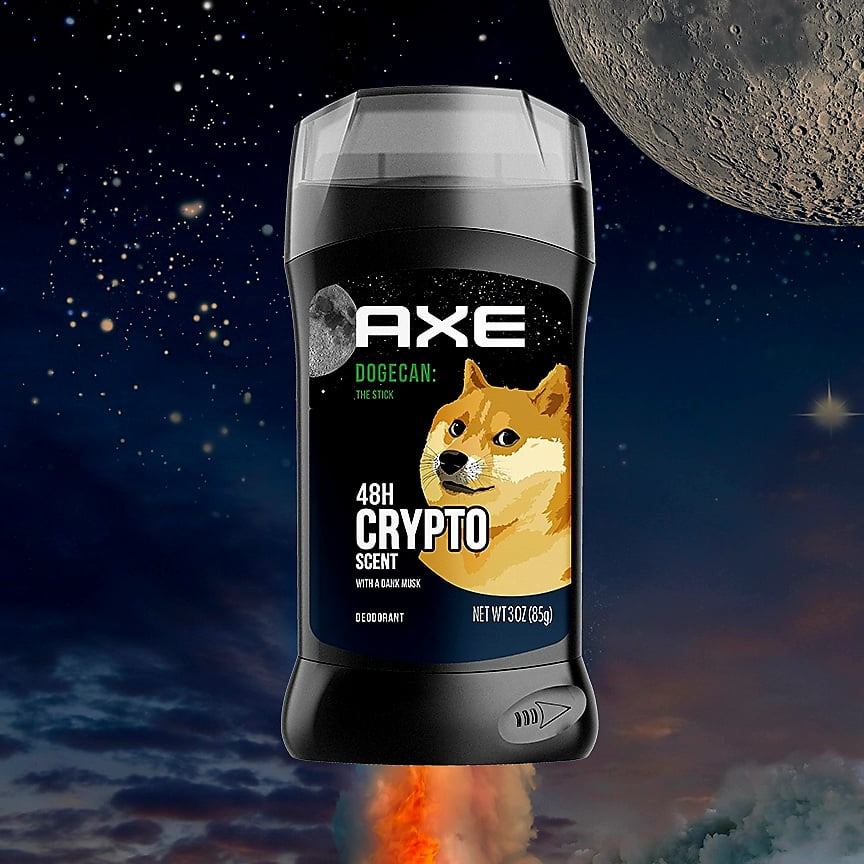
The first-ever AXE product available to purchase exclusively with Dogecoin was announced today (4/20 – DogeDay 2022) and drops April 27.
Your favorite crypto-inspired scent is back with a twist: AXE Dogecan. The Stick is available exclusively for Dogecoin.
It all started with a now famous tweet: “if it gets to $1, we’ll make it happen.” AXE first teased the idea of the limited-edition Dogecan on DogeDay 2021, promising to release the original musk if Dogecoin hit $1. The buzz was huge across social media with fans clamoring for the brand to release the product.
Even though Dogecoin didn’t go to the moon last year, AXE released Dogecan to meet the demand from the Doge community. AXE released one thousand limited-edition cans, which were given away for free and snatched up in under 10 minutes.
If you missed out on last year’s Dogecan, this is your moment to grab one of your own limited-edition crypto-scents – only available on April 27 for purchase exclusively with Dogecoin**.
Follow AXE on Twitter, TikTok, Instagram and Facebook for all the details on how to purchase on April 27 and smell irresistible.
So, what will the brand do after the limited edition sells out this year? Wait and see – it’ll certainly be out of this world. To the moon!
**Smartmedia Labs is powering the activation by leveraging SmartMedia Tech’s enterprise NFT/web3 platform. T&C apply