


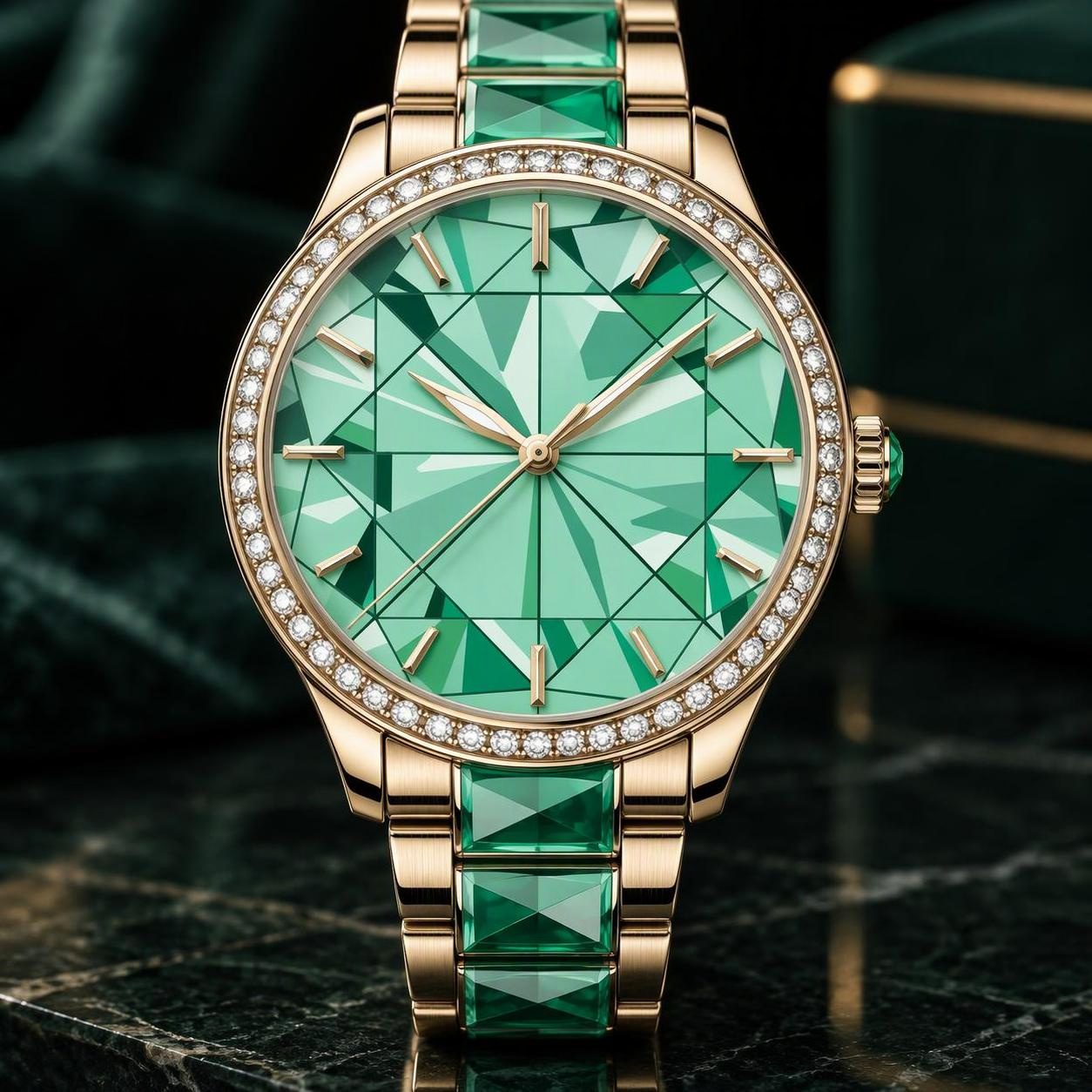
Rolex sold more than 11 billion Swiss francs’ worth of watches at wholesale in 2025, according to estimates from Morgan Stanley and the consultancy LuxeConsult. Research on status objects gives a fairly specific account of what a date concludes from seeing a watch like that on a first evening.
Watch-Wearing and Conscientiousness
Wearing a watch at all is linked to a personality trait. In a 2015 study published in PeerJ, psychologists David Ellis of Lancaster University and Rob Jenkins of the University of York compared people who regularly wore a wristwatch with people who did not. In a first sample of 112 people recruited at the 2011 British Science Festival, watch wearers scored significantly higher on conscientiousness, the personality trait linked to organization and reliability.
A later study tested the link in practice. Among 85 participants, watch wearers arrived significantly earlier for appointments than the comparison group. The authors discussed the results in relation to enclothed cognition, the idea that what people wear can affect their own behavior, and to the spread of smartwatches. The design cannot tell a punctual person who chooses a watch from a person made punctual by one. Either way, arriving on time is one of the few things a date can judge in the first minute.
Status Objects and Attraction
Studies of other status objects suggest that a visibly expensive possession changes how attractive a man looks to women. Michael Dunn and Robert Searle tested this for a 2010 paper in the British Journal of Psychology, photographing the same man seated in a silver Bentley Continental GT and in a red Ford Fiesta ST. Women who saw him in the Bentley rated him as significantly more attractive, by about 1 point on a 10-point scale. When men rated a woman photographed in the same 2 cars, the car made no difference. The ratings came from passers-by in central Cardiff, and a pilot test had found the 2 models equally attractive against a blank background.
A watch is a smaller object than a car, but it stays in plain view on the wrist through a whole dinner. The effect of any status object also depends on the person judging it.
Differing Dating Intentions
The same watch can create a different impression depending on what each person wants from dating. A man hoping for a lasting partner, a man who wants something casual, and a man looking for a sugar baby may all wear a steel sports watch to dinner, and each will be judged against the relationship his date has in mind.
A woman who wants marriage and one who wants a few relaxed evenings will notice the same watch and draw different conclusions from it.
Short-Term and Long-Term Interest
In a 2011 study titled “Peacocks, Porsches, and Thorstein Veblen,” Jill Sundie and her colleagues tested how women interpret conspicuous spending by men. Nearly 1,000 university students took part in the experiments. Women saw men who spent conspicuously as more interested in short-term relationships, and the spending made those men more desirable as short-term partners while giving them no advantage as long-term partners.
Women found a man with a Porsche more desirable for a date, but when they considered him as a husband, the Porsche gave him no advantage over a man with an economy car. The researchers also found that men’s conspicuous spending was driven largely by short-term mating motives, while women did not spend conspicuously to attract men. When the idea was tested with smartphones in 2014, men inclined toward short-term relationships reported more interest in buying a high-status phone only when they were single or in uncommitted relationships.
A loud, recognizable watch may help with a date who wants something light, and it may count for nothing, or work against the man, with a date who is screening for a long-term partner.
Logos and Their Limits
In 2011, Rob Nelissen and Marijn Meijers reported in Evolution and Human Behavior that people wearing clothing with a luxury logo were judged higher in status and received help more often than people wearing the same clothing without a logo. In one of their experiments, observers suggested a 9% higher salary for a job candidate when a logo was visible.
A 2017 replication by Joël Berger in PLOS ONE used double-blind field experiments and found no positive effect of luxury brand labels in any of 5 experiments. He noted that some of the original experiments had not been run under fully double-blind conditions. In poorer neighborhoods the label had a slightly negative effect. Berger concluded that the effect of a status signal depends on who is looking at it.
Recognizable Brands and Rising Prices
According to the Federation of the Swiss Watch Industry, Swiss watch exports fell 1.7% in 2025 to 25.6 billion francs, and the number of watches exported fell 4.8% to 14.6 million. The federation said record prices for gold and a record-high Swiss franc had raised the cost of Swiss watches, especially outside Switzerland, so the same watch costs a buyer more than it did before those increases.
The largest luxury houses also hold a growing share of the market. Rolex, Patek Philippe, Audemars Piguet, and Richard Mille increased their combined share by 2.2 percentage points to 49.1% during the year, according to the Morgan Stanley estimates, so about half of Swiss watch sales by value now go to 4 names.
Choosing a Watch for a First Date
Wearing a watch at all is associated with conscientiousness, and a highly visible luxury piece is associated, in the minds of women judging it, with short-term interest. A watch that fits the rest of the outfit and the setting, worn on time to a first meeting, uses the first finding and avoids the second. A man who already owns an expensive watch can still wear it, and a date who is looking for something lasting will judge him mainly on how he treats her across the evening.
Cost of the Wrong Signal
For a man who wants a lasting relationship, a conspicuous watch can suggest to a date that he is interested in something short, and the Sundie results suggest that a woman screening for a long-term partner gives him no credit for it. A plain watch worn every day, and a man who arrives on time to meet her, cost nothing extra on a first date and send the signal that the conscientiousness research associates with reliability.