About 360 MAGAZINE

360 MAGAZINE is an award-winning international publishing on popular culture and design. We introduce avant trademarks to efficacious architects. We are a LGBTQIA2S+ friendly publication--officially recognized by the NGLCC. Our core demographic ranges from 19 to 39-year-old college-educated trendsetters within their respective international communities. The pages in this art book satisfy their strong interests including music, art, travel, auto, health, fashion, tech, philanthropy, design, food and entrepreneurship. It's an introspective digital/print/tablet portrait series, which encapsulates artists/brands/entities who embody the true essence of our publication- empowerment, equality, sensuality and most important of all, humanity within a global society.

The Avett Brothers × The Tonight Show

THE AVETT BROTHERS TO PERFORM ON THE TONIGHT SHOW STARRING JIMMY FALLON TONIGHT

Tune in tonight as The Avett Brothers share a special performance for The Tonight Show Starring Jimmy Fallon: At Home Edition pre-recorded from their home in North Carolina. Don’t miss the performance airing tonight at 11:35 pm EST on NBC where the band is asking viewers to donate to DirectRelief.org . In the U.S., Direct Relief is delivering protective masks – along with exam gloves, isolation gowns, and other protective gear to healthcare organizations across the country.

About The Avett Brothers:
The Avett Brothers​ made mainstream waves with their 2009 major-label debut, ​I and Love and You​, landing at No. 16 on the ​Billboard​ Top 200 and garnering critical acclaim. 2012 saw ​The Carpenter​ hit No. 4 on the ​Billboard ​Top 200 and was followed by ​Magpie and the Dandelion (2013) which debuted at No. 5 on ​Billboard’s ​Top 200 and saw the band appear twice on ​Jimmy Kimmel Live! True Sadness​ (2016) achieved The Avett Brothers’ highest career debut to date hitting No. 1 on ​Billboard’s​ Top Albums Chart, No. 1 Top Rock Albums Chart, No. 1 Digital Albums Chart, No. 3 on ​Billboard​ Top 200, and scoring two GRAMMY​®​nominations. In the same year, the band was inducted into the North Carolina Music Hall of Fame. In 2017, the band released their critically acclaimed documentary ​May It Last: A Portrait of The Avett Brothers​, which was co-directed by Judd Apatow and Michael Bonfiglio. The film followed the band as they wrote their GRAMMY​®​ nominated album ​True Sadness​. The film was released theatrically and on HBO to rave reviews and critical acclaim and is now available on DVD/Blu-ray/VOD. In November 2018, the band headlined the Concert for Hurricane Florence Relief in Greenville, North Carolina, raising $325,000 to help those affected by Hurricane Florence. Last year, the band released their tenth studio album ​Closer Than Together​ featuring new single “High Steppin’” which reached #1 on the Americana Radio Chart. Coming soon: Swept Away – a new musical inspired by and featuring the music of The Avett Brothers – will have its world premiere at Berkeley Repertory Theatre.

Vaughn Lowery, 360 MAGAZINE

Why you need visibility into invoices

(and how AI can help you get it)

We’ve covered how having visibility into employee expense reports helps organizations catch errors, waste, and fraud, and streamline process so that employees get reimbursed faster. But there’s another area of business spend where visibility might be even more critical: invoices. 

Enterprise AP departments pay thousands of invoices every month. Overworked AP teams may be hard pressed to scrutinize every invoice manually for adherence to contract terms, pricing anomalies, gradual increases in invoice amounts, or patterns that could indicate fraud, such as repeated invoices that fall just below the PO limit. Even worse, criminals can exploit an AP department’s lack of bandwidth by sending invoices for products that were never delivered or services that were never rendered, sometimes from companies that don’t even exist. 

Of course, the vast majority of vendors are trustworthy and want to earn and retain their customers’ trust, but with humans in the payment processing equation, honest mistakes are bound to happen. 

The risk hiding in vendor invoices

We recently reviewed the aggregated, anonymized data from billions of audit transactions across hundreds of customer accounts in a variety of industries, and summarized the results in our quarterly report, The State of AI in Business Spend. We found that, for the average enterprise, invoices comprise 96% of their business spend. (In comparison, employee expenses for travel and entertainment (T&E) make up only 3.7% of spend). The average company processes 60,354 invoices every month, but only audits or reviews at most 10% of them, usually after payment. In other words, most companies only find mistakes after the money is out the door, when clawing it back is expensive and time consuming.

Our report also revealed that 4% of invoices could be considered high risk. These invoices generally fell into three main categories:

•Prices, discounts or terms didn’t match the contract. Procurement teams may work hard to negotiate great terms with vendors, but if AP doesn’t ensure that invoices reflect those terms, that effort is wasted.

•Vendors billed inflated prices compared to the market. Most AP teams don’t have time to see whether better rates are available elsewhere.

•Duplicates. We uncovered double billing that may or may not have been accidental, as well as amounts duplicated on expense reports. 

Why visibility into high-risk invoices is critical

We probably don’t have to work that hard to convince you that incorrect invoices hurt your bottom line. But you might be surprised at how small mistakes, intentional or not, can add up. 

For example, we’ve found that many invoices don’t align with the signed contract, and the most frequent error is net payment terms: A contract may list payment terms as Net 60, but the invoices list Net 15 or Net 30. This difference can have a huge impact on your cash flow…and even profit.

Duplicate charges or payments happen with surprising frequency. Often, after an invoice is held up, an employee may intervene and approve manual payment of the invoice, but when the system clears the hold, the invoice is paid again. Even if the vendor notifies you about the duplicate payment, the time and energy everyone will spend trying to fix the mistake could be better spent elsewhere. 

But it’s the big mistakes, like fraud and non-compliance, that can cost your organization not only money but something that’s hard to replace: its reputation. Invoice fraud is real, and even large companies fall victim to it: A Lithuanian man recently bilked Facebook and Google out of more than $100 million by impersonating a vendor with which the tech titans do business.

What’s more, our report found that for every 10,000 invoices, at least one contains a regulatory violation. For example, a regional sales director might funnel payments to a distributor for fake “logistics services” that are actually a bribe to a government official who influences reimbursement policy for your company’s product. In a real-life story that illustrates the potential consequences, a large multinational retailer will have to pay the U.S. government $282 million for violating the Foreign Corrupt Practices Act (FCPA), in part because it failed to institute sufficient internal accounting controls related to third-party payments.

How AI can help

Given the value at risk, many enterprises are embracing AI as a way to get visibility into invoices—before they pay vendors—for errors, fraud, and out-of-compliance spend. Companies that use AI achieve 100% visibility into their invoices; companies that don’t use AI get at most 10% visibility.

AI extracts and analyzes key pieces of information on every invoice to catch duplicate charges, enforce payment terms, identify missing discounts, eliminate overcharges, catch suspicious activity, and flag compliance issues. This frees your AP team to focus on tasks that will add more value to your financial processes—and helps improve your bottom line by stopping unnecessary outflows. 

To understand the magnitude of the issue and see what 100% visibility into business spend means to you, download our latest research report, The State of AI in Business Spend. The findings focus on spend visibility, value at risk in invoices, insights on streamlining the spend audit process, recommendations for finance teams, and more.

Claire Chen is a Business Operations Analyst at AppZen, where she’s passionate about providing simple solutions for complicated data.

Tainy – MALOS HABITOS

TAINY REVEALS NEW VIDEO FOR “MALOS HABITOS” FEATURING PUERTORICAN NEWCOMER KRIS FLOYD

3 time Latin GRAMMY© Award-winning producer and artist  Tainy,  released the video for  “MALOS HABITOS”  alongside  Puertorican newcomer Kris Floyd. The song is part of “The Kids That Grew Up On Reggaeton- Neon Tapes”, Tainy’s debut EP released earlier this month which consists of 7 songs and features other talented artists such as Dalex, Alvaro Diaz, Sean Paul, Cazzu, Mozart La Para, Lauren Jauregui, C. Tangana, Kali Uchis, Khea, Kris Floyd, Dylan Fuentes, Lennox, Justin Quiles, and Llane.

The video was directed by Elliot Muscat and The Garden and was shot on location in Miami in the middle of the night. Muscat drew inspiration from the up close and personal feel of the 90s shooting styles and tying the camera to the back of a pickup truck giving him the chance to capture Tainy and Kris in the best way.

“This track is special,  it’s Kris Floyd’s debut as part of the NEON16 family, so this is another exciting time for us. It was produced by the very talented Jota Rosa who is also under the NEON incubator. In this song he put his touch and gave the EP the variety it was missing. Kris’ delivery on this track is truly amazing”, comments Tainy.

WATCH HERE

INSTAGRAM / TWITTER / FACEBOOK

Tainy

Beethoven’s Effect on Test Results

Students Who Listened to Beethoven During Lecture — and Heard the Same Music in Dreamland — Did Better on Test Next Day

But scores on the material nine months later dropped to ‘floor level,’ Baylor University study finds

College students who listened to classical music by Beethoven and Chopin during a computer-interactive lecture on microeconomics — and heard the music again that night — did better on a test the next day than did peers who were in the same lecture, but instead slept that evening with white noise in the background.

Over the long haul — when students took a similar test nine months later — the boost did not last. Scores dropped to floor levels, with everyone failing and performance averaging less than 25% percent for both groups. However, targeting memory reactivation (TMR) may aid during deep sleep, when memories are theorized to be reactivated and moved from temporary storage in one part of the brain to more permanent storage in other parts, researchers said.

The study, supported by the National Science Foundation and conducted by Baylor’s Sleep Neuroscience and Cognition Laboratory (SNAC), is published in the journal Neurobiology of Learning and Memory.

“All educators want to teach students how to integrate concepts, not just memorize details, but that’s notoriously difficult to do,” said Michael K. Scullin, Ph.D., director of Baylor’s sleep lab and assistant professor of psychology and neuroscience. “What we found was that by experimentally priming these concepts during sleep, we increased performance on integration questions by 18% on the test the next day. What student wouldn’t want a boost or two to their letter grade? The effects were particularly enhanced in participants who showed heightened frontal lobe activity in the brain during slow wave sleep, which is deep sleep.”

He noted that the effects emerged when using gold standard procedures: neither participants nor experimenters knew who received a particular treatment, sleep was measured using EEG in a laboratory setting, and the learning materials matched those that would actually be used in a college classroom, in this case an undergraduate microeconomics lecture.

Poor sleep is widespread in college students, with 60 percent habitually sleeping fewer than the recommended seven hours on 50 to 65 percent of nights. While students may be more concerned about immediate test results — and TMR may help them cram for an exam — learning by rote (item memory) does not normally benefit grasping and retaining a concept.

For the study, researchers recruited 50 college students ages 18 to 33 for a learning task with a self-paced, computer-interactive lecture; and for two overnight polysomnography sessions, with the first night an adaptation to the lab and screening for sleep disorders, and the second done the evening of the lecture.

During the lecture, soft background selections were played from a computer: the first movement of Beethoven’s “Moonlight” Piano Sonata, the first movement of Vivaldi’s “Spring” Violin Concerto and Chopin’s Nocturne in E-flat major, Op. 9, No. 2.

That night in Baylor’s sleep lab, research personnel applied electrodes and used computers to monitor sleep patterns of both test and control groups. Once technicians observed a person was in deep sleep, they played either the classical music or the white noise — depending on whether the individual was in the test or control group — for about 15 minutes.

“Deep slow wave sleep won’t last super long before shifting back to light sleep, so we couldn’t play them endlessly,” Scullin said. “If we played it during light sleep, the music probably would have awoken participants. The first slow wave cycle is the deepest and longest.”

The music choice was important, researchers said.

“We ruled out jazz because it’s too sporadic and would probably cause people to wake,” Scullin said. “We ruled out popular music because lyrical music disrupts initial studying. You can’t read words and sing lyrics — just try it. We also ruled out ocean waves and ambient music because it’s very easy to ignore. You’re going to have a heck of a time forming a strong association between some learning material and a bland song or ambient noise.

“That left us with classical music, which many students already listen to while studying,” he said. “The songs can be very distinctive and therefore pair well with learning material.”

In the microeconomics exam the next day, the TMR of classical music more than doubled the likelihood of passing the test when compared with the control condition of white noise.

Scullin cautioned against confusing the Baylor study’s findings with the so-called “Mozart Effect” — the finding that having students listen to Mozart pieces led to better scores on intelligence tests. Subsequent tests of the “Mozart Effect” found that it either did not replicate or that boosts were strictly due to increased arousal when listening to energetic music.

“Mozart doesn’t make memories,” Scullin said.

Previous researchers have found that memories associated with sensory cues — such as an odor or song — are re-activated when the same cue is received later. When that happens during deep sleep, the corresponding memories are activated and strengthened, said co-researcher Chenlu Gao, a doctoral candidate of psychology and neuroscience at Baylor.

Early experimenters also played audio tapes during sleep to test whether individuals can learn new knowledge while sleeping. But while those experiments failed to create new memories, “our study suggests it is possible to reactivate and strengthen existing memories of lecture materials during sleep,” Gao said. “Our next step is to implement this technique in classrooms — or in online lectures while students complete their education at home due to COVID-19 social distancing measures — so we can help college students ‘re-study’ their class materials during sleep.”

“We think it is possible there could be long-term benefits of using TMR but that you might have to repeat the music across multiple nights,” Scullin added. “After all, you wouldn’t just study material a single time and then expect to remember it months later for a final exam. The best learning is repeated at spaced-out intervals — and, of course, while maintaining good sleep habits.”

*The study was supported by the National Science Foundation. Paul Fillmore, assistant professor of communication sciences and disorders in Baylor’s Robbins College of Health and Human Sciences, also was a co-researcher.

ABOUT BAYLOR UNIVERSITY

Baylor University is a private Christian University and a nationally ranked research institution. The University provides a vibrant campus community for more than 18,000 students by blending interdisciplinary research with an international reputation for educational excellence and a faculty commitment to teaching and scholarship. Chartered in 1845 by the Republic of Texas through the efforts of Baptist pioneers, Baylor is the oldest continually operating University in Texas. Located in Waco, Baylor welcomes students from all 50 states and more than 90 countries to study a broad range of degrees among its 12 nationally recognized academic divisions.

ABOUT THE COLLEGE OF ARTS & SCIENCES AT BAYLOR UNIVERSITY

The College of Arts & Sciences is Baylor University’s oldest and largest academic division, consisting of 25 academic departments and seven academic centers and institutes. The more than 5,000 courses taught in the College span topics from art and theatre to religion, philosophy, sociology and the natural sciences. Faculty conduct research around the world, and research on the undergraduate and graduate level is prevalent throughout all disciplines. Visit www.baylor.edu/artsandsciences.

ABOUT THE SLEEP NEUROSCIENCE AND COGNITION LABORATORY

The goal of the Sleep Neuroscience and Cognition Laboratory at Baylor University is to understand the basic processes supporting cognition and to translate that knowledge to promote health and flourishing across the adult lifespan. The two lines of inquiry focus on the sleep-based underpinnings of health and cognitive flourishing; and how technology can be leveraged to support prospective memory and quality of life in persons with Alzheimer’s disease and their caregivers.

 

Illustration, 360 magazine, sara sandman

Glitter Up the Dark: How Pop Music Broke the Binary

Glitter Up the Dark: How Pop Music Broke the Binary

A sharp, insightful, wide-ranging survey of the queerness coursing through pop music history, Sasha Geffen’s first book shows how music allows rigid gender roles to fall away in a sensual and ambiguous exchange between performer and listener.

Starting with early blues and the Beatles and continuing with performers such as David Bowie, Prince, Missy Elliot, and Frank Ocean, Geffen explores how artists have used music, fashion, language, and technology to break out of the confines mandated by gender essentialism and establish the voice as the primary expression of gender transgression. From glam rock and punk to disco, techno, and hip-hop, music helped set the stage for today’s conversations about trans rights and recognition of nonbinary and third-gender identities. Glitter Up the Dark takes a long look back at the path that led here.

Glitter Up the Dark Playlist

Praise for GLITTER UP THE DARK

“[Glitter Up the Dark] is a unique examination of gender fluidity and queerness across genres of popular music; a must-read for music lovers.”—Ms. Magazine

“Fortunately, there are progressive art objects. There are transgressive art objects. But every now and then, we get revolutionary art objects that change how we talk, read, and think. Sasha Geffen’s Glitter Up the Dark changed the way I hear music and the convenient way I understand gender and performance in and outside of music. One will not hear or reproduce traditional understandings of gender ever again after experiencing this boldly brilliant book.”—Kiese Laymon, author of Heavy

“With simply brilliant writing and joyfully queer insights, Sasha Geffen dives deep into rock’s gendersmashing history, reminding us of the ecstatic potential when art and transgression collide.”—Michelle Tea, author of Against Memoir and creator of the Drag Queen Story Hour

“How does music make gender audible in all of its rich, expressive, shifting forms, far beyond binary definitions? How have artists as ubiquitous as the Beatles and as cult-yet-crucial as Poly Styrene or Wendy Carlos helped us hear and understand the truths of bodies who, as the author writes, demand to choose their own shapes? This scintillating and deeply considered history of pop’s queer and trans history answers those questions with inspiring stories of rebellion and community, bratty punks and androgynous poets, studio inventors and prophets of the dance floor. An absolutely necessary account of what has always been the heart of popular music: transformation.”—Ann Powers, author of Good Booty

“Sasha Geffen follows the glamour and the glitter across a musical universe of queer and trans performances. Not looking simply at particular stars nor following a musical movement like punk from its roots to its demise, Glitter Up the Dark travels the multiple lanes of a trans-musical express. With riffs on the trans voice, careful attention to histories of performance, reception, and fashion, and theories of queer time and space, this book sparkles and glows. Read it, listen to it, love it.”—Jack Halberstam, author of Gaga Feminism

$18.95 paperback
978-1-4773-1878-2

PUBLICATION DATE:
APRIL 7, 2020

CHRYSLER PROVIDES MEALS

As previously communicated to the company’s employees from Fiat Chrysler Automobiles (FCA) CEO Mike Manley, the company is in the process of converting its first plant to produce face masks for donation to first responders and health care workers. The first machinery has been delivered and installed with supply and donation coming on stream in the coming weeks.

FCA is expanding its program of measures to support coronavirus relief efforts, focused on two principal areas: charities providing food services to children and support for a range of technical, logistical and manufacturing programs, such as face mask production.

“There has never been a more important moment to help children and their families with vital needs in our communities than during this time of great uncertainty,” said FCA CEO Mike Manley. 

Food programs for children in our communities
FCA will work in partnership with non-profit organizations and foundations that are providing food to children until schools return to session. Starting immediately, FCA will help provide more than 1 million meals to school-age children in the communities around our principal manufacturing plants in Illinois, Indiana, Michigan and Ohio. The program will then be extended nationwide in the U.S. and to Canada and Mexico, supporting similar relief efforts for kids who would normally access school meal services.

Mobilizing company resources
Following the first actions taken to start face mask production, the company is now investing technical, logistical and manufacturing resources at medical equipment and personal protective equipment (PPE). With the donation of face masks produced by the company starting in the coming weeks, the company will invest to extend that production capacity to other plants and ultimately donate masks to first responders and health care workers across the world. Drawing on experience from the company’s engineering and logistics team in Italy who are assisting a local ventilator manufacturer, FCA is engaged with other companies producing ventilators and other much needed medical equipment and PPE.

“In this time of need, we’ve focused our resources on those actions we can implement quickly and that will have the greatest impact, as we did in Italy as soon as the emergency started,” added Manley.

FCA
Fiat Chrysler Automobiles (FCA) is a global automaker that designs, engineers, manufactures and sells vehicles in a portfolio of exciting brands, including Abarth, Alfa Romeo, Chrysler, Dodge, Fiat, Fiat Professional, Jeep®, Lancia, Ram and Maserati. It also sells parts and services under the Mopar name and operates in the components and production systems sectors under the Comau and Teksid brands. FCA employs nearly 200,000 people around the globe. For more details regarding FCA (NYSE: FCAU/ MTA: FCA), please visit www.fcagroup.com.   

FCA × COVID-19

Fiat Chrysler Automobiles (FCA) is stepping in to help those at the front line of the coronavirus pandemic by manufacturing and donating more than 1 million protective face masks per month. Production capacity is being installed this week and the company will start manufacturing face masks in the coming weeks with initial distribution across the United States, Canada and Mexico. 
 
The face masks are to be donated by FCA to police, EMTs and firefighters, as well as to workers in hospitals and health care clinics. This action is the first of a multifaceted global program being developed by the company through applying manufacturing, supply chain and engineering expertise to support the global fight against the coronavirus pandemic.
 
Commenting on this initiative, FCA CEO Mike Manley said: “Protecting our first responders and health care workers has never been more important. In addition to the support we are giving to increase the production of ventilators, we canvassed our contacts across the healthcare industry and it was very clear that there is an urgent and critical need for face masks. We’ve marshalled the resources of the FCA Group to focus immediately on installing production capacity for making masks and supporting those most in need on the front line of this pandemic.”  
 
FCA will be working through national, regional and city authorities to ensure that the donated face masks are being directed to the people and facilities in the most immediate need. The company will disclose further actions related to the fight against the coronavirus in the coming days.
 
FCA
Fiat Chrysler Automobiles (FCA) is a global automaker that designs, engineers, manufactures and sells vehicles in a portfolio of exciting brands, including Abarth, Alfa Romeo, Chrysler, Dodge, Fiat, Fiat Professional, Jeep®, Lancia, Ram and Maserati. It also sells parts and services under the Mopar name and operates in the components and production systems sectors under the Comau and Teksid brands. FCA employs nearly 200,000 people around the globe. For more details regarding FCA (NYSE: FCAU/ MTA: FCA), please visit www.fcagroup.com.   

Covered by the Cloak

Appeal and functionality coexist with intent to live outside the box. Designed with purpose, tastemaker Jonahaze takes his street interpretation of an outdoor garment the Cloak. A gender neutral piece, detailed with gold hardware 31 inch elongated zippers on each side. Unzip to transition garment to open completely from each side for the scarf element. Multifunctional with front zipper to close – wear as a jacket for layering and achieve a full body drape. Cozy to the touch with sustainability in craftsmanship. Subtle hand painted seams outline the silhouette of the garment for a pop of color. Street branding with chenille logo patch on the back for a collegiate flare. Jonahaze lifestyle brand AceofHaze.StyleofAce spring/summer offering is parallel to trend simultaneously paying homage to timeless unisex fashion with a twist .

A best seller for the designer, paired with his core offering the Zipped joggers to complete the look. As of late, Jonhaze was spotted at Nobis fashion preview sporting a printed cultural design of the Cloak jacket. Custom orders welcomed, visit StyleofAce.com

(Photo credit: Vaughn Lowery)

Lauren Jauregui, 360 MAGAZINE

Lauren Jauregui – LENTO

WATCH “LENTO” | VEVO

Vevo announces the release of Lauren Jauregui’s live performance of “Lento.” Lauren Jauregui is an artist, singer, songwriter, creative and humanitarian. Having spent most of 2019 in the studio, writing and recording new music, the award-winning artist and activist is ready to enter this new phase of her career, with even more new music on the horizon and an album in the works. True to her artistic ethos, this next phase finds her fully expressing her creativity in every aspect of her art, from writing songs to conceptualizing and editing her own music videos. Outside of the studio, Jauregui has spent much of her life engaging in political activism and using her wide-ranging social platform as a mouthpiece to share her views. With over 14 million combined followers actively engaging across all social media platforms, Jauregui understands the power of her platform and her voice as a young member of society. She is politically outspoken and actively involved in protests, whether it’s marching with students from Parkland, FL for gun reform or speaking on women’s and LGBTQ+ rights. As she gears up for a busy 2020, Lauren is making it her duty to continue her activism, imploring her fans to be vocal about their stances and always fight for human rights. “Lento” is the first official solo release of Lauren’s in 2020, following her wildly popular “Invisible Chains.” “Lento” is now streaming on all platforms. Keep up with exclusive content from artists all over the world on YouTube.com/Vevo

ABOUT VEVO: 

Vevo is the world’s largest all-premium music video provider, offering artists a global platform with enormous scale through its distribution partners. Vevo connects artists with their audience globally via music videos and original content, working directly with them to find unique ways to bring their music to life visually. Vevo also works with emerging artists, providing them with a platform of global scale and reach, to find and grow their audience. Reaching 26 billion monthly views globally, Vevo has over 400,000 music videos in its catalogue.

Jameson, 360 MAGAZINE

National Cold Brew Day

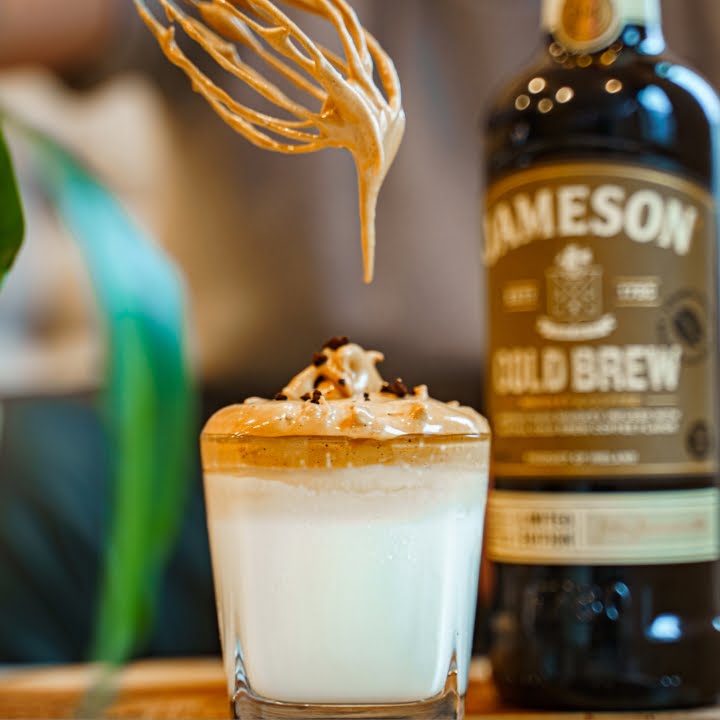
While some people are enjoying a different type of CBD on 4/20, we will be sipping on cold brew drinks. Jameson Cold Brew is a traditional Irish Whiskey infused with a delicious cold brew flavor, perfect to be enjoyed in mixed cocktails or simply on the rocks. 

Jameson Cold Brew Dalgona Coffee

Ingredients

  • 1 part Jameson® Cold Brew
  • 2 parts instant coffee
  • 2 parts granulated sugar
  • 2 parts hot water
  • 3 parts milk of choice
  • 1 part cinnamon

How to Make

  • In mixing bowl add instant coffee, sugar and hot water
  • Whisk until light and fluffy
  • In a glass, fill 3/4 of the way with 3 parts milk of choice and 1 part Jameson Cold Brew
  • Add coffee fluff to top and garnish with cinnamon

Jameson Cold Brew-Tini

Ingredients

  • 2 parts Jameson Cold Brew
  • 1 part cold brew
  • .5 parts simple syrup

How to Make

  • Shake with ice, strain
  • Pour into martini style glass

Jameson Cold Brew & Cola

Ingredients

  • 1 part Jameson Cold Brew
  • 2 parts Cola
  • Orange peel

How to Make

  • Build over ice in a highball glass
  • Garnish with Orange Peel