

Posts made in November 2026

How a Shampoo-and-Conditioner Set Fights Dandruff on Two Fronts

Dandruff care often focuses on reducing visible flakes while leaving the hair dry, rough, or difficult to manage. A two-step routine addresses both needs in the same wash. The shampoo targets the scalp, where dandruff develops, while the conditioner replenishes moisture through the lengths and supports a healthier scalp surface. This approach helps treatment fit into regular hair care instead of disrupting it. The difference becomes clearer when each product has a defined job.

Why Dandruff Needs a Two-Step Routine

Dandruff involves scalp flaking, irritation, and oil imbalance. A treatment shampoo must cleanse the scalp and address the factors behind visible flakes. Hair still needs moisture after cleansing, especially when frequent washing leaves strands feeling dry or coarse.

A conditioner completes that process by restoring softness after shampooing. Products such as the Jupiter dandruff shampoo and conditioner set pair a balancing shampoo with a nourishing conditioner, so scalp care and hair care happen during the same routine. This pairing suits people with mild to moderate dandruff or seborrheic dermatitis who wash often and want smoother hair afterward.

Front One: Treating the Scalp

The balancing shampoo uses 1% zinc pyrithione, a clinically proven dandruff treatment. It cleanses the scalp, helps address flakes, and rebalances scalp pH with dermatologist-loved botanicals.

Application time affects how the shampoo works within the routine. The directions recommend applying it to the scalp and hair, leaving it in place for two to three minutes, then rinsing thoroughly.

The recommended frequency is up to three or four times weekly. People with oily scalps can wash more often, while those with dry scalps should use it less frequently. This adjustment keeps the routine practical without treating every scalp the same way.

Front Two: Caring for the Hair

Dandruff shampoos often receive attention for scalp treatment, while the hair itself receives less care. The conditioner addresses that gap with colloidal oatmeal and antioxidant-rich botanicals.

Colloidal oatmeal helps support moisture and comfort, while the conditioner restores softness after cleansing. It also strengthens strands and supports a healthier scalp. Applying conditioner after shampoo keeps the hair more manageable without removing the scalp-focused step.

The set also has a color-safe formula. That detail matters for people who color their hair and need dandruff care that fits an established maintenance routine.

How to Use Both Products

A consistent order keeps each formula focused on its intended role. First, apply the shampoo to the scalp and hair. Massage it through the hair, leave it for two to three minutes, and rinse.

Next, apply the conditioner after shampooing. Work it through the hair and scalp as directed, then rinse thoroughly. Using both products together creates a complete wash routine rather than treating the shampoo as a stand-alone product.

The set has a subtle rosemary, mint, and vanilla scent. Its daily-routine format also makes it easier to maintain regular washing while managing mild to moderate dandruff.

Who Should Consider This Format?

This routine suits people who experience mild to moderate dandruff or seborrheic dermatitis and wash their hair regularly. It also fits those who want scalp treatment without sacrificing smoothness, softness, or color care.

People with more severe or stubborn dandruff may need a more intensive routine. The product ia an advanced oil control trio for those concerns, so the shampoo-and-conditioner set is best viewed within the level of dandruff care it lists.

What Results Should Users Track?

Visible flakes and scalp itch provide practical signs to monitor during the first few washes.  The set clears flakes and calms itch in as little as two washes.

Hair condition matters as well. After washing, strands should feel clean and manageable, not stripped or stiff. Tracking both scalp comfort and hair texture gives a more complete view of how the routine fits your needs.

If symptoms persist, worsen, or cause significant discomfort, a dermatologist can assess the scalp and recommend appropriate care. Dandruff and seborrheic dermatitis can require different treatment plans.

Conclusion

A two-product dandruff routine works because it separates scalp treatment from hair conditioning without separating them from the same wash. A shampoo with 1% zinc pyrithione targets dandruff, while the conditioner restores moisture and supports smoother strands. People with mild to moderate dandruff can follow the stated wash schedule, then track flakes, itch, and hair texture over the first two washes. That simple check shows whether the routine matches their scalp and hair needs.


Rheumatology in Greenville, Ohio via 360 MAGAZINE.

Best Rheumatologists in Greenville, Ohio: Top Options for RA, AS, and PsA Care in 2027

According to the CDC’s 2022 report, the age-adjusted prevalence of diagnosed arthritis in U.S. adults was 18.9% in 2022. That number climbed from 16.1% in large central metropolitan areas to 23.5% for people living in nonmetropolitan areas, and adults in the Midwest (20.0%) were more likely to have arthritis than those in the Northeast or West. 

If you call Darke County home and you’re managing rheumatoid arthritis (RA), ankylosing spondylitis (AS), or psoriatic arthritis (PsA), those statistics probably feel personal. 

This guide ranks the best rheumatology options near Greenville, Ohio, for exactly those conditions. 

For broader health coverage, browse the health coverage on 360 Magazine.

How These Rheumatology Options Were Ranked

This ranking is built for adults in Greenville and Darke County who need ongoing, routine rheumatology care for RA, AS, and PsA. It isn’t intended for emergency situations. All information came from practice websites and public listings, not from independent patient surveys or online reviews. 

Six criteria shaped the list, each weighted to reflect what matters when you live with a chronic autoimmune condition.

  1. Specialty focus in RA, AS, PsA, and related autoimmune conditions.
  2. Team-based care and care coordination.
  3. Scheduling and wait times.
  4. Telehealth and rural access.
  5. Insurance acceptance.
  6. Location convenience from Greenville and Darke County.

Because chronic conditions like RA, AS, and PsA demand consistent monitoring, criteria such as scheduling speed and team coordination were weighted heavily. The ability to consult via telehealth from a rural address also carried significant weight. The goal is to help you narrow your options quickly, not to replace a phone call to confirm current insurance panels.

#1 AndHealth: Team-Based Rheumatology Built for Greenville

AndHealth ranked among the top rheumatology providers because of its coordinated team model. When you’re living with RA, AS, or PsA, waiting weeks for a specialist can be frustrating. AndHealth flips that script by letting you book a 45-minute virtual consultation within one to two weeks, with no referral required. 

The model combines a rheumatologist, clinical pharmacist, coordinating provider, health coach, and patient navigator into a single care team, so you spend less time shuttling between offices.

  • Fast, no-referral scheduling: Appointments are typically available within 1–2 weeks, and the 45-minute virtual visits give you room to discuss symptoms, side effects, and lifestyle without feeling rushed.
  • Insurance built for the region: AndHealth is in-network with Medicaid, Medicare, TRICARE, and most commercial health plans in Ohio and Indiana. Ohio Medicaid members often see no copays for any care team member.
  • Greenville location with video reach: A physical office at 5735 Meeker Rd, Greenville, OH 45331 anchors the practice, and video visits extend care to anyone in Ohio or Indiana. Additional hubs in Columbus, Cambridge, Logan, and Springfield support in-person needs.

Because AndHealth coordinates with Wayne HealthCare, your local hospital can stay connected to your ongoing care for RA, AS, or PsA. That coordination can mean fewer gaps when you need labs, imaging, or emergency support close to home.

#2 Premier Health Rheumatology: Dayton-Area Specialty Care

Premier Health Rheumatology, part of the Premier Physician Network, treats rheumatoid arthritis, lupus, vasculitis, osteoporosis, and a wide range of other joint and connective tissue diseases. 

Its clinic model includes an in-office infusion center, same-day appointments, and both in-person and video visits, plus MyChart messaging. While the drive from Greenville to Vandalia or Beavercreek can take over 40 minutes, the trade-off is immediate access to infusion therapy without a separate hospital visit. 

Appointments are available Monday through Friday from 8 a.m. to 4 p.m. at the Vandalia and Beavercreek offices, and on select days in Monroe. You reach the team by phone at (937) 567-5960.

  • Broad autoimmune range: According to the Premier Health Rheumatology service page, specialists manage autoimmune arthritis, connective tissue disorders, gout, lupus, and osteoporosis.
  • Infusion and same-day access: An in-office infusion center eliminates the need for separate hospital trips, and same-day appointments help when a flare demands quick attention. Video visits and MyChart messaging round out the access options.
  • Multiple Dayton-area locations: Vandalia and Beavercreek offices operate Monday–Friday 8 a.m. to 4 p.m.; the Monroe office is open Monday, Tuesday, and Thursday 9 a.m. to 5 p.m.

Premier Health Rheumatology is a strong choice when infusion services and same-day responsiveness sit at the top of your priority list.

#3 Premier Arthritis and Osteoporosis Center

This Premier Health clinic at 122 Wyoming Street, Suite 120, Dayton, OH, zeroes in on arthritis and osteoporosis management. The office runs Monday–Friday from 8 a.m. to 4 p.m. Phone scheduling is available at (937) 208-7275.

  • Arthritis and osteoporosis focus: The center specializes in joint and bone health, which suits patients managing both rheumatoid arthritis and bone density concerns.
  • In-person clinic model: Appointments are primarily in-person, based on published information. No telehealth or rapid-appointment details were surfaced.
  • Dayton campus location: The clinic sits in Dayton, not Greenville, so travel is required.
  • Integrated network: As part of Premier Health, care can coordinate with other rheumatology and specialty offices inside the system.

Best for: Patients managing osteoporosis alongside arthritis who prefer a Dayton-based Premier Health clinic.

Less ideal if: You need Greenville-area telehealth, faster published wait times, or a dedicated care coordinator.

This is a secondary Premier Health option with clear contact details but less published information on RA, AS, and PsA specialty pathways.

#4 Dayton Arthritis and Allergy with Dr. Aliya U. Khan

Dr. Aliya U. Khan brings a dual certification in rheumatology and allergy/immunology, a combination that can simplify care when joint pain and allergic symptoms intersect. She completed her internal medicine residency and chief residency at Wright State University, where she now serves as a clinical assistant professor of internal medicine.

  • Dual board certification: Board certified in both rheumatology and allergy/immunology, Dr. Khan is equipped to connect inflammatory arthritis with immunologic triggers.
  • Academic engagement: Her role at Wright State University suggests continued exposure to evolving treatment protocols.
  • Dayton private practice: The office at 3075 Governor’s Place Blvd., Suite 110, Dayton, is a comfortable private-practice setting. The practice also offers infusion and DXA bone density testing.

Dr. Khan’s dual specialty makes her a distinctive resource for complex overlapping cases, though it’s a drive from Greenville.

Caveats and Counterpoints

Wayne HealthCare at 835 Sweitzer St. in Greenville is the local hospital serving Darke County, which AndHealth’s page describes as a 5-star CMS-rated hospital that has served the community for nearly 100 years. However, Wayne HealthCare’s public pages don’t appear to list a rheumatology service, so it functions better as a care partner than a standalone rheumatology option.

The CDC arthritis prevalence figure is from 2022, so while the rural-urban gap likely persists, the exact percentages may have shifted since then.

Similarly, many of the source pages used here lack publication years; insurance panels, wait times, and office hours can change quickly. A short phone call to confirm coverage and availability is always worth the time.

Final Verdict

If you’re managing RA, AS, or PsA in Darke County, AndHealth offers a coordinated entry point. You can schedule a 45-minute virtual visit in one to two weeks, no referral needed, and connect with a rheumatologist, pharmacist, health coach, and patient navigator under one plan. 

For patients who need in-office infusion or same-day treatment inside the Dayton health system, Premier Health Rheumatology is an excellent fallback. Dr. Aliya Khan at Dayton Arthritis and Allergy fills a niche for those whose arthritis symptoms intertwine with allergies or immune disorders. 

No matter which direction you lean, take five minutes to call and confirm insurance coverage, current wait times, and whether a virtual or in-person visit fits your situation. Starting with the right team saves you months of trial and error.

This article is for general information and isn’t medical advice. Talk with your doctor about your specific condition and treatment options.

BUGATTI Celebrates 20 Years in the U.S. at Wynn Las Vegas via 360 MAGAZINE.

BUGATTI Celebrates 20 Years in the U.S. at Wynn Las Vegas

Bringing together twenty customer-owned BUGATTI hypercars alongside DESTRIER, the latest one-of-one creation from Programme Solitaire, the occasion honored two decades of BUGATTI in America and the owners, partners and enthusiasts who have helped shape the marque’s modern story.

Since the arrival of VEYRON in 2006, BUGATTI’s presence in the United States has grown steadily. Today, America stands as the marque’s largest single market worldwide, with twelve dealerships and 353 BUGATTI automobiles.

Beyond these milestones lies something equally significant: a community united by a deep appreciation for BUGATTI’s singular approach to performance, craftsmanship and artistry.

Many of the owners who gathered in Las Vegas have built lasting relationships with BUGATTI across multiple generations of automobiles, from VEYRON and CHIRON to the new TOURBILLON. Their passion for the marque has helped establish the United States as one of BUGATTI’s most important homes outside of Molsheim.

At the heart of BUGATTI’s presence stood DESTRIER, the latest creation from Programme Solitaire. More than a one-of-one car, DESTRIER embodies the uniquely personal relationships BUGATTI cultivates with its customers, transforming a very intimate vision into art on wheels. Bringing together exceptional craftsmanship, distinctive design and unparalleled attention to detail, DESTRIER stands as a testament to what can be achieved when BUGATTI’s customers are at the center of the creative journey.

As BUGATTI enters the TOURBILLON era, the United States remains as important to the marque as it was when the first VEYRON arrived on American soil two decades ago. One in three TOURBILLON models will find a new home there.

Twenty years into this extraordinary journey, the BUGATTI community is stronger than ever.

More about the Wynn Las Vegas.

BUGATTI Celebrates 20 Years in the U.S. at Wynn Las Vegas via 360 MAGAZINE.

The 35 U.S. City Tour Celebrates More Than Three Decades of Chart-Topping Hits, Cultural Influence and the R&B Greatness of JODECI via 360 MAGAZINE.

JODECI 35TH ANNIVERSARY TOUR CELEBRATING DEBUT ALBUM

FOREVER MY LADY KICKS OFF TONIGHT IN ST. LOUIS, MISSOURI

The 35 U.S. City Tour Celebrates More Than Three Decades of Chart-Topping Hits, Cultural Influence and the R&B Greatness of JODECI

As seen in PEOPLE, PIX11, HOT 97, and COMPLEX, JODECI is hitting the road for their highly anticipated 35 city U.S. tour celebrating the 35th anniversary of their #1 debut album, Forever My Lady. 

The tour kicks off tonight, Wednesday, November 4, in St. Louis, and celebrates the group’s historic 35th anniversary of their 3x platinum debut album, Forever My Lady.  The highly-anticipated tour will make stops in major markets including Los Angeles, Houston, Chicago, Atlanta, Miami, New Orleans, and a special hometown concert in Charlotte, NC on December 19 and 20th. In honor of the milestone, the Forever My Lady album was re-released with a special expanded vinyl version, distributed through UMG on July 17. The album will feature bonus tracks and a never before heard a capella version of “Stay.”

Few groups defined the 90’s R&B scene like JODECI. Bursting into the music scene at a time when R&B groups were plentiful, K-Ci, JoJo, and Mr. Dalvin captivated the industry with their groundbreaking style, unforgettable hits, enticing vocals, and fearless fashion influence. With over 20 million albums sold, five #1 singles, three #1 albums, and multiple accolades – including Soul Train Awards and Billboard Music Awards, JODECI’s expansive influence helped define the era. Over three decades later, their lasting influence continues to shape music and the culture, solidifying their place in R&B history.

“Thirty-five years ago, Forever My Lady changed our lives,” said K-Ci Hailey and Mr. Dalvin of JODECI in a joint statement. “The love and connection we share with our fans is unmatched and this tour is for them — the people who stood by us from day one. Get ready, we’re going to leave everything on the stage for you.”


Nov 4 – St. Louis, MO | Stifel Theatre
Nov 6 – Detroit, MI | Fox Theatre
Nov 7 – Chicago, IL | Arie Crown Theater
Nov 8 – Indianapolis, IN | Murat Theatre at Old National Centre
Nov 10 – Cincinnati, OH | The Andrew J. Brady Music Center
Nov 11 – Pittsburgh, PA | Citizens Live at The Wylie
Nov 12 – Oxon Hill, MD | MGM National Harbor
Nov 14 – Cleveland, OH | KeyBank State Theatre at Playhouse Square
Nov 15 – Bristol, VA | Hard Rock Hotel & Casino Bristol
Nov 18 – Jersey City, NJ | Loew’s Jersey Theatre
Nov 19 – Bensalem, PA | Parx Casino
Nov 20 – Baltimore, MD | The Paramount Baltimore
Nov 22 – Louisville, KY | The Louisville Palace
Nov 24 – Memphis, TN | Orpheum Theatre
Nov 28 – Norman, OK | Riverwind Casino
Nov 29 – Houston, TX | Arena Theater
Dec 1 – N. Little Rock, AR | Simmons Bank Arena
Dec 2 – New Orleans, LA | Saenger Theatre
Dec 3 – Birmingham, AL | BJCC Concert Hall
Dec 5 – Lake Charles, LA | Lake Charles Event Center
Dec 6 – Mobile, AL | Saenger Theatre
Dec 8 – Savannah, GA | Johnny Mercer Theater
Dec 10 – Nashville, TN | The Truth
Dec 11 – Columbia, SC | Township Auditorium
Dec 13 – St. Petersburg, FL | Duke Energy Center for the Arts
Dec 15 – Jacksonville, FL | Florida Theatre
Dec 16 – Miami, FL | The Fillmore Miami Beach
Dec 18 – Atlanta, GA | Venue To Be Announced
Dec 19 – Charlotte, NC | Ovens Auditorium
Jan 8 – San Francisco, CA | The Masonic
Jan 9 – Inglewood, CA | YouTube Theatre
Jan 10 – El Cajon, CA | The Magnolia
Jan 15 – Phoenix, AZ |  Arizona Financial Theatre
Jan 16 – Ontario, CA | Toyota Arena
Jan 17 – Las Vegas, NV | Palms Casino

FOLLOW JODECI

Website
Instagram

The Prompts a Mobile Cash Game Sends You Are a Design Choice, and They Say Plenty

Install a mobile game that takes paid entries and within a week you will have received several notifications. A tournament starting. A reminder that you have not played. Possibly a message timed shortly after a match you lost. Players treat these as background noise, something to be muted or tolerated. They are worth more attention than that, because the notification layer is where a platform’s idea of its own business becomes legible, and it is visible from the outside before any money is committed.

Nothing about a prompt is inherently a problem. A competitive format genuinely has events that start at times, and a player who wants to be told about them is being served rather than pushed. The question is what triggers a message, what the message asks of the player, and whether the free route is offered as readily as the paid one. Those are design decisions, they are observable within a few days, and they describe the relationship on offer better than any marketing page.

The surrounding market makes the stakes clear. The games industry is estimated at about $213.9bn in 2026, up around 6.1 per cent, with in-app purchase revenue near $81.7bn in 2025, and mobile carrying roughly 57 per cent of platform share at some $121.1bn. Attention is the contested resource across all of it. In a format where attention converts into paid entries, how a platform asks for it is not a small matter.

What makes this test unusually reliable is that it cannot be staged. A rules document can be written carefully by somebody who was never going to be held to it. Notification behaviour is produced by whatever the platform has actually built and whatever it is actually trying to achieve, every day, to every player. It is the one part of a product a prospective player gets to observe in operation before committing anything.

Seven things to watch in the first week

  1. A prompt that arrives immediately after a loss is the one worth noticing. There is a difference between telling a player that a tournament begins at eight and telling a player, two minutes after a defeat, that another match is available now. The first is scheduling information. The second is timed to a moment when judgement is at its worst, and a platform that has decided not to do it has made a real choice at a real cost to itself.
  2. Scheduled messages and result-triggered messages are different products. A message tied to the calendar can be planned around. A message tied to what just happened in your account is responding to your state rather than to the world. Both will look similar in a notification tray, which is why it is worth watching for a few days to see which kind a platform mostly sends.
  3. A good prompt offers the free route as plainly as the paid one. Where a game has a practice mode running the same rules and the same interface as the paid version, there is no reason for an invitation to play to point only at an entry fee. A platform confident in its competitions does not mind a player warming up for nothing first, and the shape of its messages will show whether that confidence exists.
  4. Streaks, countdowns and expiring offers import urgency a skill format does not need. A competition is interesting because of the competition. Where the reason to enter now is that an offer disappears at midnight, the pressure has been manufactured somewhere other than the game. This is one of the clearest tells available, and it takes no expertise to spot.
  5. The entry fee belongs in the prompt, not one screen later. If a message invites a player into a paid match, the cost should be in the message. Where the fee only appears after a tap, the prompt is doing something other than informing, and the fact that the platform knows the number perfectly well makes the omission a decision rather than an oversight.
  6. Nothing in the design should be asking for a longer session than the player intended. Skill formats reward concentration, and concentration has a duration. A platform whose prompts and flows quietly extend sessions is working against the quality of its own competitions, since a tired player in round five is a worse competitor than the same player in round one. Interests that genuinely align here produce quieter software.
  7. There should be an off switch, and it should work completely. Granular notification settings that actually hold, a clear route to turning everything off, and no quiet re-enrolment after an update. This is the easiest item on the list to test and the most revealing, because it is the point at which a platform either respects a stated preference or treats it as a temporary setback.

How it works in practice

The underlying structure matters as much as the messages, and it is visible in a live catalogue. Backspin Games publishes ten mobile titles, among them 21 Jack, Bingo, Solitaire and Cannon Blast. Every title carries a free practice mode running the same rules and the same interface as the paid version, so there is always a route into the game that costs nothing. The entry fee is displayed before a player commits and the prize is stated in advance. Opponents are paired by demonstrated ability rather than at random, and both players get the same cards in the same order, the same puzzle and the same bubbles, so the only variable left in a match is how each person plays it. The platform takes a small fee for organising matches and tournaments. Winnings sit as an account balance until the player completes identity verification, links a payout method and requests a withdrawal, and that verification also prevents one person holding several accounts, supports anti-cheat work and allows a refund where cheating is found. The titles are available globally on both the App Store and Google Play, though paid entry depends on where the player is.

A week-long test anyone can run

  • Did any message arrive within minutes of a loss?
  • Are the prompts tied to scheduled events or to your own results?
  • Does any invitation point at the free practice mode?
  • Is there a countdown, a streak or an offer that expires?
  • Does a prompt for a paid match state the entry fee in the message?
  • Does anything in the flow ask for a longer session than you planned?
  • Do the notification settings hold after an app update?

Frequently asked questions

Is this gambling?

No. Skill-based real money gaming and gambling are two very different things. Legality in the United States turns on the predominance test, which asks whether skill or chance decides the result, and in a skill format both players face the same cards in the same order, the same puzzle and the same bubbles. Federal law does not prohibit skill-based real-money tournaments, though around 12 states restrict paid entry.

Are notifications a bad sign in themselves?

No. A competition with scheduled events has genuine information to pass on, and a player who wants it is being served. What is worth watching is whether messages respond to the calendar or to your own recent results, and whether the free route is offered alongside the paid one.

Why would a platform avoid prompting after a loss?

Because the quality of its competitions depends on players making considered decisions, and a message timed to a bad moment produces the opposite. A platform paid a small fee for organising matches has no interest in a particular result, which makes restraint here consistent rather than charitable.

What about offers that expire?

Urgency attached to a deadline is pressure created outside the game. A skill competition is interesting on its own terms, so a reason to enter that rests on a countdown is worth reading carefully. None of it changes what an entry fee buys or what results depend on.

Does any of this affect what I can earn?

Only indirectly, through the quality of the decisions you make. No operator can promise a return on an entry fee and results depend on performance. A platform whose design leaves you entering matches when you intended to is at least not working against you.

Can I tell anything from the first day alone?

Not much. One day produces a welcome message and little else. A week produces a pattern: what gets announced, what gets nudged, whether anything arrives at a bad moment, and whether switching messages off is respected. A week also costs nothing, since the free practice mode is where it can be spent.

The quiet software is usually the better software

Everything a platform claims about fairness sits in documents. How it behaves when it wants your attention sits on your phone, within a week, for free. A game that tells you when competitions start, points at the practice mode as readily as the paid table, puts the entry fee in the message and lets you switch the whole thing off has told you something about how it makes its living. It is the cheapest piece of research available in this category, and almost nobody runs it.

Peptide Supplier Customer Support Standards: Why Technical Response Time Is a Quality Indicator

Supplier evaluation in the research chemical sector concentrates almost entirely on the material. Purity, identity, documentation, storage: these are the categories that appear on every procurement checklist. Support is treated as a matter of convenience, assessed informally if at all, and rarely written into a selection decision.

That allocation of attention is understandable and it misses something. In practice, the questions a laboratory needs answered about a reagent arrive after the reagent does, and the speed and substance of the answers determine whether a problem becomes a delay or a dead end. A supplier’s technical support function is the point at which its internal record-keeping becomes visible to the customer. What can be answered, and how quickly, is a direct readout of what is recorded.

The questions that actually get asked

Support enquiries in this sector cluster into a small number of recurring types, and almost none of them are commercial.

  • Retrieval of analytical documentation for a lot already in use. A certificate has been mislaid, or the laboratory needs the underlying chromatogram rather than the summary figure.
  • Clarification of method detail. The certificate names a technique; the laboratory needs the column, gradient or detection parameters to interpret the result or to run a comparable in-house check.
  • Lot history questions. Whether a current lot came from the same synthesis campaign as a previous one, and whether anything in the process changed between them.
  • Storage and transit queries. What conditions the material was held at before despatch, and whether a shipment that arrived warm has an associated temperature record.
  • Specification interpretation. What a particular line on the certificate is measuring, and what it does not measure.

Each of these is a question about the supplier’s records. A supplier that can answer within a day is one whose records are indexed by lot and retrievable by staff. A supplier that cannot answer at all is telling the customer something important about how the material was tracked, regardless of how good the material is.

Response time as a proxy for record structure

The relationship is mechanical rather than mysterious. If analytical data is filed against the batch, with the batch linked to the packaging run and the packaging run linked to the despatch, then a lot-history question resolves by lookup. If the data sits in dated folders organised by analysis session, the same question requires reconstruction, and reconstruction takes days or produces a hedge.

This is why experienced purchasing reviewers test support before committing to a supplier rather than after. The test is simple: ask a specific, answerable, documentary question about a lot before placing a substantive order. Request the chromatogram behind a summary purity figure. Ask which synthesis campaign a listed lot belongs to. The content of the reply matters less than its shape. A precise answer with a document attached indicates one kind of operation. A general reassurance indicates another.

What a support standard looks like when it is deliberate

Suppliers who treat technical support as part of the quality system tend to share several characteristics. Enquiries are answered by someone with access to the analytical records rather than routed through a commercial team that has to ask. Documentation requests are met with the document rather than a restatement of the summary. Questions the supplier cannot answer are identified as such, with an explanation of why the information was not captured, instead of being absorbed into vague assurance. Lot-specific enquiries receive lot-specific replies.

There is also a negative indicator worth watching for. Support that responds to a technical question with commercial material, or that answers a documentation request by offering a replacement shipment, is substituting goodwill for records. The goodwill may be genuine. It does not help a laboratory that needs to reconstruct what it used.

Among suppliers positioning on documentation rather than on catalogue breadth, this is where the positioning is tested. Bluum Peptides is one of the operations in the research-use-only segment that routes lot-level enquiries to the analytical record rather than to a sales function, which is the structural precondition for answering them at all.

The cost of a slow answer

The practical consequence of weak support is rarely dramatic. It is accumulated delay and quiet substitution of assumption for fact.

A laboratory investigating an anomalous result needs to establish whether the reagent is implicated. The chain of reasoning requires the lot’s analytical history. If that history takes three weeks to surface, the investigation either stalls or proceeds on the assumption that the reagent was as specified. The second option is faster and it introduces an untested premise into the conclusion. Multiply that across a research programme and the supplier’s record-keeping has become a silent variable in the findings.

The same dynamic affects method transfer. A laboratory attempting to reproduce a supplier’s analytical result needs the method parameters. Without them, a discrepancy between in-house and supplier figures cannot be attributed: it may be the material, or it may be the two laboratories measuring different things. The question is answerable only with information the supplier holds.

Writing support into the evaluation

Making this assessable requires turning an impression into a check. Several questions do the work:

  • Who answers technical enquiries, and do they have direct access to analytical records?
  • What is the stated turnaround for a documentation request against a specific lot?
  • Will the supplier provide underlying instrument data, or only the summary certificate?
  • How long are analytical records retained, and is retrieval available for lots purchased in previous years?
  • Is lot-to-lot process history available on request?

The answers are easy to record and easy to compare across suppliers. They also age well: a supplier’s answers to these questions change slowly, because they describe infrastructure rather than intention.

Support is where documentation becomes usable

A certificate of analysis filed at the point of purchase is a static artefact. Its value is realised later, when a question arises and the record has to be interrogated. Whether that interrogation is possible depends less on what the certificate said than on whether the supplier can still reach behind it.

Laboratories that treat technical support as a quality attribute rather than a service courtesy are acknowledging something about how research records fail. They rarely fail because the material was wrong. They fail because the material’s history became unavailable, and nobody noticed until the history was needed.

All materials and documentation discussed in this article relate to research use only. Nothing here describes or implies human or veterinary use, administration, dosing, or any therapeutic, diagnostic or clinical application.

The Exit State Movie Hits Uncomfortably Close to Home via 360 MAGAZINE.

The Exit State Hits Uncomfortably Close to Home

Standout performances, dark humor, and an unsettlingly familiar premise fuel Gabriela Ledesma’s political horror-thriller.

In The Exit State, Americans are the ones trying to get out. Fleeing an authoritarian regime, a group of citizens heads toward the Mexican border, stopping at a supposed safe house along the way. It is a reversal of a familiar political narrative, and an unsettling foundation for a film that finds room for absurdity even as its world closes in.

Directed by Gabriela Ledesma and co-written with leads Callie Schuttera and Josh George, the horror-thriller explores survival, privilege, and the ways people participate in systems they would rather not examine. Its near-future setting offers little comforting distance from the present.

“I believed our story was a cautionary tale of a worst-case scenario. Just a few months later, the film’s premise already felt uncomfortably current,” Ledesma said in a statement shared on the film’s social media.

That discomfort gives The Exit State its bite. The question of who gets to escape sits alongside a less flattering one: how long were they comfortable staying?

Clayton Farris makes that second question especially entertaining. As wealthy escapee Andrew Montebello, he captures the vanity of someone who seems to regard protecting his own comfort as an act of political bravery. Andrew imagines himself as both philanthropist and rebel, apparently without considering how his privilege complicates either identity. Farris finds the comedy in that contradiction without needing to underline it, bringing a welcome, ridiculous energy to the film’s increasingly uneasy atmosphere.

Jeremy D. Howard is another standout as Rome, the driver transporting Americans to the house. His comic timing makes an immediate impression, but the emotional depth of his performance deserves equal attention. Howard gives Rome a humanity that reaches beyond the laughs, making him a compelling presence within an ensemble whose relationships to power vary sharply. His performance rewards attention without needing its trajectory explained in advance.

Schuttera and George anchor the film as Claire and Vince. Their assured performances make authority feel disarmingly conversational, even reassuring. Both understand how to hold an audience’s attention without making likability the priority. Their chemistry gives the film much of its charge, with tension resting as much in their interactions as in the larger crisis outside.

The film’s ambition becomes even more striking in light of the production itself: The Exit State was filmed in just nine days on a reported $150,000 budget. Following its October 13 world premiere at Screamfest, the film arrived on digital through Chroma on October 23, bringing its unsettling vision to audiences beyond the festival.

Following the premiere, reviewer Landon Reid praised what the filmmakers accomplished with those resources. He singled out Schuttera and Howard for exceptional performances and welcomed the film’s departure from a predictable low-budget slasher formula. His response captured something essential about the project: the production circumstances are impressive, but the performances and unexpected choices give viewers reasons to care beyond the numbers.

Other critics have taken notice of the film’s blend of character, satire, and suspense. Edward Douglas called it “a truly original take on a horror-thriller trope,” highlighting its attention to character alongside the bloody kills. Horror Fuel’s Joseph Perry praised Ledesma’s ability to build suspense and deliver surprises, while The Contending’s Frank J. Avella described it as a “deliciously nasty satirical thriller.”

The response has not been unanimous. Letterboxd reactions range from enthusiasm for the timely premise and entertainment value to reservations about pacing and tonal balance. Reid questioned the exposition-heavy opening, while Fortress of Solitude admired the atmosphere and Farris’s performance but felt some scenes would benefit from less dialogue. The film’s mix of political dread, dark comedy, and horror is an ambitious one, and its shifts will not land equally for every viewer.

Still, the performances give that ambition a human center. Farris makes privilege absurd. Howard brings warmth and emotional weight. Schuttera and George keep the audience watching closely. Together, they give the film more to offer than the shock of its premise.

The Exit State is uncomfortable, sometimes funny, and difficult to dismiss as a distant fantasy. It leaves an unsettling question hanging over its promise of refuge: when safety becomes conditional, what are people willing to accept to keep their place inside?

The Exit State is available on Prime Video and Apple TV through Chroma. Visit the official website for more information.

The Exit State Movie Hits Uncomfortably Close to Home via 360 MAGAZINE.
New York Fashion Week brought an international mix of designers to Sony Hall this September, with Runway 7 presenting 138 designers and brands across six days of shows via 360 MAGAZINE.

Melis Makes Its Mark

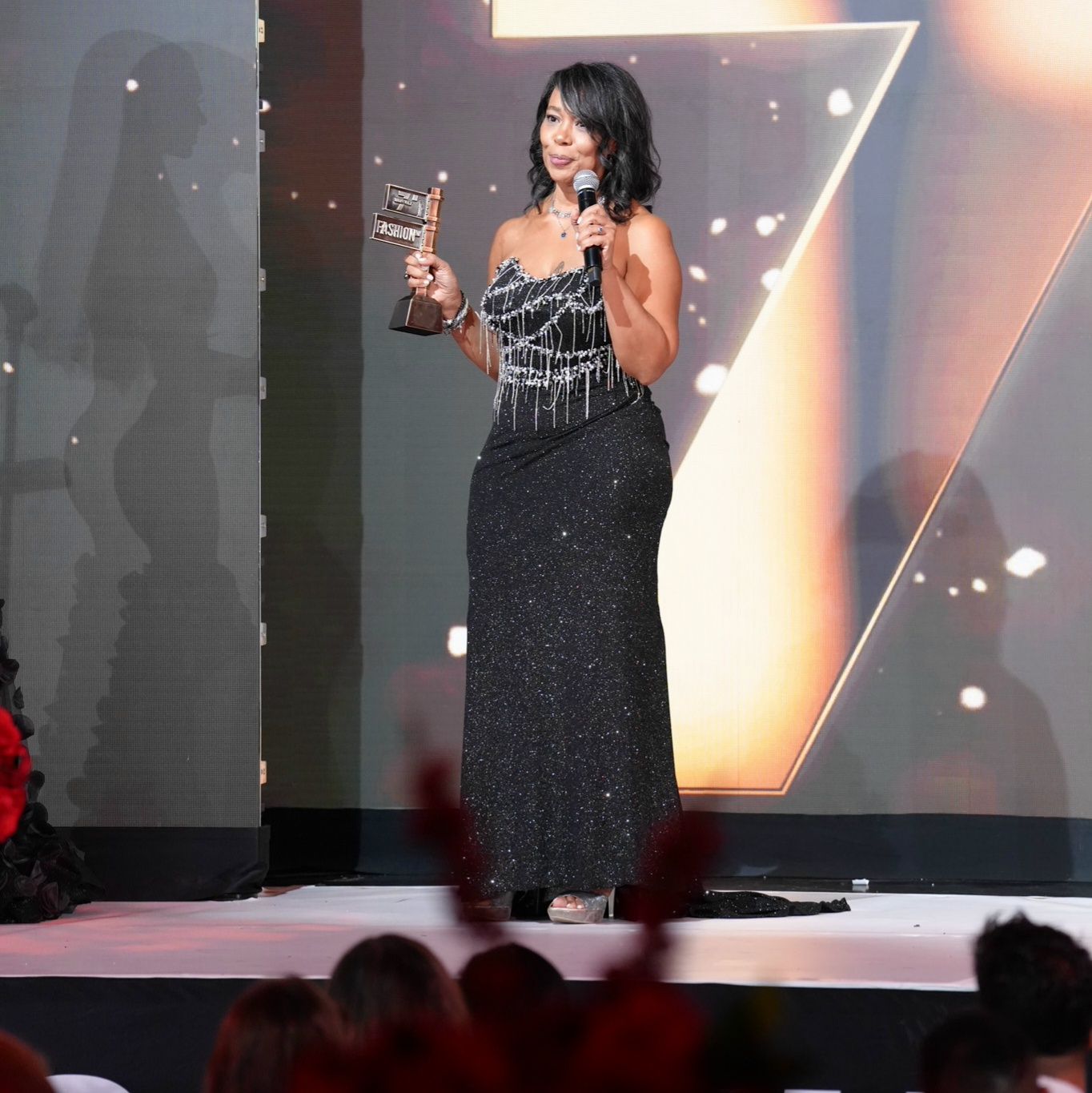
New York Fashion Week brought an international mix of designers to Sony Hall this September, with Runway 7 presenting 138 designers and brands across six days of shows. The activities shifted its attention from the runway to the people behind the collections for the inaugural Runway 7 Fashion Awards.

Among the evening’s honorees were Filipino couturier Michael Cinco, named Designer of the Year, and Malan Breton, who received the Excellence in Design Award. Omani designer Sahar Al Aufi joined them on the winners’ roster when her label, Melis Bridal, received Best Bridal Collection.

For Al Aufi, Sony Hall was familiar territory. In September 2023, she presented Melis’s Spring/Summer 2024 collection there during Runway 7’s New York Fashion Week programming. Three years later, she returned to accept an award for her bridal designs.

Al Aufi’s fashion career began in 1998 in Muscat, Oman, where she established the house that would grow into Melis. Today, she works between ateliers in Oman and Italy, combining Omani textile traditions with Italian tailoring. Her designs frequently incorporate custom-developed fabrics and hand embroidery, with individual garments made to a client’s measurements and preferences.

“Bridal couture is very personal,” Al Aufi said following the recognition. “I believe a gown should express the woman wearing it, her individuality, her story and the way she wants to feel on one of the most important days of her life.”

The designer’s work extends beyond bridalwear. Under the wider Melis fashion house, she creates evening and red-carpet couture, ceremonial attire and custom menswear. Her interest in fabric development is particularly notable, with Al Aufi personally involved in creating embroidered textiles rather than treating embellishment as a final decorative step.

The ceremony reflected Runway 7’s expanding international reach. Its awards recognized 29 winners across fashion design, modeling, media, hair and makeup, and special recognition categories, bringing established names together with designers building their presence in New York.

For Al Aufi, the bridal award arrives as she continues introducing her work to American fashion audiences. Her return to Sony Hall offers a fitting connection between her earlier runway presentation and the recognition her designs received this September.

New York Fashion Week brought an international mix of designers to Sony Hall this September, with Runway 7 presenting 138 designers and brands across six days of shows via 360 MAGAZINE.

*Photo Credits: Dillon Wright, Taylor Fenner, Antoine Delerme / Publik, and Runway 7 Fashion Awards (@runway7awards).