Posts made in June 2020

Roll Royce, 360 Magazine, Ghost, luxury, bespoke

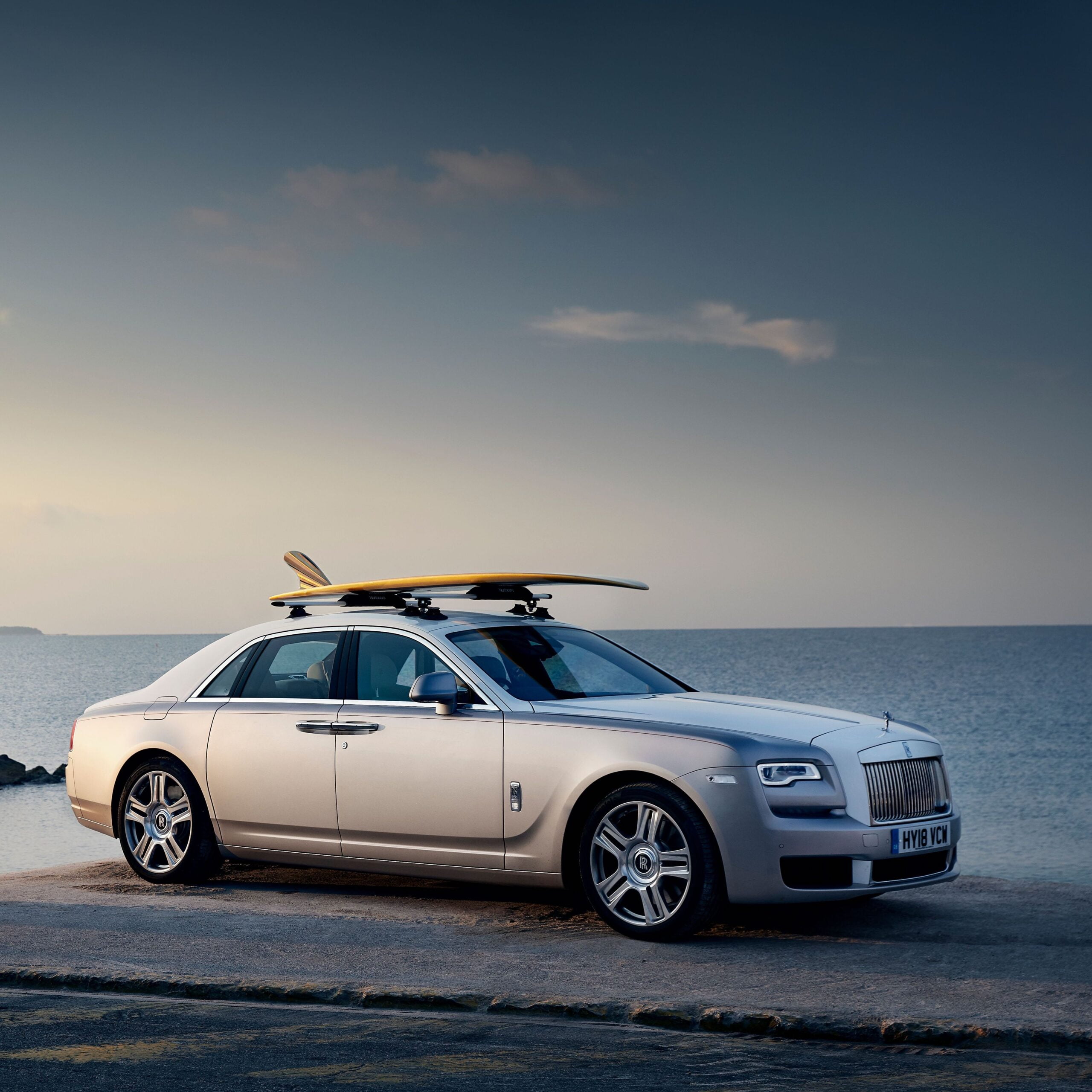
Rolls-Royce Ghost

Celebrate the final chapter for the fleeting icon of Rolls-Royce’s Ghost

From the Silver Ghost, the motor car that established the moniker of ‘The Best Car in the World’ over 100 years ago, to 200EX, the experimental car that introduced the concept of a contemporary expression of this nameplate at the Geneva Motor Show in 2009, Ghost has offered patrons of the marque a modern, nimble and driver-focused Rolls-Royce.

When production of Ghost began in 2009, patrons across the world were drawn to its elegant lines and dynamic offering and it quickly became, and remains to this day, the most successful Rolls-Royce motor car ever to be built, attracting a new group of young entrepreneurs to the marque. Indeed, the reduction in average age of a Rolls-Royce customer to around 43 is in part testament to Ghost’s global success.

As Ghost approaches the end of its remarkable ten-year tenure, the marque with the extremely limited Zenith Collector’s Edition of Rolls-Royce Ghost. The Collection of just 50 commissions celebrates the elegance of a nameplate that has become the cornerstone of contemporary Rolls-Royce Motor Cars. Fewer than ten commissions are still available to North American clients.

The Ghost Zenith Collection draws many references from 200EX, with perhaps the most significant being the inclusion of a commemorative ingot, made from the original 200EX Spirit of Ecstasy, melted down and set into the centre console of each of the 50 Zeniths. Engraved with the three key design lines of Ghost, the plaque details its significant origins. The Collection’s own Spirit of Ecstasy and clock are engraved with the name of this highly anticipated collection.

Black Badge Ghost joins in the celebration with Ghost Zenith, Ghost and Ghost EWB. About one-fourth of all Ghost commissions are done in Black Badge. Black Badge Ghost features not only the darker Bespoke design, it delivers more power along with a more dynamic handling and performance.

The darker, edgier iteration of Ghost has been a tremendous hit in North America. The iconic luxury brand celebrates this virtual send-off celebration in preparation for the arrival of all-new Ghost later this year. Rolls-Royce Motor Cars North America has created a limited selection of Black Badge Ghost for 2020.

George The Poet * Peabody

Have You Heard George’s Podcast? makes podcast history as first UK podcast to win a Peabody Award

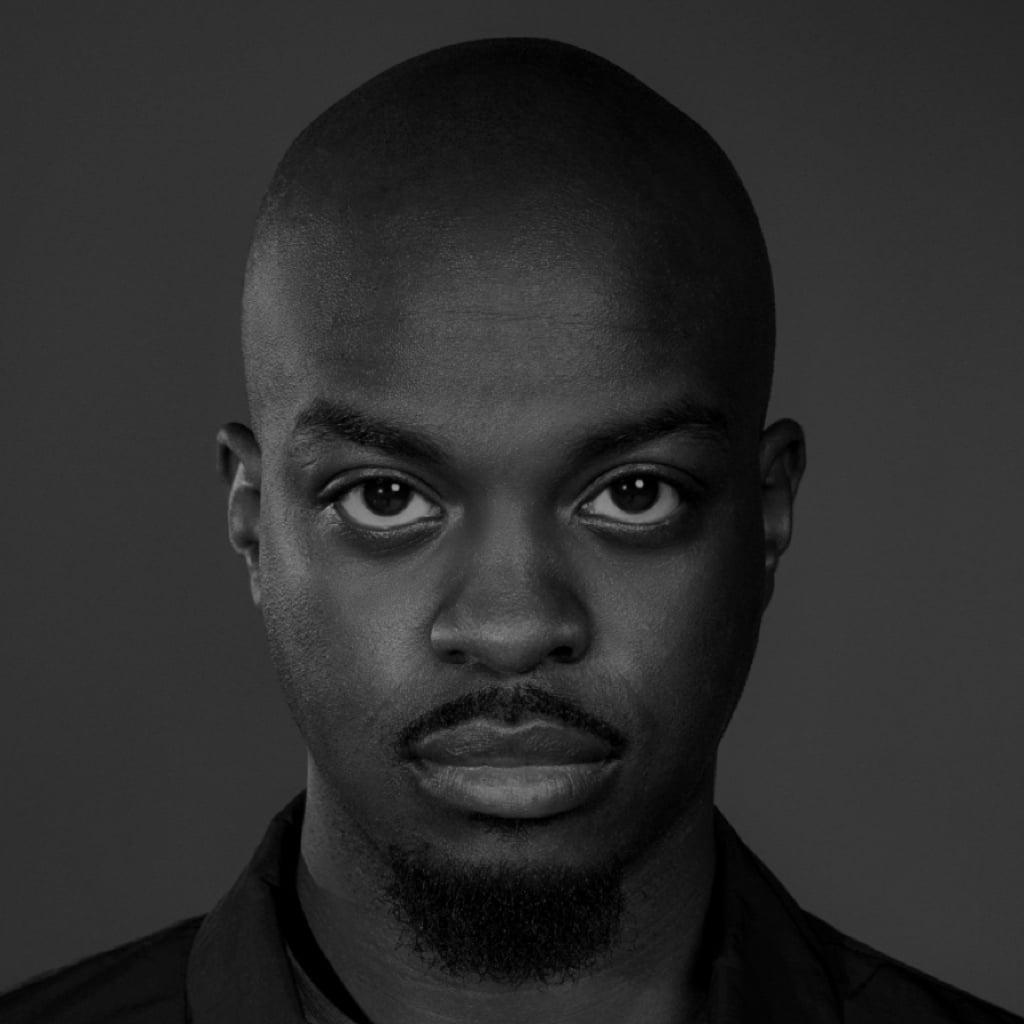
Have You Heard George’s Podcast? by George Mpanga, better known as George the Poet, and collaborator Benbrick has won a 2019 Peabody Award, making it the first podcast outside of the United States to win this prestigious award.

The Peabody Awards recognise the most compelling and empowering stories released in broadcasting and digital media and are frequently cited as the most respected award in US media due to the rigour of their nomination and selection process.

Out of nearly 1,300 entries, 60 are chosen as Nominees and only 30 are selected as Winners, by unanimous vote of the Peabody Board of Jurors. As part of their citation the jury said (the full citation can be found below):

George Mpanga’s Have You Heard George’s Podcast? is a remarkable and arresting creative engagement with European colonialism and the Black Atlantic consciousness its afterlife produced. Through the portals of poetry, spoken word, music, and speculative fiction, Mpanga, or George the Poet, imagines new horizons of possibility and pushes the boundaries of language and word-play to explore issues of trauma, intimacy, work, art and creativity, belonging, attachment, and meaning in Black Atlantic worlds.

George the Poet said:

“To win a Peabody feels like being honoured by storytelling royalty. Our podcast was inspired by greats from different fields who have also been honoured here; it’s a milestone in my career that I never dreamed of reaching so soon. On behalf of my community, I’m grateful for this recognition of our truth.”

Benbrick said:

“This recognition from the Peabody jury holds a special significance, not only given the award’s history, and the illustrious alumni of past winners that it has recognised since 1941, but because it offers an international spotlight to help highlight the importance of George’s writing.”

Jason Phipps, Commissioning Editor for Podcasts on BBC Sounds, said:

“Becoming the first podcast outside of the US to win a Peabody is a huge milestone for Have You Heard George’s Podcast? and in the evolution of podcasting as a medium with the power to tell stories that resonate, educate and entertain across international borders. The podcast began as a grassroots DIY collaboration and this huge accolade is testimony to George the Poet and Benbrick’s extraordinary creativity and originality. I know I’m joined by others who have supported the podcast at Radio 1Xtra, Radio 4 as well as my team in congratulating George the Poet and Benbrick on this brilliant achievement.”

The highly acclaimed Have You Heard George’s Podcast? has also recently won Best Podcast at the NME Awards, Podcast of The Year at the Broadcasting Press Guild Awards, plus seven awards at the 2019 British Podcast Awards.

The Peabody Awards were inaugurated in 1941 as the radio industry’s equivalent of the Pulitzer Prizes, expanding in 1948 to include television and in 2001 to include online media. The first podcast to be awarded a Peabody was Serial in 2014 and other winners have included Caliphate (2018), S-Town (2017) and In The Dark (2016), but until now there have been no podcast winners outside of the US.

The thought-provoking podcast features a mix of storytelling, music and fiction to explore powerful themes and issues in Britain and beyond. It has explored themes such as education for disadvantaged young people, the history of black American music, George’s personal relationship with Uganda and Britain, plus his own experience of growing up on a London council estate.

The first two chapters of Have You Heard George’s Podcast are currently available to listen to on BBC Sounds, with the third chapter coming later this year.

Have You Heard George’s Podcast? is produced by Benbrick and George The Poet, commissioned by Jason Phipps and Dylan Haskins for BBC Sounds.

Have You Heard George’s Podcast? is available to listen to on BBC sounds now

Consumer Physics, 360 Magazine, Vaughn Lowery, Corn

Consumer Physics Corn Analysis

Consumer Physics’ pocket-size solution enables farmers, agronomists and seed producers to test larger areas, project the optimal harvest time, save lab and dry-down costs, and increase yield potential

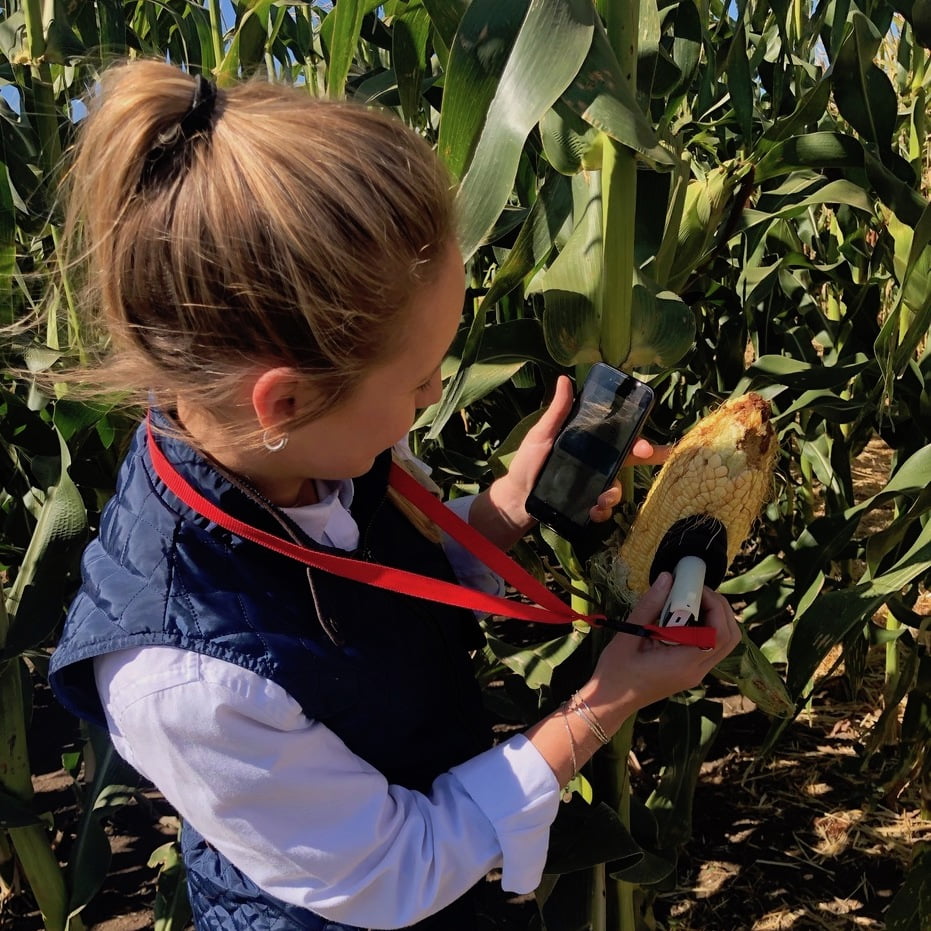
Ag-tech startup Consumer Physics is unveiling the world’s first corn moisture analysis solution that provides results in seconds, in the field, directly on the cob, without shelling. The solution is based on SCiO – Consumer Physics’ micro-NIR flagship platform, which is also the world’s first pocket-sized connected micro-spectrometer.

The solution includes a pocket-sized analyzer based on NIR (Near Infra-Red) Spectroscopy as well as a mobile app that sends data to the cloud, where Consumer Physics’ algorithms analyze the data and send back the results in seconds. This solution is tailored for corn farmers, corn seed producers and agronomists.

Corn plays a critical role in American and global agriculture and is widely implemented by various industries, from the food industry to a wide range of industrial applications. The National Corn Growers Association in the U.S. estimates that the value of corn grown in the U.S. alone amounted to $53 billion in 2019, planted on 90 million acres.

Analyzing moisture with SCiO is simple and non-destructive, and best of all, it is carried out in the field. The operation is as easy as scanning five different cobs, tapping the mobile app, and getting the moisture level reading within seconds. The solution’s accuracy and precision are on par with labs, and moisture levels range from 8% to 80%. The higher range is particularly relevant for seed producers to monitor the growing process and collect data to support the development of future products.

Consumer Physics’ user-friendly solution replaces lengthy, expensive, and complicated processes that currently require the collection of several corn cobs from the field, which are sent back to the plants or labs. In the labs, kernels must then be shelled and ground, with results taking up to several hours. With SCiO, users can conduct many measurements, daily, from numerous locations in the field, to ascertain the precise moisture level in each plot and determine the optimal harvest time. Users can also track and monitor the data collected in the cloud across time to produce long-range insights into crop efficiency and areas where they should make improvements.

Consumer Physics opened new Sales offices in Minnesota and started piloting the solution in 2019. Within a short period of time, SCiO was rolled out successfully by the leading corn growers and seed producers in the U.S., including Corteva Agriscience, Syngenta, Cargill, Beck’s, and Precision Planting.

Terry Allen, Consumer Physics’ North America Head of Business Development, said, “We successfully transferred NIR technology from the lab into the field, allowing growers and operators to get more data and take better decisions.”

According to Allen, “precise moisture measurement in real time has a direct impact on the corn business’ bottom line. SCiO was seen to improve forecasting by about 2-3%, which is likely to save tens of thousands of dollars on an average 1000-acre field.”

Consumer Physics works with Corteva to be on the forefront of technology and maximize seed quality and overall effectiveness in key crops such as corn. Consumer Physics’ unique solution for in-field moisture analysis enables farmers, agronomists and seed producers to test larger areas, project the optimal harvest time, save costs and ultimately ensure great quality seed for the customer.

For more information about the study, click here.

About Consumer Physics

Consumer Physics is the company that developed SCiO, the world’s first pocket-sized connected micro-spectrometer. Our mission is to empower the Agriculture and Food industries around the world with material analysis capabilities that provide real time data to support decisions that impact the way these industries grow crops and harvest them, handle quality control, monitor trends and performance, and more, through a powerful connected ecosystem. We believe that the days when only labs or skilled professionals used spectrometers are behind us.

Watch a corn kernel moisture analysis video here and a video about how to analyze corn moisture here.

360 Magazine, Statue Wearing Mask

Mask-Wearing and Manliness

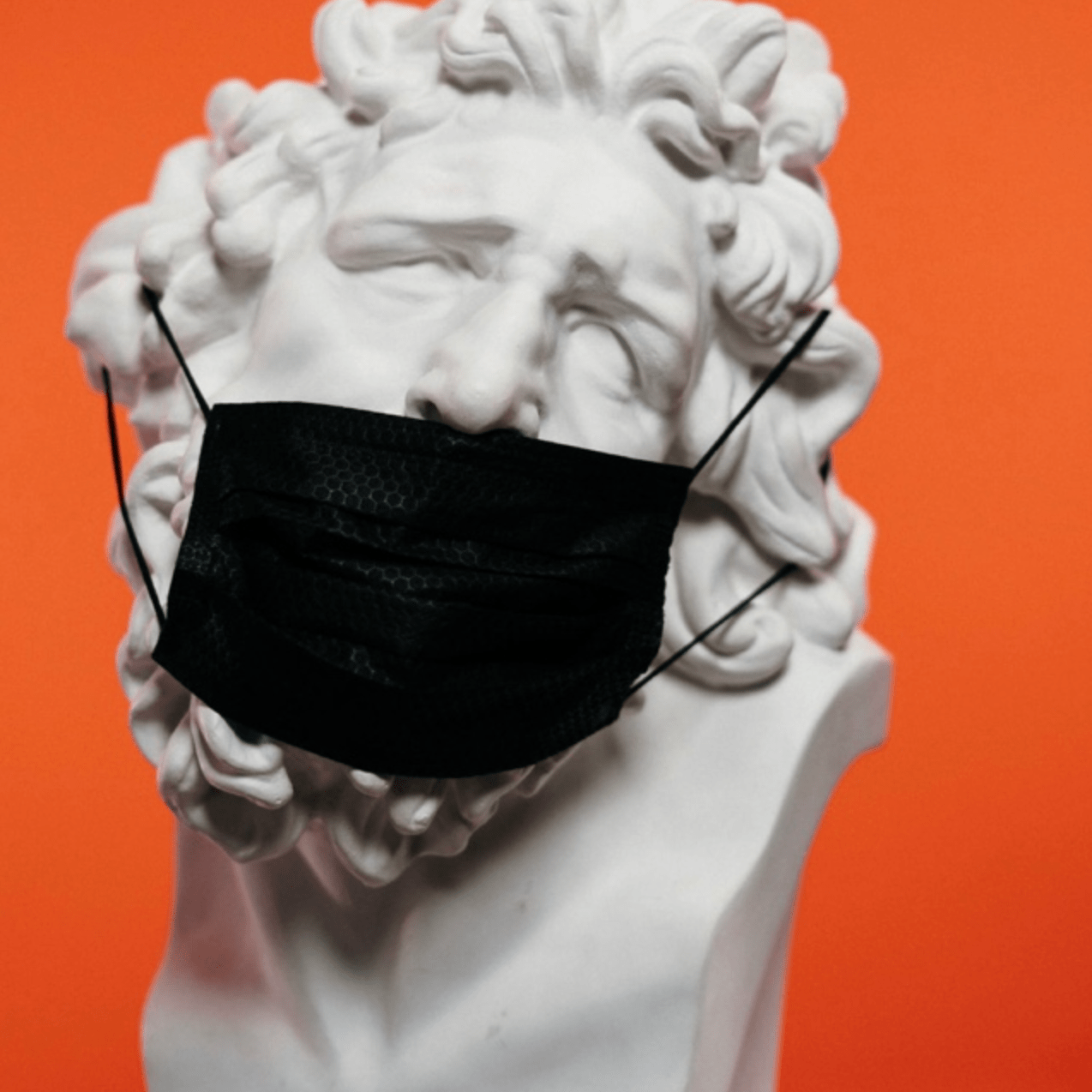
Is it unmanly to wear a mask? Journalist and attorney Marian Lindberg, author of the new book Scandal on Plum Island, has written an article (see attached) exploring this question and its implications for the fight to control the spread of Coronavirus in the US and around the world.

Masculinity and manliness have deep roots in the US political sphere and its rhetoric, from war hawks like Teddy Roosevelt to lesser-known politicians urging America to “assert its manliness” (Sen. William M. Stewart, R, Nev., in 1897). Lindberg’s article examines these roots and connects them to the current pandemic response.

With Trump and other male US leaders inserting coded manliness concerns into the COVID-19 debate–including around mask-wearing–Lindberg suggests that the success of countries with female leaders like New Zealand, Germany, and Taiwan in fighting the virus might be related to the fact that as women, these leaders do not carry the baggage of worrying about their manliness. They are free to respond to a major problem dispassionately, based on “sober judgment” and without regard to bravado.

Unemployment and Voter Turnout

The “angry voter hypothesis” is a popular narrative that many voters are driven to the polls by economic anxiety. But a new study shows that hundreds of thousands of Americans hit by the 2008 recession actually avoided participating in subsequent elections.

The same phenomenon could happen this November as the United States experiences historic levels of unemployment, said the study’s author, Ben McCartney, an assistant professor of finance at Purdue University and an expert in household finance and voter participation. With so much financial distress on their plate, voting could be the last thing on their minds. “My concern going forward is that this story is going to repeat itself,” he said.

McCartney found that a 10% decline in local home prices decreased the participation rate of an average mortgaged homeowner by 1.6%, amounting to 800,000 potential votes over the course of the 2010 and 2012 national elections. The effect was less intense for renters and particularly severe for homeowners with little to no equity in their homes. He estimated that financial distress from the economic downturn was to blame.

McCartney used North Carolina voter files, housing data and Zillow home values for his analysis. His findings were recently published online as an accepted manuscript in The Review of Financial Studies.

“It’s a case where the opportunity costs now of voting are very high for some people,” he said. “It’s relatively easy for people to say, ‘I’m not going to worry about it this cycle. How do I figure out if I’m registered to vote? Where’s my polling place? Who is running for the various offices? I’ve got too much stuff on my plate, the economy is collapsing and I’m trying not to foreclose. Maybe now I’m taking care of the kids myself instead of sending them to day care, maybe I’m working more hours or working overtime.’ That is the story that I find fits the data better than this angry voter hypothesis.”

Fortunately, home prices have remained stable during the recent economic downturn due to high demand and low housing stock. But Zillow estimates prices to drop by 2%-3% and rebound by next year.

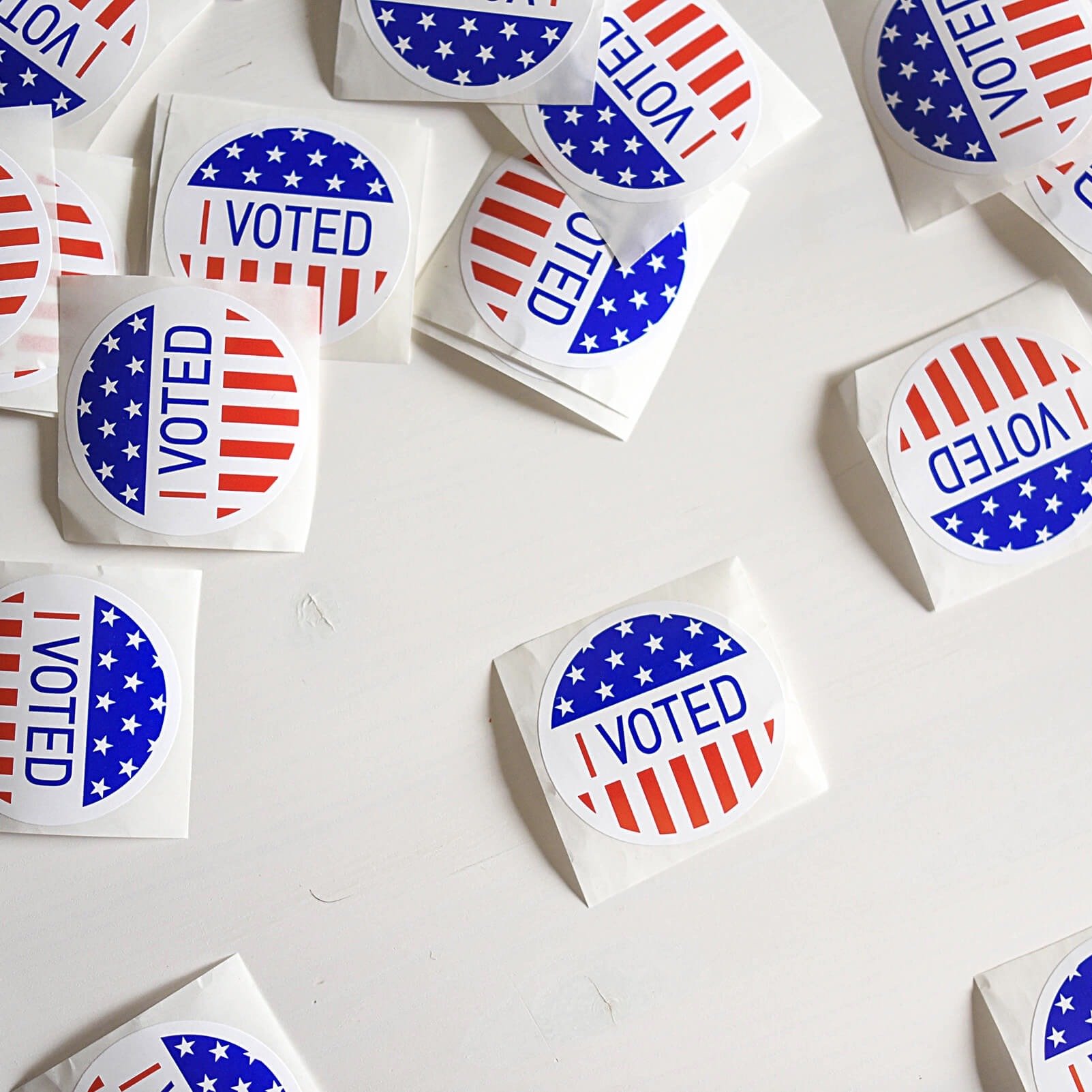
Four of 10 states that held their primary elections on June 2 saw a decline in voter turnout compared with 2016, according to analytics website FiveThirtyEight.com. The expansion of mail-in voting could have contributed to higher turnout in the six other states, according to the report.

McCartney said that potential voters could be more concerned about recovering from closures, furloughs and layoffs due to the COVID-19 pandemic. “Households hit hard by this crisis are going to turn to credit cards and short-term loans,” he said. “Even if the economic ship is somewhat righted by November, a lot of households’ financial situations will have really deteriorated. And, for financially distressed households, voting is something easy to just drop from the to-do list. The implications for voter turnout are worrying.”

Ben McCartney (Courtesy photo)

McCartney is a faculty affiliate in the Purdue University Research Center in Economics. His research was supported by Purdue’s Krannert School of Management and Duke University.

About Purdue University

Purdue University is a top public research institution developing practical solutions to today’s toughest challenges. Ranked the No. 6 Most Innovative University in the United States by U.S. News & World Report, Purdue delivers world-changing research and out-of-this-world discovery. Committed to hands-on and online, real-world learning, Purdue offers a transformative education to all. Committed to affordability and accessibility, Purdue has frozen tuition and most fees at 2012-13 levels, enabling more students than ever to graduate debt-free. See how Purdue never stops in the persistent pursuit of the next giant leap here.

Covid and health illustration

MIT COVID-19 Research

Why does the coronavirus kill some Americans, while leaving others relatively unscathed?

A new study by researchers at the MIT Sloan School of Management sheds light on that question. The study, by Christopher R. Knittel, the George P. Shultz Professor of Applied Economics at MIT Sloan, and Bora Ozaltun, a Graduate Research Assistant in the Center for Energy and Environmental Policy Research (CEEPR) lab, correlates COVID-19 death rates in the U.S. states with a variety of factors, including patients’ race, age, health and socioeconomic status, as well as their local climate, exposure to air pollution, and commuting patterns.

The findings have important implications for determining who is most at risk of dying from the virus and for how policymakers respond to the pandemic.
Using linear regression and negative binomial mixed models, the researchers analyzed daily county-level COVID-19 death rates from April 4 to May 27 of this year. Similar to prior studies, they found that African Americans and elderly people are more likely to die from the infection relative to Caucasians and people under the age of 65. Importantly, they did not find any correlation between obesity rates, ICU beds per capita, or poverty rates.

“Identifying these relationships is key to helping leaders understand both what’s causing the correlation and also how to formulate policies that address it,” says Prof. Knittel.

“Why, for instance, are African Americans more likely to die from the virus than other races? Our study controls for patients’ income, weight, diabetic status, and whether or not they’re smokers. So, whatever is causing this correlation, it’s none of those things. We must examine other possibilities, such as systemic racism that impacts African Americans’ quality of insurance, hospitals, and healthcare, or other underlying health conditions that are not in the model, and then urge policymakers to look at other ways to solve the problem.”

The study, which has been released as a Center for Energy and Environmental Policy working paper and is in the process of being released as a working paper on medRxiv, a preprint server for health sciences, contains additional insights about what does, and does not, correlate with COVID-19 death rates. For instance, the researchers did not find a correlation between exposure to air pollution. This finding contradicts earlier studies that indicated that coronavirus patients living in areas with high levels of air pollution before the pandemic were more likely to die from the infection than patients in cleaner parts of the country.

According to Prof. Knittel, the “statistical significance of air pollution and mortality from COVID-19 is likely spurious.”

The researchers did, however, find that patients who commute via public transportation are more likely to die from the disease relative to those who telecommute. They also find that a higher share of people not working, and thus not commuting, have higher death rates.

“The sheer magnitude of the correlation between public transit and mortality is huge, and at this point, we can only speculate on the reasons it increases vulnerability to experiencing the most severe COVID-19 outcomes,” says Prof. Knittel. “But at a time when many U.S. states are reopening and employees are heading back to work, thereby increasing ridership on public transportation, it is critical that public health officials zero in on the reason.”

The proportion of Americans who have died from COVID-19 varies dramatically from state to state. The statistical models that Knittel and Ozaltun created yield estimates of the relative death rates across states, after controlling for all of the factors in their model. Death rates in the Northeast are substantially higher compared to other states. Death rates are also significantly higher in Michigan, Louisiana, Iowa, Indiana, and Colorado. California’s death rate is the lowest across all states.

Curiously, the study found that patients who live in U.S. counties with higher home values, higher summer temperatures, and lower winter temperatures are more likely to die from the illness than patients in counties with lower home values, cooler summer weather, and warmer winter weather. This implies that social distancing policies will continue to be necessary in places with hotter summers and colder winters, according to the researchers.

“Some of these correlations are baffling and deserve further study, but regardless, our findings can help guide policymakers through this challenging time,” says Ozaltun. “It’s clear that there are important and statistically significant difference in death rates across states. We need to investigate what’s driving those differences and see if we can understand how we might do things differently.”

music, note, orange, black

Orville Peck Postponed “Show Pony”

Orville Peck has postponed the June 12th release date of his EP “Show Pony” and he will now release “Show Pony” at a later date in July.

“Hey gang, I know it’s only two days away but I’ve decided to push the release of my new EP ‘Show Pony’ to July. We’re undergoing a huge overdue worldwide transformation thanks to the Black Lives Matter movement and that is mainly what I want to put my focus on at the moment. The momentum is currently so strong, and it needs to keep going in order to dismantle the injustices of oppression, so if your voice hasn’t been heard yet just use it, or walk out and hear the protesters, and if you’re scared, tell them Orville sent you! Last week, thanks to the help of some lovely people we raised close to $37k, and this week I’ll be performing a little surprise from the EP at @wynwoodpride where we’re hoping to raise $100k. Lots of great performers, so if you guys like what you see, remember to tip- and y’all, even if you can’t tip, watching to actively educate yourself is also a win for everyone. Love you all for being kind people and I can’t wait for you to hear the album – but let’s use this month to get our shit in order because this is only the start of the marathon for equality.” – Orville Peck

Please note artwork, tracklist, etc. remains the same; the only change is that the EP will be released at a later date.

Vaughn Lowery, 360 Magazine, BLM, black lives matter, protests, marches, change

BLM x Private Schools

By Katrina Tiktinsky

As Black Lives Matter protests continue throughout the U.S., the nation’s activists are extending their call for change to institutions of power well beyond the police force. In an ironic, but fitting, turn of events, the educational bodies which taught students to use their words are now seeing those rhetorical skills employed against them. Private schools are a prime target.

Following a slew of noncommittal administrative statements from Hopkins School in New Haven, Connecticut, recent alumni and current students rallied in a demand for meaningful change. Circulating the hashtags #builtonslavery and #shouldajustdonated, protesters called attention to the school’s problematic history, enduring flaws, and present failure to support the Black Lives Matter movement — financially or otherwise.

As discussions spiked around the subject of Hopkins and race, individuals used their social media platforms to share their experiences, even turning Instagram Live into a discussion forum. Ultimately, key activists within the Hopkins talks, including Kamsi Nwangwu ’15, drafted a petition targeted at the Board of Trustees. In this public document, which is viewable here, the petitioners ask the school to donate to Black Lives Matter causes, diversify its student body and faculty, decolonize its curriculum, lend greater support to New Haven’s communities of color, and put forward a detailed and timely action plan.

Speaking to the petition and general Hopkins-BLM conversations, Hopkins Class of ’18 alumnus Lionel Louis commented, “I feel like the community should hold its members and the institution to a higher standard in regards to intersectionality at large. The climate surrounding social issues is focused on issues for Black citizens, so I want to see the school join the fight for racial equity: I want them to commit to making changes to improve for the greater New Haven area that is not as white and not as privileged resource-wise, for their current BIPOC students in all walks of life on campus, for their Black and non-Black faculty and staff. I want to see ‘diversity and inclusivity’ transform from a bullet point on our website into a whole new attitude that actively and constantly seeks to do better for all of Hopkins’ community and neighbors. And, of course, they should’ve just donated.”

In regards to English and History curriculum flaws in particular, Class of ’18 alumna Kiarra Lavache argued, “There is often only one book or section per class about an author or culture that is not white. The curriculum needs to be more well-rounded and contemporary. They need to include Black, Latinx, Native American, Asian, LGBTQ+, and Muslim writers and history in the curriculum and they need to be mandatory. Students need to be able to make connections between what they learn in the classroom and what they experience in their everyday life.” The private school’s core history sequence is titled “Atlantic Communities,” a narrative oriented around the white, Christian, male colonizer’s perspective. Multiple Hopkins alumni have spoken out regarding instances in which teachers asked students to read racial slurs aloud in class, from texts so problematic as Mark Twain’s The Adventures of Huckleberry Finn. Beyond its curriculum, the institution lacks meaningful Black representation in its student body, faculty, and administration.

Activists also critiqued the concept of a private school bubble. Kofi Adjepong, Hopkins Class of ’15, a central voice in the social media conversations and petition drafting, noted, “Hopkins prides itself on being part of the community but outside of the Canned Food Drive and the Pathfinder program, they need to show more support to the everyday livelihood of the New Haven community. We are hoping they would show more concern for the everyday individual, rather than sitting pretty in their bubble, passively overlooking the struggles in the community.” Lavache identified the overwhelming presence of individuals from Fairfield County (distinct from New Haven in location as well as socioeconomic makeup) in the student body as contributing to the school’s ability to disregard “what is happening right outside their gates,” noting that private schools in general, “Have the tendency to be ‘bubbles’ meaning that they are distanced from the surrounding community.” The recent grad added, “Because Hopkins has resources that other schools in New Haven do not, they should be using what they have to help better their surrounding community, one in which they have taken up space for 360 years.”

Hopkins alumni pointed to the ways in which they felt unable to speak out while enrolled at the school. “Hopkins is a space dominated by white voices and white money, so there is a lot of pressure on people of color to fit into a particular mold that is carved out for them. Breaking that mold and speaking up can cost you relationships and reputation. Because of this, many people at Hopkins are not even aware that there are injustices happening on their campus. If these issues don’t get talked about, Hopkins will be oblivious to their occurrence,” Lavache explained. Echoing these sentiments, Adjepong outlined, “Purposely or not, being a POC on campus there’s feelings that you should be ‘grateful’ Hopkins allowed you into their space. It feels more like a white space that allows a few of Black excellence, rather than a melting pot of diversity like they try to claim it to be.”

As far as where Hopkins will go from here? Within a matter of days, the school issued a new statement, addressing recent conversations and presenting a rough plan for the future. This development was met with varying levels of confidence. Lavache was hopeful, saying, “I think it was great that the school responded so quickly. In my opinion, it shows a sense of urgency and eagerness to get the ball rolling. The pledges that were made in the message were not specific, but I think that with further communication more details will be ironed out and plans can start taking shape.” Adjepong was more cautious to embrace the administration’s response: “Although Hopkins has finally reached out and it seems to be in good faith, it took me leaving veiled threats of exposure of racial injustices for them to get the ball rolling. I hope their actions are not performative in nature to slow down the negative public perception they have been receiving. I have my doubts, but only time will tell.”

As Hopkins and other private schools throughout the country continue to address their relationship with race in the coming days, weeks, months, and years, they will be working to reform problematic systems which have stood as pillars of education for centuries. This work will be difficult, painful, and extensive, but if there’s anything the wave of young activists have demonstrated, it’s that they have the wit, social capital, and determination to effect that change.

360 Magazine, Allison Christensen

WHO x Rare Asymptomatic COVID-19 Spread

By Jason Tayer x Emmet McGeown

The Coronavirus remains very present and contagious around the country and world. However, as expert organizations, such as the World Health Organization (WHO), find new ground-breaking data, knowledge about the nature of the virus and how it spreads advances.

According to CNBC, Dr. Maria Van Kerkhove admits that the previously widely believed notion of the virus spreading between and from asymptomatic carriers has lost traction. Instead, Maria claims that it’s “very rare” for virus transmission to take place among asymptomatic patients based on contact tracing and secondary transmission analysis data. Maria’s news briefing at the UN agency’s Geneva headquarters can be found HERE. The New York Post also adds that narrowing in and focusing on all isolating and quarantining all of the symptomatic cases could result in much fewer transmission rates.

However, as of Tuesday, following widespread skepticism from global healthcare officials, the head of WHO’s diseases and zoonosis unit, Dr. Maria Van Kerkhove, has walked back statements that she made during a Monday press conference. After an influx of criticism, she clarified that it’s “misunderstanding to state that asymptomatic transmission globally is very rare,” instead claiming that she was referring to a “small subset of studies.” Van Kerkhove acknowledges that much is unknown and that there exist models, which estimate that around 40% of transmissions are due to asymptomatic individuals.

With this recent news and many cities beginning to enter new phases of reopening, it may seem feasible to allow asymptomatic people to reopen and participate in various public businesses and services. AMNY expands on the example of NYC, where they are now in phase 1 of reopening. Even with this phase of reopening underway, the Department of Health has found that there have not been significant spikes in COVID-19-like cases in emergency rooms.

Regardless of the scrambling by the WHO to refine its oratory or the Department of Health observing no significant spikes in cases, there is no doubt that isolation and social distancing are slowing the spread of the virus. Indeed, it is possible that “asymptomatic” individuals can, in fact, be pre-symptomatic or simply be experiencing a very “mild disease.” This muddies the waters to such an extent that taking precautions seems to be the only logical corollary of the medical community’s ongoing attempt at total comprehension of the virus. Dr. William Schaffner, a Vanderbilt University professor and longtime adviser to the CDC says, “I thought they [WHO] were getting very prissy and trying to slice the salami very fine.” He, like many other medical experts, believes that whether asymptomatic, pre-symptomatic, or mildly symptomatic, people should be wearing masks, washing their hands, staying away from large crowds and social distancing when possible.

Such perspectives echo the findings of a study, published in the scientific journal Nature, which suggest that the emergency lockdown procedures of six countries, ranging from Iran to the US, have prevented more than 500 million coronavirus infections across all six nations.

This leaves one wondering whether or not the accelerated re-openings of hotspots like Las Vegas casinos where, last year, guests outnumbered residents 20 to 1 are wise. Yet, with the risk of a mental health crisis and a hemorrhaging global economy, many are supportive of dismantling protective measures. However, we must dispel the false dichotomy that we must choose between complete lockdown and a restless revival or normal life. One only ought to look at Turkey where the government ordered only the young and elderly to remain at home while everyone else, except consumer-facing businesses, never ceased working. According to The Economist, “the vulnerable escaped the worst of the pandemic while those infected, mostly working-age adults, generally recovered.”

Irrespective of which approach the states decide to embark upon, the fact still remains that over 7 million people have been affected and the virus continues to spread.

Virgin Limited Edition Reopening

Virgin Limited Edition, the award-winning collection of luxury hotels and retreats, is to re-open the first of its properties at the beginning of July, following the temporary closure across all of its collection, as a result of COVID-19.

The much-loved Son Bunyola Estate, located in the beautiful UNESCO world heritage site of the Tramuntana mountains in Mallorca, will be the first property to open across the collection and offers the ideal escape in this current climate, with the option of three individual secluded villas set across a stunning 700-acre private estate.

As Spain eases out of quarantine, Son Bunyola will be the first positive movement for the portfolio as it is set to re-open its doors with a robust set of new measures going above and beyond local government guidelines, to ensure the comfort and wellbeing of future guests.

Jon Brown, Managing Director of Virgin Limited Edition, commented “We have always remained optimistic that we may be able to open some of our properties at the beginning of July and we are thrilled to be able to announce that Son Bunyola will be the first of our properties to open its doors once again,”

“Whilst our properties have been temporarily closed, our teams have been at the forefront of ensuring we are in the best position to welcome back our guests with meticulous new safety and hygiene measures, ensuring they have complete peace of mind and trust in everything we do,”

“Guests can expect to see some slight changes across all of our properties as we ask our staff to wear masks, take daily temperature checks and carry out rigorous cleaning measures, whilst ensuring that in our restaurants and guest areas we are adhering to social distancing guidelines. But what’s more important, is that we make these new processes entirely simple and flexible for the guest, depending on their own level of comfort and preferences. Whether that is daily housekeeping with the same member of staff, or no housekeeping at all, we remain completely fluid to how our new processes will work.”

“We have always been extremely proud of the incredible experiences we offer across all of our properties and what is more important than ever is that we continue to share the Virgin Limited Edition magic, but in a slightly different way – with our guests’ safety and wellbeing always remaining our number one priority.”

Son Bunyola is located away from the crowds and between the scenic towns of Banyabalfur and Valldemossa with breathtaking scenery and three luxury villas: four-bedroomed Son Balagueret and Sa Terra Rotja, and five-bedroomed Sa Punta de S’Aguila. There is plenty to discover in the mountainous region and guests can enjoy the world-class hiking and cycling trails, a relaxing boat trip along the coastline or simply stay put enjoying the comfort of the villas and soak up the Spanish sunshine.

The villas can be rented on a self-catering or all-inclusive basis making them the perfect choice for groups and families to enjoy in a secluded and beautiful setting this summer. Available to rent individually or take all three villas exclusively, Son Bunyola offers guests the benefit of having both the seclusion and security of a holiday with minimal risk of exposure– without compromising on the typical luxuries and experience guests would expect.

As with all Virgin Limited Edition properties, Son Bunyola’s number one priority remains the safety and wellbeing of its guests. Guests can also relax in the knowledge that there will be new safety and hygiene measures in place and just like before, there will be medically trained staff on hand, should the unlikely need arise and all of our staff will continue to be tested daily to ensure guests can have complete peace of mind.

Rates for the four-bedroomed Son Balaguaret villa, accommodating up to eight adults, start from EUR 16,100 (US$18,283 at today’s current exchange rate) for a seven-night self-catering stay during July and August 2020. Shorter stays of 3, 4 and 5 nights are also available on request (outside of July and August) subject to availability.

For bookings, please call T: 877 577 8777 (US toll free) or +1 (212) 994 3070. Alternatively, e-mail enquiriesusa@virginlimitededition.com