

Posts made in September 2026

Chinese superstar Adam Fan releases debut English-language album "Skyfall" via 360 MAGAZINE.

Chinese Superstar Adam Fan Releases Debut English-Language Album ‘Skyfall’

‘Adam Fan Chengcheng is a multi-talented individual. His music transcends. Many of his acting roles garner massive attention, and he possesses chops as a rapper. With his first English album, he’s on track to become viral and leave a lasting impact.’ – Vaughn Lowery

Released alongside the video for its focus track “Make It Make Sense,” SKYFALL marks a significant new chapter in Adam Fan’s artistic evolution, introducing his music to an international audience through a project built around global production, English-language songwriting, and a forward-thinking fusion of melodic rap, trap, rage, rock, and dance influences. Listen to SKYFALL in full here and watch the “Make It Make Sense” Official Music Video here.

Adam Fan (Fan Chengcheng), a trailblazing musical voice of China’s Generation Z with more than 55 million social media followers across all platforms, unveils his highly anticipated debut full‑length international English‑language album SKYFALL. Boasting an elite roster of A‑list Western producers including Grammy‑nominated talents, with production standards and sonic ambitions benchmarked against the world’s leading artists. The album is produced by the international music production company Hits Rhythm and A WW Productions.

The album is distributed outside China by the partnership between Hits Rhythm and Pacific Music Group to support the album’s worldwide distribution and international promotional efforts, with a focus on expanding Adam Fan’s global reach, and connecting his music with audiences across key markets around the world.

Chinese superstar Adam Fan releases debut English-language album "Skyfall" via 360 MAGAZINE.

SKYFALL opens with its cinematic title track, “Skyfall,” arriving alongside a cinematic music video. Cowritten by acclaimed American artist Lawson, whose writing credits include The Weeknd and Playboi Carti’s “Timeless,” the track establishes the album’s introspective and atmospheric tone. Blending ethereal melodies with melodic rap, “Skyfall” explores pressure, loneliness, self-discovery, and the determination to continue moving forward despite setbacks.

The album’s focus track, “Make It Make Sense” showcases another side of Adam Fan. The song is written and produced by Puku, whose writing credits include the Billboard HOT 100 track,  “SOMETHING ABOUT YOU” by PARTYNEXTDOOR/ Drake. Built around a trap-driven production and accompanied by a visually striking official music video, the track combines cutting-edge fashion with an international rap aesthetic. Its composed delivery and confident perspective center on rejecting superficiality, focusing on personal growth, and allowing ability and dedication to speak for themselves.

Across SKYFALL, Adam Fan moves fluidly between genres while maintaining a cohesive artistic identity. “Go Girl” delivers an energetic melodic dance-rap sound centered on confidence, independence, and female empowerment, while “TTTM” and “Error” lean into the explosive energy of modern Rage rap. “Make It Rock” fuses rock with contemporary Rage, creating a high-energy crossover track designed for the international stage. “Pink” combines psychedelic textures, melodic songwriting, and Rage production, reflecting on the clarity and self-belief that emerge after periods of struggle. “Heard of Us” closes the project with a message of collective ambition and perseverance, capturing the philosophy of building quietly while allowing success to speak for itself.

Together, the songs present a multidimensional portrait of an artist entering a new phase,  one that embraces international sounds while remaining grounded in Adams’s own experiences, ambition, and evolving identity.

This highly anticipated album “Skyfall” demonstrates the vision of a new‑generation artist Adam Fan breaking domestic boundaries and aiming for the global stage, with a broad international musical perspective and world‑class production quality.

Adam Fan SOCIALS

Website | Instagram                Weibo | LinkedIn |    YouTube  |  X | Spotify

Chinese superstar Adam Fan releases debut English-language album "Skyfall" via 360 MAGAZINE.

Liquid supplements via 360 MAGAZINE.

Why a Liquid Format Delivers Supplement Benefits More Efficiently

A supplement’s effectiveness depends on more than its ingredient list. The delivery format affects how easily a person can measure a serving, swallow it, and stick to the routine. Liquid supplements deliver nutrients in a ready-to-use form, so the body doesn’t first need to break down a compressed tablet. This one difference matters to people who value convenient routines and precise servings. Understanding how liquid delivery works also helps explain why the format may matter.

A tablet or capsule must disintegrate before its ingredients mix with digestive fluids. By comparison, a liquid format starts with ingredients dispersed in a fluid base, so digestion begins with one fewer physical step. Absorption still depends on nutrient chemistry, dose, and formulation. People comparing formats can consider Dose liquid supplements if they want a measured serving that fits into their daily routine without swallowing a solid pill.

Why Liquid Delivery Can Work Efficiently

Solid supplements pass through several physical steps before the body processes their contents. The outer material needs to be broken apart so the active ingredients disperse before digestion starts. 

Liquid supplements start at a different point. A fluid base already disperses its ingredients, helping them mix with digestive fluids. From there, enzymes and digestive fluids continue breaking down and absorbing the ingredients. It does not bypass digestion, but it removes one preliminary step.

This difference matters more for people who have difficulty swallowing pills or dislike large capsules. A liquid serving avoids tablet-related problems, like crumbling or sticking in the throat. It may also be easier to use consistently when swallowing pills makes the routine inconvenient.

Absorption Depends on More Than Format

Liquid delivery makes it easier for ingredients to disperse, but it does not produce the same result for every ingredient. Nutrient chemistry, solubility, dose size, food intake, and formulation affect absorption.

Bioavailability describes how much of an ingredient reaches circulation and becomes available for use. A liquid format can improve dispersion, yet the body still processes each ingredient according to its properties.

For example, fat-soluble compounds provide a useful example. They often require dietary fat for effective absorption, so taking a liquid supplement with a suitable meal can matter more than choosing a liquid format alone. Product directions should guide timing and serving details.

Formulation also matters. A well-made liquid needs stable ingredients, accurate measurements, and packaging that protects the contents during storage. Without those, a fluid format does not automatically deliver better results.

Measuring a Consistent Serving

Consistency affects supplement outcomes because accurate servings give the body a more predictable intake. A liquid format allows a manufacturer to set a defined volume, such as a two-ounce shot, for each serving.

This can make daily use simpler. People don’t have to take tablets or estimate the amount inside a powder scoop. A marked cup, measuring spoon, or single-serve container can reduce uncertainty during daily use.

Liquid supplements still require careful handling. Users should shake the container when the directions require it, measure the stated amount, and store it as directed. Guesswork can create serving differences and disrupt the routine.

Convenience Supports Daily Use

A supplement provides limited value when people skip it regularly. This is one reason where convenience plays an essential role in consistency. Liquid products can fit into routines that already include breakfast, a morning beverage, or an evening meal. Their format also suits people who cannot comfortably swallow pills.

Taste and texture influence adherence, so a liquid product should match the user’s preferences. Serving size matters as well. A small, clearly measured portion creates less friction than several large capsules.

Travel requires more planning. Users should protect the container from heat, close it securely, and follow storage instructions after opening. These steps help preserve the product and keep the serving routine consistent.

How to Choose a Liquid Supplement

To choose, start with the ingredient list and serving size. Check the label for each active ingredient, its amount per serving, and the recommended daily use.

Next, check the formulation details and compare doses. Avoid unwanted ingredients and identify potential allergens. People taking medication should review the ingredient list with a health professional before use.

The product’s purpose should also match a measurable personal goal. If you are tracking a specific health marker, discuss suitable supplements with a clinician and monitor changes through appropriate testing. In this situation, a liquid format can make daily dosing easier to manage.

Conclusion

Liquid supplements deliver ingredients in a fluid base, which may reduce the physical breakdown needed to digest a tablet or capsule. However, their value still depends on formulation quality, nutrient chemistry, accurate dosing, and regular use. Hence, compare the label, serving volume, storage directions, and ingredient amounts before choosing a product. Anyone managing a health condition or taking medication should review that choice with a qualified healthcare professional.

How Sleep Apnea and Testosterone Levels Are Connected in Men

Sleep apnea does more than interrupt breathing at night. Repeated airway blockages fragment sleep, lower oxygen levels, and disrupt the hormone signals that support testosterone production. Men with untreated obstructive sleep apnea often report fatigue, reduced sexual interest, poor concentration, and mood changes. Those symptoms also appear with low testosterone, which makes the underlying cause easy to miss. Understanding the connection helps men seek the right testing and treatment before the cycle continues.

Symptoms That Often Overlap

Sleep apnea and low testosterone share several symptoms, so one condition can hide the other. Persistent daytime fatigue is common, even after spending seven or eight hours in bed. Sleep apnea causes exhaustion through repeated waking, while low testosterone affects both energy and physical recovery.

Sexual symptoms deserve attention. Low testosterone can reduce libido and create erection problems. Sleep apnea also affects erectile function by disrupting sleep, oxygen balance, blood vessel function, and hormone signaling.

Mood and concentration can change, too. Men may notice irritability, low motivation, memory problems, or difficulty focusing at work. These symptoms don’t prove that testosterone is low, but loud snoring, witnessed breathing pauses, morning headaches, and daytime sleepiness make sleep apnea more likely.

Men examining testosterone and sleep apnea should view the conditions as connected rather than isolated. Using hormone products for fatigue without checking sleep quality can leave the underlying breathing disorder untreated. A proper evaluation identifies whether one condition, or both, is contributing to the symptoms.

Why Sleep Apnea Affects Testosterone

Testosterone production follows a daily rhythm. The brain releases luteinizing hormone, or LH, in pulses that signal the testes to produce testosterone. These pulses strengthen during deeper sleep, especially later in the night.

Obstructive sleep apnea repeatedly interrupts that process. When the throat closes, breathing stops, oxygen levels fall, and the brain triggers a brief arousal to reopen the airway. Many don’t remember these interruptions, but their sleep quality still suffers.

Research links moderate-to-severe sleep apnea with lower testosterone levels, particularly when breathing interruptions occur frequently. A higher apnea-hypopnea index (AHI) often matches greater hormone disruption. Sleep fragmentation also reduces time spent in restorative sleep, when key hormone signals normally occur.

Low oxygen creates another problem. The body responds to repeated oxygen drops by activating stress pathways and releasing more cortisol. Elevated nighttime stress signals interfere with the reproductive hormone system, which can further reduce testosterone production.

How Doctors Test Both Conditions

A sleep evaluation begins with a medical history and questions about snoring, breathing pauses, morning symptoms, and daytime alertness. A home sleep apnea test measures breathing patterns, oxygen levels, and related signals during sleep. A full polysomnography study records additional information and provides a broader assessment.

The apnea-hypopnea index shows how often breathing slows or stops each hour. Mild sleep apnea ranges from 5 to 14 events per hour, moderate sleep apnea ranges from 15 to 30, and severe sleep apnea exceeds 30 events per hour.

Testosterone testing requires careful timing. Doctors usually collect a blood sample between 7 and 10 AM, when testosterone levels are highest. Doctors often check total testosterone, free testosterone, and SHBG, the protein that binds testosterone in the bloodstream.

One low result does not confirm a lasting hormone disorder. Testosterone levels change with illness, sleep loss, medication, calorie restriction, and training demands. Doctors generally repeat the test on a separate morning before diagnosing.

Treatment Can Improve the Hormone Picture

Continuous positive airway pressure (CPAP) keeps the airway open by delivering steady air pressure through a mask. It remains a first-line treatment for moderate-to-severe obstructive sleep apnea. Consistent use improves breathing control and restores more stable sleep.

CPAP does not raise testosterone in every man. Studies show mixed hormone results, especially when researchers measure treatment without accounting for changes in body weight or other health factors. Sleep quality and daytime alertness often improve even when testosterone changes remain limited.

Weight loss can help men who carry excess body weight. Losing 5% to 10% of body weight can reduce sleep apnea severity and support healthier hormone levels. Exercise, limiting alcohol, side-sleeping, and treating nasal obstruction can also support better breathing during sleep.

Men should not start testosterone therapy without medical testing. Testosterone treatment can affect fertility, blood counts, and sleep-related breathing. A doctor should assess the cause of low testosterone and review sleep apnea before prescribing hormone therapy.

Conclusion

Sleep apnea and low testosterone often share symptoms because both conditions disturb energy, sexual function, mood, and concentration. Repeated breathing interruptions also disrupt LH pulses and expose the body to nighttime oxygen drops and stress signals. Men with snoring, witnessed pauses, daytime exhaustion, or reduced libido should request a sleep evaluation and morning testosterone testing. Treating confirmed sleep apnea, reviewing weight and medications, and repeating abnormal hormone results creates a clearer path to recovery.

Why Health-Conscious Young Adults Are Asking Better Questions via 360 MAGAZINE.

How a Women’s Telehealth Platform Delivers Care on Your Schedule

Women’s health needs rarely fit within standard office hours. Telehealth moves the first steps of care online, including intake, clinical review, treatment decisions, and follow-up. Patients can complete a health questionnaire, share medical history, and communicate with a licensed provider without scheduling an office visit. Prescribed medication can then arrive at home. This approach works when convenience is paired with clear instructions, informed decisions, and continued communication.

Patients seeking one place to begin with common women’s health concerns can review the care model behind Nurx before choosing a treatment path. The process starts with an online medical consultation that covers health history and treatment goals. A provider licensed in the patient’s state reviews the information, prescribes when appropriate, and arranges medication delivery with follow-up support. Patients can complete these steps on their own schedule, without rearranging an entire day around an appointment.

A Consultation Sets the Pace

An online consultation gives the provider the information needed for a clinical review. Questions address the patient’s health history, current concerns, medications, allergies, and treatment goals. The provider then decides whether online care suits the request and whether a prescription is appropriate.

For eligible concerns, this process removes the need to begin with a scheduled office appointment. Patients also have time to review their answers before submitting them, which supports more complete and accurate information. A careful response gives the provider a clearer basis for making a treatment decision.

Care Follows the Condition

A women’s telehealth platform can address several areas through one online starting point. Available categories include reproductive care, menopause, mental health, skincare, weight management, sexual health, hair loss, and general health services.

Each category follows its own clinical path. Birth control includes more than 50 types, while menopause care includes options for hormone replacement therapy when appropriate. Mental health care includes treatment discussions for anxiety, depression, seasonal affective disorder, postpartum depression, and obsessive-compulsive disorder.

Dermatology care covers acne, melasma, rosacea, fine lines, and eyelash growth. Weight management includes injectable and oral treatment options, with guidance for tracking progress. The provider decides whether a treatment fits the patient’s health information and goals.

Patients should review the requirements for the selected category before completing an assessment. Different concerns call for different questions, treatment choices, and follow-up expectations.

Medication Arrives At Home

After a provider prescribes treatment, the prescription ships to the patient’s doorstep. Most of the services have free shipping, so patients do not pay a separate delivery charge.

Home delivery changes how patients manage routine treatment. A patient does not need to plan a pharmacy trip around work, caregiving, or travel. The service checks in to ask how treatment is working, and patients can pause or cancel anytime.

These steps connect the initial consultation with ongoing care. Patients still need to follow medication instructions, monitor changes, and contact the care team when questions arise. Keeping medication information available also helps patients discuss treatment accurately during follow-up.

Communication Continues After Treatment

Telehealth works best when communication continues after a prescription is sent. Patients need clear directions about use, possible side effects, and when to request further guidance.

Mental health treatment includes unlimited messaging for support. Other care categories also include follow-up communication related to the prescription and the patient’s response. Patients can review the resulting record of questions and answers later.

A patient should report new symptoms, unexpected reactions, or concerns about effectiveness through the appropriate care channel. The provider can then decide whether treatment should continue, change, or receive further review.

Schedule-Based Care Has Limits

Telehealth suits routine, non-emergency concerns that a provider can assess through medical questions and available records. It does not replace urgent evaluation for severe symptoms, serious reactions, or conditions that require a physical examination.

Patients should seek emergency care for trouble breathing, severe chest pain, sudden weakness, or heavy bleeding. Accurate answers also matter because a provider relies on the submitted history when deciding whether treatment is clinically appropriate.

Telehealth works best as medical care, not as a quick transaction. Patients still need to share complete information and follow the prescribed plan. They should also use in-person or emergency services when symptoms require immediate examination.

Conclusion

Schedule-based telehealth works when each step is clear: a patient submits accurate health information, a licensed provider reviews it, and treatment arrives with instructions and follow-up. Before starting, patients should list current medications, allergies, diagnoses, and treatment goals. That preparation makes the online consultation more useful and helps the provider assess clinical fit. The practical next step is to review the available care category and complete the consultation with accurate information.

Sewing machine feature via 360 MAGAZINE.

How to Choose the Best Walking Foot Sewing Machine for Quilts

Quilting through several fabric layers requires even feeding, steady stitching, and precise control. A walking foot sewing machine keeps the quilt top, batting, and backing moving together, which reduces shifting and puckering. The right choice depends on quilt thickness, machine compatibility, stitch style, workspace, and budget. Before comparing machines, quilters should learn how the walking mechanism works and which attachment details affect results. That knowledge creates a practical basis for choosing the right setup.

Understand the Walking Mechanism

Many household machines use a detachable walking foot, while dedicated quilting machines use an integrated upper-feed system. Quilters should confirm the shank style, mounting method, and stitch limits before buying. A walking foot sewing machine works properly only when its foot and feed system suit the machine, fabric weight, and planned quilting pattern. This check helps prevent skipped stitches, uneven seams, and incompatible attachments.

A walking foot moves fabric layers in coordination with the machine’s lower feed dogs. The system helps the top, batting, and backing travel together beneath the needle. It suits straight-line quilting, binding, multiple-layer seams, and materials that shift during sewing.

Check Machine Compatibility

Compatibility matters more than price or appearance. A walking foot must match the machine’s shank height, presser-foot holder, needle position, and attachment method. Household machines often use low-shank, high-shank, or snap-on systems, so the machine manual provides the most reliable reference.

Quilters should check whether the attachment supports straight stitching only or allows selected utility stitches. Some walking feet leave little clearance around the needle, which makes zigzag or decorative stitches unsuitable. The wrong setting can damage the foot, needle, or machine.

Dedicated quilting machines require a different assessment. Their integrated walking systems usually match the machine, but buyers still need to check throat space, presser-foot lift, needle access, and control placement. A larger throat space makes a rolled quilt easier to manage during long quilting lines.

Match the Foot to the Quilt

The quilt’s construction determines the most suitable foot style. Thin cotton quilts require less clearance than thick quilts with dense batting or several fabric layers. A foot that sits too close to the work can compress the layers, while excessive clearance reduces feeding control.

A standard walking foot handles many straight-line quilting tasks. An edge-guide foot helps maintain a consistent distance from a seam or previous stitching line. Cording, welting, and piping feet suit projects with raised trim, but they do not replace a standard quilting foot.

  • Straight-line quilting

Choose a foot with a clear viewing area and stable contact surface for long, parallel rows. A guide helps maintain even spacing, especially around borders and block seams. Quilters should test the spacing on a scrap quilt sandwich before stitching the finished piece.

A quarter-inch foot helps with narrow seam work, but its suitability depends on the machine and foot design. The needle must enter the opening without touching the metal sides. Slow testing helps prevent damage.

  • Binding and edge work

Binding requires controlled movement near the quilt edge. An edge guide keeps the stitching line consistent, while a suitable walking foot limits movement between the binding and quilt layers. The foot should leave enough room for folded binding without pushing the edge sideways.

Compare Control and Maintenance

Speed control matters during quilting. A machine with adjustable speed, a responsive foot pedal, and clear needle positioning gives the operator better control around corners and bulky seams. Excessive speed can stretch the quilt sandwich and create uneven stitch lengths.

The machine should also provide enough presser-foot lift for the quilt’s thickness. A narrow work area makes it harder to rotate and support a large quilt. A flat, stable table keeps the quilt’s weight from pulling against the needle.

Regular cleaning prevents lint from collecting around the feed dogs and bobbin area. Quilters should replace a dull needle, use the recommended needle size, and remove the attachment before storing the machine. These steps protect stitch quality and reduce mechanical strain.

Test Before Buying

A short test sample reveals more than a product description. Create a sandwich with the same fabric, batting, and backing you plan to use for the quilt. Sew straight lines, cross a seam, turn a corner, and test the thickest section.

Inspect both sides for skipped stitches, puckering, uneven tension, and changes in stitch length. Check whether the foot moves freely and whether the quilt feeds without pulling by hand. The best machine or attachment produces consistent results with normal pressure and a comfortable working position.

Conclusion

The best walking foot setup matches the machine, quilt thickness, stitch plan, and available workspace. Compatibility comes first, followed by foot design, speed control, throat space, and maintenance needs. Quilters should compare these points with a test sandwich before purchasing or beginning a finished quilt. The next step is simple: check the machine manual, identify the required shank type, and test a suitable walking foot on representative fabric layers.

Best Place To Sell A Lab-Grown Or Natural Engagement Ring

Selling an engagement ring can be a bit complex when you are unsure of where to begin. You can recall the purchase price when you bought the ring, but the price you would get if you resell the ring has nothing to do with the original purchase price. Your options can also vary depending on whether the ring has a natural or lab-grown diamond.

However, decision-making can be made easier by comparing selling options before making a decision. A niche buyer can provide a solid combination of value, convenience, and security. In certain situations, other options like consignment shops, local jewelers, pawn shops, auction houses, and online marketplaces can be more suitable choices.

Here is how each option compares so you can choose the right place to sell your engagement ring.

  1. Choose Specialized Online Buyer

A specialized online buyer can be useful when you want your engagement ring evaluated based on its diamond and jewelry characteristics rather than its original retail price. These buyers focus on diamonds and fine jewelry and can review factors such as carat weight, cut, color, clarity, certification, and the condition of the ring. White Pine Diamonds, for example, evaluates jewelry based on these characteristics when determining an offer.

A specialized buyer can also evaluate engagement rings that include melee diamonds as accent stones. These smaller diamonds can contribute to the overall design and value of the piece. The evaluation can consider the center stone, melee diamonds, setting, metal, brand, certification, and overall condition rather than assessing the ring based only on its appearance.

An online buyer can also simplify the selling process by allowing you to provide information and photos before sending the ring for a physical evaluation. Before choosing a buyer, check how the ring will be shipped, whether shipping is insured, how the jewelry is evaluated, when you will receive an offer, and how payment is handled. White Pine Diamonds provides insured shipping and makes a formal offer after evaluating submitted jewelry.

  1. Consider a Local Jewelry Store

A local jewelry store can be a practical choice when you prefer face-to-face communication. You can bring your engagement ring to a physical location, discuss its condition with a professional, and ask questions during the evaluation. That personal interaction can make the experience easier if you are uncomfortable shipping valuable jewelry.

Local jewelers may also understand the regional market and the styles that appeal to nearby customers. However, you should not assume that every jewelry store specializes in buying pre-owned engagement rings. Some stores focus primarily on selling new jewelry or offer trade-in credit instead of cash.

Ask how the store determines its offer before you agree to sell. Find out whether the jeweler evaluates the diamond separately from the setting and whether any fees or deductions apply. Comparing a local offer with one from a specialized buyer can give you a better idea of your ring’s potential resale value.

  1. Use an Auction House or Consignment

An auction house can make sense when your engagement ring has qualities that may attract competitive bidding. Rare diamonds, notable designers, vintage pieces, and distinctive settings may appeal to collectors. However, an auction is not always the fastest way to sell an ordinary engagement ring. You may also have to pay seller fees and wait for a scheduled auction.

Consignment offers another way to reach potential buyers without handling the entire sale yourself. A jewelry store or specialist lists the ring, manages customer inquiries, and completes the transaction when a buyer is found. You receive a portion of the final sale price after the agreed-upon commission is deducted.

Both options require patience. An auction house cannot guarantee that bidding will reach your target price, while a consignment store may need weeks or months to find the right buyer. Review the agreement carefully before handing over your ring. Pay close attention to commission rates, insurance, listing periods, minimum prices, and what happens if the ring does not sell.

  1. Try Online Marketplaces

Online marketplaces give you direct access to individual buyers. You can create a listing with photos, diamond details, certification information, and your asking price. This approach can give you more control over the listing and final price than some traditional selling methods.

The tradeoff is that you take on more responsibility. You must communicate with potential buyers, answer questions, negotiate offers, arrange secure payment, and manage shipping. High-value jewelry can also attract fraudulent inquiries. You should not overlook identity verification, payment security, shipping insurance, or platform rules simply because an offer looks attractive.

An online marketplace may work well when you understand your ring’s value and feel comfortable managing the transaction yourself. If you prefer professional evaluation and a more structured process, a specialized buyer may be more convenient. Your priorities should guide your decision.

  1. Use a Pawn Shop as a Last Resort

A pawn shop can provide a fast way to turn an engagement ring into cash. You can bring the ring to a local shop, receive an evaluation, and potentially leave with payment the same day. Speed can be useful when getting cash quickly matters more than maximizing your return.

However, a pawn shop is usually not the strongest choice when your goal is to get the best possible value. A pawn shop must account for resale risk, operating costs, and the possibility that the item may not sell. Those factors can lead to a lower offer than you might receive from a specialized diamond buyer.

You should also understand the difference between a pawn loan and an outright sale. With a loan, the ring serves as collateral, and you must repay the loan under the agreed terms to get the ring back. With a sale, ownership transfers to the shop. If you are considering a pawn shop, compare the offer with at least one other reputable buyer before making your final decision.

Conclusion

The best place to sell an engagement ring depends on your diamond type, priorities, and expectations. A specialized online buyer is often a strong starting point for a natural diamond ring because you can access specialized expertise without the limitations of a general resale channel. Local jewelry stores, auction houses, consignment services, online marketplaces, and pawn shops each have different advantages and trade-offs. The right choice ultimately comes down to how much value, convenience, speed, and control you want from the sale.

Before you sell, gather your certification and purchase records, understand your ring’s characteristics, and compare your options. If your ring has a natural diamond, look for a buyer with diamond-specific expertise. If your ring has a lab-grown diamond, confirm that the buyer accepts lab-grown stones before you begin the process. Taking these steps can help you approach the sale with realistic expectations and greater confidence.

The game between the cards: how online blackjack designs around the player’s decision window

It’s right after the deal. You have two cards. One card is face-up on the dealer’s side. The dealer’s hand is unresolved. Something is still uncertain. Already the game asks you to act. You look at the card on the dealer’s side and the cards you have, and, with limited information, imagine what the dealer may have and what is likely to happen. You decide to hit, stand, double, or split. All of this happens before the dealer turns another card face-up. Then, finally, something happens in the game. Blackjack is made up of many sequences, of which the most important is the relationship between the uncertain, the decision, and the outcome. This situation naturally occurs in every game of blackjack. Most of what the player sees on the game screen is related to this critical situation, and is usually arranged to provide information about the betting surface and the options the player may take. Because the player acts first, the situation must be structured to provide the player the opportunity to act.

Blackjack is a unique card game where players are continually faced with choices. The design brief for blackjack at Betinia NJ challenges the designers to think about information architecture and structure. This includes determining how much time is sufficient for players to make a decision, what types of feedback are provided to players after a decision has been made, and the order in which decisions appear. Designers focus on interface hierarchy and timing. As one of the few games where players are faced with choices as part of an open-ended game, Blackjack presents unique challenges for designers. Player choices should not be guided by anxiety and concern. This creates a design challenge that transcends the gaming world.

Infinite Blackjack from Evolution Gaming 

The incomplete hand

There is already asymmetry in the dealing of the first two cards. The player can see both cards, while the dealer only reveals one. This creates an incomplete picture for the player to work with. In addition to this structural asymmetry, there is also a functional asymmetry. The player always acts first. If the player’s total goes over 21, the hand ends immediately, before the dealer plays out their hand. The loss is settled regardless of what the dealer would have drawn. The same concepts hold true in an online casino. The user interface (UI) shows the two cards of the player, one card of the dealer, and displays the options available to the player. The rest of the UI is irrelevant. The goal of the UI is to minimize the cognitive load of the player. The UI has to effectively emphasize the cognitive aspects of the decision: the player’s cards, the dealer’s card, and the available options. This information needs to be quickly communicated in a format that enables the player to make an informed decision. The design should accomplish this goal for every hand dealt.

Buttons that read the room

Set within the virtual environment of an online game, button design in blackjack illustrates how user interface design can implement contextuality to further enhance functionality. During the betting phase, the user interface is designed to blur the online chip tray and foreground the user’s betting chips aligned with the game table. Once the user interacts with the deal button, the chip tray retracts and the interface functions, buttons and commands relevant to the next user action (hit, stand, etc.) become available and prominently displayed. Unlike traditional button design which is often user initiated and operates independent of the game’s state, functionality in blackjack is often dictated by state, rules and cards dealt. For example, the option to split is available only when a pair is dealt and grayed out (unavailable) for the remaining user actions for the turn. Similarly, the double down option is available only for the initial two-card hand and is grayed out for the subsequent user actions. In addition to implicitly providing game rules and functionality, the interface also shows the user the actions available for a given state. A user dealt a pair of eights is prompted by an available split action, depending on the dealer’s up card. Actions which are grayed out reduce cognitive load for the user.

Designing buttons

How buttons are placed on a user interface (UI) and how they are positioned relative to other buttons play a critical role in determining their importance. There are actions which are applicable across all user hand configurations. Among these actions, there are some which are more predominant than others. Usually, “Hit” and “Stand” are the predominant actions. “Hit” is a potentially risky action, and once taken, is irreversible. Therefore, from a visual design perspective, it is justified to give more emphasis to the “Hit” action button compared with the “Stand” action button. “Stand” is an irreversible action which completes the current user hand configuration. “Double” and “Split” are lesser used options, usually prevalent only in specific game conditions. Similar to how visual design treats “Hit” and “Stand”, it is justifiable to design “Double” and “Split” options in a similar fashion. These buttons (along with “Hit” and “Stand”) are presented in an action-oriented manner using appropriate colors and are strategically positioned to focus player attention on the options which facilitate the next player action. Designing the user interface in this manner helps players to quickly identify the available options without wasting valuable time scanning the entire game display.

More experienced players will usually make the correct decision based on basic strategy, even if the result is still unknown. For instance, if the dealer’s card is a 10, and the player’s hand totals 16, the player will want to Hit in most cases, regardless of what card comes up. The program just has to provide the player with the option to Hit.

Constantly counting the seconds

The existence of a time limit at blackjack tables certainly changes the vibe. The time limits help move the game along, and discourage players from taking too long to make a decision. Taking too long can definitely slow the game down. The time limits serve their purpose, but give a sense of how quickly a decision must be made. Some time limits change speed as time runs out. Others stay the same speed. Some even use different colors to convey the same information. These time limits aren’t separate from the decisions. They help communicate the abstract concept of time running out. A format of the game called Speed Blackjack reduces the time a player has to make a decision. It reduces betting and decision times by seven seconds compared with the standard live format, resulting in a pace 30 to 40 percent quicker than regular live blackjack. These time limits create an overall faster game. This format suits players who are adept at blackjack strategy because they generally don’t need a long time to make a decision. If the player hasn’t made a decision before time runs out, the game applies a default action. If time runs out, and a player has a hand worth 12 or more, then the player stands. If time runs out and a player has less than 12, then the player is forced to take a hit. The game is designed so the other players at the table aren’t negatively affected by a player taking a long time to make a decision.

All players act simultaneously

Simultaneous-decision blackjack systems are relatively new to the world of live dealer blackjack, and systems like Speed Blackjack illustrate the potential of these designs. Traditional blackjack is relatively rigid, with dealers moving from left to right. One of the main tenets of Speed Blackjack is changing that. Each player gets their two cards, as normal, and then, once all the cards are dealt, players get to make their decision at the same time. Once a player makes their choice, they receive their card. A player at seat six can receive their card before a player at seat one if they decide faster. For over 100 years, players at a table have made their decisions from the dealer’s left to right because that was how physical casinos worked. Having each player make their decision concurrently is a departure from traditional blackjack design. However, the Speed Blackjack designers have left the mechanics of blackjack unchanged. Instead, they have altered how decisions are made. Essentially, they have changed the concurrency of the decisions available to players.

Infinite Blackjack, released by the same developer in 2018, focuses on a different variant of the same core concept. Traditionally, blackjack tables are limited by the number of seats. However, Infinite Blackjack gets around this limitation by dealing a single communal hand, and giving players the opportunity to make decisions based on this hand. Since players make decisions based on the same hand, there is no limit to the number of players that can take part in a single game. Like other innovations in live dealer games, Infinite Blackjack integrates a Game Control Unit (GCU) to facilitate the processing and transmission of data. The GCU provides the live feed and synchronizes the physical and digital elements of the game. While Infinite Blackjack and Speed Blackjack are by the same developer, each represents a creative way to structurally change the pacing of the game while retaining its essential elements. The core of both games remains Blackjack; players need to make decisions based on the cards dealt. However, the focus is on reducing the amount of time players need to wait before taking their turn.

Feedback is a reply to your input

Making a decision in Blackjack doesn’t end with the button press. It ends when the outcome of that decision is revealed. We think of the design of the feedback phase as the closure or the final beat of the decision making process. Card animations are an opportunity to create an engaging and satisfying experience for the player. It is important for the design of the feedback phase to slow the game down and to provide the player an opportunity to absorb the outcome of the decision they’ve just made. Consider the design of a card animation that encapsulates the outcome of a player hitting. What is the new total? Is the card a face card? An animation’s primary goal is not to provide an answer to these questions; however, it may assist the player in quickly identifying the outcome. A feedback phase that incorporates result overlays and win and bust animations helps to reinforce the outcome of the hand. Unlike a number that represents the outcome of a hand, feedback animations that incorporate chip movement give the player a concrete response and help convey the outcome of a hand. A design approach that incorporates varying elements to create a rich and engaging auditory and visual experience helps to bring a game interface to life and to create a space that feels like it is interacting with a player as opposed to a sterile and unengaging design.

A window in the game opens up for the player to make a move. How the game responds to the player’s move is what creates the player’s experience.

The black rectangle of a game window

A crucial element of interaction design, which can be found in many different situations and which is applied in blackjack in the form of a decision window, is that the player must make a decision on the basis of incomplete information in a limited period of time. The outcome of the player’s decision is determined by how well the game interface assists the player in focusing on the relevant information and filters the rest. Blackjack is a design case which deals with asymmetry, and the design must work with the constraint. Solutions to this kind of design problem can be found in other areas of design as well. For example, the state of a button can represent information, or feedback can be delivered to the player as soon as a decision is made. The overall idea in design is to get to the essential element of a decision by the player as quickly as possible. Everything which does not serve that purpose is irrelevant and can be removed. A good design frames the essential element of a decision by the player as quickly as possible.

Online slot machines in the UK via 360 MAGAZINE.

These 4 Casinos Represent the New Wave of Online Gaming

Online gaming continues to move forward. That’s clearly evidenced in the world of digital casinos. No longer is it simply about recreating the traditional casino experience. Now, a newer generation of platforms are experimenting in different, exciting ways. 

Whether it’s through original games or social features, the following standouts show how this new wave of online casino gaming is taking shape. 

1. Duel 

Visit Duel, and you’ll instantly see it’s a world apart from the polished, conventional casino model. Its rebellious identity – it self-identifies as the “first casino that gives a f*ck” – is matched by an emphasis on original games. Not just your run-of-the-mill titles, these originals include bizarre concepts like Groomer’s Van and Beef. The latter sees you guide a cow across a busy road in a crash-style game. 

There’s substance behind the personality. Its originals feature a headline worthy 100% RTP, which means there’s zero edge for the house. No other casino can claim that right now. Then its provably fair mechanics provide greater transparency around game outcomes. Duel also puts its community at the center of the experience, with live chat and real-time bets allowing you to see what others are playing and interact around ongoing games.  

With a combination of distinctive branding, unconventional games, and community features, Duel is the clearest example of the new wave in casino gaming. 

2. Cloudbet

Cloudbet represents another key aspect of the newer crypto casino landscape: games built around exceptionally high theoretical returns. Its casino features a selection of original titles, with some of its offerings reaching around 99% RTP. 

While not as high as Duel, that figure again changes the conversation around what players can find at an online casino. It’s no longer about competing through enormous game libraries and standard promotional features. High RTP games are another way for casinos to differentiate themselves. 

Cloudbet also underlines the crypto-centric nature of this newer generation of platforms, where cryptocurrency isn’t an afterthought – it’s integrated directly into the gaming experience. 

3. Yeet

Yeet takes the idea of casino gaming in a more social, unconventional direction. Some platforms present themselves as purely a traditional casino with cryptocurrency payments. Yeet highlights how it combines casino gaming with a stronger social and community-oriented identity. 

When compared to a conventional casino lobby that includes thousands of slots and little else, its approach to crypto, social interaction, and original titles gives the platform a different feel. The emphasis at Yeet is simple: creating an environment around gaming. This isn’t simply a library of games to play.

4. Thrill 

Thrill represents another side of the new crypto gaming landscape, putting more into the overall experience. Its original games, which include Limbo, Plinko, and Slide, feature games that are directly associated with the platform. These aren’t simply sourced from third-party providers. 

Along with displaying bets in real time, the platform also uses an XP system that allows players to level up and earn bonuses. This creates a greater sense of activity around the games. No longer is each player treated as completely separate from everyone else. 

As with Duel, Thrill combines its casino with sports betting, which creates a wider entertainment platform overall. 

Visiting a Local Jewelry Store: How to Compare Quality, Service, and Selection in Person

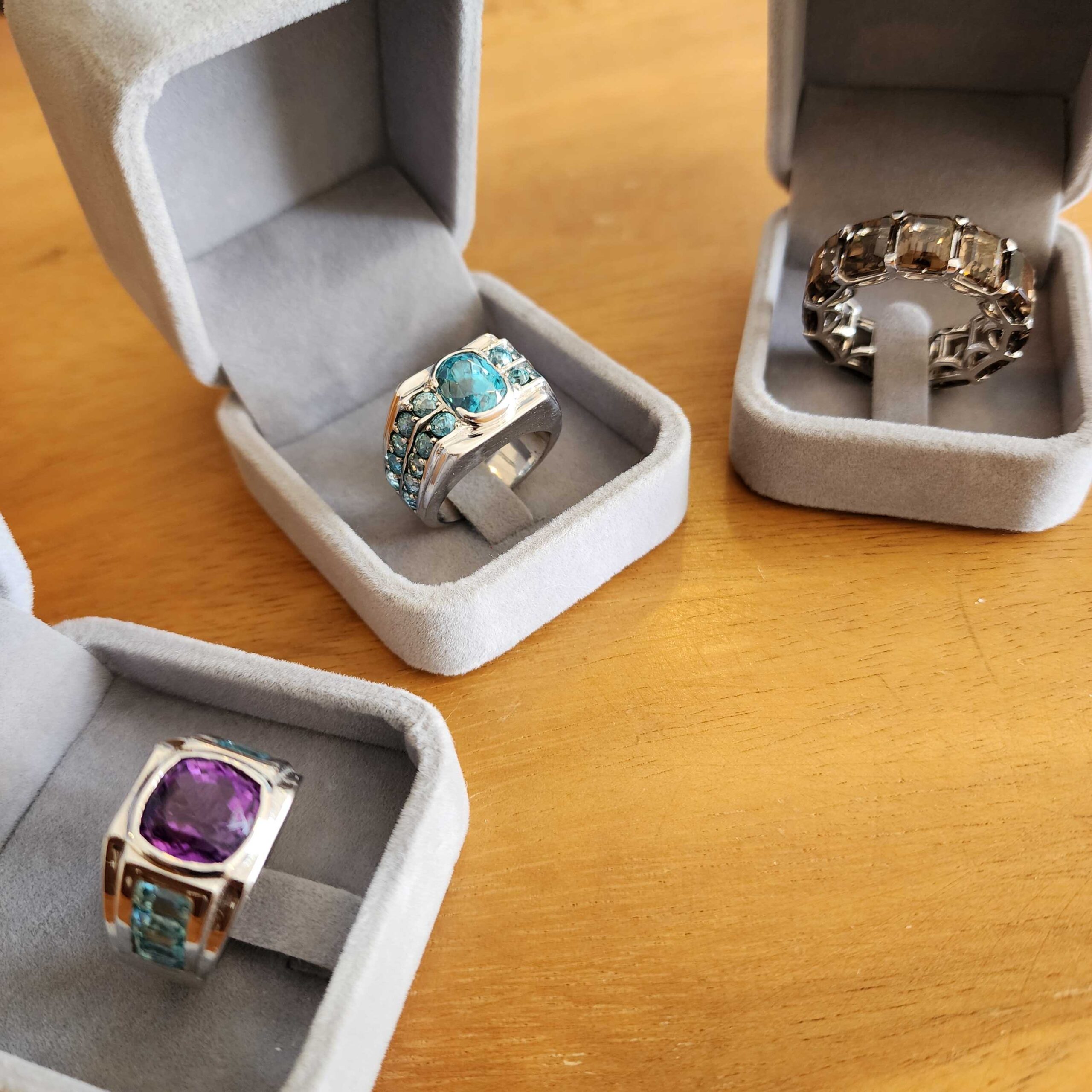
Buying a ring, a diamond, a custom piece — easier when you can actually see it. Hold it. Online listings give you measurements, photos, prices, certification details. Fine. But a physical store gives you craftsmanship up close. Side-by-side comparisons. Real questions, answered on the spot. Visiting a local jewelry store can also help buyers understand how different materials,

Engagement ring. Diamond. Wedding bands. Custom design. Whatever the goal, knowing what to look for makes the whole trip a lot more productive.

Start With Knowing What You Actually Want

Before walking in, have a rough idea. Not every technical detail — just your preferred metal, roughly your budget, stone shape, general style. That’s enough to narrow things down fast.

Someone shopping for an engagement ring might already know: round, oval, emerald, pear-shaped. Someone else might just want a simple gold band, or something custom carrying real personal meaning.

A clear starting point means comparing pieces on consistent criteria. Not getting pulled in ten directions by every shiny thing in the case.

Look at Jewelry Under Different Light

Lighting changes everything with diamonds and gemstones. Store displays use carefully positioned lighting — makes stones look bright, alive, better than they might elsewhere. Ask to see a piece under more than one type of light if possible. Worth the ask.

Look from different angles. Watch how the stone interacts with the setting. For diamonds — brightness, flashes of light, darker patches worth noticing. For colored gemstones — color consistency, transparency, visible inclusions.

Physical inspection catches what photos miss, too. Band thickness. Setting height. How the prongs actually hold the stone in place. Small stuff. Matters a lot.

Compare Materials and Craftsmanship, Not Just the Stone

Quality’s not just about the center stone. Metal, setting, finishing, construction — all of it shapes how a piece looks and holds up over years.

Ask what metal’s actually being used. Solid? Plated? An alloy? Gold comes in different karat levels — changes composition, color, durability, price, all at once. Platinum’s got its own physical characteristics, different from gold — worth considering if that’s the direction.

Check for smooth edges. Secure prongs. Even finishes. Clean alignment. On a ring, gently check how the stone actually sits in its setting. For custom pieces, ask how the design gets built. What steps happen before it’s actually finished and delivered.

Ask About the Actual Documentation

Buying a significant stone? Documentation matters. A diamond grading report covers carat weight, color, clarity, cut-related details — real info for real comparison.

Ask whether the stone comes with an independent grading report. Check the document actually matches the stone being shown — not always a given. For colored gemstones, documentation might cover treatments, origin, identification, depending on the stone itself.

Documentation isn’t just paperwork for the sake of paperwork. It’s information. Lets you compare stones on consistent characteristics instead of just trusting a sales pitch.

Pay Attention to the Actual Service

How a jeweler communicates matters just as much as what’s in the case. A good experience gives real time to examine pieces. Ask questions. No rush. No pressure.

Ask directly — sizing, resizing, warranties, maintenance, repairs, cleaning, return policy. Considering something custom? Ask about design revisions, production time, stone selection, what happens if changes come up mid-process.

Visiting Aura Diamonds or any other local jeweler — same basic questions work everywhere. Use them to make real comparisons between stores.

The goal’s gathering info. Not just sitting through a sales presentation. Clear answers tell you what’s actually included, and what costs extra on top.

Compare Selection — Not Just the Size of the Case

A huge display case doesn’t automatically mean a better selection for you specifically. Look at whether the styles actually match your preferences. Whether there’s real variety in stones and metals to compare.

Pay attention to shape variety, settings, band widths, metal colors, gemstone options, price ranges. A smaller selection can still work fine if it’s got what you’re actually looking for.

For custom jewelry, “selection” means something different too — access to stones, settings, design possibilities. Not just finished pieces sitting under glass.

Understand What You’re Actually Paying For

Price only means something next to the actual specs. Two rings that look nearly identical can differ wildly in diamond characteristics, metal purity, craftsmanship, included services.

Ask whether the price covers the center stone, the setting, taxes, sizing, engraving, whatever else. For custom pieces, get a clear breakdown of major components before approving anything.

Helps to compare several pieces within a similar budget too. Makes it obvious how stone size, quality, metal, and design each move the final price.

Take Your Time. Seriously

Doesn’t need to happen in one visit. Take notes on what you liked. Record specs where allowed. Compare everything after you’ve actually left the store, with a clear head.

Buying an engagement ring or custom piece? Think about how it fits everyday life, not just how it looks under showroom lighting. A ring that looks incredible in the case should also feel comfortable. Practical. Every day, not just the one day you tried it on.

Visiting a physical store turns an online search into something hands-on. Real comparison. Examine the craftsmanship. Check the documentation. Ask the real service questions. Compare materials. Understand the pricing. Put it all together, and the whole search gets a lot more organized. A lot more informed.

Wardrobe and style piece on life after medical weight loss via 360 MAGAZINE.

Rebuilding A Professional Wardrobe After Medical Weight Loss

Major weight loss may lead to an unexpected emotional shift, especially when you are planning to re-enter professional environments with a transformed body. The biggest challenge lies between wearing ill-fitting old clothes and investing in a new wardrobe while your body is still changing. 

Rebuilding a professional wardrobe is not only about clothing, but it is also about an investment in career confidence and an important step towards embracing your new lifestyle. With the right essentials in your wardrobe, you will feel empowered to project the success and vitality that reflect your weight loss journey and your commitment to long-term health goals. 

Mastering the Art of Transitional Professional Style

Major weight loss is often connected with the use of medical weight loss drugs such as Wegovy, Ozempic, and generic semaglutide. These medications can significantly alter your body shape over time, which makes rebuilding a professional wardrobe both exciting and challenging. 

  • The “In-Between” Phase: Dressing up professionally during this phase requires flexible wardrobe choices. Opting for pieces that accommodate gradual size changes without compromising style can be a great idea. For example, you can pick wrap dresses or adjustable waistbands. 
  • The Power of Alterations: If you do not wish to give away the collection already present in your wardrobe, investing in a skilled tailor can go way beyond what you think. A skilled tailor can adjust blazers, trousers, and structured garments by a few sizes. This practice not only saves money but ensures a polished fit throughout your weight management journey. 
  • Focusing on Accessories: Accessories are key to maintaining a sophisticated look without depending on size-specific items.
    • Choose statement luxury belts as they can cinch looser silhouettes and add definition to your look. 
    • To elevate your professional outfit, you can carry a structured leather bag and wear premium footwear. 
    • Besides that, you can also include classic timepieces and minimalist jewelry, as they provide timeless elegance and help you create a polished overall appearance. 

Smart Budgeting Strategies for Your New Work Wardrobe

In this regard, understanding your financial reality is crucial because completely replacing your wardrobe all at once may not be a sustainable option. 

This is where Capsule Wardrobe Methodology comes into the picture, which emphasizes picking a compact collection of versatile yet neutral pieces that you can mix and match easily. The approach helps maximize your outfit options without breaking your bank while ensuring flexibility during your weight loss journey. 

Embracing Pre-Owned Luxury and Consignment

If you are looking for a luxury collection, navigating the resale market can be a good option. In the resale market, you will find premium consignment, high-quality, structured corporate wear at huge discounts. This practice not only saves money, but also makes sure that your professional presence remains polished. 

Utilizing Clothing Rental Services for Executive Wear

During your weight management program, you are supposed to adjust your budget to stick to a specific Ozempic meal plan, going to the gym, buying weight loss medications, and other necessities. Therefore, spending a great deal on building a new professional wardrobe is not a good idea. 

This is the reason why most professionals rely on subscription-based rental services that offer access to high-end professional styles without long-term commitment. In short, clothing rental services are perfect for important meetings or presentations. 

Essential Core Silhouettes for Your Permanent Corporate Look

Individuals who are prescribed weight loss medications may experience muscle loss in addition to fat loss. This is why fashion consultants recommend updating your wardrobe after muscle loss from Ozempic to create a structured and polished look. 

  • Unstructured Blazer: Pick tailored shoulders with a forgiving torso fit. 
  • High-Waisted Wide-Leg Trousers: Such trousers elongate and anchor your silhouette. 
  • Classic Wrap Dress: Timeless, adjustable, and adaptable. 
  • Timeless Jewelry: Complete your look with subtle accessories to enhance your refreshed look. 

Actionable Takeaway: 

Rebuilding a professional wardrobe after medical weight loss is both challenging and exciting. You can begin by evaluating your current wardrobe and choosing a few versatile, timeless pieces. Make sure you embrace this transformation as a reflection of your commitment to health and a better version of you, which can help create lasting vitality in your career.  

Wardrobe and style piece on life after medical weight loss via 360 MAGAZINE.