


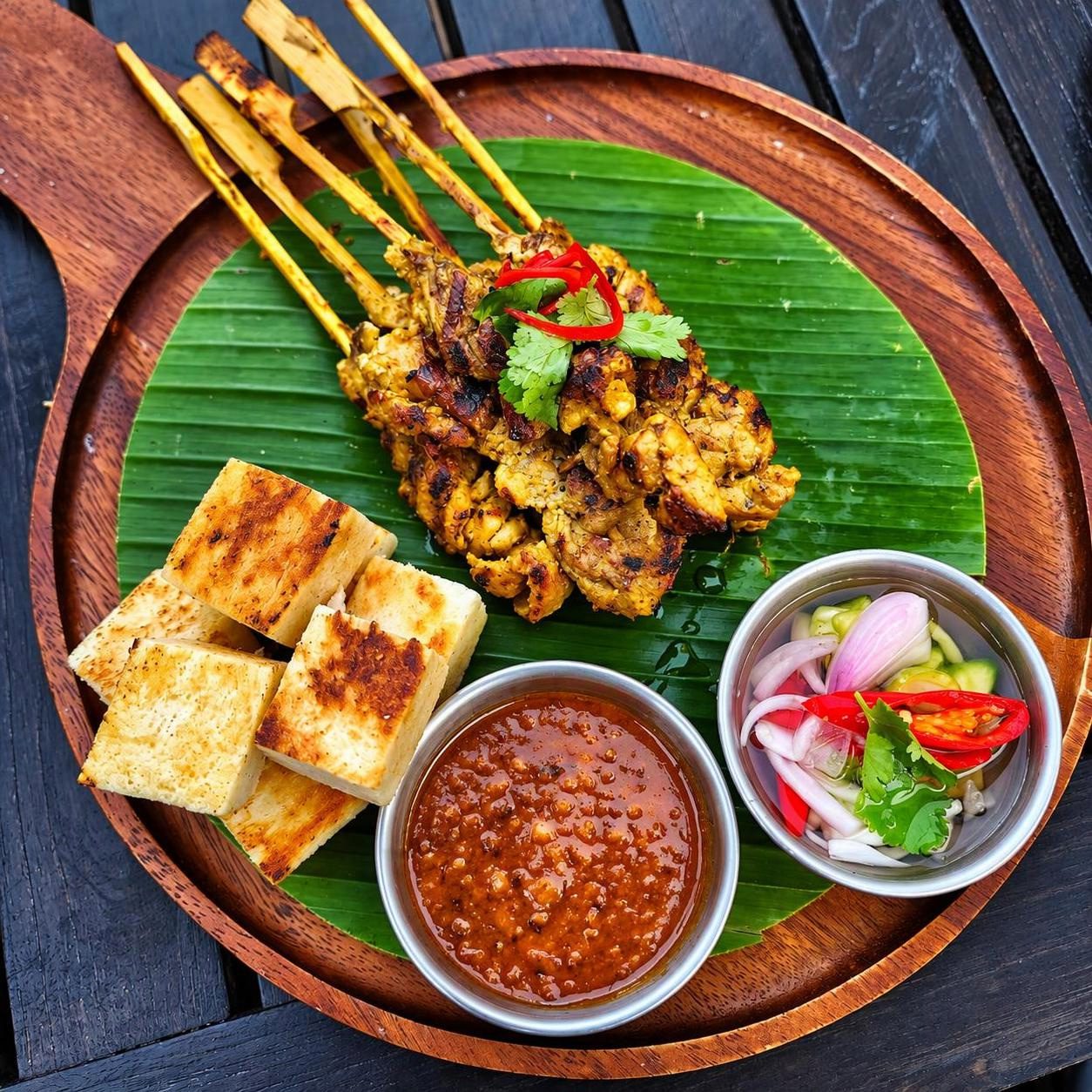
Most travelers land in Indonesia expecting one cuisine, usually summed up as fried rice and peanut sauce. What they find instead is a country of more than 17,000 islands, about 6,000 of them inhabited, where the cooking shifts from one coast to the next. A beef dish from Sumatra has almost nothing in common with a sweet stew from central Java, and both taste different again from the soups of Sulawesi.
Ordering nasi goreng every night is easy, but it means missing most of the country. These eight dishes are a better map, each one tied to the place that made it.
1. Rendang from the Minangkabau Highlands of West Sumatra
Rendang belongs to the Minangkabau people of West Sumatra, and it’s the dish that converts people who swear they don’t like curry. Beef is simmered in coconut milk with chili, galangal, lemongrass, turmeric leaf and kaffir lime until the liquid cooks away completely. The meat then fries slowly in the oil left behind. What arrives at the table is dark, almost dry, and so concentrated that a small piece goes a long way with plain rice. The quick versions sold abroad are often wet and saucy, which is closer to kalio, an earlier stage of the same process. Real rendang has a crust and a deep brown color, and it keeps for days, which is why it traveled so well with Minangkabau merchants.
You’ll find it anywhere a Padang restaurant operates, which is nearly everywhere in Indonesia. Dishes come stacked on the table, and you pay for what you touch.
2. Tumpeng at a Javanese Celebration
Tumpeng is a cone of rice, usually yellow from turmeric, set in the middle of a tray and ringed with side dishes: fried chicken, tempeh, boiled egg, vegetables in coconut, a little sambal. It’s a Javanese ceremonial dish, served at birthdays and openings, and the cone is said to echo the shape of a sacred mountain.
The tip is cut first and offered to the most senior or honored person present.
Visitors rarely stumble on tumpeng at a roadside stall, since it’s made for occasions. Some Javanese restaurants sell smaller versions, and a hotel or guide in Java can often point you toward one if you ask.
3. Gudeg in Yogyakarta
Yogyakarta is where most people base themselves to visit Borobudur and Prambanan, and it’s also the home of gudeg. Young jackfruit is cooked for hours with palm sugar and coconut milk in a pot lined with teak leaves, which turn it a reddish brown. The result is soft and sweet, with a faint smokiness. That sweetness surprises first-timers, so order it the local way to balance it out. A proper plate comes with rice and a braised egg, plus krecek, a spicy stew of beef skin that cuts right through the sugar.
Gudeg is a breakfast dish as much as a dinner one, so it pairs well with a sunrise start at the temples.
4. Arsik on the Shores of Lake Toba
Lake Toba sits in the highlands of North Sumatra, a drive from the city of Medan, and the Batak people who live around it have a fish dish worth the trip on its own. Arsik is usually made with carp, cooked whole in a yellow paste of turmeric and torch ginger flower.
The defining ingredient is andaliman, a relative of Sichuan pepper that grows in the region. It gives a citrusy, tingling numbness that you won’t taste anywhere else in Indonesia. If the first bite makes your lips buzz slightly, the andaliman is doing its job.
Ask for it at lakeside eateries around Samosir and Parapat.
5. Coto Makassar in South Sulawesi
Makassar is one of Indonesia’s busiest port cities and a regular cruise stop, which makes coto Makassar one of the easier regional dishes to try if you’re arriving by sea.
It’s a thick, cloudy beef soup made with ground peanuts and rice water, seasoned with a long list of spices, and loaded with beef and offal. Locals eat it with ketupat or burasa, compressed rice cakes wrapped in leaves, which soak up the broth. Squeeze in lime and add sambal to taste. It’s heavy and filling, and best before noon, when the coto shops are at their liveliest.
6. Gado-gado from Jakarta’s Street Carts
Jakarta’s Soekarno-Hatta airport is where many trips begin, and gado-gado is a fine first meal. The name roughly means “mix-mix,” and the dish lives up to it: blanched vegetables, potato, tofu, tempeh, boiled egg and rice cake, all covered in peanut sauce and topped with fried shallots and crackers. Good vendors grind the sauce to order on a stone mortar, adjusting the chili and sugar as you watch. Tell them how hot you want it. “Sedang” means medium, plenty for most first-timers.
7. Sate from Madura and Bali
Sate turns up across the archipelago, and the regional versions are different enough to track down separately:
· Sate Madura: chicken or goat with a sweet peanut and soy sauce, the style most foreigners picture.
· Sate Padang: beef or offal in a thick yellow gravy thickened with rice flour, from the same Minangkabau kitchens as rendang.
· Sate lilit: Balinese minced fish or pork mixed with coconut and spices, wrapped around lemongrass stalks instead of sticks.
· Sate kambing: goat skewers, common in Java, often served with sliced shallots and sweet soy.
Night markets are where sate shines, with smoke rising off charcoal grills along the stalls. Sate lilit is a favorite in Bali, where Ngurah Rai airport brings in a large share of international visitors, and a village cooking class where you wrap your own lemongrass skewers is the kind of afternoon that Indonesia luxury tours fold neatly into a stay among the island’s rice terraces and beaches.
8. Nasi Goreng from a Night-Market Wok
After all that, nasi goreng still deserves a place, as long as it’s the right one. The hotel buffet version is often pale and polite. The street version is made with day-old rice in a blackened wok over a roaring flame, with kecap manis, shallots, garlic, shrimp paste and chili, and finished with a fried egg on top.
Look for a cart with a queue and a cook who doesn’t stop moving. Add-ons vary: chicken, shredded omelet, prawn crackers, pickled cucumber. Some stalls in Java fold in goat or salted fish.
It’s also the dish that ties the trip together, since you can order it in Medan or Makassar and taste how each kitchen leans a little differently on the sweetness and the smoke.