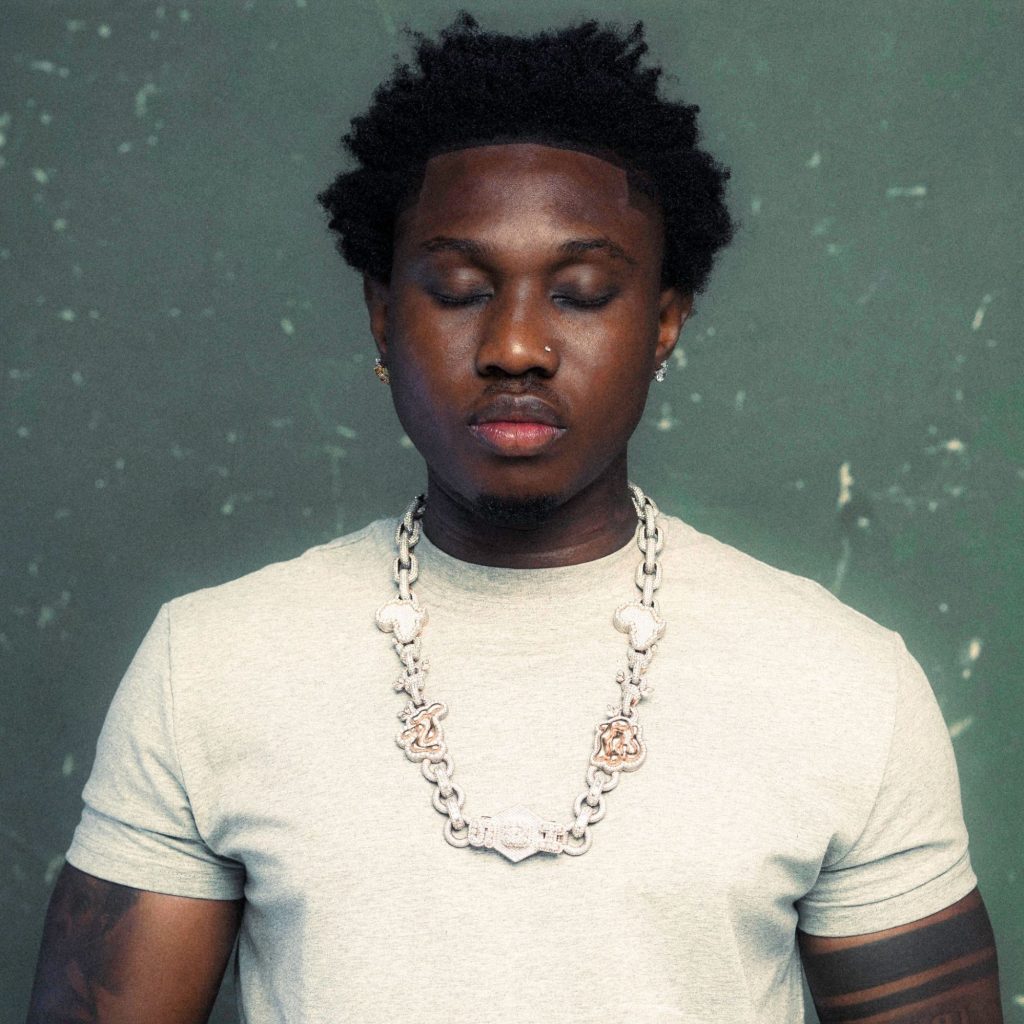

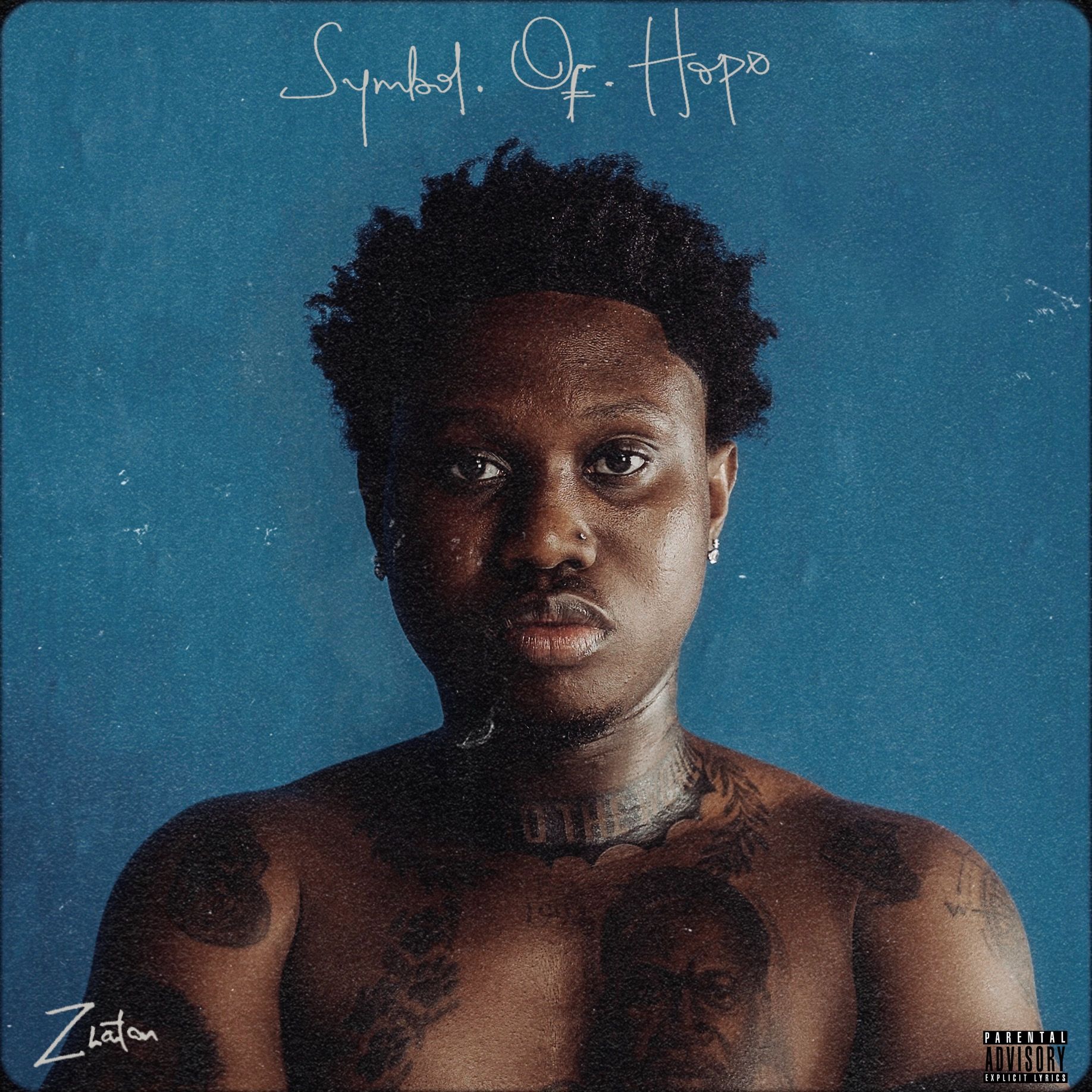
Zlatan’s third album ‘Symbol of Hope’ isn’t just a victory lap, it’s a framework. Sequenced from the soulful opening of “Pay Day” to the thanksgiving cadence of “Alpha & Omega,” it builds a tonal language of reassurance and release: progressions that feel like a hand on your shoulder when the tempo dips, bursts of dance-floor energy when the joy needs to spill over. Across the set, he threads Lagos street sense through gospel lift, folds romance into homage on “Diamond,” and keeps the pulse calibrated for call-and-response. It’s a record made to move bodies and steady minds, and it pairs that intent with a pragmatic rollout via Zanku Records and ONErpm—data-driven planning without sanding off the grit.
In conversation with 360 MAGAZINE, Zlatan unpacks the choices behind that arc. He explains how “Get Better” with Fola set the emotional temperature, why “hope” had to be heard in the chords as much as the lyrics, and what each guest was brought in to do rather than merely represent. He talks about balancing spiritual tones with street-hop bounce alongside Chechdaproducer, lifting cues from Lagbaja with intent, and building live moments where dance becomes the message. He also gets practical—on running Zanku and ZTTW, on the value of precision when you’re independent, and on the first habits he’d hand to a kid in Ikorodu. Read on for a clear-eyed artist at work, articulating a thesis he believes anyone can practice: resilience is teachable, hope is contagious, courage is currency.
1. ‘Symbol Of Hope’ is your third studio album and you’ve described it as a grass-to-grace chapter. What moment or realization gave you the title, and how does “hope” translate sonically across the project rather than just lyrically?
From the intro, ‘Pay Day’, you’d notice it has a soulful chord progression at the beginning, something of a church choir, hymnal, folk-leaning type of progression. That was us setting the tone for the album.
The whole album is built on tonal structures that are meant to generate joy. Even in the songs with more sombre tempos, those chords are well placed to feel like a hand over your shoulder, that is, the music telling you that everything would be okay.
On the outro, ‘Alpha and Omega’, we turned up the momentum on that celebratory and thanksgiving mood, and you can tell from the arrangement on that particular song, especially with those subtle vintage guitar melodies, that we were aiming for something fresh, uniquely African, and very much reassuring.
The album packs different ranges, with songs like ‘Demons’, channelling that RnB-Hip Hop chemistry; and there are songs you’d just want to dance to like ‘Oyoyo’, ‘Jeserawa’, ‘Bebe’, and ‘Paypal’. Whatever tempo you find pouring through your eardrums, there’s either euphoria or re-assurance attached to it.
2. “Get Better” with Fola arrived first and cut through on multiple charts. In what ways did that record set the emotional or musical temperature for the rest of the album?
Fola is a really special talent. This particular song is one of my favourites and it’s an uplifting song on the album. Depression, stress, and silent battles are everywhere, and sometimes all we need is a reminder that things can change.
Fola and I created Get Better as a voice of comfort. Even if we never meet those
who need it, the music will reach them. Music is spiritual because it speaks where words can’t, and that is what we used as our north star on this project — that consistent reminder that this album is a functional record. It’s meant to help you, as you soak it in.
3. You’re releasing via Zanku Records in partnership with ONErpm. What did that setup let you do, in terms of rollout, marketing, data feedback etc, that you couldn’t on previous albums?
ONErpm matches my energy, and I tell them this all the time. They know me very well; I’m always on standby to brainstorm, and develop ideas. We started planning the rollout of this album, even before its completion.
They take data very seriously, and we were able to assess public sentiments around my music way before we started planning. It was helpful having so much insight to work with, and that has shaped how we targeted the album during its release to reach even broader audiences. It’s been a great learning curve for me, just working with them.
4. The opener “Pay Day” feels like a victory lap, while the closer “Alpha & Omega” revisits early sacrifices in Ketu. How did you want listeners to travel from arrival to reflection between those two poles?
I wanted listeners to understand the structure of hope itself. It all starts with finding a purpose, but it matures when you find faith in God. Throughout the record, I spun different perspectives, from chasing the bankroll, being resilient, daring naysayers, celebrating your wins, fighting your demons and self saboteurs, and ultimately locking in with God. That’s the drift I had mentally
while creating this album, and I want listeners to feel that same uplift as they experience this album.
5. Gospel uplift threads through “Till Thy Kingdom Come,” yet there’s still dance-floor energy elsewhere. How did you and Chechdaproducer balance spiritual tones with street-hop bounce without one diluting the other?
Chechdaproducer is a visionary. We linked up in 2017 when we recorded ‘Able God’, and since then we have worked a couple of times before this album. We have learned to create without overthinking, but we ended up locking in on the vision for Symbol of Hope before we recorded most of the songs. So, all the beats he made felt fully in sync with the tonal structure I envisioned for the album. It was just seamless chemistry.
6. “Diamond” nods to Lagbaja’s “Never Far Away.” What did you want that reference to signal about romance on the album—and how did you approach homage versus reinvention?
Lagbaja is a legend in the Nigerian music scene. I grew up listening to his classics. And ‘Never Far Away’ is an iconic record that I was excited to reimagine. The song ‘Diamonds’ is special to me; because it celebrates the idea of love as something to cherish like pure jewels.
It’s for lovers, yearners and romantics, and that’s why we went for a chill, laid-back feel to the record. It’s a record that I want people to play back 10 years from now and still feel the same connection to their lover that they might experience now when they spin the track.
7. The feature list is heavyweight, including Davido, Qing Madi, Victony, Shallipopi, Mayorkun, Olamide, Flavour. Beyond star power, what specific textures or perspectives was each guest brought in to deliver?
Every collaboration on this album was intended to evoke a strong emotion. It was not about the momentum of the artiste or anything like that. These are people I listen to and connect strongly with.
They each brought on a specific vibe, such that even on the party-starter songs there’s synergy in the messaging. It was very important for me to ensure that every song brought in sincere storytelling, and the deliveries matched our overall sonic vision for this album. Celebratory, introspective, reassuring.
8. Zanku the dance became a global language. Where do movement and crowd call-and-response show up most clearly on ‘Symbol Of Hope’, and how are you building those moments into this tour cycle?
Dance has always been a major part of my artistry. I remember the 2014 open mic competition audition that I won, which gave me my first car. I had gotten on stage, with barely a few minutes allocated to perform, and I started dancing before I even performed the song I went there to perform.
From my days in school, till now, I have always moved through the streets embracing dance and the dance community as a core part of my expression. That’s how the Zanku and Gbeku dance forms became a moment in Afrobeats, from just interacting with the pulse of the dance community.
Those dance moves begin, first, from the inner corridors of Lagos, where dancers speak with their feet and interpret music with motion. It’s something I really hoped for at that time, because there was a time I created a dance step and it became popularized by another artiste. I knew I wanted a dance step that drew its breath from my music.
So, I’m still excited that Zanku and Gbeku are still evergreen moves that are present in today’s dancefloors. In ‘Symbol of Hope’, we are expecting dance to also take centre-stage, and we are already in the process of interfacing the dance community here. Dance and Zlatan are like 5&6, so I am always set for another moment like the ‘Zanku/Gbeku’ era.
9. As a founder (Zanku Records) and fashion head (ZTTW), the enterprise keeps growing. What did running those lanes teach you that directly shaped creative choices on this album, whether it was sequencing, artwork, or single selection?
Becoming an entrepreneur has always been in my trajectory. I started Zero to the world as an online pop up store, back in 2017. I hadn’t fully prepared for a full-blown business, but I knew I was going to try it out. I’ve stuck with my close circle since I took off — no major label support or structure at the time. We had to learn the ropes as an independent label, from learning about distributions, contracts and all of that.
Since then, we have always moved with the utmost urgency for sustainability. Even down to deciding the album’s creative rollouts, to the choice of collaborations in the final tracklisting, every decision was made with this understanding in mind. That’s why we are always keen on brainstorming through every decision. Being an independent act running your own label means zero room for mindless execution. Everything has to be precisely curated, else it’s too much of a risk to execute.
10. If a young artist in Ikorodu asked how to apply the album’s thesis “resilience is teachable, hope is contagious, courage is currency”, what is the first concrete habit or mindset you’d tell them to practice for the next 90 days?
I’d encourage them to do two things first: manifest and take action. At certain stages in one’s life, it’s important to see beyond their present predicament and visualize their success. Then, it’s very necessary to have a go-spirit. It’s not enough to wish or dream things; you have to take the next step.
Your path might not be fully clear at the time, but it is key to keep trying. At some point in my life, I was driving cabs, and still going to the studio to record music. I was always on the move, trying my hands at anything that guaranteed success. That’s the ultimate mindset to staying resilient and spreading hope with your life.
Listen to ‘Symbol of Hope’ below!