

By Lynette Yang, Vice President at Bigo Live
Most people know the feeling. You open an app to kill five minutes, look up, and forty are gone. And somehow you feel worse than before you started: a little anxious, a little irritated, not entirely sure what you just watched. Merriam-Webster has a word for it. Doomscrolling: spending excessive time scrolling through bad news. It is far from a fringe habit. Nearly one in three U.S. adults who use social media say they doomscroll, and among Gen Z the number climbs to 53%, according to Morning Consult. After more than an hour on the feed, roughly a third of Gen Z say they come away feeling worried, depressed or angry.
It is easy to see why. Between content engineered to make people mad, low-effort AI slop, and an ad or an influencer selling something every third swipe, the obvious conclusion is that social media is simply bad for you. Delete the apps, buy a flip phone, go analog. Plenty of people are doing exactly that.
But a different approach is gaining ground, and it starts from a less dramatic premise: the problem was never the phone. It was the autopilot.
The Doomscrolling Hangover
Call it a hangover, because that is what it feels like. Hours disappear, nothing sticks, and the mood lingers well after the screen goes dark. The uncomfortable part is that none of it was forced. Nobody made anyone watch the fourteenth outrage clip. The feed offered, and the thumb accepted.
That is also the hopeful part. Habits that are chosen can be chosen differently.
The Bloomscrolling Alternative
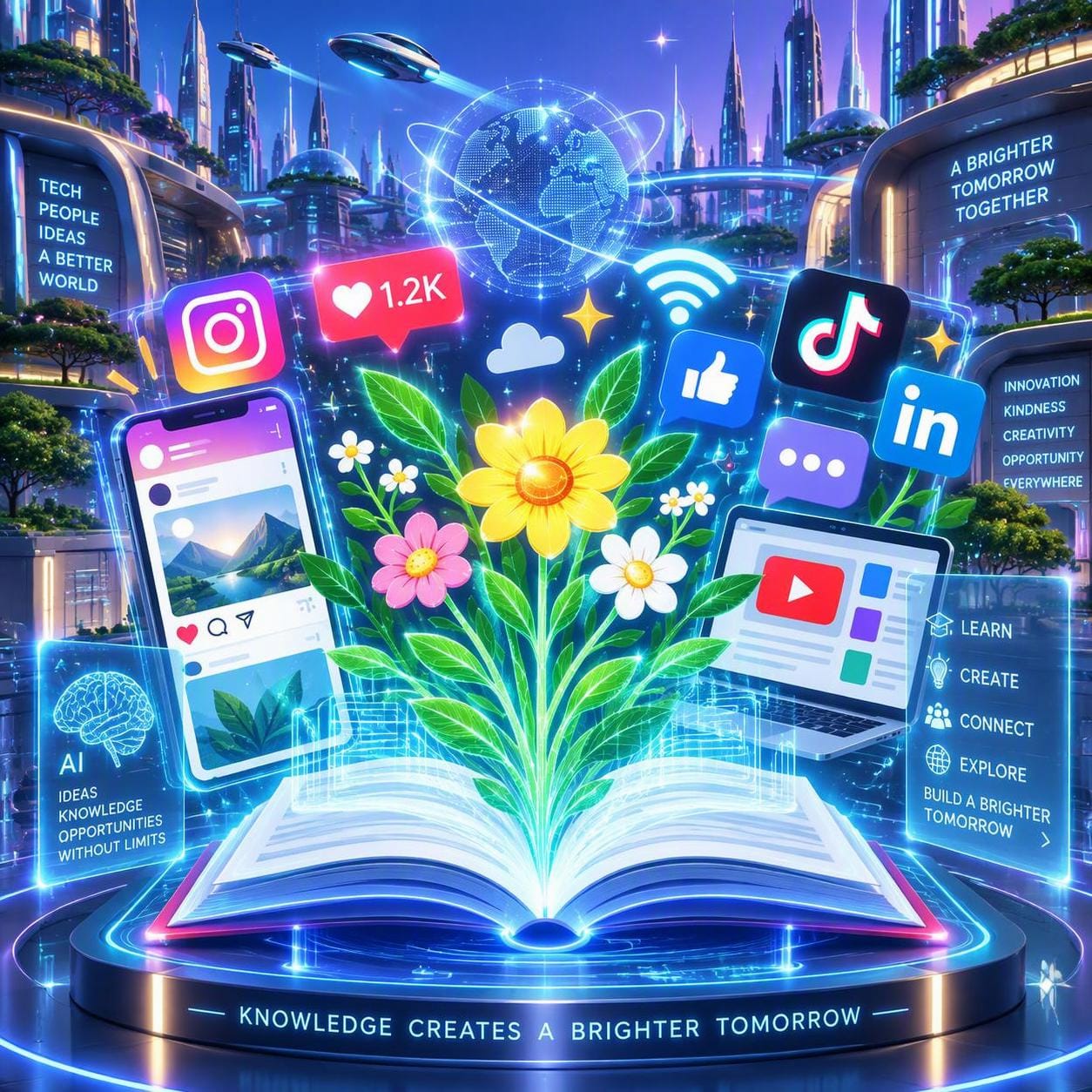
Newport Healthcare describes bloomscrolling as the intentional use of social media to seek out positive, educational and uplifting content, a deliberate counter to doomscrolling. Same apps, same thumb, different inputs.
In practice it looks fairly ordinary. A cooking lesson instead of a comment-section fight. A language series, a woodworking tutorial, a creator who is building something rather than baiting someone. Following accounts that leave you a bit more curious, a bit more capable, or just in a better mood than when you arrived. None of this is revolutionary. It is just the difference between being fed and choosing what to eat.
The Real Shift is Intention, Not Abstinence
The reason bloomscrolling is catching on where digital detoxes keep failing is that it does not ask anyone to leave. Social media has quietly become infrastructure. It is where people learn new skills, find their community, run a side business, or keep up with family three time zones away. Logging off for good is neither realistic nor, for most people, necessary.
What is realistic is remembering how the feed actually works. Algorithms learn from what people choose. Every follow, every search, every skip, every “not interested” is a vote, and the feed people have today is largely the feed they trained. The same mechanism that drags someone into a rabbit hole of bad news will, just as obediently, serve up more bread recipes if that is what gets the attention.
Boundaries still matter. Bloomscrolling works best as a reset, not an all-day habit. A screen time limit is still a good idea. So are hobbies and friendships that happen offline. The goal is to come back from the phone feeling restored, not to find a prettier way to lose the afternoon.
Real Connection is What Makes It Stick
Here is what separates a feed that genuinely helps from one that just looks nicer: whether anyone on the other side is actually there.
Live content changes the dynamic. Watching a recorded clip is consumption. Watching someone cook, paint, or talk through a hard day in real time, and being able to ask a question and get an answer, is participation. Viewers help shape the conversation, and that changes how it feels. In a 2026 survey of U.S. adults by Bigo Live, 53% said livestreams make them feel more connected than traditional posts or reels, and 35% of those who had gone live themselves said it helped ease loneliness.
Unscripted moments build a kind of trust that a polished highlight reel never can. People can tell when something is real, and real is what turns an audience into a community. That is the thing passive scrolling cannot offer. People log off having learned something, laughed with someone, or felt a little less alone.
Leaving Better Than You Arrived
The shift from doomscrolling to bloomscrolling is not really about content categories. It is the shift from autopilot to intention: noticing what the feed does to your mood, and treating that as information rather than fate.
As platforms and creators lean further into participatory, unscripted experiences, the feeds that win will not be the ones that hold attention the longest. They will be the ones people close feeling better than when they opened them.
Sources: Merriam-Webster; Morning Consult (2024); Newport Healthcare; Bigo Live survey (April 2026).