

Culture merch rarely fails because the graphic is ugly. It fails because the first file that goes to a factory is a look, and the first object that comes back is a garment. Those are different jobs. Before a label briefs a custom streetwear manufacturer, someone on the drop team should write down which decisions the starting file can actually carry, and which ones are still open. Otherwise the sample becomes a pretty argument instead of a recorded standard.
A tour tee, a capsule with a museum partner, or a one-week pop drop usually begins as a render, a sketch pile, or a reference garment borrowed from last season. Each of those inputs is useful. None of them is a complete production brief. The missing pieces are ordinary: a back view, a fabric direction, a measurement, a usable artwork file, a packing note. If those gaps stay unnamed, the factory fills them in order to cut a first sample, and the talent later treats those fills as mistakes.
Jiashun Clothing builds men’s streetwear from a tech pack, a reference, a sample or a sketch, then quotes after review. New styles normally use a paid sample for fit, fabric, artwork and quality, with bulk following buyer approval. The claim worth testing on a culture calendar is narrower than “can they copy the mood.” It is whether the first sample can be given a version name, a written review, and the same identity as the specification that will run.

What The First Sample Is Actually For
The sample is not a souvenir of the concept. It is the first time the brief can be measured, handled and compared. Until that object exists, the team is still arguing about a picture. After it exists, the team can accept points, require changes, and keep those comments tied to one sample version instead of a chat scroll.
On a culture drop that is the difference between a reprintable garment and a one-off that cannot be reordered when the first size run sells. If the approved object and the written specification do not share a revision identity, the next carton will be negotiated again from memory, usually after the artist’s manager joins the thread.
The factory’s published sample window for simple work is typically 10–18 working days after project details are confirmed; complex styles take longer. Those days only answer a real question if the brief arriving on day one already names the open decisions. Sending a beautiful render and then discovering the neck rib on day sixteen usually means an unnamed field waited until cloth made it expensive.
What To Send Before Anyone Quotes
A tech pack helps and is not required. The intake can start from an AI render, a sketch, labelled reference images or a physical garment. What changes is not politeness. What changes is the list of facts the file cannot carry. Write that list in the same note as the file. The review then prices one project, not three competing guesses.

The inquiry form accepts PDF, PNG, JPG, WEBP, ZIP, RAR, AI, DOCX or XLSX, up to three files and 20 MB each. That cap is a planning fact, not a suggestion to dump a drive. Pick the files that settle silhouette, artwork and any measurement you already know. Leave the rest as labelled gaps. Vector artwork is preferred when it exists; a high-resolution flat and a placement mockup still help when the vector is not ready.
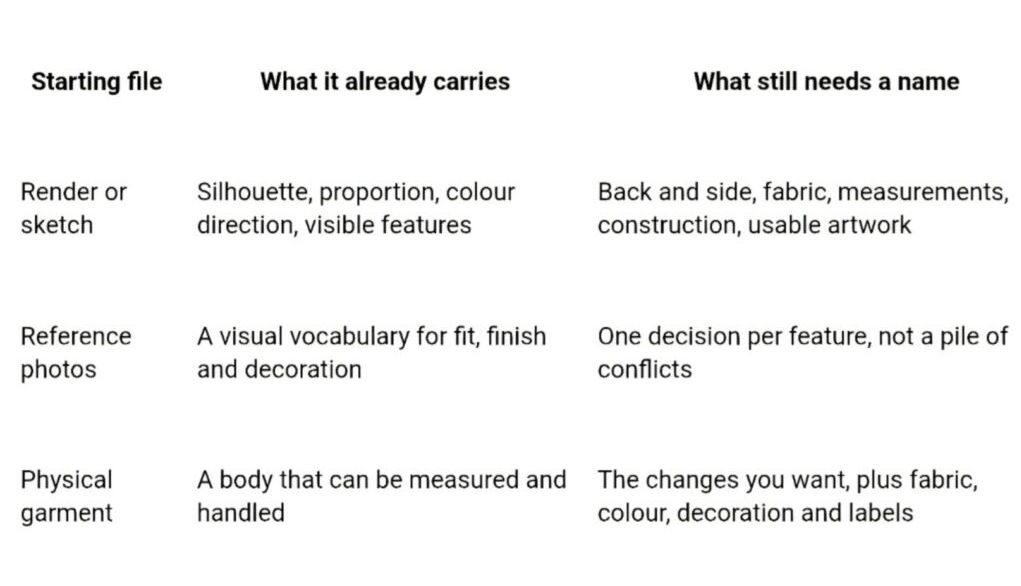
The table is a briefing aid. A culture team can start without a full tech pack. What it cannot do is pretend a front-view render already includes a back neck and a care label.
Render Sketch Or Labelled Reference Images
A render is strong on attitude and weak on construction. It can show a dropped shoulder and a chest mark. It cannot tell a cutter how the shoulder was drafted, what the fabric weighs, or whether the mark is screen print or a transfer. If the only file is a render, mark the details that must stay and attach any garment that explains the handfeel you want. Do not attach five conflicting street photos and call the pile “direction.”
Reference images work when each image is labelled. One photo for fit. One for fabric face. One for the graphic. When the same board asks for a tight rib and a stretched rib, the sample will invent a third rib. That invention looks fine in a preview until someone holds it next to the original reference and the neck no longer matches the campaign still. The fail is observable: the object and the picture tell different stories.
A Physical Garment Already In Hand
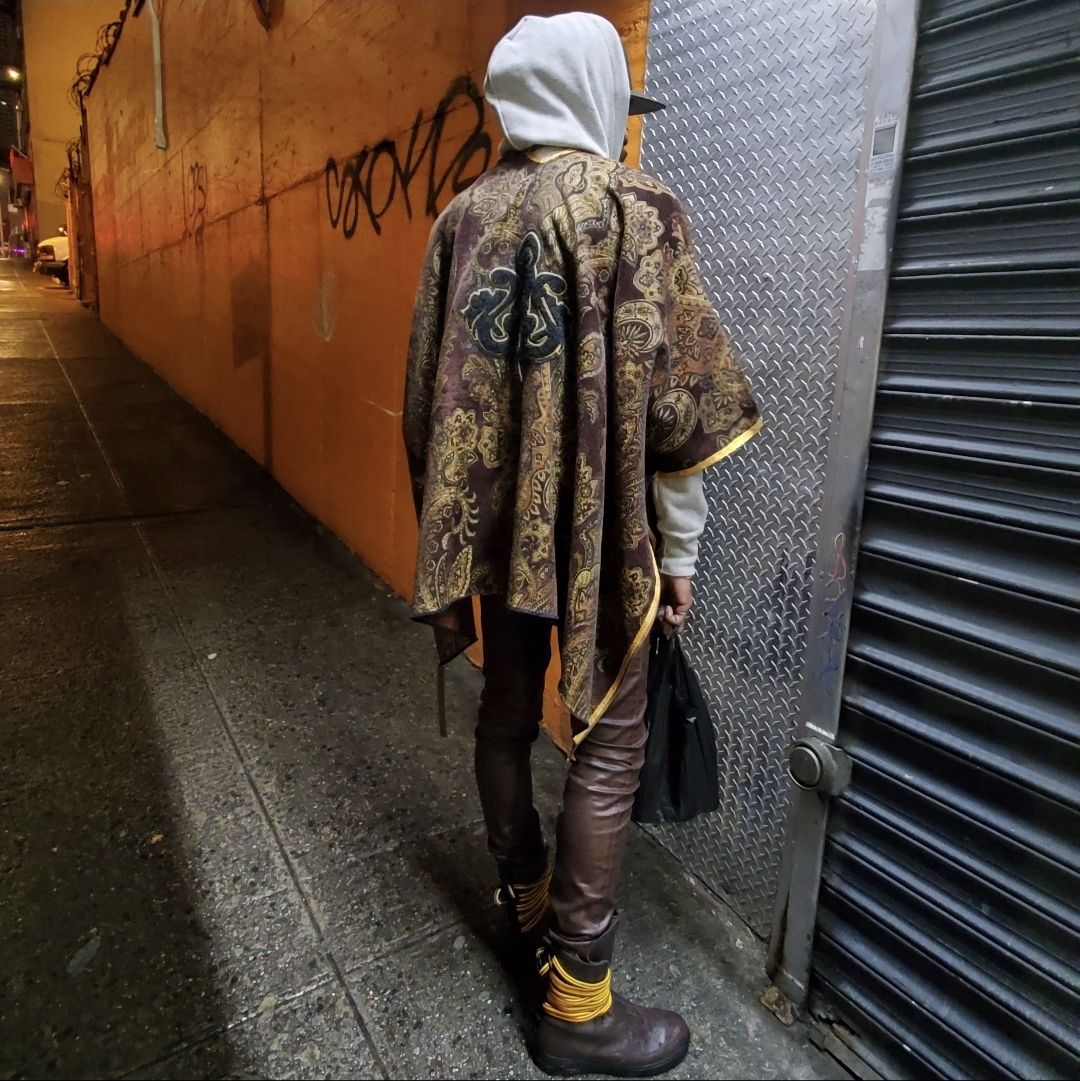
A garment you can photograph and measure is the cleanest start when the drop is “last year’s tee, new mark.” It already contains a fit and a construction. What it does not contain is the list of changes. Write those changes before the parcel moves. If the old tee is the fit and the new art is the product, say so. If the old tee is only a colour hint, say that too. An unlabelled vintage piece becomes a second brief hiding inside the first.
Jiashun Clothing can review that package. It cannot infer which seams were luck and which seams are the brand. The person who owns the drop has to mark the difference. A wasted afternoon usually begins here: the sample copies a hem the team never meant to keep, and the calendar has already spent the simple-sample window on the wrong question.
How The Sample Path Reaches Shipment
Once the starting file and the open decisions sit in one note, the published path is short. Keep it as four jobs, not as a mood. Each job should leave a sentence the next job can protect.
1. Send the brief. Share product type, quantity, fabric, artwork and a target delivery. A quote follows review, not a homepage form submission. Attach what you have; name what you do not.
2. Approve the sample. After details are confirmed, a simple sample typically takes 10–18 working days. Complex work takes longer. New styles are normally paid. The tee path uses the real fabric, print method and labels, so the object you approve is the object bulk is supposed to follow.
3. Run bulk production. After sample approval, typical bulk sits in a 20–30 working-day window, with materials confirmed. Cut, sew, decorate and review against the approved reference, not against a newer chat image.
4. Finish checks and shipping. Measurements, stitching, artwork, trims, labels and surface are checked against that same standard. Packing — fold, polybag, hang tag, carton mark — is part of the handover, not a later favour. Timing and method are confirmed by destination.
A custom t shirt manufacturer on this path is useful when the drop is a real tee with a real neck label, not a digital mock worn once in a lookbook. Screen print still suits bold flat graphics; DTG still suits detailed or high-colour work on compatible cotton. Those names only matter after the artwork and the fabric sit in the same sentence. Choosing a method from a menu, then discovering the fabric later, is how a sample gets built twice.
Errors That Burn The Sample Calendar
Most delays on this path come from brief errors that spend the 10–18 working days answering the wrong question. The cost shows up as a second paid sample, a missed drop week, and a manager who now thinks the garment “changed” when the brief never held still.
Conflicting References Waste The Sample Window
Two fits in one folder will not average into a third fit the talent likes. They will produce a sample that matches neither, plus a comment thread that tries to recover both. Label a primary fit reference and demote the rest to colour or graphic only. If the team cannot pick a primary, the sample is early. Sending it anyway trades a cheap argument today for a rework after cloth is cut.
The same rule applies to artwork. A campaign still, a logo file and a phone crop of last year’s print are three different marks. Pick the file that must survive at production size. Vector helps because it keeps edges usable when the mark moves from a phone screen to a chest. If the only file is a soft crop, say that the edge quality is still open. Do not approve a soft crop as if it were a production file.
A Chat Photo Is Not Sample Approval
A photograph of a sample on a hotel bed is a travel note. It is not a revision record. Fit, measurements, workmanship, artwork placement, trims, labels and packing direction belong in one written review tied to a version name. Separate accepted points from required changes. Add a marked image when a measurement is easier to see than to describe.
If approval lives only in a voice note, the next size run has no object to copy. The garment that looked fine in the hotel light can still be unreadable at the neck or wrong in the sleeve once it sits next to the original spec. That single discard should happen on the sample, in writing, not after five hundred pieces have already been sewn. A comment that never names the version is a comment that cannot be reopened without starting over.
What Must Be Locked Before Bulk Starts
Before bulk, the project record should hold the same identity on both sides of the table: the approved sample version and the written specification. Then lock quantity, size and colour breakdown, materials, timing, checking points, packing and shipping. Jiashun Clothing treats that cluster as the order plan. If any line is still a vibe, bulk will invent a number and the drop team will call the invention a surprise.
For a tee, complete the object the audience will actually handle. Neck labels, care labels, hem tags and hang tags are part of the sample, not a later print job. A culture drop that photographs well on a body and arrives in a blank polybag has finished only half the product. The unboxing is part of the release. If the tag copy, the care line and the bag mark are unnamed, they will be filled with whatever was on the line that week.
Weight is one number, not the whole brief. A heavyweight boxy tee in the 250–300 gsm band behaves differently from a lighter merch jersey; the sample should carry the knit you intend to sell, not a stand-in. Share a target handfeel or a reference tee if you have one. Approve after washing if the drop will be washed by customers, because rib recovery and body length can move. Do not lock a pre-wash chest and then argue with the post-wash body.
Payment, when the order is real, is bank transfer or Wise against a pro forma issued after details are confirmed. Terms sit on the quotation and invoice, and should not be the first time the budget owner sees the quantity they approved on a voice note.
Where This Path Still Leaves Work
The path does not replace a designer or a merch manager. It will not guess a missing back view, invent licensed artwork the team does not own, or turn a render into a guaranteed retail fit. International shipping time sits outside the 20–30 working-day production window and is confirmed by destination. If the drop date was printed before the brief was complete, the calendar—not the factory floor—is the constraint.

Keep The Dated Sample Not The Mood File
This route fits a culture team that can name a starting file, list the open decisions, and give the first sample a version. Jiashun Clothing can develop that sample from an incomplete creative pack and then run bulk against the approved pair of object plus writing. It is a poor fit for a campaign that only needs a digital still and has no plan to repeat the garment.
Arrive with one primary reference, the artwork that must survive, and the packing the audience will see. Leave with a dated sample and a specification that share a name. The useful outcome is a garment the next size run can copy, not a prettier file in the shared drive.