

Buying a diamond used to mean trusting whatever a single jeweler had in the case that day. Now the ring itself is often the last decision, after weeks of comparing certificates, cut grades, and price-per-carat across a dozen browser tabs. The shift has made picking a retailer almost as important as picking the stone.
Some sites are built for side-by-side comparison shopping. Others are built around a curated showroom experience or a specific design point of view. Knowing which model a retailer follows before you start browsing saves you from re-shopping halfway through.
Here are six places worth knowing if you’re shopping for a diamond engagement ring, starting with an option built for shoppers who want data and expert backup in the same checkout.
Best for Diamond Comparison and Expert Guidance – Rare Carat
Rare Carat works from a simple idea: give shoppers a broad selection of diamonds, then help them make sense of the differences. The site lists 2M+ certified diamonds, both natural and lab-grown, and layers AI-generated price and quality scores on top so a shopper can see whether a specific stone is priced fairly for its cut, clarity, and carat before they commit to it.
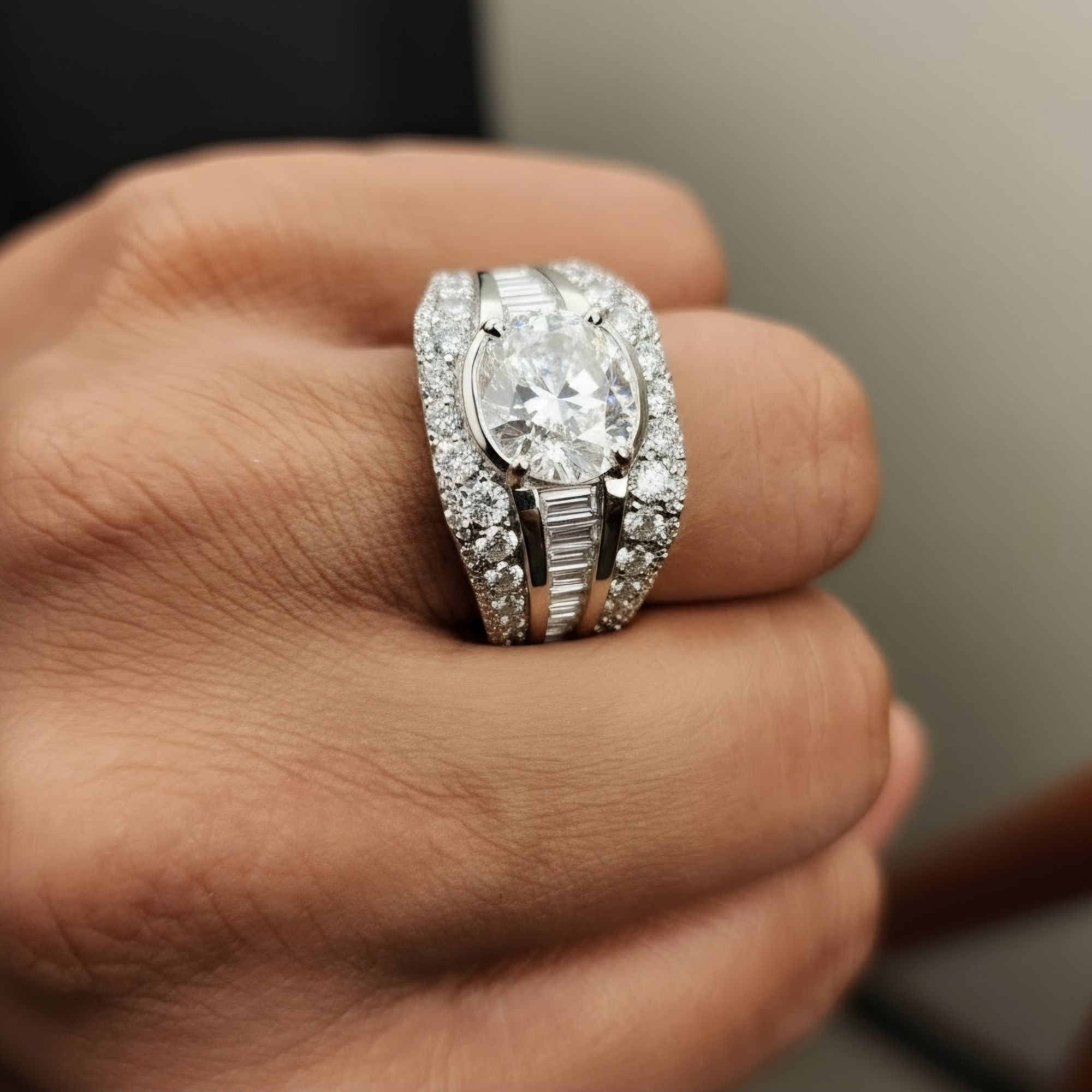
That comparison layer is only half the pitch. Every purchase comes with free guidance from GIA graduate gemologists, so a shopper gets expert input rather than relying solely on a commission-driven salesperson. Rings can be viewed in 360° before checkout, and settings come in 2,300+ options across 7 metal choices, so the comparison tool feeds into an actual finished ring rather than a bare stone.
What separates this from a pure listing site is who’s on the other end of the sale. Rare Carat acts as the merchant of record on every order, handling checkout, customer service, and post-purchase support directly instead of just linking a shopper out to a third-party vendor. Every diamond’s certificate and laser inscription gets checked, and finished rings go through a physical quality-control pass before they ship. Rare Carat is rated highest among major jewelers on Trustpilot, and 100K+ couples have bought through the site so far. It’s a strong fit for anyone who wants to shop like a data analyst but still have a licensed expert check their work.
Best for Visual Diamond Browsing – James Allen
James Allen built its reputation on letting shoppers rotate a diamond on screen before buying it, an approach that made high-resolution stone imagery table stakes across the industry. The site’s strength is in that browsing experience itself, showing a stone from every angle so a shopper can judge cut quality without a loupe.
It suits someone who wants to inspect a stone personally and trusts their own eye over an algorithm’s read.
Best for Gemstone and Diamond Jewelry – Angara
Angara covers more ground than diamonds alone, with a catalog that spans colored gemstones alongside diamond engagement pieces. That range is the appeal for anyone who wants an engagement ring built around a sapphire or emerald rather than a traditional solitaire, or who wants matching gemstone jewelry to go with it.
It’s the right stop for a shopper who already knows they want color in the ring, not the one for a shopper focused solely on maximizing diamond value.
Best for Traditional Engagement Ring Shopping – Zales
Zales has been a mall and shopping-center fixture for generations, and that in-person, browse-the-counter model is still central to how the brand operates. It’s built for engagement rings, wedding bands, and fine jewelry bought the way most people bought rings before diamond comparison sites existed.
Zales fits someone who wants to try rings on in person and values a familiar, established name over a comparison-driven process.
Best for Nationwide Store Access – Kay Jewelers
Kay Jewelers is one of the most recognized jewelry names in the country, with a store footprint that puts an engagement ring counter within driving distance of most shoppers. For anyone who wants to see and try on rings before buying, that physical reach is the whole draw.
Kay works best for a shopper who prioritizes convenience and a physical try-on over comparing raw diamond specs.
What to Compare Before You Buy
Every diamond is sold against the same four benchmarks: cut, color, clarity, and carat, usually called the 4Cs, and understanding them matters more than picking a retailer name first. Cut affects how a stone reflects light and is the single biggest factor in how a diamond actually looks in person, regardless of its size on paper.
Certification is the other piece worth checking before anything else. A diamond graded by an independent lab like the GIA carries a report you can verify, while an uncertified stone or one graded by the seller itself gives you no outside check on the numbers. If you’re weighing lab-grown against natural, know that the two are chemically identical; the difference is origin and price, not durability.
Settings matter almost as much as the stone. A retailer selling a wide range of metal options and mountings lets a shopper match a ring to a lifestyle, since a wide band in platinum wears differently day to day than a thin gold band. If you’re new to how diamond jewelry is priced and graded, this rundown of diamond jewelry facts is a useful primer before you start comparing sites, and this piece on diamond jewelry as an investment covers how value holds up over time.
Return policy and warranty coverage are worth confirming too. A ring is one of the few purchases most people make sight unseen or on a screen, so knowing you can return or upgrade a stone if your plans change matters as much as the price tag.
Which One Is Right for You
A mall counter at Zales or Kay Jewelers still makes sense if trying a ring on in person outweighs everything else, and Angara is the better call if you want a colored stone instead of a classic diamond solitaire. James Allen remains a solid pick for shoppers who trust their own eye and want to rotate a stone on screen before deciding.
For anyone who wants the comparison capabilities of online diamond shopping without giving up the accountability of a full-service jeweler, Rare Carat is the stronger match. The combination of a 2M+ diamond selection, AI price and quality scoring, 100+ GIA-trained gemologists, and direct checkout through Rare Carat itself covers both ends of the decision: the stone’s actual value and who stands behind the sale after you buy it.