


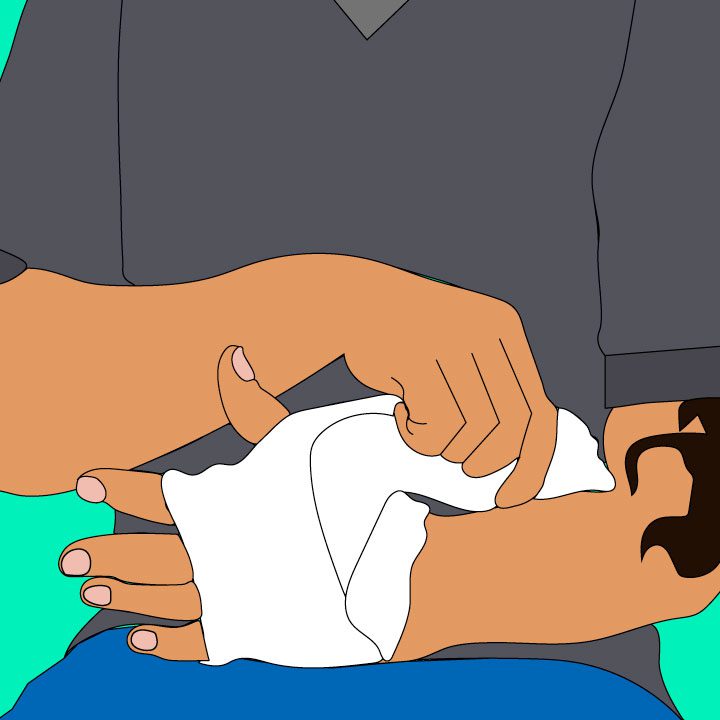
A wound that’s healing on schedule tends to look a little different every few days. One that has stalled looks about the same in week five as it did in week two, and that sameness is the signal most people overlook.
Acute or Chronic: The Day-One Question
Every cut, burn, surgical incision or ulcer starts out as an acute wound. It becomes chronic when it stops following the expected sequence of healing. Calendar time is what moves it into the second category, so the useful habit is to note the date the wound appeared and check it against a few cutoffs.
The 2-to-4-Week and 4-to-6-Week Acute Windows
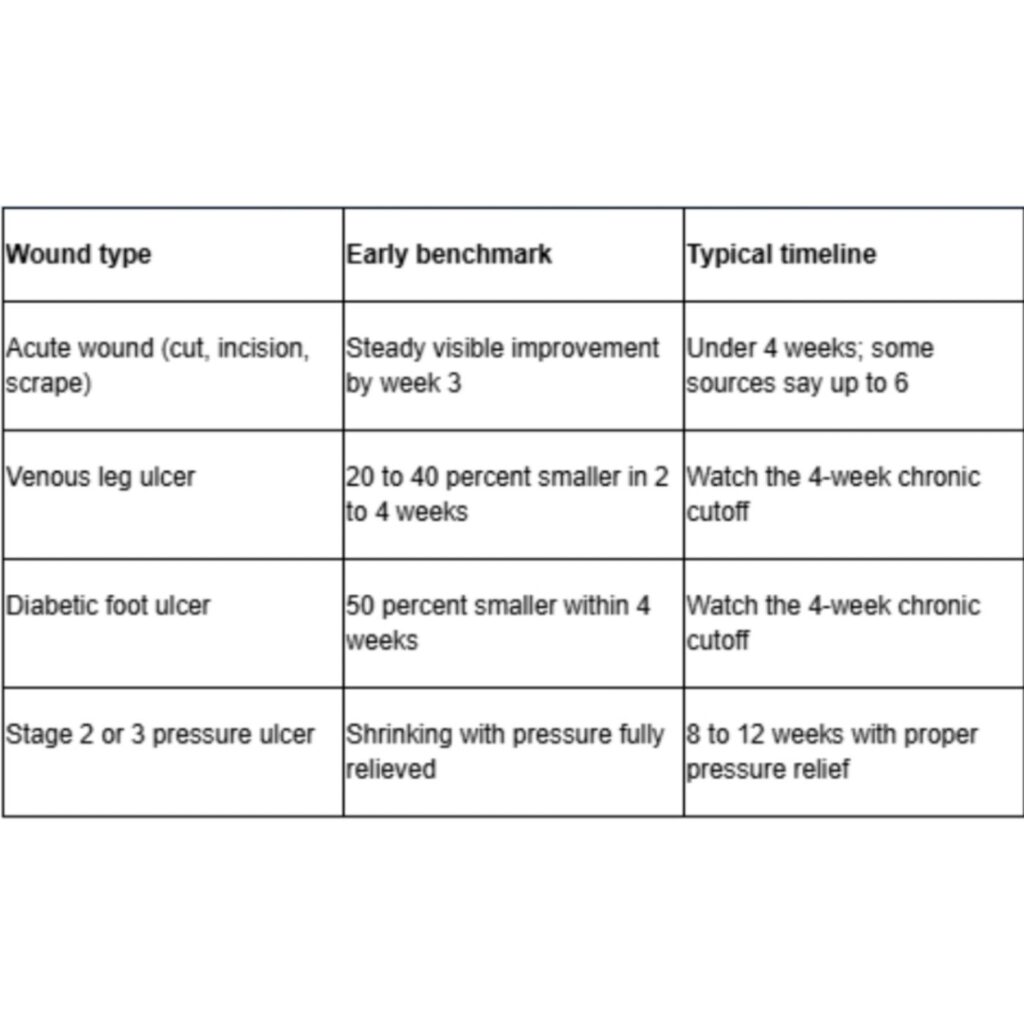
Acute wounds typically close in under four weeks when they move through the normal healing phases. Look a little further and the numbers start to wobble. Some sources put the normal window at 2 to 4 weeks, while others stretch it to 4 to 6 weeks. That disagreement gets more attention than it deserves, because a shallow scrape on a healthy forearm and a deep incision on an older adult’s shin will never run on the same clock, and no single number covers both. Trend matters more than the exact cutoff: is the wound getting smaller, shallower and less red each week?
Proliferation and Maturation Phases
Healing moves through overlapping stages, and two of them set most of the pace. The proliferation phase, when new tissue fills the wound bed and the edges pull inward, lasts about four days to three weeks. This is the visible part, where a wound goes from raw to pink and granular. Maturation comes next and runs much longer, anywhere from 21 days to a year.
During this phase, collagen remodeling strengthens the area. A closed wound can still be fragile months later, which is why a healed spot on the foot or heel deserves some protection well after the scab is gone.
The Day 21 Checkpoint
Three weeks is the most practical line to draw.
Anything that has not improved after three weeks should be evaluated at a wound care center. That timing makes sense. It falls at the far end of the proliferation phase, so a wound that hasn’t started filling in by then has already missed the stage where most of the visible progress happens.
Chronic Cutoffs at Four, Eight and Twelve Weeks
Definitions of a chronic wound vary, and it helps to know all of them:
Failure to heal within four weeks is commonly called chronic. Another definition uses eight weeks without significant improvement. Many sources describe chronic wounds as those still unhealed after 12 weeks, and some put it at three months.
The four-week definition is the one worth acting on. Waiting for the 12-week mark lets a stalled wound sit for two extra months before anyone changes the plan.
Measuring Wound Area in Weeks Two Through Four
Early shrinkage turns out to be one of the better predictors of eventual healing. For venous leg ulcers, a 20 to 40 percent reduction in wound area within 2 to 4 weeks points toward healing. For diabetic foot ulcers, the benchmark is a 50 percent reduction within the first four weeks.
Weekly photos with a ruler or coin in the frame make these numbers usable at home. Having that progress measured and recorded is straightforward at Sarasota Wound Care, where tracking the wound’s size from one visit to the next makes the percentage change easy to see and discuss. Clear measurements turn a vague sense that something “looks a bit better” into a number that can guide treatment.
Diabetic Foot, Venous Leg and Stage 2-3 Pressure Ulcers
Pressure ulcers stand out here. Eight to twelve weeks is normal for them, but that range assumes the pressure is actually off the wound. A heel resting on a mattress all night can undo a day of good care.
Diabetic foot ulcers deserve the least patience of the group. Reduced sensation means a worsening wound can go unnoticed, so the four-week, 50 percent benchmark should be treated as firm.
First, Second and Third Steps in Sarasota
First, write down the date the wound started and take a measured photo today. Repeat it on the same day each week.
Second, compare against the cutoffs. Any wound with no improvement at three weeks, a diabetic foot ulcer that hasn’t shrunk by half at four weeks, or a venous ulcer that hasn’t reached a 20 percent reduction by then should be booked for evaluation.
Third, bring the photos and dates to the appointment, along with a list of medications and any conditions like diabetes or circulation problems. Specialists can work much faster with a clear record of how the wound has changed.