


Fortnite is not only about winning matches. It is also a place where players show who they are. One of the main ways to do this is through character skins. These do not change how the game works, but they change how others see you. A skin can show your style, your mood, or even how long you have played. Over time, these choices have become part of how players build their identity in the game.
Why Self-Expression Matters in Modern Gaming
Many players use games to show who they are. They choose how their character looks, acts, and feels. This makes the game more personal. It also helps players connect with others. Recent data shows that many players care about self-expression as much as gameplay. Why it matters:
- Makes games feel personal: Customization helps players feel more connected to their character.
- Supports social interaction: Other players notice your look first. It becomes a way to communicate without words.
- Allows safe exploration: Games give space to try different identities or styles.
- Reflects modern digital culture: Online identity is now part of everyday life, and games play a big role in that.
This trend goes beyond Fortnite and is clear in online casinos. Players do not look only at payouts or rules. They also care about themes, design, and how games look. Slot games often use characters and visual styles that shape player choice. Over time, these choices reflect personal taste. On platforms like Slotozilla, users compare not just bonuses but also how games are presented. This shows that identity and style now influence how people choose and use online casinos.
Fortnite as a Platform for Digital Identity
Fortnite gives players simple ways to shape how they look in the game. You can choose from a large number of skins, emotes, and accessories to build your own style. As of March 2026, the game has over 2,500 skins, and new ones are added often through updates and collaborations. This means players always have new options to change how they present themselves.
The game updates often, so identity is not fixed. One day, you may use a simple outfit, and later switch to a skin linked to a film, music artist, or trend. These choices build over time and create a clear image of who you are in the game. Since other players see your skin first, appearance becomes part of how you communicate. In Fortnite, your look is not random. It is a simple way to show your identity in every match.
The Role of Skins in Player Self-Expression
In Fortnite, skins are one of the main ways players show who they are. They do not change gameplay, but they change how others see you. With thousands of skins available and new ones added each season, players can choose a look that matches their style, mood, or interests. Over time, these choices help build a clear identity in the game.
Social Meaning of Fortnite Skins
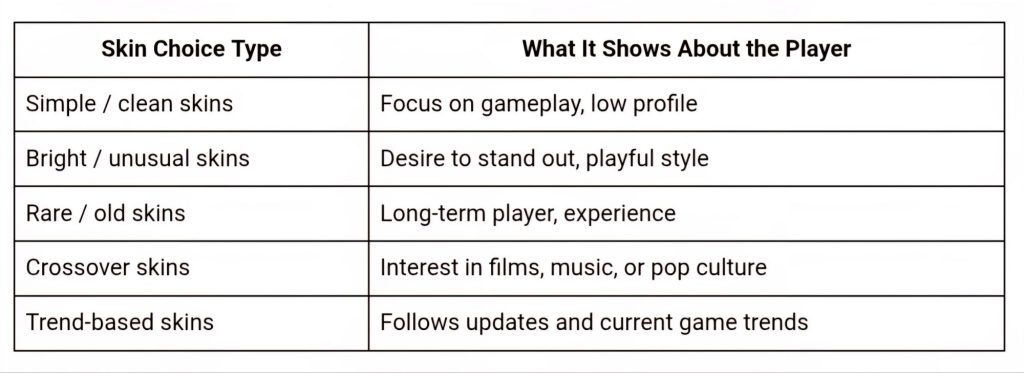
Before a match even begins, players notice each other’s skins. This first impression often carries meaning. Some outfits are seen as more valuable or more recognizable than others. Rare or limited skins can signal long-term play or early access to the game. In some cases, certain skins are linked to competitive players, which may suggest a more serious approach.
Skins also reflect group identity and personal choice. Many players select crossover skins to show interest in films, music, or other trends. Others prefer unique or less common looks to stand out. Fortnite has over 230 million monthly active players, so appearance becomes a fast way to communicate in a large player base.
Popular Skin Types and What They Represent
Rare or limited skins like Renegade Raider or Black Knight are linked to status and early play, since they were available only in the first seasons. Collaboration skins such as Spider-Man, Travis Scott, or Goku show interest in films, music, or anime outside the game. Themed skins like Peely or Fishstick reflect a playful style, while others choose simple outfits like Aura for a clean look. Event skins, such as winter or Halloween designs, often show participation in seasonal updates.
How Fortnite Reflects Broader Digital Identity Trends
Fortnite shows how identity works in modern games. Players not only play. They choose how they look and how others see them. This idea is now common in many online platforms. Key trends:
- Avatars represent players: Skins and emotes show style and personality.
- Games are social spaces: Players meet and interact through their characters.
- Shared digital spaces: Fortnite works like a place where people connect, not just play.
- Links to real-life interests: Skins from films and music show what players like.
- Style matters online: Players care about how they look in games and apps.
Fortnite has over 500 million registered players. Millions play each month. Many spend money on skins. This shows that appearance matters, not only gameplay. Other platforms like Roblox have tens of millions of daily users, which shows the same trend.
Why Players Invest in Customization
Players spend money on skins for simple reasons. It is not only about how the game looks. Many use skins to show their style, like choosing clothes in real life. In Fortnite Battle Royale, the game is free, so most of the money comes from cosmetic items. Buying a skin is quick, and over time, it becomes a normal part of playing. Social factors matter too. Some players do not want to look new, so they choose skins that others recognize. Rare or limited skins can show experience or long-term play. In the end, players invest in customization because it shapes how they feel in the game and how others see them.