

Why Hair Styling Habits Matter
How you style your hair day to day affects more than appearance—it shapes strength, moisture balance, texture, and how manageable your hair stays over the long run. Many people reach for heated tools as part of their regular routine, and using a hair styler can certainly fit into that. But the safest results have less to do with any particular tool and more to do with how hair is prepped, how much heat gets applied, the technique behind it, and how often you style in the first place. This article offers general, evidence-informed guidance rather than product recommendations or medical advice—the goal is simply to help readers cut down on avoidable damage while still getting the look they’re after.
Understand What Causes Styling-Related Hair Damage
Styling-related damage tends to show up as dryness, roughness, split ends, breakage, loss of elasticity, or frizz that won’t quit. Repeated exposure to high heat gradually weakens the hair shaft, leaving strands more likely to snap. It’s worth distinguishing between temporary fixes and actual repair here: conditioners and styling products can smooth the surface and make hair look healthier, but they can’t undo structural damage that’s already happened.
Chemical treatments, frequent tension from tight hairstyles, sun exposure, chlorine, and rough detangling all pile onto heat-related stress. Hair type, texture, porosity, length, and any history of chemical processing also play a role in how vulnerable a given head of hair is to this combined wear and tear.
The outer layer of hair, called the cuticle, consists of overlapping scales that protect the inner structure. Repeated high heat or prolonged contact can lift or disturb these scales, which contributes to moisture loss and breakage over time. There’s no single “safe” temperature that works for everyone—fine or chemically treated hair generally tolerates much less heat than thick, unprocessed hair.
Prepare Hair Before Using Heat
Start with gentle cleansing and conditioning. Conditioner improves slip, which cuts down on friction while detangling and styling. Many people find it helps to apply shampoo mainly to the scalp and let the lather rinse through the lengths, rather than scrubbing the ends directly. How much conditioning you need depends on texture, oiliness, density, and chemical history.
Detangle carefully, working from the ends upward instead of pulling straight through knots from the roots. Wet hair is usually more fragile, though tightly curled or textured hair can actually be easier to detangle when damp and well-conditioned. A wide-tooth comb or detangling brush helps minimize stress on individual strands.
Remove excess moisture by blotting or wrapping hair in a towel rather than rubbing it vigorously. When you have the time, letting hair partially air-dry before picking up a blow-dryer or heated tool makes a real difference. And a tool meant for dry hair shouldn’t be used on visibly wet hair unless the instructions explicitly say otherwise.
Use Heat More Safely
Choose the lowest effective heat setting. Cranking up the heat doesn’t make styling faster or more effective—it just raises the odds of damage. Start low and only increase if you genuinely need to. Fine, fragile, bleached, or chemically treated hair calls for more caution than coarse, unprocessed hair. Heat-protectant products can reduce friction and surface stress, but they don’t make unlimited heat exposure safe.
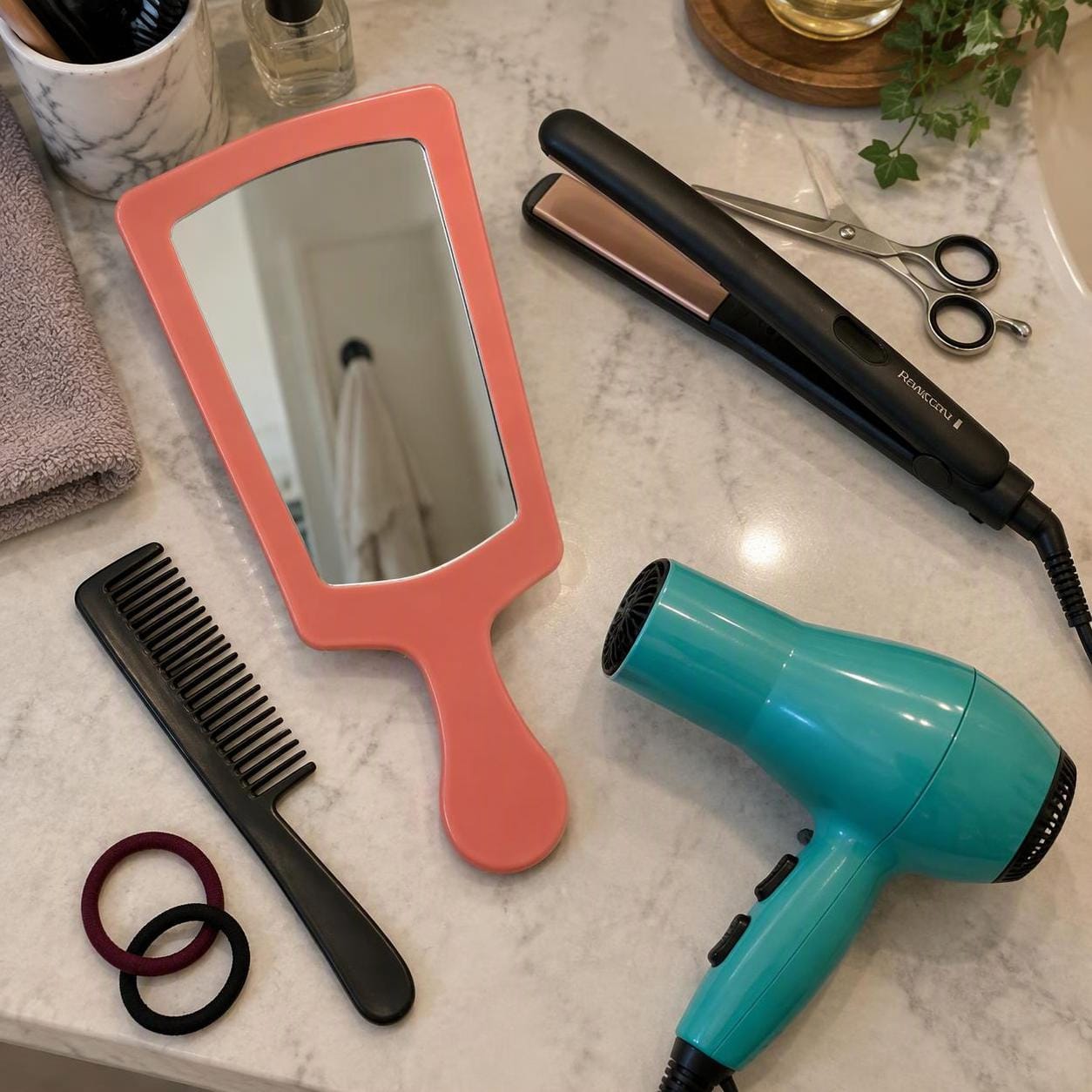
Limit contact time and repeated passes. Work in manageable sections so you’re not forced to go over the same spot again and again. Keep your hair styler or other tool moving instead of letting it rest in one place, and avoid lingering with curling tools on a single section. Letting hair cool before you manipulate it further also helps a style set without extra heat.
How often you style matters too. Building in heat-free days tends to be more protective than relying on products alone. The American Academy of Dermatology generally recommends limiting heat exposure, using lower settings, and air-drying when it’s practical.
Key Takeaway: The most protective routine combines less frequent heat styling, the lowest effective temperature, short contact time, and careful handling before and after styling.
Select Products According to Hair Needs
Rinse-out conditioners, leave-in conditioners, detangling sprays, heat-protection products, and styling creams or gels all serve different purposes, so reading labels matters. Some products are meant only for damp hair, others for dry hair or specifically before heat styling. Overusing product can lead to buildup, which may then require harsher cleansing to remove. “Repair” claims on packaging usually refer to improved appearance or temporary smoothing rather than any permanent fix for damaged hair. If a product causes irritation or scalp sensitivity, stop using it.
Match Techniques to Hair Type and Condition
Fine or fragile hair generally does better with lighter products, lower heat, and fewer repeated passes—watch for snapping or thinning as warning signs. Thick, coarse, or curly hair often responds best to smaller sections, an unhurried approach, and thorough conditioning, rather than simply turning up the heat. Chemically treated, bleached, or highly porous hair needs extra care, since prior processing often leaves it drier and more prone to breakage; cutting back on heat frequency or opting for heat-free styles can help, and a qualified stylist or dermatologist is worth consulting if damage persists.
Consider two very different routines: one involves styling soaking-wet hair at maximum heat with repeated passes—a recipe for damage. The other involves partial air-drying, careful sectioning, a lower heat setting, and limiting repeated passes, an approach far more likely to keep hair in good condition over time, though outcomes still depend on individual hair characteristics.
Recognize Signs of Damage and Know When to Seek Advice
Keep an eye out for signs of breakage—persistent split ends, short broken hairs, strands that snap during brushing, unusual roughness, or scalp discomfort and irritation. A trim removes existing split ends, but it won’t prevent new damage from forming. Breakage along the hair shaft is a different issue from hair loss originating at the scalp, and sudden shedding, visible thinning, or scalp pain is worth discussing with a dermatologist rather than guessing at the cause yourself.
Build a Lower-Damage Styling Routine
- Assess your hair’s current condition before styling.
- Cleanse and condition according to your hair’s needs.
- Detangle gently, from ends to roots.
- Blot excess water and air-dry partially when possible.
- Apply suitable products according to their instructions.
- Use the lowest effective heat setting.
- Style in sections with minimal passes.
- Alternate with heat-free styles regularly.
- Clean tools and follow manufacturer safety instructions.
- Reassess your routine if dryness, breakage, or irritation develops.
Make Consistency the Main Strategy
Healthier hair styling comes down to cumulative habits, not any single tool or product. Gentle preparation, reduced heat, shorter contact time, fewer styling sessions, and attentiveness to warning signs all work together toward that end. Since hair texture, condition, and chemical history vary so widely from person to person, techniques need to be adapted individually. Pay attention to which habits actually improve manageability and reduce breakage over time, then refine your routine gradually based on what your hair really needs.