


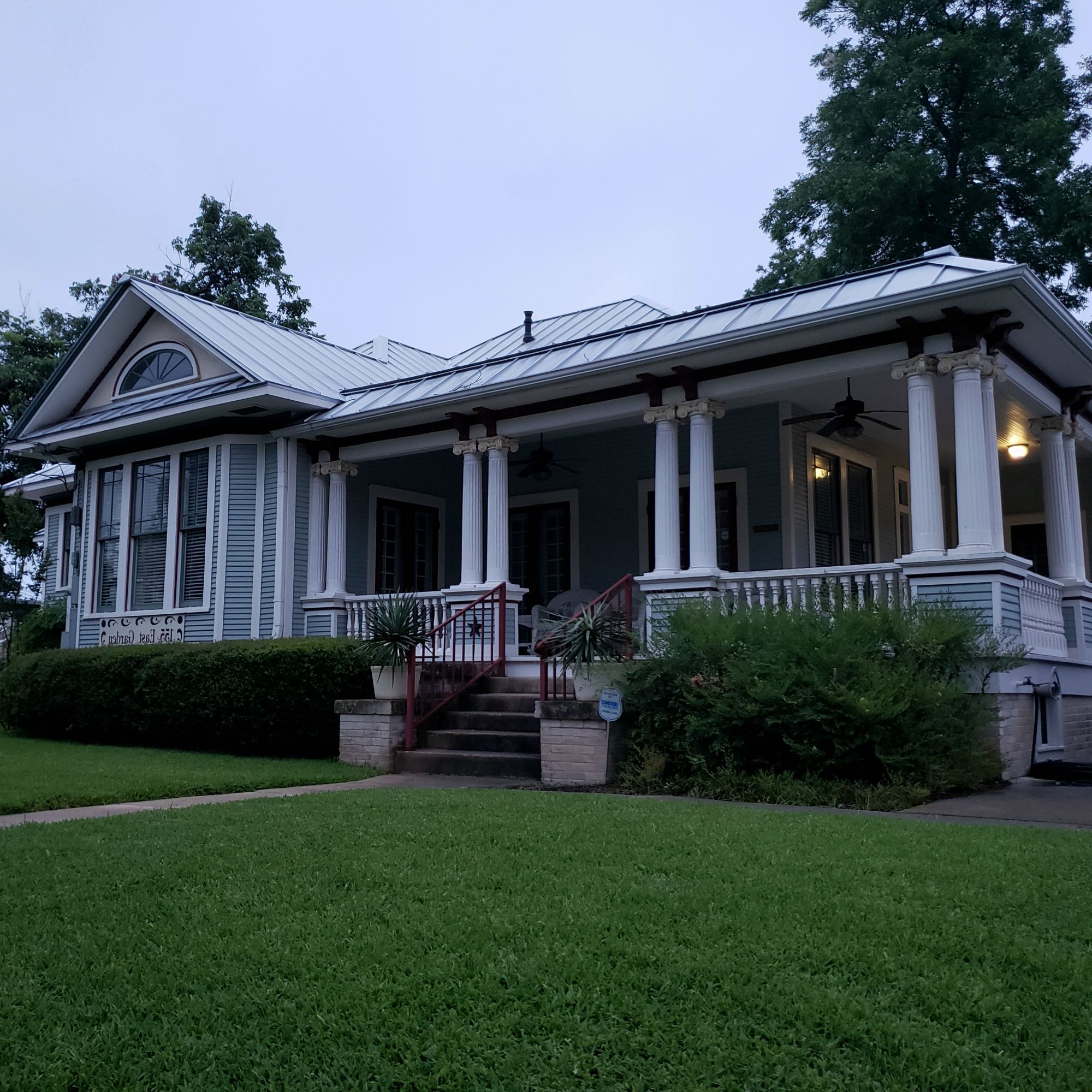
Bermuda grass covers more North Texas yards than any other variety, but walk through a mature DFW neighborhood on a July afternoon and a pattern becomes clear: the patches under the live oaks and cedar elms are thin, pale, and fighting a losing battle. Shade does not just slow grass down. It fundamentally changes which grass belongs there, how you water and fertilize, and what kind of lawn you can realistically expect to maintain.
Why Shade Is a Bigger Problem Than Most Homeowners Expect
Most people treat shade as a minor inconvenience, something a little extra fertilizer can fix. It is not. Shade stress adversely impacts chlorophyll content, chloroplast ultrastructure, photosynthetic processes, and plant morphology, and those effects compound over time. A lawn that looks acceptable in year one under a young canopy can be bare dirt by year five as trees mature and spread.
The scale of this challenge is significant. It has been estimated that 20 to 25% of all turfgrass in the USA is subjected to varying degrees of shade. In established North Texas subdivisions with mature trees, that number is almost certainly higher on individual properties. The problem is not rare or unusual. It is a predictable consequence of trees growing taller while the grass underneath stays the same.
Shade produces slower growth, thinner leaf blades, increased vertical turfgrass growth, reduced sward density, shallower rooting, more succulent tissue, a reduced photosynthetic rate, lower energy reserves, and a decline in overall quality. That list explains why shaded turf looks the way it does: spindly, sparse, and quick to thin under foot traffic or drought stress.
The North Texas Grass Problem: Bermuda in the Wrong Place
Bermuda is by far the most common turf grass in North Texas. That popularity comes from its heat tolerance, drought resistance, and low cost at installation. Builders use it because it is affordable and establishes fast. But Bermuda has a serious vulnerability that many homeowners do not discover until their trees grow large enough to cast real shade.
Compared to other grass varieties common in DFW landscapes, Bermuda ranks among the worst for shade tolerance. Some grass types can maintain adequate health with just four to six hours of filtered sunlight, but Bermuda begins showing stress when it receives less than six hours of direct sun. That threshold catches people off guard.
A subdivision developed in 2000 with modest street trees now has mature canopy that has cut backyard sunlight considerably over the past 24 years. A Bermuda lawn installed in that neighborhood in 2003 that looked good through 2010 has been thinning since 2012 and is largely bare today. That is not a watering problem or a fertilizer problem. It is a grass-selection problem, and the only real fix is choosing a variety suited to the actual light conditions.
Mapping the Shade on Your Property Before You Plant Anything
Before selecting a grass type, spend a Saturday tracking sunlight across your yard. Note which areas receive unobstructed sun from morning through afternoon, which get filtered light through a tree canopy, and which stay in shadow for most of the day. The findings often surprise homeowners who assumed their yards were sunnier than they are.
Full Sun Zones
Areas receiving six or more hours of direct, unfiltered sunlight are genuine full-sun zones. Bermuda thrives here and is a reasonable choice if your yard falls mostly in this category. The grass will be dense, fast-recovering, and drought-tolerant through a North Texas summer.
Partial Shade Zones
Partial shade, roughly three to six hours of direct sun with filtered light for the rest of the day, is where most North Texas yards get complicated. This is the zone beneath spreading live oaks, along the east side of a house, or in the shadow of a tall cedar fence in the afternoon. Bermuda struggles here. Zoysia and St. Augustine are the practical options.
Dense Shade Zones
Areas under tight canopies or between closely spaced structures may get fewer than three hours of usable sunlight. Only one or two grasses will grow in near-complete shade: Fescue and Bluegrass. The difficulty is that both perform better in cooler climates and tend to wilt in the middle of a Texas summer. In these zones, ground cover, mulch, or hardscape often makes more practical sense than fighting to keep any turf alive.
Choosing the Right Grass for Shaded North Texas Yards
Once the shade map is clear, grass selection becomes more straightforward. In North Texas, the two most common shade-tolerant grass types are St. Augustine and Zoysia. Each has a different profile, and the right choice depends on how much shade the area receives and how the yard gets used.
St. Augustine for Moderate Shade
St. Augustine handles shade better than Bermuda by a wide margin. Texas A&M AgriLife’s turfgrass selection guidance puts it plainly: bermudagrass has very low to low shade tolerance, St. Augustinegrass has high shade tolerance, and zoysiagrass generally has moderate to high shade tolerance. St. Augustine spreads aggressively, fills in quickly, and holds its color reasonably well under filtered light. The trade-off is that it needs more water than Bermuda and is less durable under heavy foot traffic.
Zoysia for Shade Plus Durability
Zoysia sits in a useful middle ground: more shade-tolerant than Bermuda, denser and more traffic-resistant than St. Augustine. Among Zoysia varieties, Zeon stands out for shaded North Texas yards. It can thrive in full sun, recover from drought thanks to an extensive root system, and requires only three hours of direct sunlight. For homeowners dealing with partial shade under mature trees, shade-tolerant Zoysia grass like Zeon holds its density and color where other warm-season varieties give up. Soft underfoot, fine-bladed, and bred for performance, Zeon offers low thatch production, improved traffic tolerance, and an extensive root system that produces a thick, compact turf across a wide range of soil types. It works for home lawns, commercial installations, and golf courses alike.
Adjusting Lawn Care Practices for Shaded Areas
Picking the right grass is the first step. Managing it correctly in shade is the second. Shaded turf behaves differently from grass in full sun, and applying the same care routine across the entire yard is a common mistake.
Key adjustments shaded areas need:
- Reduce nitrogen fertilizer. Grasses growing in heavily shaded areas need only one-half to two-thirds as much nitrogen as grasses in full sun. Cutting nitrogen in shaded zones also reduces disease pressure.
- Water less often, but deeply. Shaded areas need less water than sunny ones. Water infrequently but deeply, and only when necessary. Shaded soil dries out more slowly, and overwatering creates the humid conditions that fungal diseases love.
- Raise the mowing height. Taller blades capture more of the limited light available. Cutting shaded grass short removes the leaf surface it needs most.
- Improve airflow where possible. Pruning the lower branches of trees lets more light reach the turf and improves air circulation, which reduces disease pressure in areas that stay damp longer.
How Tree Canopy Shifts Over Time
One factor North Texas homeowners often overlook is that shade is not static. A yard that worked well with Bermuda ten years ago may no longer be a Bermuda yard today. Trees grow, canopies spread, and the light reaching the ground decreases every season.
Leafless, deciduous hardwood trees can block nearly 50 percent of sunlight in winter. The same trees in full leaf can block nearly 95 percent of summer sunlight. That figure matters because summer is exactly when warm-season grasses need the most light to build the carbohydrate reserves that carry them through dormancy. A tree that seems manageable in March casts a very different shadow in August.
Reassessing the shade map every few years, particularly after major tree growth or after removing a large tree, keeps lawn planning grounded in current conditions rather than assumptions from a previous decade.
Where to Start
The most productive first step is not buying sod. Spend a few hours on a clear day watching where the sun actually falls across the yard and for how long. That observation drives every decision that follows: which grass to plant, how to water, how much to fertilize, and which zones to give up on entirely. North Texas lawns fail in the shade because of mismatched expectations, not because healthy turf is impossible. Match the grass to the light, adjust the care routine, and the results follow.