


There’s a sound every festival camper, overlander and tailgater knows by heart. It starts as a cough, settles into a drone and never stops. It’s the gas generator two campsites over, and it’s the soundtrack to a lot of otherwise perfect nights.
That sound is starting to disappear. Not because we need less power – we’re dragging more gear into the wild than ever – but because the portable solar generator has grown up. Silent, fume-free and surprisingly muscular, it’s quietly rewriting the rules of the road trip.
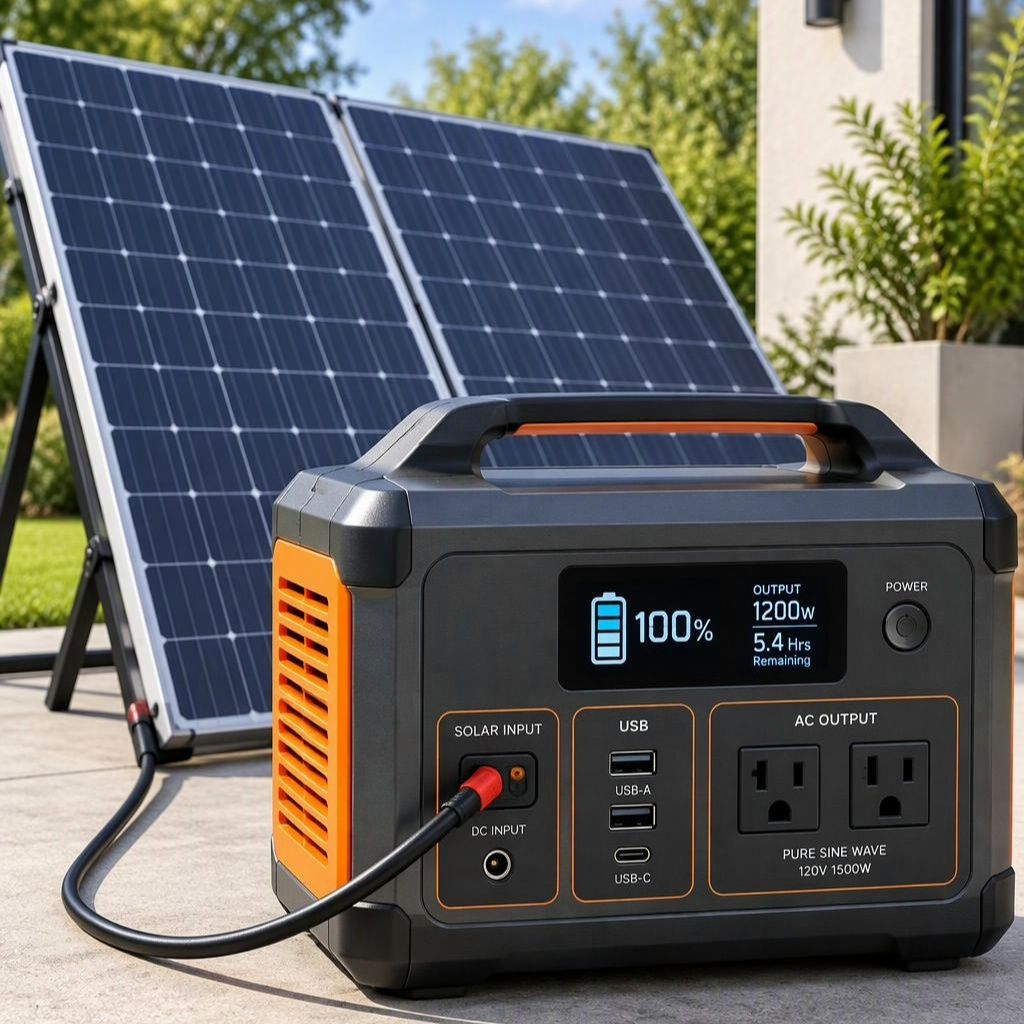
Modern portable power stations are compact enough to carry to the campsite.
What Is a Portable Solar Generator?
The name is a little misleading. There’s no engine. A solar generator – often sold as a portable power station – is three things in one box:
- A lithium battery that stores energy.
- An inverter that turns it into the same AC power you get from a wall outlet.
- A charge controller that lets you refill the battery from folding solar panels.
Plug in a phone, laptop, camera, mini fridge or blender and it just works. Charge it at home before you leave, top it up from the car’s 12V socket while you drive, and let the panels keep it going once you’ve parked.
The better units use LiFePO4 (lithium iron phosphate) cells. They’re typically rated for 3,000 to 6,000 charge cycles – years of regular weekend use – and are more stable than older lithium chemistries in the heat, which matters when your gear is baking in a parked car.
Why Campers and Road-Trippers Are Switching
We travel with a lot of electronics. Phones, earbuds, a drone, a camera, a laptop, a speaker and a string of LED lights for the tent. Content creators add ring lights and gimbals. The car’s cigarette lighter was never built for that.
Quiet has real value. Many campgrounds, including plenty in national parks, restrict generator hours or ban them in certain loops. A battery makes no sound, so the music, the fan or the coffee maker keep going without making you the most hated tent in the field.
No fumes, no fuel runs. Gas generators need gasoline, oil and plenty of distance from tents because of carbon monoxide. A solar generator can sit inside your van or under your awning. No jerry cans rattling in the trunk.
The tech finally grew up. Today’s mid-size units run coffee makers, electric grills and power tools, and many recharge from a wall outlet in under two hours.
Where a Solar Generator Earns Its Keep
Festival Camping
Multi-day festivals are where a battery shines. Keep a mini fridge cold all weekend, run a fan when the tent turns into a sauna at 9am, charge the whole crew’s phones and light the campsite after the headliner. A pair of panels does the rest during the day.
Tailgating
A speaker, a slow cooker, a TV for the pregame show and a blender for margaritas – all off one box, with no engine idling next to the grill. Just check the wattage of anything that heats before you plug it in.
Road Trips and Van Life
Overlanders and van dwellers were early adopters for a reason. A solar generator can run a 12V fridge, a laptop for remote work and the lights without wiring a complicated electrical system into the van. Bring it inside and it doubles as home backup when the power goes out.
Photo and Film Shoots
Location crews love them because silence matters on set: no generator hum bleeding into the audio and no long cable runs back to a truck.
How to Size a Solar Generator for Camping
Two numbers matter, and they’re printed on every spec sheet.
Capacity, in watt-hours (Wh). This is the size of the tank. A 60W mini fridge cycling on and off might use 400-700Wh a day. A 50W laptop running for four hours uses about 200Wh. LED lights barely register. Add up what you’ll actually use and leave some headroom.
Output, in watts (W). This is how much power the unit can push at once, and it’s the number that catches people out. Coffee makers, kettles, hair dryers and electric grills can pull 1,000-1,800W on their own. If the continuous output is lower, the unit simply shuts off. Check the surge rating too – fridges and power tools spike briefly when they start.
- 300-700Wh: phones, laptops, cameras, lights and a fan for a weekend.
- 1,000-2,000Wh: the sweet spot for most campers and tailgaters – a fridge for a day or more, plus a coffee maker or small grill.
- 2,000Wh and up: van life, longer trips, home backup and power tools. Many are expandable with extra battery packs.
Be Honest About the Sun
Solar panels are brilliant, but not magic. A 200W panel rarely delivers a full 200W – angle, heat, clouds and shade all chip away at it. On a clear summer day you might realistically collect 600-1,000Wh from a 200W panel. Under trees or in a week of rain, plan on far less.
Treat solar as a top-up, not the whole plan. Arrive with a full battery, charge from the car while you drive and let the panels stretch your runtime. Re-aim them as the shadows move and keep them out of your own tent’s shade.
What to Look for Before You Buy
- LiFePO4 battery chemistry for long life and better heat tolerance.
- Plenty of AC outlets and fast USB-C ports so laptops and phones charge without a bag of adapters.
- A high solar input rating for faster recharging from panels.
- Weight and handles – a 2,000Wh unit can weigh 40-60 lb.
- Weather resistance – a few newer models are dust and water resistant; most are not.
- App control and a quiet charging mode if you’ll sleep next to it.
- Expandability if your trips are likely to get longer.
When comparing options, browse a range of portable solar generators side by side and filter by capacity and output first – those two numbers narrow the field faster than any feature list.
Frequently Asked Questions
Can a portable solar generator run a mini fridge?
Yes. Most 12V and small AC fridges draw 40-80W while running. A 1,000Wh unit will typically keep one going for a day or more, longer with solar top-ups.
Can I use a solar generator inside a tent or van?
Yes. Unlike gas generators, battery power stations produce no exhaust or carbon monoxide. Keep them ventilated, dry and out of direct heat.
How long does it take to recharge?
Many current models recharge from a wall outlet in 1-2 hours. Solar charging takes longer and depends on panel wattage and sunshine – often 3-8 hours with good sun.
Is a solar generator better than a gas generator?
For phones, laptops, fridges, fans, lights and small appliances, yes: it’s silent, fume-free and cheaper to run. For heavy loads like whole-house AC for days on end, a gas or standby generator still makes sense.
The Bottom Line
A portable solar generator won’t power a stadium light rig, and it isn’t meant to. But for the way most of us travel – phones, laptops, fridges, fans, speakers, lights and the occasional coffee – it’s quieter, cleaner and easier to live with than a gas generator ever was.
Start small. Take one on your next weekend away, see what you actually use and size up from there. The only thing humming after midnight will be the bass from the main stage.
Tech Spec: Example Mid-Size Solar Generator (Jackery Explorer 1500 Ultra)
- Battery: 1,536Wh LiFePO4, rated for 4,000 cycles
- Output: 1,800W continuous, 3,600W peak
- Solar input: up to 800W
- Recharge: about 1.5 hours from a wall outlet, about 2.5 hours from solar
- Protection: IP65 dust and water resistant
- Operating temperature: 5°F to 113°F